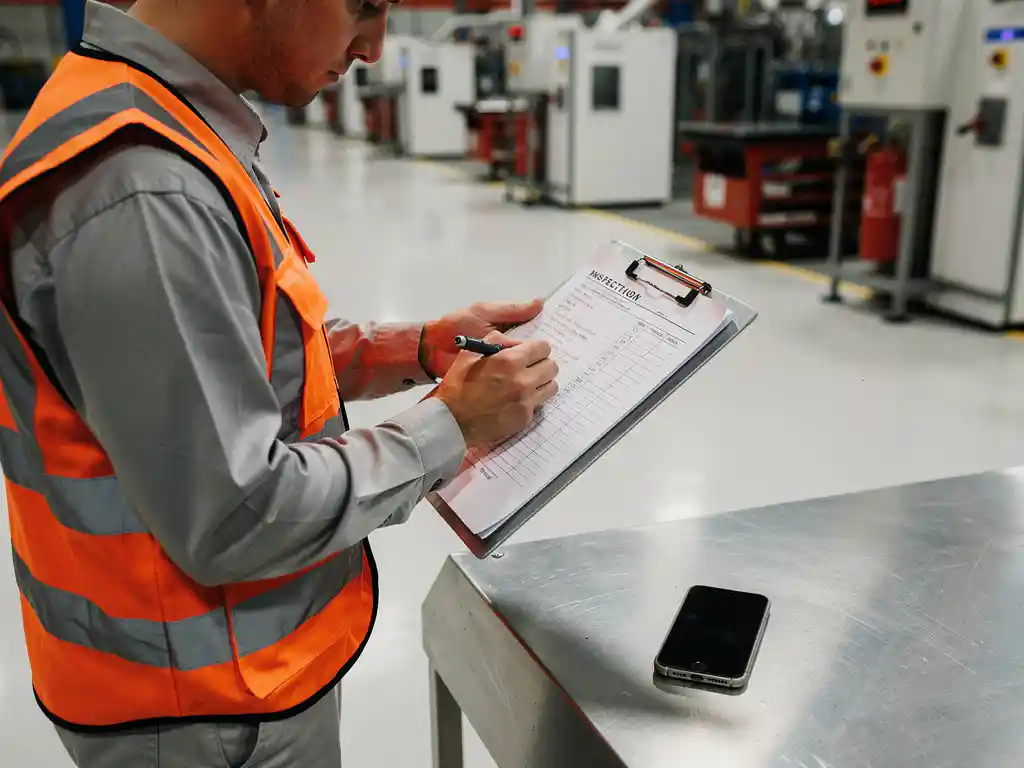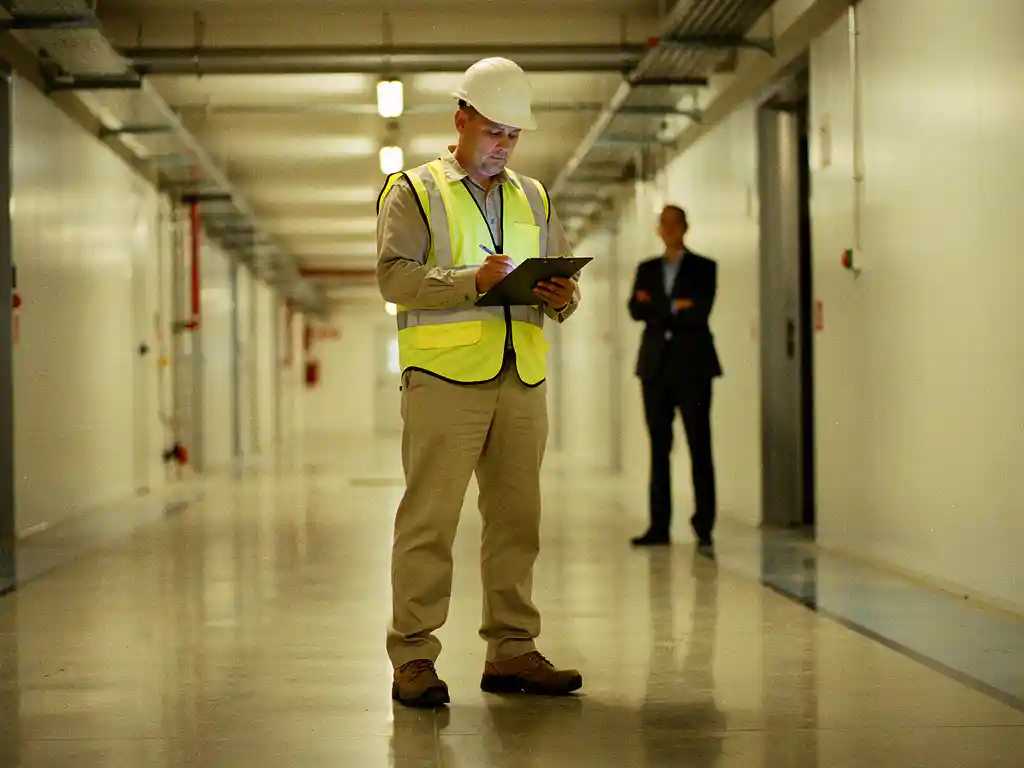


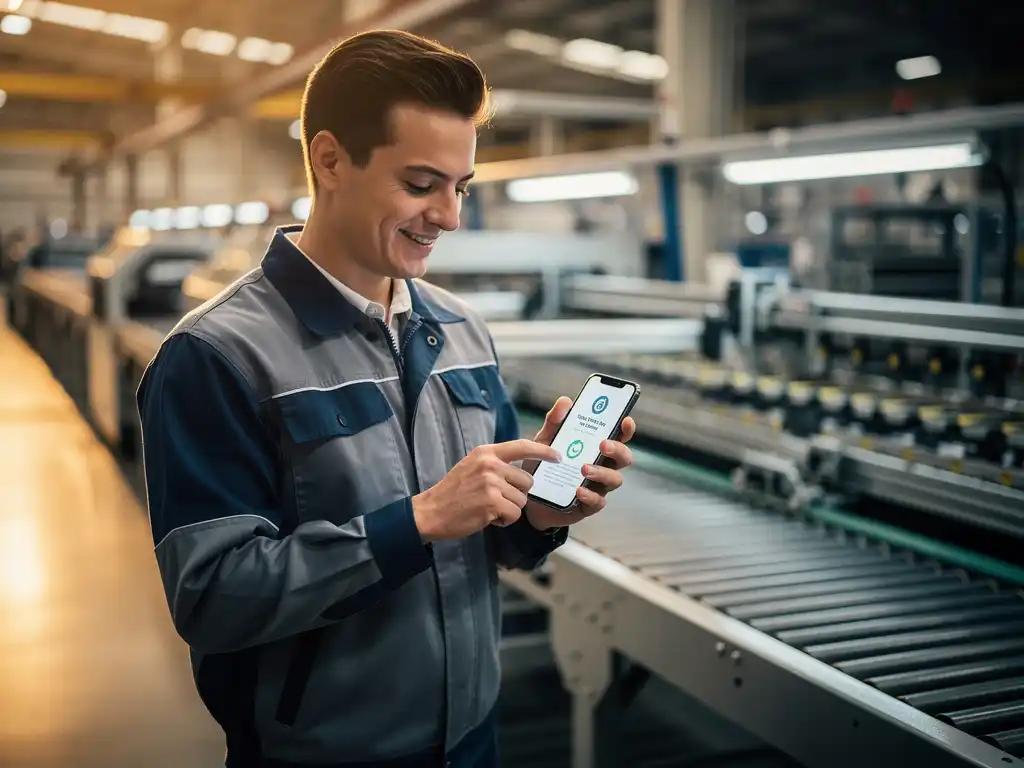
A good onboarding program in production typically moves through four to five core phases: pre-onboarding before the first day, an orientation week covering safety and processes, role-specific skills training, a supervised practice period, and a final evaluation stage. Each phase builds on the last, giving new employees the knowledge, confidence, and practical skills they need to work safely and effectively on the production floor. The sections below walk through each phase in detail, including how to handle safety training, multilingual teams, and program measurement.
What happens before a new employee’s first day in production?
Pre-onboarding in production starts the moment a new hire accepts their offer and ends the moment they walk through the door on day one. This phase sets the tone for everything that follows. It typically includes sending essential information about the workplace, safety requirements, dress codes, and first-day logistics so new employees arrive prepared rather than overwhelmed.
Effective pre-onboarding in a manufacturing environment also covers administrative tasks: contracts, compliance documents, and any legally required safety declarations. Beyond paperwork, it is an opportunity to introduce the company culture, team structure, and basic production processes before the employee sets foot on the floor.
The goal is to reduce first-day anxiety and shorten the time it takes for a new hire to become productive. When employees arrive already familiar with the basics, trainers and supervisors can spend less time on introductions and more time on hands-on learning. Pre-onboarding also signals to new employees that the organization is well-organized, professional, and invested in their success from the very start.
What should the first week of production onboarding include?
The first week of a production onboarding program should cover workplace orientation, foundational safety training, an introduction to key processes, and initial supervised practice on the production floor. This week is not about achieving full competency — it is about building a safe, informed foundation that the rest of the program can build on.
A structured first week in manufacturing typically includes:
- A facility tour covering emergency exits, first aid stations, and restricted zones
- An introduction to the team, direct supervisors, and key contacts
- Core safety rules and personal protective equipment (PPE) requirements
- An overview of the production process and the employee’s specific role within it
- Initial hands-on time with equipment under close supervision
- A review of quality standards and reporting procedures
Spreading this content across the week rather than delivering it all on day one prevents information overload. Short, focused learning moments throughout the week help new employees absorb and retain what they need to work safely and confidently.
How long does a good production onboarding program take?
A thorough production onboarding program typically takes between four and twelve weeks, depending on the complexity of the role, the machinery involved, and the level of prior experience the employee brings. Simple production roles may be fully onboarded in four weeks, while technically complex or safety-critical positions often require eight to twelve weeks of structured learning and supervised practice.
The most common mistake organizations make is treating onboarding as a one-week event rather than a phased process. Research in learning and development consistently shows that knowledge retention improves significantly when training is spaced out over time rather than delivered in a single block. A phased approach also allows supervisors to identify skill gaps early and address them before they become safety or quality issues on the floor.
After the formal onboarding period ends, a light-touch check-in structure — such as monthly follow-ups during the first six months — helps reinforce learning and supports longer-term retention.
What role does safety training play in production onboarding?
Safety training is the non-negotiable core of any production onboarding program. In a manufacturing environment, inadequate safety training is not just a compliance risk — it is a direct risk to people’s lives and well-being. Safety content should appear in every phase of onboarding, not only during the first week.
Safety training in early onboarding phases
During pre-onboarding and the first week, safety training focuses on the essentials: PPE requirements, emergency procedures, hazard identification, and the specific risks associated with the production environment. This foundational layer must be completed before a new employee works independently near machinery or hazardous materials.
Ongoing safety reinforcement throughout the program
As the onboarding program progresses, safety training becomes more role-specific. Employees learn the safety protocols tied to their particular machines, tasks, and workflows. Regular refreshers, scenario-based learning, and short knowledge checks help embed safe behaviors rather than leaving them as theoretical knowledge from a day-one briefing.
Organizations that treat safety as a continuous thread through onboarding — rather than a single checkbox — tend to see lower incident rates and stronger safety cultures over time.
How do you onboard multilingual employees in a production environment?
Onboarding multilingual employees in production requires delivering training content in each employee’s preferred language, using visual and practical learning formats alongside written materials, and avoiding the assumption that a general translation is sufficient for safety-critical instructions. Language barriers in manufacturing are a genuine safety risk, and onboarding programs must address them directly.
Practical approaches that work well in multilingual production environments include:
- Providing key safety documents and process instructions in multiple languages
- Using visual work instructions, diagrams, and short video demonstrations that reduce reliance on text
- Pairing new multilingual hires with a buddy who speaks their language during the first weeks
- Using digital tools that support automatic translation so training content does not need to be rebuilt for each language
- Confirming comprehension through practical demonstration rather than written tests alone
The goal is not just translation — it is genuine understanding. An employee who has memorized a translated safety rule without fully understanding it is still a risk. Onboarding programs that combine translated content with hands-on confirmation of understanding are far more effective in multilingual production settings.
How do you measure whether a production onboarding program is working?
You measure the effectiveness of a production onboarding program by tracking a combination of learning outcomes, operational performance indicators, and employee retention data. No single metric tells the full story — effective measurement combines what employees know, how they perform, and whether they stay.
Key indicators to track include:
- Knowledge retention: Quiz scores and knowledge checks at the end of each onboarding phase
- Time to full productivity: How quickly new hires reach the expected output level for their role
- Error and incident rates: Whether new employees make more mistakes or have more near-misses than experienced colleagues
- Module completion rates: Whether employees are completing all required training content
- Early turnover rates: Employees who leave within the first three to six months often signal onboarding gaps
- Manager and peer feedback: Qualitative input from supervisors about how well-prepared new hires appear
Collecting this data requires a system that makes progress visible without creating an administrative burden for managers. A dashboard that shows completion rates and assessment results in real time allows L&D teams and production managers to spot problems early and adjust the program before issues compound.
How E-Lia helps with onboarding in production
We built E-Lia specifically for environments where onboarding needs to be fast, practical, and accessible to everyone — including employees who are not comfortable with computers or who work in multiple languages. Our platform delivers production onboarding content directly via WhatsApp, with no app to download and no login required.
Here is what that means in practice for production organizations:
- Pre-onboarding made simple: Send new hires their first instructions, safety overviews, and welcome content before day one, straight to their phone
- Multilingual by default: Our platform supports automatic translation so every employee receives training in their own language without rebuilding modules
- Short, effective modules: Each microlearning takes 3 to 6 minutes to complete, making it easy to fit training into shift schedules without pulling people off the floor
- Fast to build: Creating a new module takes an average of 10 to 15 minutes, so your team can respond quickly when processes change
- Real-time progress tracking: Our dashboard shows exactly who has completed what, so managers always know where new employees stand
- No IT complexity: No integrations to set up on day one — employees start learning immediately via a channel they already use
If you are ready to make your production onboarding program more structured, measurable, and accessible for every employee, we would love to show you how it works. Book a demo and see E-Lia in action.
Frequently Asked Questions
What is the biggest mistake companies make when designing a production onboarding program?
The most common mistake is compressing onboarding into a single day or week and treating it as a one-time event rather than a structured, phased process. This leads to information overload, poor knowledge retention, and new employees who feel underprepared when they start working independently. A well-designed program spaces learning over four to twelve weeks, reinforces key content at multiple points, and includes supervised practice before full independence is expected.
How do I get started building a production onboarding program from scratch?
Start by mapping the core phases your program needs to cover: pre-onboarding, orientation, role-specific skills training, supervised practice, and final evaluation. For each phase, identify the must-know content — prioritizing safety first — and decide how it will be delivered and assessed. You do not need a perfect program on day one; a structured outline with clear milestones and a way to track completion is a strong foundation to build from and improve over time.
How do you handle onboarding for employees who have prior production experience?
Experienced hires still need a structured onboarding program, but it can be adapted to reflect their existing knowledge. Focus on company-specific processes, machinery, safety protocols, and quality standards rather than general production fundamentals. A short skills assessment at the start of onboarding helps identify which modules can be fast-tracked and where additional attention is genuinely needed, avoiding the frustration of sitting through training that covers what they already know.
What should a supervised practice period look like in a production onboarding program?
A supervised practice period should give new employees hands-on time with their actual tasks and machinery while a trained colleague or supervisor observes and provides real-time feedback. The level of supervision should gradually decrease as competence increases — starting with close side-by-side guidance and moving toward independent work with periodic check-ins. Clear criteria for what 'ready to work independently' looks like make it easier for both supervisors and new hires to know when this phase is complete.
How do you keep new production employees engaged during a longer onboarding program?
Engagement during a multi-week onboarding program improves when training is delivered in short, focused sessions rather than long blocks, and when new employees can see their own progress over time. Mixing learning formats — such as brief video demonstrations, hands-on practice, and short knowledge checks — prevents fatigue and reinforces learning more effectively than passive instruction alone. Regular check-ins with a supervisor or buddy also help new hires feel supported and motivated throughout the process.
What is the best way to update onboarding content when production processes change?
The key is having a system that makes updating content fast and low-effort, so changes to processes or safety procedures are reflected in training materials quickly rather than weeks later. Identify a clear owner for each training module so there is always someone responsible for keeping content current. Digital tools that allow quick edits and immediate redeployment to employees are far more practical in fast-moving production environments than printed manuals or slide decks that require significant effort to revise.
How do you ensure new production employees actually retain what they learned during onboarding?
Retention improves significantly when training content is revisited at spaced intervals rather than delivered once and never reinforced. Short knowledge checks at the end of each onboarding phase, combined with on-the-job coaching during the supervised practice period, help move learning from short-term recall to long-term competence. A light-touch follow-up structure in the months after formal onboarding ends — such as brief refreshers or monthly check-ins — further strengthens retention and catches any gaps before they become performance or safety issues.