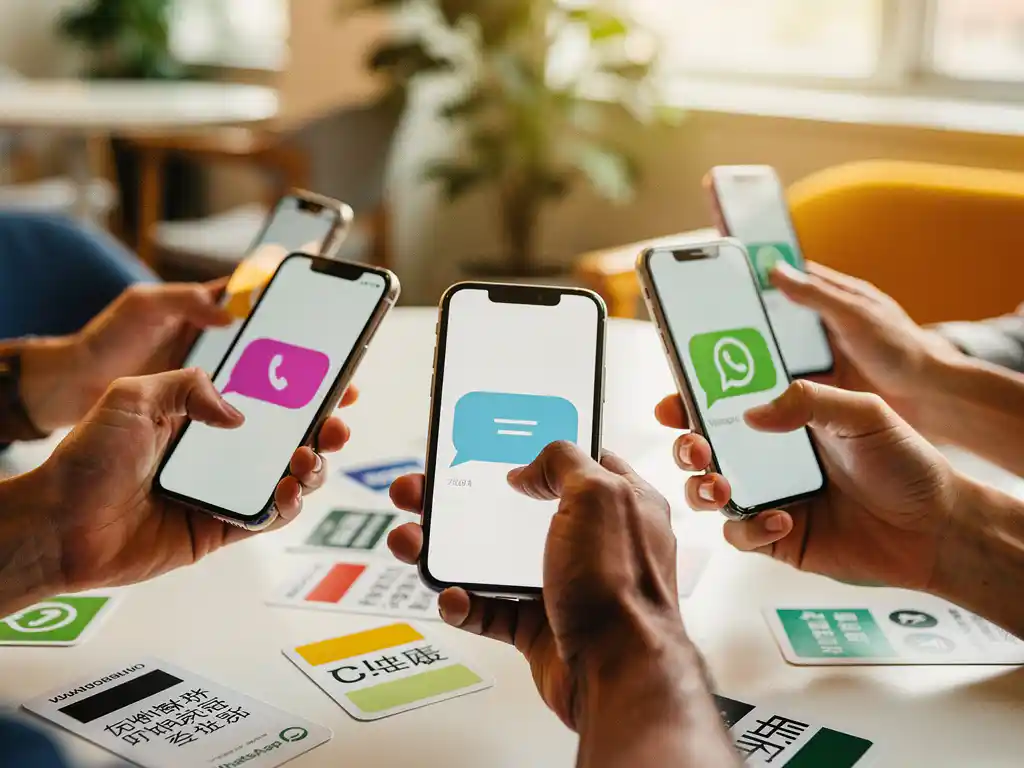
Multilingual teams are a reality in many organizations, especially in sectors like logistics, manufacturing, healthcare, and retail. Employees speak Polish, Turkish, Arabic, Spanish, or dozens of other languages, and that calls for a smart approach when it comes to training and knowledge sharing. Want to make sure everyone understands what is expected of them, including on topics like food safety or HACCP training? It all starts with the right methods and tools.
In this article, we answer the most frequently asked questions about training multilingual teams. From the challenges to practical approaches using microlearning and automatic translations: you’ll find concrete answers here that you can apply right away.
What are the challenges of training multilingual teams?
The biggest challenges when training multilingual teams are language barriers that slow down comprehension, uneven information transfer, and the risk that employees misinterpret instructions. This leads to mistakes on the work floor, lower engagement, and in some sectors even safety risks.
Many organizations address this through verbal explanations via a colleague or manager who translates. That sounds practical, but it creates inconsistency. Not everyone receives the same information, and nuances get lost. Especially with complex topics like food safety regulations or work procedures, that’s a risk you want to avoid.
Time pressure also plays a role. Trainers don’t always have time to deliver the same session multiple times in different languages. And translating written materials traditionally takes a lot of time and money. The result is that multilingual employees are often less well trained than their English-speaking colleagues — not due to lack of motivation, but due to lack of accessible resources.
Why is language so important for effective training?
Language is the foundation of understanding. When employees receive training content in their own language, they process information faster, retain more, and apply what they’ve learned more effectively in practice. Training in a foreign language leads to surface-level understanding, even if employees have a partial command of that language.
This is especially relevant for training with a legal or safety basis. Consider a HACCP course for employees in the food industry. If an employee doesn’t fully understand the critical control points because the instruction was given in English, a real risk arises. Comprehension here is not a luxury — it’s a requirement.
Language also relates to engagement and respect. Employees who receive training in their own language feel taken seriously. That increases motivation to learn and strengthens their connection to the organization. An investment in multilingual training is therefore also an investment in employee satisfaction and retention.
Which training methods work best for multilingual employees?
The most effective training methods for multilingual employees combine short, visually supported content with the ability to learn in one’s own language. Microlearning, video training, and digital work instructions with automatic translations outperform classroom sessions or lengthy written manuals.
Visual support
Images, icons, and short videos reduce dependence on language. An employee who sees a step-by-step instruction rather than just reading it understands the task faster. Always combine visual elements with a brief text explanation in the employee’s own language for the best result.
Digital and mobile learning formats
Multilingual employees often work in shifts or at varying locations. Digital learning formats accessible via smartphone fit seamlessly into their daily routine. They can learn at a time that suits them, without depending on a computer or a fixed location.
Repetition and short modules
Knowledge sticks better when it is delivered in small chunks and repeated regularly. Long training sessions are challenging for everyone, but for employees learning in a second language the cognitive load is even greater. Short modules of a few minutes significantly lower that threshold.
How do you use automatic translations in team training?
You use automatic translations in team training by creating training content once and then having it automatically translated into the languages your employees speak. This saves time, ensures consistency, and makes it possible to reach all team members simultaneously, regardless of their native language.
Modern learning platforms support automatic translations as a built-in feature. You create the module once in English or another base language, and the system automatically translates the content into the desired languages. This way, all employees receive the same information — each in their own language.
When using automatic translations, pay attention to the quality of the source content. The simpler and clearer you write, the better the translation will turn out. Avoid jargon, long sentences, and ambiguous phrasing. For sensitive or technical topics, always have the translations reviewed by a native speaker or a colleague who is proficient in that language.
How do you use microlearning for multilingual teams?
Microlearning works for multilingual teams by splitting training content into short, focused modules of three to six minutes that employees can work through at their own pace and in their own language. The combination of short duration, clear structure, and multilingual support makes microlearning particularly well suited for diverse teams.
A microlearning module focuses on one topic or one skill. That makes it straightforward to translate content without losing context. Think of a module on hygiene rules, correctly completing a checklist, or the steps of a specific work process. Each topic gets its own module, which employees can consult whenever they need it.
Microlearning also lends itself well to just-in-time learning. An employee who is unsure about a procedure can quickly look up the relevant module and find the answer within minutes. That is far more effective than searching through a thick manual in a language that is not your native tongue. For topics like a HACCP course — where employees need to know and be able to repeat specific steps — this is a particularly powerful approach.
How do you measure whether training is reaching multilingual employees?
You measure whether training is reaching multilingual employees by tracking progress, completion rates, and test results per employee via a dashboard. In addition, you include short knowledge questions after each module to verify whether the content was actually understood, and not just read through.
Look not only at who completed the module, but also at how quickly employees answer the questions and how often they revisit a module. Repeatedly viewing the same module can be a signal that the content isn’t clear enough, or that the translation needs improvement. Use that data to continuously refine your training materials.
Also involve team leaders in the measurement. They can see on the work floor whether what was learned is actually being applied. Combine quantitative data from your learning platform with qualitative observations from team leaders for a complete picture of training effectiveness.
How E-Lia helps with training multilingual teams
At E-Lia, we developed our platform specifically for organizations that want to train quickly, easily, and effectively — including in multilingual environments. Via WhatsApp, we reach employees directly on their phones, without them needing to download an app or log in. That dramatically lowers the barrier, especially for employees who are less digitally confident or accustomed to a different language.
What we specifically offer for multilingual teams:
- Automatic translations, so employees receive training in their own language
- Microlearning modules that you build in 10 to 15 minutes and that employees complete in 3 to 6 minutes
- Direct or scheduled delivery via WhatsApp, fitting shift work and changing rosters
- A clear dashboard that lets you track progress and results per employee
- Ready-made standard modules available, including a HACCP training that is immediately deployable for teams in the food industry
Curious about how we can help you train your multilingual team more effectively? Get in touch with us or explore our offering and discover how simple learning via WhatsApp can be.
Frequently Asked Questions
Which languages are supported for automatic translations in a learning platform?
Most modern learning platforms support dozens of languages, including commonly spoken languages in international organizations such as Polish, Turkish, Arabic, Spanish, Romanian, and Portuguese. With E-Lia, you can have training content automatically translated into the languages your team actually speaks. Always check in advance which languages your platform supports and align this with the composition of your team.
What if an employee speaks multiple languages but none of the available translations is their preference?
In that case, it is advisable to let employees choose their preferred language at the start of the training. Good learning platforms offer the option to set a language profile per employee. This way, each employee automatically receives the correct version, without you having to manage this manually.
How do I prevent errors in automatic translations for technical or safety-related training?
Write your source content as simply and concretely as possible: use short sentences, avoid technical jargon, and be explicit in your instructions. For critical topics — such as HACCP procedures or safety instructions — always have translations reviewed by a native speaker or a bilingual colleague. A one-time review when creating the module is sufficient, as the translated content is then reused consistently.
How do I convince my management to invest in multilingual training?
Back up the business case with concrete risks and costs you are currently incurring: think of errors on the work floor, employee turnover, or non-compliance with regulations such as HACCP requirements. Show that multilingual microlearning via a platform like E-Lia is significantly cheaper and faster than traditionally translating manuals or organizing separate training sessions. Higher engagement and a lower error rate are measurable results that quickly make the return on investment visible.
Can employees with low literacy levels also manage with digital multilingual training?
Yes, provided the training is built with strong visual support. Use videos, images, icons, and spoken instructions to reduce dependence on written text. Platforms that work via WhatsApp, like E-Lia, lower the digital barrier further because employees don't need to learn a new app — they use an environment they already know and use every day.
How often should I update training modules for multilingual employees?
Plan at least one revision of your training modules per year, or more frequently if laws and regulations, work processes, or products change. The great advantage of digital microlearning is that you update a module centrally and the translations are automatically refreshed, so all employees immediately receive the most current version. Also keep an eye on your dashboard data: if employees consistently score lower on certain modules, that is a signal to review the content or the translation.
How do I get started with setting up multilingual training if I have no experience with digital learning platforms?
Start small: choose one topic that is urgent or mandatory — such as a hygiene or HACCP training — and build your first multilingual module around it. Many platforms, including E-Lia, offer ready-made standard modules that you can deploy immediately and customize to your organization. This way you gain experience with the platform, see results quickly, and gradually build a complete multilingual training program.