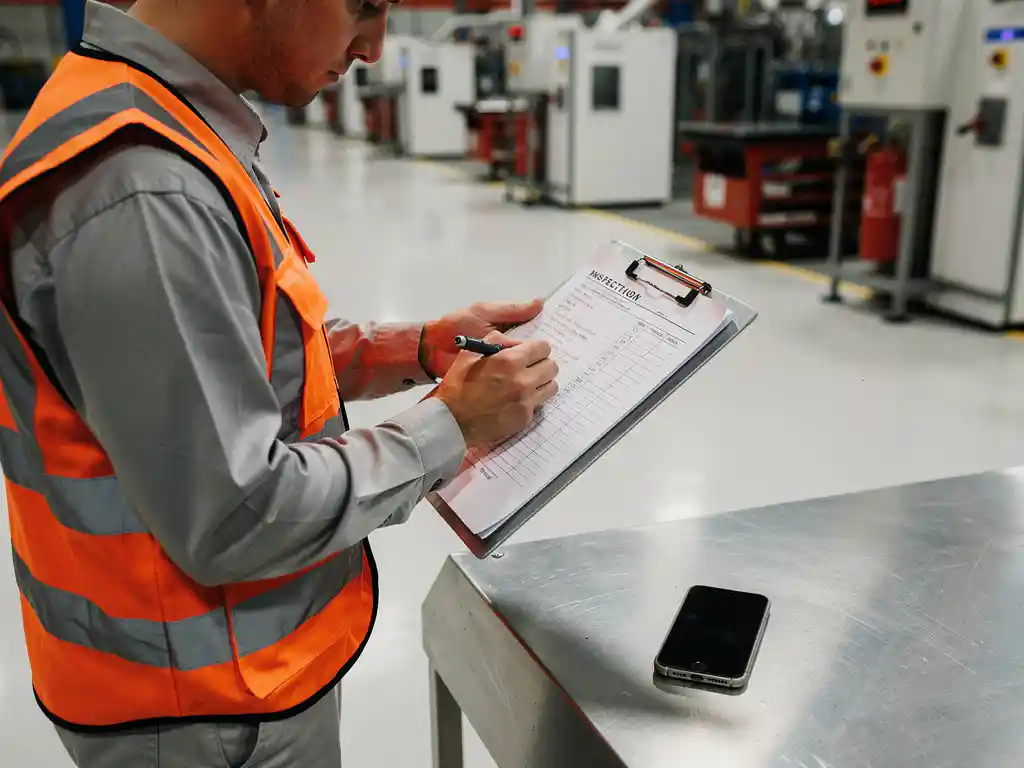


A workplace inspection holds significant evidentiary value in the event of a workplace accident. When conducted properly and documented thoroughly, an inspection report can establish the condition of a work environment before or after an incident, helping to determine whether safety standards were met, ignored, or violated. Whether you are an employer, an employee, or a legal representative, understanding how workplace inspections function as evidence is essential for navigating any accident investigation or liability claim.
How is a workplace inspection used as evidence after an accident?
A workplace inspection is used as evidence after an accident by providing a documented record of the physical conditions, safety measures, and potential hazards present at the worksite. This record helps investigators, insurers, and courts reconstruct what the environment looked like at the time of the incident and whether existing conditions contributed to the accident.
When an accident occurs, the inspection report becomes a critical reference point. Investigators compare the findings of any pre-accident inspections against the conditions observed immediately after the event. If a hazard was previously identified but not corrected, that gap becomes a powerful piece of workplace safety evidence. Conversely, if inspections consistently showed a safe and compliant environment, this can support an employer’s defense.
Workplace accident investigations typically draw on multiple sources of evidence, including witness statements, CCTV footage, maintenance logs, and risk assessments. The inspection report sits at the center of this process because it offers a structured, timestamped account of conditions that other sources may not capture at the same level of detail.
What does a workplace inspection report typically contain?
A workplace inspection report typically contains a systematic record of observed conditions, identified hazards, corrective actions taken or recommended, and the inspector’s conclusions. It serves as both a compliance document and a factual account of the worksite’s safety status at a specific point in time.
Most inspection reports include the following elements:
- Date, time, and location of the inspection
- Name and role of the inspector conducting the review
- Areas and equipment inspected, including specific machinery, walkways, storage areas, and workstations
- Hazards identified, categorized by severity or risk level
- Corrective actions recommended or already taken, with assigned responsibilities and deadlines
- Photographs or supporting documentation where applicable
- Signatures or acknowledgments from relevant supervisors or safety officers
The more detailed and consistent the report, the stronger its value as workplace safety evidence. Reports that use standardized formats and follow a regular schedule carry more credibility than ad hoc or incomplete documents.
How much legal weight does a workplace inspection carry in court?
A workplace inspection report can carry substantial legal weight in court, particularly when it was conducted by a qualified inspector, follows a recognized methodology, and was produced independently of any legal dispute. Courts treat well-documented inspection records as reliable factual evidence about site conditions.
The legal weight of an inspection report depends on several factors. Reports produced by external safety authorities or accredited third-party inspectors tend to carry more weight than those completed internally, simply because they are less susceptible to accusations of bias. Reports that were created before the accident, as part of a routine safety program, are generally viewed as more credible than those commissioned after an incident has already occurred.
In a work accident claim, courts and tribunals will also consider whether the employer acted on the findings of previous inspections. An inspection that identified a hazard, combined with evidence that no corrective action was taken, can significantly strengthen a claimant’s case. On the other hand, a consistent record of inspections showing compliance and prompt remediation supports the argument that the employer exercised a reasonable duty of care.
Can a workplace inspection be used against an employer in a liability claim?
Yes, a workplace inspection can be used against an employer in a liability claim, especially if the report reveals that a known hazard was left unaddressed prior to the accident. In this context, the inspection becomes direct evidence of negligence rather than a demonstration of due diligence.
Employers sometimes assume that conducting regular inspections automatically protects them legally. In reality, the opposite can be true if the inspections identified problems that were never resolved. A written record showing that a hazard was flagged weeks or months before an accident and that no corrective steps were taken is difficult to defend against in a work accident claim.
This is why the value of a workplace inspection as evidence is closely tied to follow-through after the inspection itself. Documentation of corrective actions, re-inspections to confirm resolution, and sign-offs from responsible managers are all essential parts of a defensible safety record.
What’s the difference between a proactive and a reactive workplace inspection?
A proactive workplace inspection is conducted as part of a routine safety program before any incident occurs, with the aim of identifying and eliminating hazards. A reactive workplace inspection takes place after an accident or near-miss, specifically to investigate what went wrong and gather evidence about the conditions that contributed to the event.
Both types serve important but distinct purposes in a workplace accident investigation:
- Proactive inspections establish a baseline of safety compliance, demonstrate an employer’s commitment to ongoing risk management, and create a historical record that can be referenced if an accident later occurs.
- Reactive inspections focus on documenting the scene as close to the time of the incident as possible, capturing physical evidence before conditions change, and supporting the formal investigation process.
From an evidentiary standpoint, proactive inspections are often more persuasive because they show a pattern of behavior over time. A single reactive inspection, conducted only after an accident, may be viewed with more skepticism, particularly if the employer has no prior inspection history to support it.
Who should conduct a workplace inspection for it to hold evidentiary value?
For a workplace inspection to hold strong evidentiary value, it should be conducted by a qualified individual with relevant health and safety expertise, ideally someone independent from the day-to-day management of the worksite. This could be an accredited safety professional, an occupational health specialist, or an inspector from a regulatory authority.
Internal inspections carried out by trained safety officers can also hold evidentiary value, provided the inspector has documented credentials, followed a recognized inspection protocol, and has no direct conflict of interest in the outcome of any related claim. The key factors courts and insurers look for include:
- The inspector’s qualifications and professional standing
- Whether a standardized checklist or methodology was followed
- The consistency and regularity of the inspection program
- Whether findings were reported objectively, including unfavorable observations
- Whether the report was signed, dated, and retained in a secure record system
When a workplace accident investigation is underway, employers should consider engaging an independent safety consultant to conduct or review the inspection. This reduces the risk of bias claims and strengthens the credibility of the documentation in any subsequent legal or insurance proceedings.
How E-Lia helps with workplace safety training and compliance
Preventing workplace accidents starts with well-informed employees, and that is exactly where we come in. At E-Lia, we make safety training and workplace instructions accessible to every member of your team through WhatsApp, without the need for logins, apps, or classroom sessions. Our platform is built for organizations that need to deliver consistent, up-to-date safety knowledge quickly and at scale.
Here is how we support your workplace safety efforts:
- Microlearning modules covering safety procedures, inspection checklists, and hazard awareness, completable in 3 to 6 minutes
- Instant or scheduled distribution of updated safety instructions when procedures change or new risks are identified
- Automatic translations so multilingual teams receive safety information in their own language
- Progress tracking via dashboard so you always know who has completed which training
- Pre-onboarding and onboarding flows that ensure new employees understand safety expectations from day one
A strong inspection record is only as effective as the training that supports it. When your team knows what to look for, how to report hazards, and what procedures to follow, your inspections reflect a genuinely safe workplace rather than a paper exercise. Contact us to find out how we can strengthen your safety training, or plan a demo to see the platform in action.
Frequently Asked Questions
How long should workplace inspection records be retained in case they are needed as evidence?
Workplace inspection records should generally be retained for a minimum of three to seven years, though this varies depending on local health and safety legislation and the nature of your industry. In cases where an accident or liability claim has occurred, records should be preserved indefinitely until all legal proceedings are fully resolved. Destroying or losing inspection records during an active investigation can seriously damage an employer's legal position and may even be treated as evidence of negligence.
What should an employer do immediately after a workplace accident to protect the evidentiary value of an inspection?
Immediately after a workplace accident, the employer should secure the scene to prevent any alteration of conditions, arrange for a qualified inspector to conduct a reactive inspection as soon as safely possible, and preserve all existing inspection records, maintenance logs, and photographs. Avoid making repairs or modifications to the accident site before it has been formally documented, as doing so can destroy critical physical evidence. Notifying your insurer and, where legally required, the relevant regulatory authority should also happen promptly and in parallel.
Can an employee or their legal representative request access to workplace inspection reports?
Yes, in most jurisdictions employees and their legal representatives have the right to request access to workplace inspection reports, particularly those relevant to a personal injury or work accident claim. These records may be obtained through formal disclosure processes during litigation, freedom of information requests, or direct requests to the employer under health and safety legislation. If an employer refuses or delays disclosure without a lawful reason, this can reflect negatively on their position in any subsequent legal proceedings.
What are the most common mistakes employers make that undermine the evidentiary value of their inspections?
The most common mistakes include failing to follow up on identified hazards with documented corrective actions, conducting inspections irregularly or only after an incident has occurred, and using inconsistent or poorly structured report formats that are difficult to interpret in a legal context. Another frequent issue is assigning inspections to individuals who lack formal qualifications or who have a conflict of interest in the outcome. Each of these gaps can be exploited in a liability claim to argue that the inspection program was not genuine or effective.
Does a workplace inspection conducted by a regulatory authority carry more weight than an internal one?
Generally, yes. An inspection conducted by a government regulatory authority or an accredited third-party safety professional carries more legal weight because it is considered independent and free from internal bias. However, a well-documented internal inspection program, conducted consistently by trained safety officers using standardized protocols, can still hold significant evidentiary value, especially when it demonstrates a long-term pattern of compliance. The key is credibility through consistency, qualifications, and objectivity, regardless of who carries out the inspection.
How can safety training reduce an employer's liability exposure in the event of a workplace accident?
Comprehensive, documented safety training demonstrates that an employer took reasonable steps to inform and equip employees to work safely, which is a central element of fulfilling the duty of care. When training records show that workers were instructed on hazard identification, reporting procedures, and safe working practices, it becomes harder to argue that the employer was negligent. Platforms like E-Lia that track training completion and deliver consistent safety content across the entire workforce create an additional layer of documented evidence that can support an employer's defense in any accident investigation or liability claim.
What is the difference between a workplace inspection and a risk assessment, and do both hold evidentiary value?
A risk assessment is a forward-looking document that identifies potential hazards and evaluates the likelihood and severity of harm before work activities take place, while a workplace inspection is a physical review of actual site conditions at a specific point in time. Both hold evidentiary value, but they serve complementary roles: the risk assessment shows that hazards were anticipated and planned for, while the inspection record shows what was actually observed and acted upon in practice. Together, they form a stronger body of evidence than either document would on its own.