

Customising toolbox meetings per industry requires a targeted approach that considers sector-specific risks, work processes, and communication styles. What exactly is a toolbox meeting? It’s a short, practical safety discussion that helps teams identify risks and work safely. Each industry has unique challenges that require different topics, timing, and approaches for maximum effectiveness.
What are toolbox meetings and why do they differ per industry?
A toolbox meeting is a short, informal gathering where teams discuss specific safety topics relevant to their daily work activities. These meetings typically last 10 to 15 minutes and focus on practical safety tips, risk identification, and preventive measures.
Each industry has unique risk profiles and work processes that require customisation. In healthcare, for example, the focus is on infection prevention and patient safety, while construction centres on fall prevention and equipment use. A one-size-fits-all approach doesn’t work because:
- Different industries face specific safety risks
- Workers use different professional terminology and come from varied backgrounds
- Timing and frequency must align with operational processes
- Regulations vary by sector
By tailoring toolbox meetings to the industry, you increase relevance and employee engagement, leading to stronger safety performance.
Which elements should you customise in toolbox meetings per sector?
The core components that need to be adapted are topics, communication style, timing, frequency, and practical examples. These elements determine whether your toolbox meeting connects with your team’s daily reality.
Topics and content: Choose topics that are directly relevant to the work activities at hand. In production environments, the focus is on machine safety and LMRA toolbox procedures, while office environments centre on ergonomics and fire safety.
Communication style: Adapt your language to your audience. Technical teams appreciate detailed procedures, while service teams benefit more from practical tips and examples drawn from their everyday experience.
Timing and frequency: Production environments often benefit from daily short meetings, while office environments find weekly or monthly sessions more effective. Schedule meetings when teams are alert and available.
Practical examples: Use situations that teams recognise. Discuss personal protective equipment specific to your sector and work with concrete scenarios from your own work environment.
How do you organise effective toolbox meetings in healthcare?
Toolbox meetings in healthcare focus on infection prevention, patient safety, and multidisciplinary collaboration. Due to high workloads and rotating shifts in healthcare facilities, meetings must be short and impactful.
Specific topics for healthcare:
- Hand hygiene and personal protective equipment
- Medication safety and preventing dosing errors
- Patient identification and communication
- Infection prevention and isolation procedures
- Safe patient handling and manual lifting techniques
Practical organisation: Schedule meetings at the start of shifts, use visual aids such as posters and checklists, and keep sessions brief (maximum 10 minutes). Involve staff from different disciplines to encourage knowledge sharing.
Make sure PPE (personal protective equipment) is discussed regularly, especially during seasonal risk periods or when new protocols are introduced. Use concrete examples from your own department to keep content relevant.
What are the best practices for toolbox meetings in construction?
Toolbox meetings in construction focus on fall prevention, equipment use, and weather conditions. This sector carries the highest risks and therefore requires frequent, practical safety discussions that align with daily activities on the job site.
Construction-specific topics:
- Fall protection and scaffolding safety
- Electrical safety and tool management
- Lifting and transporting materials
- Personal protective equipment per work activity
- Weather conditions and seasonal hazards
Practical implementation: Hold meetings early in the morning before work begins, use the job site itself as a classroom, and discuss concrete situations teams may encounter that day. Involve experienced workers in sharing hands-on tips.
Build in flexibility, as construction teams often change and each project brings different risks. An LMRA toolbox (Last Minute Risk Assessment) helps teams pause just before starting high-risk tasks to think through potential hazards.
How do you adapt toolbox meetings for production and manufacturing?
Toolbox meetings in production environments focus on machine-specific safety, quality control, and integration with production schedules. This sector requires structured meetings that fit around shift work and production processes without disrupting efficiency.
Manufacturing-specific topics:
- Machine safety and lockout/tagout procedures
- Chemical safety and storage of hazardous substances
- Ergonomics and prevention of repetitive strain injuries (RSI)
- Quality control and process safety
- Emergency procedures and evacuation routes
Integration with production: Schedule meetings during shift handovers, use production data to pinpoint high-risk moments, and connect safety information to quality objectives. Discuss personal protective equipment specific to your production processes.
Keep meetings short (5 to 10 minutes) but hold them consistently. Use visual management tools and dashboards to make safety performance visible and keep teams motivated.
How E-Lia helps with toolbox meetings per industry
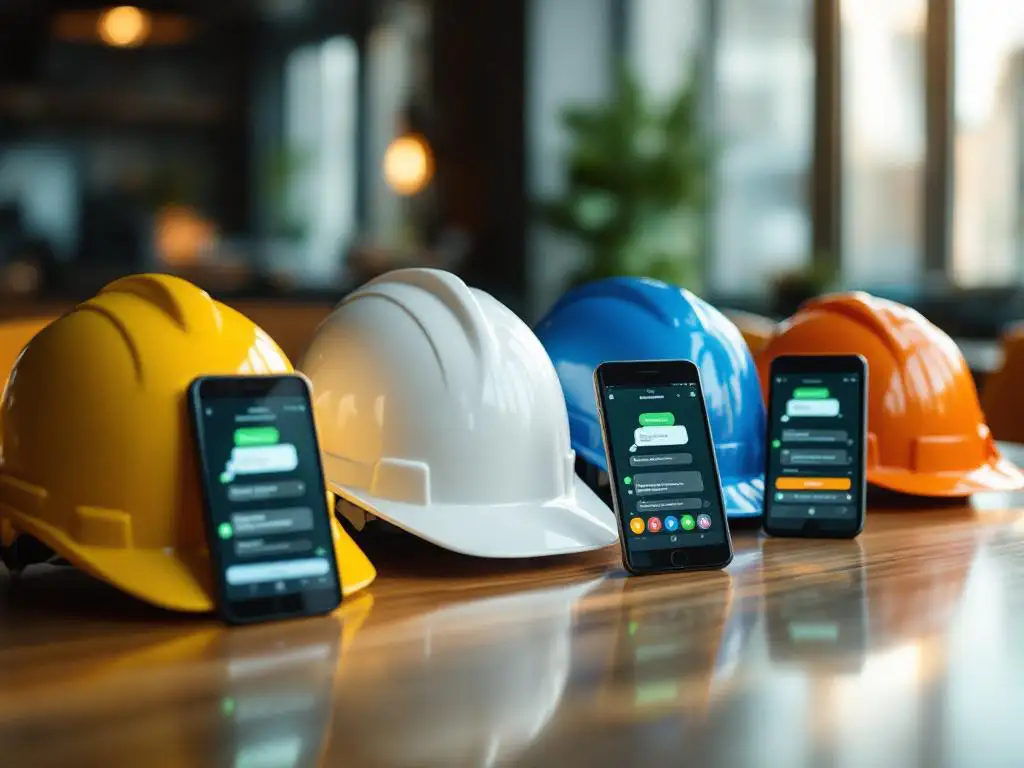
E-Lia makes toolbox meetings simpler and more effective by delivering industry-specific modules via WhatsApp, with no logins or app downloads required. Our platform helps organisations build targeted safety communication that fits their sector perfectly.
Concrete benefits for toolbox meetings:
- Ready-made modules for different industries (healthcare, construction, production)
- Automatic translations, so multilingual teams receive training in their own language
- Flexible scheduling: send modules immediately or plan them for the most effective moment
- Progress tracking via an easy-to-use dashboard
- Fast to build: creating a module takes just 10 to 15 minutes
- Quick to complete: employees finish modules in 3 to 6 minutes
Whether you want to optimise toolbox meetings for healthcare, construction, or production, E-Lia offers the flexibility and industry expertise you need. Discover how you can transform toolbox meetings into a modern, effective approach that truly works for your team.
E-Lia also supports broader safety and training needs across your organisation. Explore how our platform can strengthen your workplace inspections, streamline onboarding for new employees, help your teams retain and maintain knowledge, deliver clear work instructions, and manage HACCP training with ease.
Ready to get started? Book a demo and see how straightforward effective toolbox meetings can be with E-Lia’s industry-specific approach via WhatsApp.
Frequently Asked Questions
How often should you hold toolbox meetings per industry?
The frequency differs per industry: construction projects have daily short meetings (5-10 minutes), production environments organise meetings per shift change, healthcare holds weekly sessions per department, and office environments usually suffice with monthly gatherings. Adjust the frequency based on risk profiles and operational needs.
What do you do when employees show no interest in toolbox meetings?
Increase relevance by using concrete examples from your own work environment, let experienced colleagues share their experiences, and make meetings interactive with practical exercises. Link safety performance to team objectives and openly acknowledge good safety practices to stimulate engagement.
How do you measure the success of industry-specific toolbox meetings?
Track both quantitative and qualitative indicators: number of accidents and near-misses, attendance percentages at meetings, employee feedback via surveys, and observation of behavioural changes on the work floor. Use dashboards to make trends visible and identify improvement points.
What tools and materials do you need for effective toolbox meetings?
Basic requirements are: industry-specific checklists and conversation cards, visual aids such as photos of your workplace, flipchart or digital screen for notes, and relevant personal protective equipment as demonstration material. Digital platforms like E-Lia can further simplify the process with ready-made modules.
How do you train team leaders to conduct good toolbox meetings?
Organise train-the-trainer sessions where team leaders learn how to structure meetings, ask open questions, and facilitate discussions. Give them industry-specific scenarios to practise with and ensure ongoing coaching. Share best practices between departments and regularly evaluate their meeting skills.
What are common mistakes when implementing toolbox meetings?
Common pitfalls are: meetings that are too long causing loss of focus, generic topics that don’t align with work practice, one-way communication without interaction, and inconsistent execution between teams. Also avoid dealing with administrative matters during safety meetings and always ensure follow-up on discussed action points.