


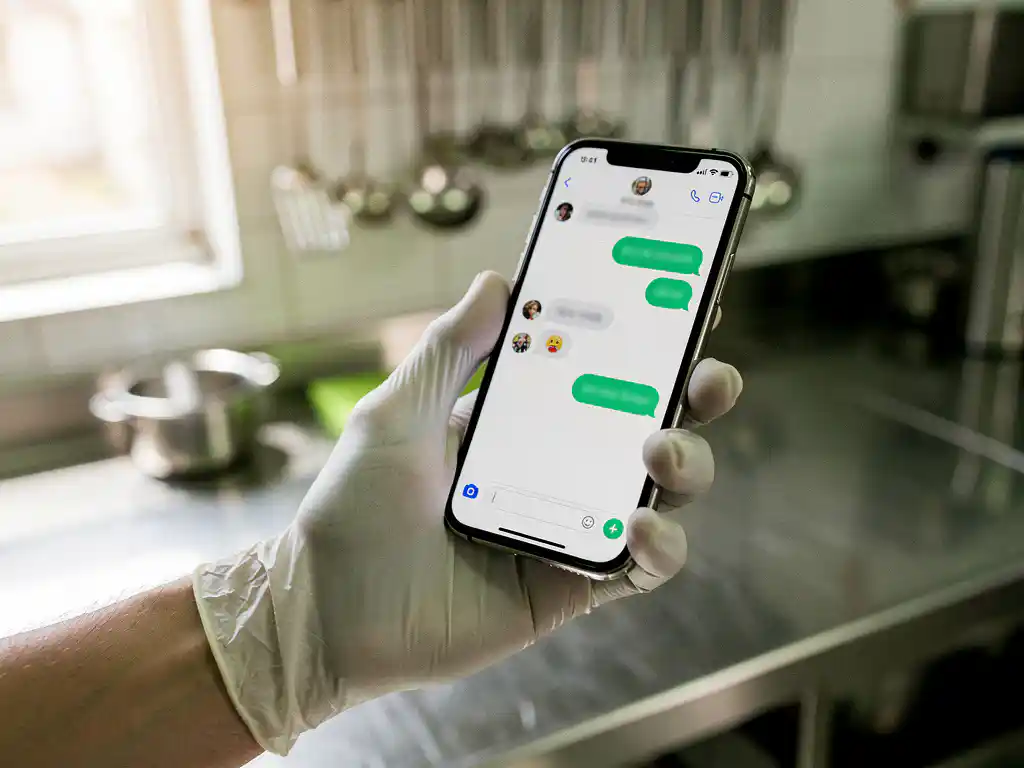
Food safety is not an afterthought. For everyone working in a kitchen, supermarket, catering company, or food production facility, HACCP training is both a legal requirement and a practical necessity. But traditional training takes time, requires scheduling, and is not always accessible for employees who spend most of their time on the shop floor. Fortunately, there is a more accessible alternative that is growing in popularity: the HACCP course via WhatsApp.
In this article, we answer the most frequently asked questions about how HACCP training via WhatsApp works, who it is suitable for, and how to get started.
What is HACCP training and why is it mandatory?
HACCP training is a course focused on identifying, managing, and preventing food safety risks in the workplace. HACCP stands for Hazard Analysis and Critical Control Points and is an internationally recognised system for food safety management. In the UK and across Europe, HACCP knowledge is mandatory for everyone who works with food, based on European food safety legislation.
The training teaches employees how to recognise hazardous situations, such as incorrect storage temperatures, cross-contamination, or improper hygiene practices. Employers are responsible for demonstrably training their staff, which means documentation is required: who completed the training, when, and with what result.
For sectors such as hospitality, retail, healthcare, and production, HACCP is not optional knowledge but a basic requirement. An employee who does not know how to handle food safely poses a risk to customers and to the organisation. Regular refresher training is therefore recommended, not only at the time of onboarding.
How does HACCP training via WhatsApp work exactly?
HACCP training via WhatsApp works by sending short, targeted learning modules through a familiar channel directly to the employee’s phone. The employee receives a message, reads or views the content, and answers one or more questions. No app to download, no login required, no computer needed.
The training is built around microlearning: small pieces of content that each cover a specific topic, such as temperature control, personal hygiene, or correct product storage. Each module takes an average of three to six minutes, making it easy to fit into a break or before a shift.
Modules can be sent immediately or scheduled for a set time. For example, an automatic message every Monday morning with a brief recap of a HACCP principle. Employee progress is tracked in a dashboard, so managers always have an up-to-date overview of who has completed what.
What are the benefits of learning HACCP via WhatsApp?
The greatest benefits of a HACCP course via WhatsApp are accessibility, speed, and high completion rates. Because employees do not need a new app or account, the barrier to getting started is minimal. WhatsApp is already on virtually every employee’s phone, ensuring direct reach.
Other concrete benefits include:
- Time efficiency: a module takes three to six minutes and fits into any work schedule
- Multilingual support: automatic translations make it possible to train employees in their own language
- Demonstrable progress: the dashboard shows exactly who has completed the training
- Flexible delivery: modules can be sent immediately or scheduled in advance
- Low barrier to entry: no login, no installation, no computer required
Particularly in sectors with large numbers of frontline workers, such as the food industry or retail, this format aligns well with the daily reality of employees who do not work at a desk.
Is a WhatsApp HACCP training different from traditional e-learning?
Yes, a WhatsApp HACCP training differs significantly from traditional e-learning. The biggest difference lies in accessibility and format: classic e-learning requires a login, a computer, or a separate platform, and typically consists of longer modules. A WhatsApp training is shorter, mobile-first, and meets employees in the moment.
Traditional e-learning has its value, but also comes with well-known drawbacks. Employees forget to log in, lose track during lengthy modules, or drop out halfway through a course. Completion rates on traditional platforms often fall short in practice.
WhatsApp microlearning works differently: the content comes to the employee rather than the other way around. This significantly lowers the barrier. In addition, short repetitions are better aligned with how people retain and maintain knowledge. Regularly revisiting small pieces of content is demonstrably more effective for knowledge retention than completing a long module just once.
For HACCP specifically, this means that employees not only complete the training, but actually retain and apply the knowledge on the shop floor.
Which employees is HACCP training via WhatsApp suitable for?
HACCP training via WhatsApp is suitable for virtually all employees who work with food, but is particularly valuable for frontline staff without a fixed desk. Think of kitchen staff, warehouse workers, production employees, supermarket staff, and delivery drivers.
This format is also highly effective for new employees during onboarding. Instead of a stack of paperwork or a mandatory e-learning package on their first day, they receive the right information step by step, at the right moment, through a channel they already know.
Employees with limited English proficiency benefit additionally from the automatic translation feature. This allows a HACCP course to be offered in multiple languages without any extra effort. This is a concrete advantage for organisations with a diverse workforce, which is often the case in the food industry and logistics.
How do you set up HACCP training via WhatsApp?
Setting up HACCP training via WhatsApp starts with choosing a platform that supports microlearning via WhatsApp, defining the learning objectives, and selecting or building the right modules. Building a module takes an average of ten to fifteen minutes, after which it can be sent immediately or scheduled.
A practical step-by-step approach:
- Determine which HACCP topics need to be covered, such as hygiene, temperature control, and allergens
- Decide whether you want to build your own modules or use existing ready-made content
- Set when and to whom the modules will be sent
- Track progress via the dashboard and send reminders where needed
- Ensure documentation of completed training is available for potential workplace inspections
It is also wise to schedule refresher training so that HACCP knowledge stays current. New employees can be automatically added to an onboarding flow, ensuring they always receive the right foundational knowledge before their first shift.
How E-Lia helps with HACCP training via WhatsApp
We offer organisations a complete solution for setting up and delivering HACCP training via WhatsApp. Whether you want to use a ready-made module or build your own course, our platform makes it simple and fast.
What we offer for your HACCP course:
- Ready-to-use HACCP modules that can be sent immediately
- The ability to build your own modules in an average of ten to fifteen minutes
- Automatic translations for multilingual teams
- A progress dashboard for demonstrable compliance and reporting
- No app, no login, and no computer required for employees
- Automatic scheduling for onboarding and refresher training
Want to see how easy it is to set up HACCP training via WhatsApp? Request a free demo and discover how we can train your team quickly and effectively.
Frequently Asked Questions
How long does it take for an employee to be fully HACCP-certified via WhatsApp?
The total duration depends on the number of modules and the scheduling frequency, but most basic programmes are completed within one to two weeks. Because each module takes only three to six minutes, employees can easily combine the training with their daily work. Once all modules are completed, documentation is immediately available to demonstrate that the employee has successfully finished the training.
Is HACCP training via WhatsApp legally recognised and valid during an inspection?
Yes, provided the training is demonstrably documented and covers the required HACCP topics, it meets the legal requirements based on European food safety legislation. The progress dashboard generates reports that can be presented during an inspection by the relevant food safety authority. Make sure the modules cover the mandatory core topics, such as temperature control, personal hygiene, cross-contamination, and allergens.
What happens if an employee does not complete a module on time or forgets to respond?
The platform automatically sends reminders to employees who have not yet completed a module, so you as a manager do not need to follow up manually. The dashboard gives you an instant overview of who is falling behind, allowing you to follow up in a targeted way. This makes managing large or changing teams considerably easier than with traditional training methods.
Can I customise the HACCP modules to suit the specific situation or sector of my business?
Yes, in addition to using ready-made standard modules, you have the option to build your own modules that are fully tailored to your work environment, products, and internal procedures. This is useful, for example, if your business involves specific risks not covered in a generic module, such as working with particular allergens or specific refrigeration equipment. Building a custom module takes an average of just ten to fifteen minutes.
How do I handle employees who do not have a smartphone or do not use WhatsApp?
Although the vast majority of employees already use WhatsApp, it is sensible to check in advance whether there are any exceptions within your team. For employees without a smartphone or WhatsApp account, you can fall back on supplementary training formats, such as a short in-person session or a printed instruction sheet. In practice, this is only a small minority, and a hybrid approach ensures that no one is left out.
How often do employees need to repeat HACCP training?
European food safety legislation does not prescribe a fixed interval for refresher training, but best practice is to schedule at least one refresher per year. When employees change roles, new products are introduced, or working methods change, an interim refresher is recommended. With the automatic scheduling feature, you can set up refresher cycles once, after which employees automatically receive the modules at the right time.
What are the most common mistakes when setting up HACCP training and how do I avoid them?
A common mistake is training employees only at the time of onboarding and then not scheduling any refresher training, causing knowledge to fade and compliance to exist on paper but not in practice. Another pitfall is offering training in a single language to a multilingual team, which leads to misunderstandings about critical food safety rules. Make sure to set up a structured onboarding flow, schedule regular refreshers, and use the automatic translation feature to reach all employees effectively.
Related Articles
- How do you quickly onboard floor workers in logistics?
- What are the benefits of a digital workplace inspection app for your safety team?
- What mistakes are most commonly made during workplace inspections?
- What is the difference between a toolbox meeting and a toolbox talk?
- Must a safety toolbox talk always take place physically?