


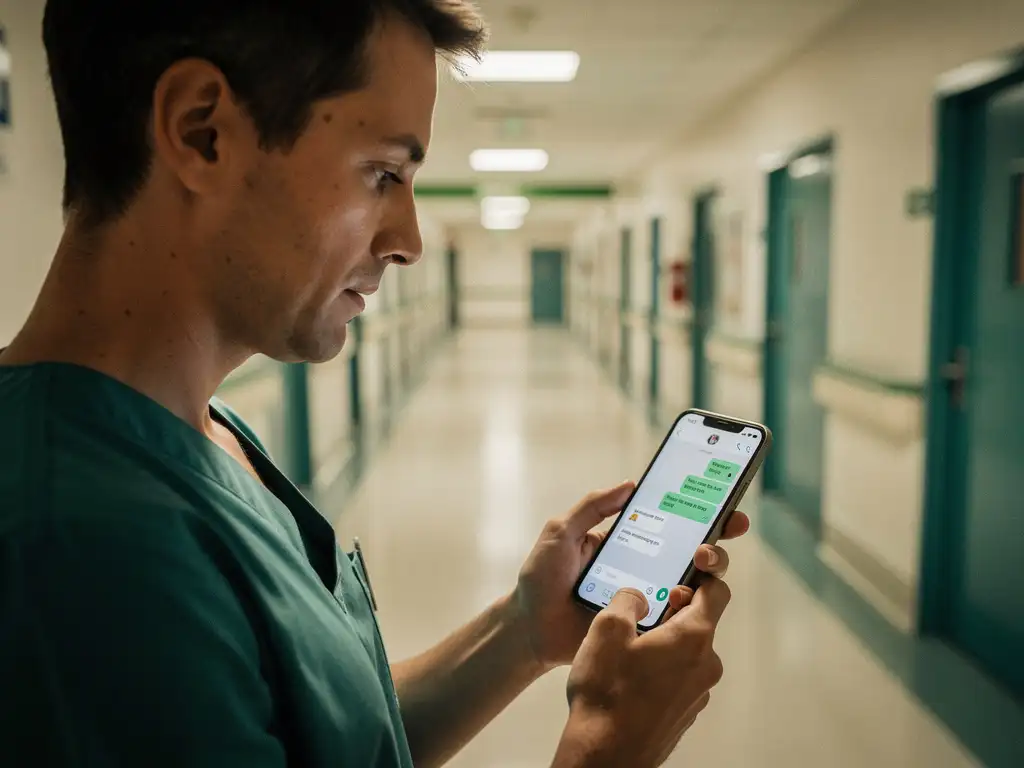
Consistent training is one of the biggest challenges for organisations working with large or changing teams. Whether it involves HACCP training in the food industry or an onboarding programme in healthcare, training quality often varies by location, trainer, or timing. This leads to knowledge gaps, errors, and unnecessary risks.
In this article, we answer the most frequently asked questions about consistent training. From definition to practical approach: here you will find what works and why.
What is consistent training and why does it matter?
Consistent training means that every employee receives the same information in the same way at the right time, regardless of who delivers the training or where it takes place. The goal is for knowledge and skills to be transferred uniformly, so that quality and safety are maintained throughout the entire organisation.
This is especially important in sectors where mistakes have direct consequences. Think of healthcare, logistics, or the food industry, where a HACCP course is not only legally required but also critical to food safety. When training varies by person or department, blind spots emerge that lead to incidents, complaints, or problems during inspections.
Consistency in training also builds employee confidence. When everyone shares the same foundation, teams collaborate more effectively and new colleagues become productive more quickly.
Why does consistent training so often fail in practice?
Consistent training frequently fails because organisations rely on individual trainers, outdated materials, or one-time sessions without follow-up. Every trainer interprets the content differently, materials are not kept up to date, and employees quickly forget a large portion of what they learned.
Some common causes:
- Training is delivered verbally without standardised content
- Materials are scattered across different systems or folders
- There is no follow-up after the initial training
- Multilingual teams do not receive information in their own language
- Progress is not tracked, leaving knowledge gaps invisible
This is a particular risk with HACCP training. When hygiene rules or food safety protocols are not transferred consistently, it can lead to violations that are immediately visible during an inspection. Structure and repetition are not a luxury — they are a necessity.
How do you create a standardised training process?
A standardised training process starts with capturing the core content in a fixed, reusable format. Define the learning objectives, determine which knowledge is essential, and ensure that content is available to everyone in the same way, regardless of who delivers the training or when.
Practical steps for standardisation:
- Define which knowledge is required per role
- Create short, focused modules per topic
- Set a fixed sequence and schedule for new employees
- Set up automatic reminders or repetitions at fixed intervals
- Use a central system so that everyone sees the same version of the content
Microlearning is an effective approach here. Instead of long training sessions, you give employees short, focused modules they can work through at their own pace. This makes repetition easier and significantly increases knowledge retention. Learn more about how retaining and maintaining knowledge works in practice.
Which tools help with training employees consistently?
Tools that support consistent training are platforms that centralise content, track progress, and automate communication. Think of LMS systems, microlearning platforms, and communication tools that reach employees through channels they already use daily.
The most effective tools share a number of characteristics:
- They have a low barrier to entry: no complex installation or login procedure
- They support automatic scheduling of modules
- They provide insight into who has completed what
- They work on mobile devices, so employees can learn on the shop floor
- They support multiple languages for diverse teams
WhatsApp-based training platforms are gaining ground in sectors such as manufacturing, retail, and healthcare. Employees do not need to download a new app or log in, which dramatically lowers the barrier to getting started. Especially for a HACCP course that needs to be rolled out quickly and broadly, accessibility is a key factor.
How do you keep training consistent with changing teams?
With changing teams, you ensure consistency by decoupling training from the presence of a fixed trainer. That means capturing content in a system that automatically sends the right modules at the right time, regardless of who is on staff or when someone starts.
Strategies that work:
- Set up an automated onboarding path that starts as soon as someone joins
- Use scheduled modules so that knowledge is repeated at fixed intervals
- Ensure content is available in the employee’s own language
- Make work instructions available on demand, even after onboarding
For seasonal roles or high-turnover environments, such as retail or logistics, this is especially relevant. New employees need to be ready quickly without a colleague or manager having to repeat the same information every time.
How do you measure whether your training is truly consistent?
You measure training consistency by tracking who has completed which modules, what scores are achieved, and whether there are patterns in knowledge gaps. A dashboard that displays this data centrally gives you immediate insight into where training is working well and where adjustments are needed.
Concrete measurement points:
- Completion rates per team or department
- Scores on knowledge assessments before and after training
- Time to first independent execution of a task
- Recurring errors that indicate poor knowledge transfer
Measurement is not an end in itself, but a means of making adjustments. When a particular department consistently scores lower on a HACCP course, that is a signal to revise the module or adjust the schedule. Without measurement, consistency remains an assumption rather than a certainty. You can also use workplace inspections and toolbox talks to reinforce and verify knowledge on the floor.
How E-Lia helps with consistent HACCP training
At E-Lia, we understand how difficult it is to keep training consistent, especially in sectors where food safety, hygiene, and compliance are central. Our platform is specifically designed to solve that challenge, without extra apps, login screens, or complex systems.
What we offer for consistent training:
- Ready-made and custom microlearning modules, including HACCP training, that you can build in 10 to 15 minutes
- Automatic delivery via WhatsApp, so employees receive training at a time that suits them
- Support for multiple languages, so that non-native speaking employees also receive the right information
- A clear dashboard that lets you track progress and completion per employee
- No login or app download required, making the barrier to getting started virtually zero
Whether you want to roll out a new HACCP training or standardise existing training, we help you do it quickly, simply, and measurably. Book a free demo and discover what E-Lia can do for your organisation.
Frequently Asked Questions
How long does it take to set up a standardised training process?
The setup time depends on the size of your organisation and the number of roles for which you want to standardise training. With a platform like E-Lia, you can build a basic module in 10 to 15 minutes. For a complete onboarding path with multiple modules and automatic scheduling, plan for one to two weeks to set everything up properly and test it.
What if employees do not have a smartphone or do not use WhatsApp?
Most employees in sectors such as manufacturing, retail, and healthcare now have a smartphone with WhatsApp. For employees without their own device, you can work with shared devices on the shop floor or choose an alternative channel supported by your platform. Always discuss during implementation which channels best suit your team.
How often does HACCP training need to be repeated to remain compliant?
Legally, there is no fixed repetition frequency, but food safety authorities recommend that employees receive regular refresher training, especially when processes or legislation change. In practice, an annual refresher module is a minimum, supplemented by targeted updates after incidents or role changes. With automatic scheduling in a microlearning platform, you set this up once and it runs itself from there.
Can existing training materials be converted into digital microlearning modules?
Yes, existing presentations, manuals, or instruction documents are a good foundation for digital modules. The key is to break the content down into small, focused segments of two to five minutes per topic. Platforms like E-Lia support uploading existing content and help you convert it into interactive modules with assessment questions.
How do you handle multilingual teams when standardising training?
Translate the core modules into the languages most common within your team, such as Polish, Turkish, or Arabic. Make sure the translation is not only accurate but also culturally clear. A good training platform lets you set the language per employee in which they receive their modules, so language barriers do not become an obstacle to knowledge transfer.
What are the most common mistakes when implementing consistent training?
The most common mistake is digitising training without reviewing the content: converting a long PowerPoint into a digital version does not solve the problem of inconsistency. Other pitfalls include the absence of follow-up moments after the initial training, not using data to make adjustments, and failing to involve employees in testing new modules. Start small with one role or department, measure the results, and then scale up.
How do you ensure that managers actively follow up on training progress?
Make progress data clear and accessible by giving managers access to a straightforward dashboard showing completion rates per employee or team. Set up automatic notifications when someone has not completed a module within the set deadline. This way, managers do not need to actively search for backlogs — they are proactively informed and can act quickly.