


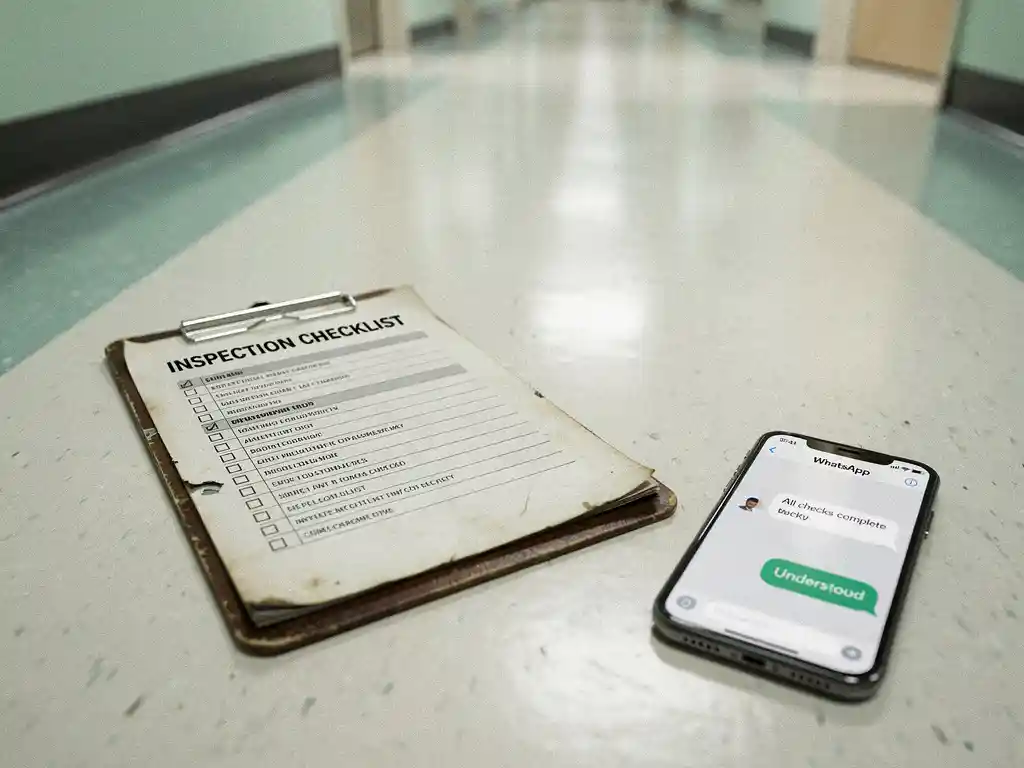
Internal controls are an essential part of quality assurance within organisations that work with food safety, production processes, or strictly regulated procedures. Whether you are responsible for a restaurant, a healthcare facility, or a manufacturing company: the question is not whether you should carry out internal controls, but how often. And that is precisely where many organisations struggle. A good HACCP training helps employees understand why regular controls are necessary and how to carry them out consistently.
In this article, we answer the most frequently asked questions about internal controls: from the basic principles to the most common mistakes. This gives you a clear picture of what is needed to embed controls effectively and sustainably within your organisation.
What are internal controls and why are they important?
Internal controls are systematic checks that an organisation carries out itself to verify whether processes, procedures, and rules are being followed correctly. They form the first line of defence against errors, safety risks, and non-conformities, before an external party does it for you.
Within food safety, internal controls are inextricably linked to the HACCP system. HACCP stands for Hazard Analysis and Critical Control Points and requires organisations to identify critical points in their processes and actively monitor them. Internal controls make that monitoring concrete: they ensure that employees measure, record, and intervene at the right moments. Without regular controls, risks go unnoticed until they become a problem. Learn more about how workplace inspections can support this process.
In addition, internal controls contribute to a culture of accountability. When teams know that processes are being monitored, diligence increases. Controls are therefore not just an administrative obligation, but also a powerful instrument for quality improvement.
How often should you carry out internal controls?
The frequency of internal controls depends on the type of process and the level of risk, but as a rule of thumb: the higher the risk, the more frequent the control. In the food industry, critical control points such as temperature are often checked multiple times per day, while procedure checks take place weekly or monthly.
A practical breakdown looks like this:
- Daily: temperature recordings, hygiene checks, monitoring of critical points in production processes
- Weekly: review of cleaning schedules, verification of working methods on the shop floor
- Monthly: assessment of records, calibration checks of measuring equipment
- Annually: full internal audit of the quality management system
It is important that the frequency is not set arbitrarily, but based on a risk analysis and legal requirements. Always document the agreements in writing in a control plan, so that everyone knows what is expected and when.
What factors determine the frequency of internal controls?
The frequency of internal controls is determined by a combination of risk, regulation, and operational context. There is no universal answer, but there are clear factors that guide the decision.
- Risk level: processes with a direct impact on safety or health require more frequent controls than low-risk activities
- Legal obligations: legislation and regulations, such as HACCP requirements for the food sector, prescribe minimum control frequencies
- Previous findings: if controls reveal that a particular process regularly deviates, increase the control frequency
- Staff turnover: organisations with many new or rotating employees benefit from more frequent checks to address knowledge gaps
- Seasonal factors: during busy periods, such as summer in the hospitality industry, the risk of errors increases and justifies more intensive controls
A thorough risk analysis is the foundation of any control plan. Take the time to assess the risk for each process and align the frequency accordingly. Structured toolbox talks can help teams stay aligned on control priorities.
What is the difference between an internal and external control?
The most important difference is who carries out the control and with what purpose. An internal control is carried out by the organisation itself and is aimed at continuous improvement and compliance with its own procedures. An external control is carried out by an independent party, such as an inspection body or certification organisation, and assesses whether the organisation meets external standards and legislation.
External controls are often mandatory and periodic, for example annually or upon a certification application. Internal controls, on the other hand, are ongoing and serve as preparation for external audits. An organisation that has its internal controls well in order will encounter fewer surprises during an external inspection.
Another difference lies in the depth. External auditors look at the system as a whole and test against objective standards. Internal controls can be much more specific and focused on daily practice, individual employees, or specific workstations.
How do you ensure that employees carry out controls consistently?
Employees carry out controls consistently when they understand why they are important, know how they should be performed, and there are no unnecessary barriers. Training, clear instructions, and a simple registration system are the three pillars of consistent compliance.
Make controls understandable and accessible
Many employees see controls as an administrative burden. By explaining what risk a control prevents, you increase engagement. Link each control step to a concrete consequence: what happens if this temperature is too high? What is the risk for the customer or patient? This makes abstract rules tangible. Clear work instructions play a key role in making this happen.
Use short, repeatable training sessions
A one-time instruction is rarely sufficient. Regular refreshers, through short microlearnings or on-the-job training sessions, ensure that knowledge sticks. Especially with rotating shifts or new staff, repetition is essential. A good HACCP course is not something you complete once, but something you repeat and update regularly as processes change. Building this into your onboarding process ensures new employees start with the right foundation.
What mistakes do organisations make with internal controls?
The most common mistake is that internal controls are carried out as a formality rather than as a genuine quality instrument. Forms are filled in without actually measuring or observing, and deviations are not followed up. This renders the entire system meaningless.
Other common mistakes include:
- No follow-up on findings: a control without corrective action in response to a deviation has no value
- Insufficient training: employees who do not know what they are checking or why will make mistakes or skip steps
- Too low a frequency: controls that take place too infrequently will miss deviations that develop gradually
- Lack of standardisation: when every employee carries out controls differently, the results are not comparable or reliable
- No documentation: without records, there is no proof of compliance and no basis for improvement
The solution lies in a combination of good procedures, clear training, and a culture in which quality is taken seriously at every level of the organisation. Investing in retaining and maintaining knowledge across your team is a critical part of that foundation.
How E-lia helps with internal controls and HACCP training
We understand that internal controls only work when employees are well trained and have access to the right knowledge at the right time. That is why E-lia offers a low-threshold way to share HACCP knowledge and control protocols, directly via WhatsApp, without employees needing to log in or download an app.
What we offer for organisations working with internal controls:
- Short microlearnings on HACCP, hygiene rules, and control protocols that employees complete in 3 to 6 minutes
- Automatic translations, so that multilingual teams also receive the correct instructions in their own language
- Modules that can be scheduled, so that knowledge is delivered at the right moment, for example at the start of a new employee’s onboarding or when a process changes
- A clear dashboard that allows you to monitor the progress and knowledge retention of your team
- Modules that take an average of 10 to 15 minutes to build, so you can quickly respond to new requirements or findings from controls
Whether you want to offer a HACCP training to new employees or refresh existing teams, we make it simple and effective. Book a demo and discover how we help your organisation structurally improve its internal controls.
Frequently Asked Questions
How do I start setting up a control plan if my organization does not have one yet?
Start with a risk analysis of all processes in your organization: identify which steps have the greatest impact on safety or quality and set priorities based on that. Then create a simple overview listing, for each process, the responsible person, the control step, the measurement method, and the desired frequency. Start small with the highest-risk areas, evaluate after a month how things are going, and then gradually expand the control plan to cover the remaining processes.
What should I do if an employee identifies a deviation during an internal control?
Every deviation must be documented immediately and followed up with a corrective action: resolve the immediate problem, analyze the root cause, and take measures to prevent recurrence. Make sure employees know in advance who to inform in case of a deviation and what the escalation procedure is, so that no valuable time is lost. Also record the corrective action and its outcome in writing, as this is not only required under HACCP, but also valuable during future audits and improvement processes.
Are small organizations or sole traders also required to carry out internal controls?
Yes, small businesses and self-employed individuals active in the food sector, healthcare, or other regulated industries are legally required to work in accordance with HACCP principles or comparable quality systems, regardless of company size. The scope and complexity of the system may be scaled to the size of the organization, but the basic obligation to identify, monitor, and record risks applies to everyone. Consult your national food safety authority or a sector-specific guideline to find out which minimum requirements apply to your situation.
How do I know whether my current control frequency is high enough?
A good indicator is to look at the outcomes of your existing controls: if deviations are regularly discovered late, or if external inspections reveal findings that were not flagged internally, the frequency is probably too low. Also compare your current frequency with the legal minimum requirements for your sector and with the recommendations from your own risk analysis. Temporarily increase the frequency after an incident or when processes change, and evaluate after a few weeks whether the additional controls yield new insights.
Is digital registration better than paper registration for internal controls?
Digital registration has clear advantages in most cases: it reduces the risk of lost or illegible forms, makes it easier to identify trends and deviations, and saves time when preparing for audits. In addition, digital systems can send automatic reminders and provide immediate insight into who carried out which control and when. Paper registration can, however, still be sufficient for small organizations or as a supplement to digital systems, provided the forms are standardized and stored securely in accordance with the retention requirements in your sector.
How do I deal with employees who consistently skip internal controls or do not take them seriously?
Address the behavior directly and look for the underlying cause: is there insufficient knowledge, a lack of time, or no sense of urgency? First ensure clear expectations, adequate training, and a workable registration system that does not create unnecessary barriers. If the problem persists, it is important to include controls as part of performance agreements and to monitor this consistently via the dashboard or team leader, so that compliance becomes visible and open to discussion.
How do I keep my internal controls up to date when processes or regulations change?
Link the control plan to your change management process: every time a procedure, a recipe, a machine, or a legal requirement changes, the corresponding control protocol must also be reviewed. Schedule a formal review of the complete control plan at least once a year, and carry out interim updates as soon as an internal audit or external inspection provides reason to do so. Also ensure that employees are immediately informed and trained on updated control protocols, so that the new working method is quickly and correctly adopted on the shop floor.