Low literacy in the workplace is a topic many organisations prefer to avoid, yet it affects almost every industry. A significant portion of the working population struggles with reading, writing, or understanding complex texts. This has direct consequences for how you train, instruct, and keep employees safe — including when it comes to mandatory training such as a HACCP training.
The good news is that low literacy does not have to be a barrier to effective learning. With the right approach and smart training methods, you can reach, motivate, and educate these employees just as well. In this article, we provide practical answers to the most frequently asked questions about training employees with low literacy.
What is low literacy and how do you recognise it in the workplace?
Low literacy means that someone struggles with reading, writing, numeracy, or digital skills at the level required for daily functioning. In the workplace, you can recognise it in employees who do not fill out forms, re-read instructions without following them, or ask questions about information that has already been shared in writing.
It is important to understand that low literacy is not the same as a lack of intelligence or motivation. Many employees with low literacy are experienced professionals who do excellent work, but struggle as soon as a lot of text is involved. They avoid situations where their limitation becomes visible, which means the problem often goes unnoticed for a long time.
Signs to look out for include:
- Employees who ignore written instructions or repeatedly ask questions verbally
- Mistakes that occur more frequently after reading a manual
- Resistance to digital systems or e-learning platforms
- Colleagues who always ask others to fill in or sign something on their behalf
Why is training employees with low literacy so challenging?
Training employees with low literacy is challenging because most training methods are designed for people who can read and write fluently. Long texts, complex e-learning modules, written assessments, and login procedures all create barriers that exclude low-literacy employees right from the start.
On top of that, many employees feel ashamed of their limitation. They rarely disclose it themselves, which means trainers and managers do not always know who they are dealing with. A HACCP course that is entirely text-based simply does not reach this group, no matter how good the content is.
The challenge also lies in organisational culture. If learning is seen as something you do behind a computer, in your own time, with a password, low-literacy employees will drop out before they have even begun. Accessibility starts with removing those barriers.
Which training methods work best for employees with low literacy?
The training methods that work best for employees with low literacy are visual, concise, and verbally supported. Think of video explanations, pictograms, demonstrations, and short audio clips instead of lengthy written texts. The less text, the more accessible the training.
Practical, hands-on learning also works very well. When employees can immediately practise what they are learning, knowledge sticks better. Combine that with repetition in small chunks and you have an approach that is effective for many people — not just those with low literacy.
Concrete recommendations for effective methods:
- Use video and images as the primary learning material
- Keep texts short, simple, and written in plain language
- Offer verbal explanations as a supplement to written content
- Let employees learn at their own pace and via their own phone
- Avoid complicated login procedures or complex digital environments
How do you use microlearning for employees with low literacy?
Microlearning is particularly well suited for employees with low literacy because it breaks learning down into short, manageable chunks of just a few minutes. Instead of completing an extensive course all at once, employees receive small modules that cover one topic at a time, with plenty of visual support and minimal text.
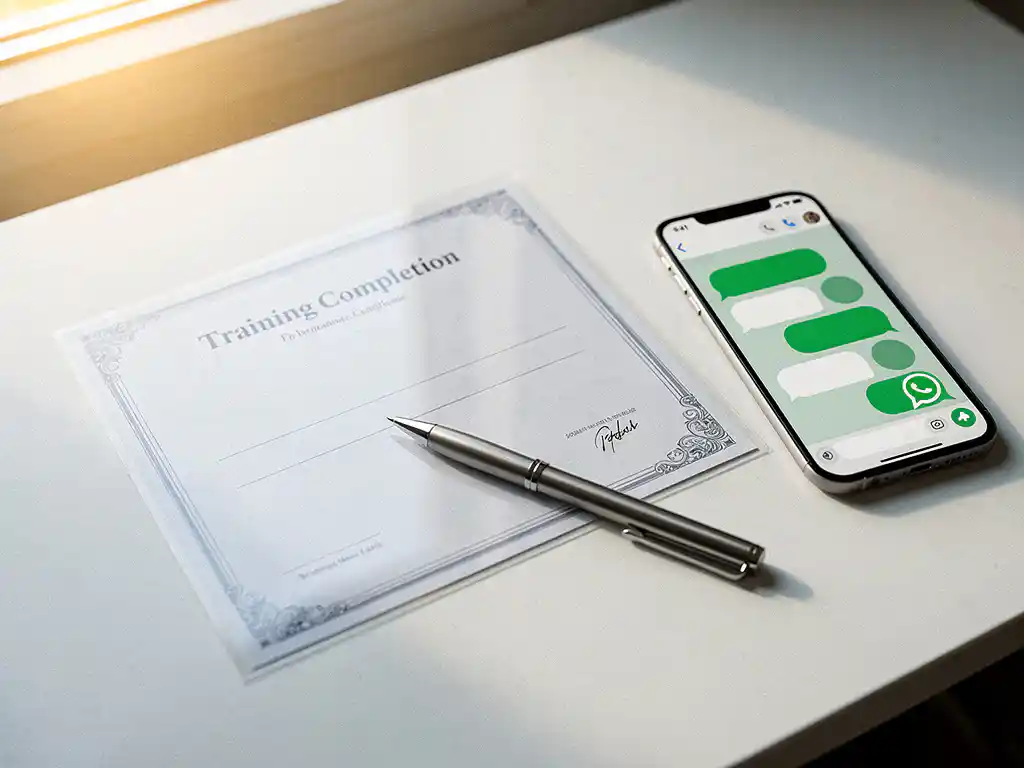
The great advantage of microlearning is that it aligns with the way people naturally process information. Short messages via a familiar channel like WhatsApp feel far less intimidating than a formal training session. Employees can learn at any time and in any place, without needing a computer or a login page.
For a subject like HACCP training, microlearning is ideal. Hygiene rules, temperature controls, and work procedures can easily be translated into short, visual modules that employees work through step by step. This way, they absorb the material without being overwhelmed by long texts or complex assessments.
How do you support multilingual and low-literacy employees at the same time?
You can support multilingual and low-literacy employees simultaneously by offering training in the employee’s native language, combined with visual content that transcends language barriers. Automatic translations make it possible to offer the same module in multiple languages without additional development time.
Many employees in sectors such as manufacturing, logistics, and healthcare speak a different language at home than English. If a training is only available in English, they will drop out — even if they have a reasonable command of the language. Learning in one’s native language significantly lowers the threshold and improves comprehension.
Always combine language support with visual elements. Pictograms, videos, and demonstrations are universally understood, regardless of language proficiency. This way, you also reach employees who have low literacy and do not have a strong command of the language of instruction. Structured onboarding that incorporates these principles makes a significant difference from day one.
What mistakes do organisations make when training employees with low literacy?
The most common mistake is offering training designed for literate employees without any adaptations. Long texts, complex e-learning environments, and mandatory written assessments effectively exclude low-literacy employees — even if participation is officially required.
Another frequent mistake is ignoring the problem because it is not visible. Employees with low literacy are skilled at concealing their limitation. If trainers and managers do not actively look out for this, the group remains unreached and untrained. Clear work instructions presented in a visual, accessible format can help bridge this gap.
Finally, many organisations underestimate the importance of the delivery channel. A training offered via a new platform that requires employees to create an account simply will not be used. The channel must be familiar, low-barrier, and easily accessible.
How E-lia helps with training employees with low literacy
We understand that employees with low literacy need a specific approach. That is why E-lia offers a platform that makes learning accessible to everyone, regardless of language proficiency or digital skills. Via WhatsApp, employees receive short, visual microlearning modules directly on their phone — without needing to download anything or log in.
What E-lia concretely offers for training employees with low literacy:
- Short modules of 3 to 6 minutes with extensive visual support
- Automatic translations so employees can learn in their own language
- No app, no login, no barriers: just WhatsApp
- Build modules in 10 to 15 minutes, including for a HACCP training or HACCP course
- Track progress and results via a clear, easy-to-use dashboard
- Support for toolbox talks, workplace inspections, and retaining and maintaining knowledge
Whether it involves onboarding, safety instructions, or mandatory hygiene training: we make sure every employee receives the information they need, in a way that truly works. Book a free demo and discover how we can help your organisation.
Frequently Asked Questions
How do I start making training more accessible for employees with low literacy?
Start with an honest review of your current training materials: how much text does it contain, how complex is the language, and through which channel is it delivered? Then gradually replace long blocks of text with videos, pictograms, and short audio clips. You do not need to change everything at once u0026mdash; start with the most mandatory or most frequently used training, such as a HACCP course, and build from there.
What should I do if an employee does not want to admit they have low literacy?
Make accessible training the standard for everyone, so no one needs to stand out or admit they struggle with reading. When learning via video and short modules becomes the norm, the stigma disappears naturally. This way, you reach employees with low literacy without requiring them to expose themselves.
Is a verbal or visual assessment legally valid as proof of training, for example for HACCP?
Yes, for most mandatory training programmes such as HACCP, the requirement is that you can demonstrate employees have completed and understood the material u0026mdash; the format of the assessment is not legally prescribed. A digitally tracked progress report or a registered completion confirmation via a platform like E-lia is sufficient proof in most cases. Always verify this with your industry association or the relevant inspection authority.
How do I ensure that employees with low literacy actually complete their training and do not drop out?
Short modules, a familiar channel like WhatsApp, and avoiding login barriers are the most important factors for a high completion rate. Also send automatic reminders and make sure managers can monitor progress, so they can step in promptly if someone gets stuck. Positive reinforcement u0026mdash; such as a message upon completing a module u0026mdash; also makes a significant difference for motivation.
What is the difference between low literacy and dyslexia, and does this require a different approach?
Low literacy is a broad term referring to insufficient reading, writing, or numeracy skills, often due to limited education or lack of practice. Dyslexia is a neurological condition that specifically makes language processing more difficult, even for people with a high level of education. In practice, the training solutions overlap significantly: visual content, short texts, and audio support benefit both groups. You therefore do not need to develop an entirely separate approach.
Can I easily convert existing training content into an accessible format?
In many cases, yes. Start by rewriting texts in simple, short sentences and adding relevant images or icons. For a more thorough approach, you can convert existing content into short video clips or audio fragments. Platforms like E-lia make it possible to build a module in 10 to 15 minutes, even without a technical background.
How do I measure whether my adapted training approach is actually working for employees with low literacy?
Do not only look at completion rates, but also at behavioural change in the workplace: are hygiene protocols being followed more consistently, are there fewer errors or incidents? Combine quantitative data from your dashboard with brief conversations with managers and employees themselves. This gives you a complete picture of effectiveness and helps you identify where the training can be further improved.