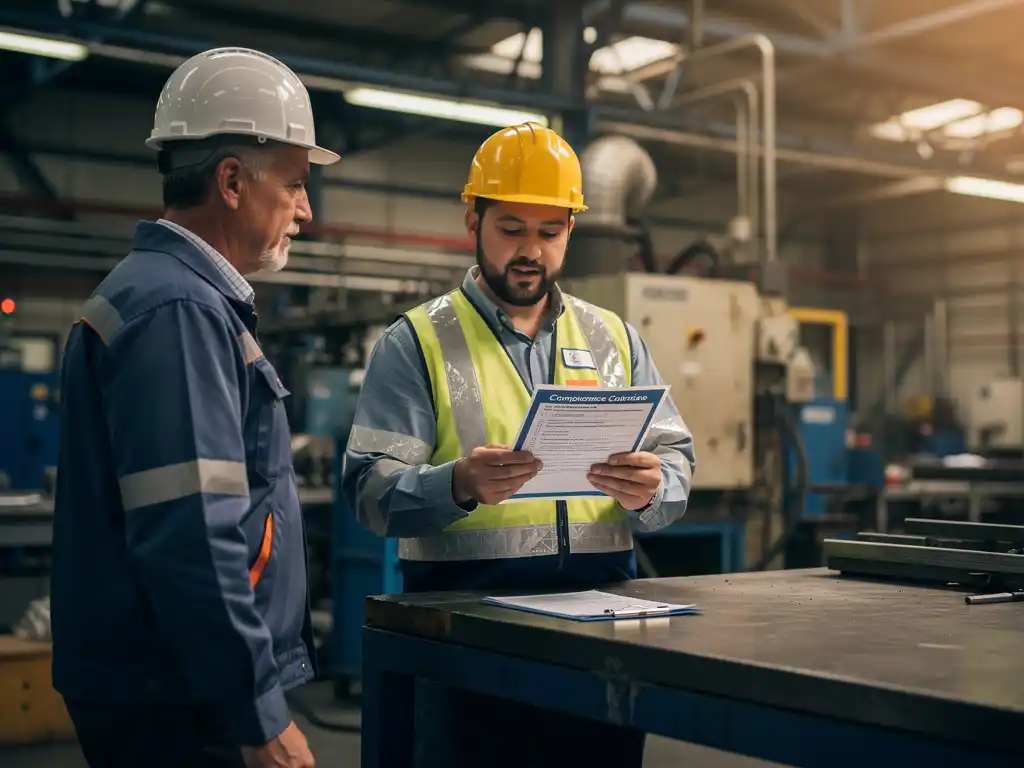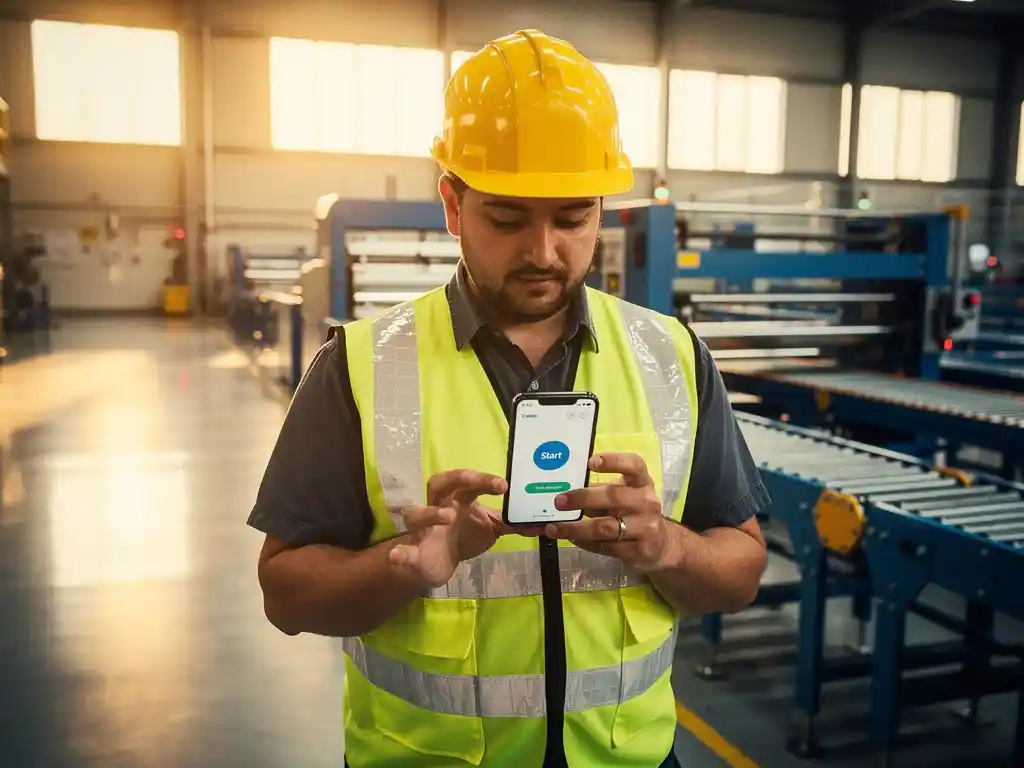
To set up an onboarding programme for production employees, start by mapping out the essential safety procedures, equipment training, and process knowledge new workers need before they can operate independently. Structure the programme in phases, beginning before the first day and progressing through hands-on practice on the floor. For production environments specifically, the programme must be practical, fast, and accessible without relying on desks or computers. This article walks through the key questions every operations or L&D manager should answer when building an effective onboarding program for production employees.
What makes onboarding production employees different from office workers?
Onboarding production employees is fundamentally different because the work is physical, safety-critical, and often time-sensitive. New workers need to be operational quickly, which means training must happen on or near the production floor rather than in a classroom or behind a screen. The stakes of getting it wrong are higher, and the learning environment is far less forgiving than an office setting.
Office workers can typically absorb information through documents, slide decks, and meetings at their own pace. Production workers need to demonstrate competence through action, often within their first few shifts. This means onboarding for manufacturing and production roles must prioritise procedural knowledge, physical safety, and role-specific tasks over general company culture content.
There are also practical barriers unique to production environments. Many workers do not have a company laptop or a fixed workstation. Shift schedules vary, and teams are spread across different parts of a facility. Any onboarding programme that assumes workers will sit down and complete a digital course is unlikely to succeed in this context.
What should a production employee onboarding programme include?
A solid onboarding programme for production workers should include safety training, equipment operation, process walkthroughs, quality standards, emergency procedures, and team introductions. These elements should be sequenced logically, starting with what workers need to know before they touch anything, and building towards full independence on the floor.
Here is a practical breakdown of what to include:
- Pre-boarding: Company introduction, dress code, shift schedules, and what to expect on day one
- Safety essentials: Hazard awareness, personal protective equipment, emergency exits, and incident reporting
- Equipment and machinery: Step-by-step operating instructions for the tools and machines relevant to the role
- Process and quality standards: How work flows through the production line, what good looks like, and how to flag issues
- Team and reporting structure: Who to go to with questions, how shifts are managed, and where to find support
- Compliance and documentation: Any regulatory or certification requirements specific to the industry or site
Keep each element focused and digestible. Production workers do not need lengthy policy documents. They need clear, actionable instructions they can refer back to when they need them. For structured safety communication on the floor, toolbox talks are an effective way to reinforce key topics at the right moment.
How long should onboarding last for production workers?
Onboarding for production workers typically lasts between two and four weeks, though the timeline depends on the complexity of the role and the equipment involved. The first few days should cover the non-negotiables: safety, basic procedures, and supervised practice. Full independence usually comes after consistent performance is observed over several shifts.
A common mistake is treating onboarding as a single event rather than a process. Even after a new employee is working independently, they benefit from follow-up check-ins, refresher training on less common procedures, and gradual exposure to more complex tasks. Structuring onboarding in phases helps managers track readiness without overwhelming new starters all at once.
For roles with higher safety requirements or more specialised equipment, extend the supervised period accordingly. Speed should never come at the expense of safety compliance or process quality. Supporting workers in retaining and maintaining knowledge beyond the initial onboarding period is equally important for long-term performance.
How do you deliver onboarding training on a production floor?
Delivering onboarding training on a production floor requires formats that work without a desk, a computer, or uninterrupted quiet time. The most effective approaches combine short, practical instruction with immediate application. Workers learn best when training is tied directly to what they are about to do, not delivered in a separate session hours before.
Buddy systems and on-the-job coaching
Pairing new starters with experienced colleagues is one of the most effective methods for production onboarding. A buddy can demonstrate tasks in real time, answer questions on the spot, and model the standards expected. This approach works well alongside structured training materials rather than as a replacement for them. Clear work instructions give both the buddy and the new starter a shared reference point for how tasks should be performed.
Mobile and messaging-based microlearning
Short training modules delivered via mobile or messaging platforms are well suited to production environments. Workers can complete a two to five minute module before a shift or during a break, without needing to log into a system or find a computer. This format works especially well for safety reminders, process updates, and equipment instructions that need to reach workers quickly and consistently.
How do you onboard multilingual production employees effectively?
To onboard multilingual production employees effectively, provide training materials in each worker’s preferred language rather than relying on a single language and hoping workers will manage. Safety instructions and process steps that are misunderstood due to language barriers create real risks on the production floor, so translation is not optional in diverse teams.
Practical steps for multilingual onboarding include:
- Identifying the languages spoken across your workforce before building any training content
- Using visual formats such as diagrams, icons, and short video clips to reduce reliance on text alone
- Automating translation of training modules so that updates reach all language groups simultaneously
- Asking multilingual team members to review translated content for accuracy and natural phrasing
- Avoiding jargon and overly complex sentence structures in source materials, which makes translation cleaner
Multilingual onboarding is also a strong signal to new employees that they are valued. Workers who receive training in their own language tend to engage more, retain information better, and feel more confident asking questions.
How do you measure whether a production onboarding programme is working?
You can measure the effectiveness of a production onboarding programme by tracking completion rates, time-to-competency, error rates in the first weeks, and new employee retention at the three and six month marks. These indicators together give a clear picture of whether workers are absorbing the training and applying it correctly on the floor.
Useful metrics to monitor include:
- Completion rates: Are new employees finishing all required modules and training steps?
- Time-to-competency: How quickly are workers reaching independent performance standards?
- Incident and error rates: Are new starters involved in more safety incidents or quality issues than experienced colleagues?
- Manager feedback: Are supervisors reporting that new employees are prepared and confident?
- Early turnover: Are workers leaving within the first three months, which often signals a poor onboarding experience?
Collect this data consistently and review it after each onboarding cohort. If completion rates are low, the format or delivery method may need to change. If time-to-competency is long, the content may be too dense or poorly sequenced. Measurement turns onboarding from a one-time checklist into a continuously improving system. Regular workplace inspections can also help identify gaps between what workers have been trained on and how they are actually performing on the floor.
How E-Lia helps with onboarding production employees
We built E-Lia specifically for the challenges that production, logistics, and healthcare organisations face when onboarding and training employees at scale. Our platform delivers microlearning modules directly via WhatsApp, which means no app downloads, no logins, and no computers required. New employees receive the right information at the right moment, wherever they are on the floor.
Here is what E-Lia offers for production employee onboarding:
- WhatsApp-based delivery: Training reaches workers on the device they already use, without any technical barriers
- Modules built in 10 to 15 minutes: Trainers and L&D managers can create structured onboarding content quickly without specialist tools
- Automatic translation: Modules can be delivered in multiple languages simultaneously, making multilingual onboarding straightforward
- Scheduled and instant sending: Pre-boarding content can be sent before day one, with follow-up modules timed to match each phase of onboarding
- Progress tracking dashboard: Managers can see who has completed what, without chasing individuals or compiling spreadsheets
- Proven in production environments: Organisations including Erasmus MC have used E-Lia to standardise onboarding and improve knowledge retention across large, diverse teams
If you want to see how this works in practice, plan a demo and we will walk you through a live example tailored to your production environment.
Frequently Asked Questions
How do I get buy-in from floor supervisors and team leads for a new onboarding program?
Start by involving supervisors early in the design process — ask them what knowledge gaps they see in new starters and what problems a better onboarding program would solve for them. When supervisors feel ownership over the program, they are far more likely to enforce it consistently and coach new employees through it. Sharing early metrics like reduced error rates or faster time-to-competency also helps build ongoing support from leadership.
What is the biggest mistake companies make when onboarding production employees?
The most common mistake is treating onboarding as a single-day event — a safety briefing and a tour — rather than a structured, phased process. This leaves new workers underprepared for the realities of the production floor and increases the risk of incidents, quality errors, and early turnover. A well-designed program continues well beyond day one, with check-ins, follow-up modules, and gradual progression toward full independence.
How do you onboard production employees who work rotating or night shifts?
Design your onboarding program to be shift-agnostic by using asynchronous formats — such as mobile microlearning modules or WhatsApp-based training — that workers can complete at the start of their shift or during a break, regardless of when they work. Avoid scheduling mandatory group training sessions that only fit day shift hours, as this excludes a significant portion of your workforce. Make sure supervisors on every shift are briefed on the onboarding plan so new starters receive consistent support no matter when they clock in.
How do I standardize onboarding across multiple production sites or departments?
Create a core onboarding framework with universal content — company values, general safety standards, and compliance requirements — and layer in site-specific or role-specific modules on top. Using a centralized platform to build and distribute training ensures that updates to core content roll out to all locations simultaneously, rather than relying on each site to manage its own materials. Standardization also makes it easier to compare performance data across sites and identify where onboarding is working well versus where it needs improvement.
At what point should a new production employee be signed off as fully onboarded?
Sign-off should be based on demonstrated competency, not just time served or module completion. A practical sign-off process typically includes a supervisor observation checklist, confirmation that all required safety certifications are in place, and a brief conversation with the new employee to surface any remaining questions or concerns. Avoid signing off workers purely because they have completed a set number of training modules — floor performance is the ultimate measure of readiness.
How can we keep onboarding content up to date when processes or equipment change?
Assign clear ownership of each training module to a specific person — usually a process owner, safety lead, or Lu0026D manager — who is responsible for reviewing and updating content whenever a change occurs. Build a simple review cycle, such as a quarterly audit of all active modules, to catch outdated information before it reaches new starters. Platforms that allow quick content edits and automatic re-distribution across language versions make this significantly easier to manage at scale.
What role does pre-boarding play in production employee onboarding, and is it worth the effort?
Pre-boarding — sending key information to new employees before their first day — significantly reduces first-day anxiety and helps workers arrive prepared rather than overwhelmed. For production roles, this can include shift schedules, dress code and PPE requirements, site access instructions, and a brief introduction to the team. The effort is minimal compared to the impact: workers who receive pre-boarding content tend to engage faster, ask better questions on day one, and are less likely to leave within the first few weeks.