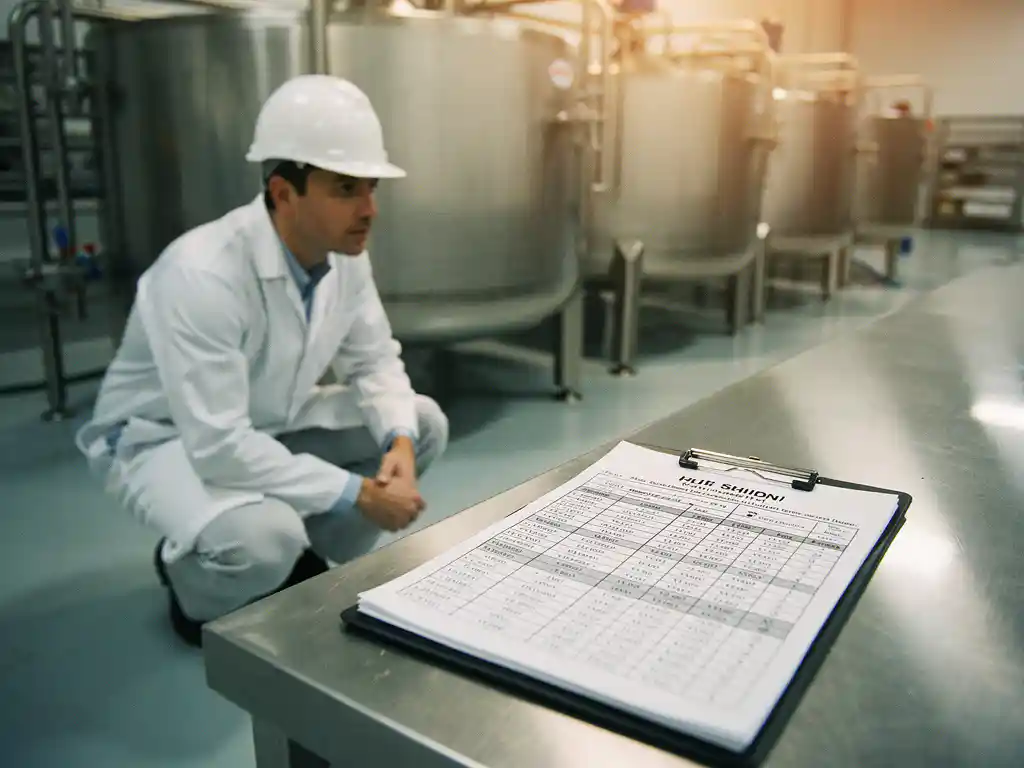


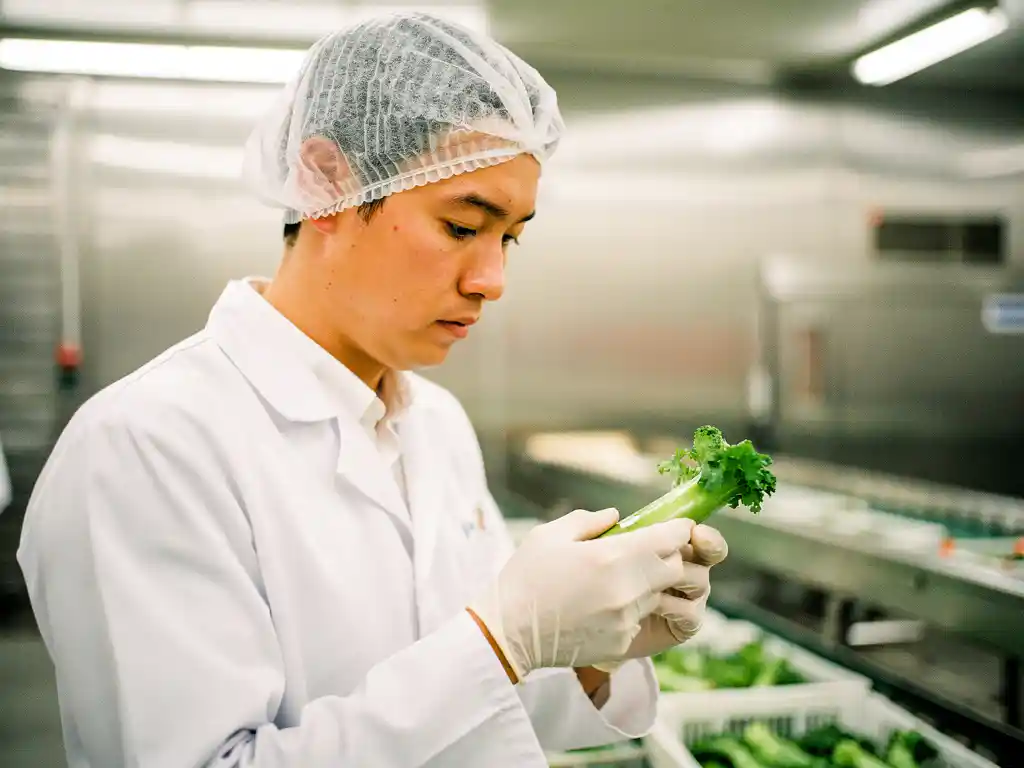
Every production employee must have a solid grasp of food safety knowledge before they set foot on the production floor. At a minimum, this includes understanding personal hygiene standards, contamination prevention, allergen awareness, and the basic principles of HACCP. These requirements apply across food manufacturing, processing, and packaging environments, and in many countries they are backed by legal obligations. The sections below answer the most important questions new production employees and their trainers face when building a food safety foundation.
Which food safety topics are legally required for production workers?
Production workers in food environments are legally required to understand personal hygiene, contamination prevention, temperature control, and the reporting of illness or injury. In the European Union, Regulation (EC) No 852/2004 on food hygiene requires that food business operators ensure all food handlers receive supervision and training in food hygiene commensurate with their role. This is not optional guidance — it is a legal baseline.
In practice, the topics that regulators and auditors expect every production employee to demonstrate knowledge of include:
- Personal hygiene: Handwashing procedures, use of protective clothing, and rules around jewellery, nail polish, and hair coverings
- Contamination prevention: Physical, chemical, and biological hazards and how to avoid introducing them
- Temperature control: Understanding why certain products require specific storage or processing temperatures
- Illness and injury reporting: Knowing when and how to report symptoms that could compromise food safety
- Cleaning and disinfection: A basic understanding of why cleaning schedules matter and how to follow them
Beyond EU regulation, many production sites operate under additional standards such as BRCGS, IFS, or SQF. These frameworks often raise the bar further, requiring documented evidence that training has taken place and that employees can demonstrate understanding. For production employees, knowing these basics is not just about compliance — it directly affects product quality and consumer safety.
What are the most common food safety mistakes new production employees make?
The most common food safety mistakes new production employees make are skipping or rushing handwashing, wearing incorrect or incomplete protective clothing, and failing to report potential contamination events. These errors are rarely intentional — they typically stem from insufficient onboarding, unclear instructions, or pressure to work quickly in a fast-paced environment.
Other frequent mistakes include:
- Touching their face, hair, or phone and then handling products without washing hands
- Eating or drinking in production areas where it is prohibited
- Using the wrong cleaning product or concentration for a surface
- Not recognising when a product or ingredient shows signs of spoilage or damage
- Misunderstanding allergen segregation rules and inadvertently causing cross-contact
What these mistakes share is that they are largely preventable with clear, practical training delivered at the right moment. New employees absorb food safety rules best when they are introduced during onboarding in a format that is easy to revisit on the job. Written manuals handed out once rarely stick. Short, scenario-based instructions that workers can return to when they need a reminder are far more effective at building lasting habits.
How does HACCP apply to individual production floor workers?
HACCP (Hazard Analysis and Critical Control Points) applies to individual production floor workers through the critical control points (CCPs) and monitoring tasks assigned to their specific role. Whilst HACCP plans are designed and managed at a system level, the people on the production floor are responsible for carrying out the monitoring, recording, and corrective actions that make the system work in practice.
For a production employee, HACCP knowledge in practice means:
- Understanding what a critical control point is and why it matters at their workstation
- Knowing the critical limits for the CCPs they monitor (for example, a minimum internal temperature for a cooking step)
- Recording measurements accurately and on time
- Knowing what to do when a critical limit is not met — who to inform and what action to take
- Understanding that bypassing a monitoring task puts the entire batch at risk
Employees do not need to understand the full HACCP documentation system in detail, but they do need to understand their own role within it. A worker who knows why they are checking a temperature — not just that they have to — is far more likely to do it correctly and consistently. HACCP training for production staff should therefore be role-specific, practical, and grounded in the actual tasks they perform each shift.
What do production employees need to know about allergen control?
Production employees need to understand which allergens are present in their facility, where cross-contact risks exist, and what procedures are in place to prevent allergen contamination. Allergen control is one of the most critical food safety requirements in production environments because the consequences of a mistake can be life-threatening for consumers with severe allergies.
The 14 major allergens regulated under EU food law include peanuts, tree nuts, milk, eggs, gluten-containing cereals, fish, shellfish, sesame, soy, celery, mustard, lupin, molluscs, and sulphur dioxide. Every production employee should be able to name the allergens relevant to their site and understand the specific risks at their workstation.
Key allergen control knowledge for production workers includes:
- How cross-contact occurs (shared equipment, airborne particles, hand transfer) and how it differs from cross-contamination
- The importance of following changeover and cleaning procedures between allergen-containing and allergen-free products
- How to handle allergen-containing ingredients and where they are stored
- What to do if a suspected allergen mix-up occurs during production
- Why labelling accuracy depends on production staff following the right procedures
Allergen awareness is not just a compliance topic — it is a direct link between what happens on the production floor and consumer safety. Employees who understand this connection take the rules more seriously than those who see allergen procedures as administrative box-ticking.
How should food safety knowledge be delivered during onboarding?
Food safety knowledge should be delivered during onboarding through short, role-specific instruction that is immediately actionable and easy to revisit. Long classroom sessions or dense written manuals are poorly suited to production environments where workers need to absorb practical rules quickly and apply them from day one. The most effective onboarding formats are brief, focused, and delivered close to the moment of need.
Best practices for delivering food safety training during onboarding include:
- Keep modules short: Cover one topic at a time rather than overwhelming new employees with everything at once
- Make it role-specific: A packing line worker and a raw materials handler face different risks — their training should reflect this
- Use visuals and scenarios: Show what correct and incorrect practice looks like rather than relying purely on text
- Include a knowledge check: A short quiz after each topic confirms understanding and creates a training record
- Allow easy access for refreshers: Workers should be able to look up a procedure when they are unsure, without needing to find a manager or locate a manual
- Support multiple languages: In multilingual production teams, delivering food safety rules in an employee’s own language significantly improves comprehension and retention
Timing also matters. Food safety basics should be covered before or on the first day, not weeks into a probationary period. The sooner a new employee understands the rules, the sooner they can follow them independently and confidently. You can also explore toolbox talks and work instructions as practical formats for reinforcing food safety knowledge on the floor.
How E-Lia helps with food safety onboarding in production
We built E-Lia specifically for environments where training needs to be fast, accessible, and effective — and production floors are a strong fit. Our platform delivers food safety training via WhatsApp, which means no app to download, no login required, and no barrier between a new employee and the information they need.
Here is what that looks like in practice for food safety onboarding:
- Short microlearning modules covering hygiene, allergen control, HACCP basics, and contamination prevention — each completable in 3 to 6 minutes
- Automatic translations so multilingual production teams receive training in their own language from day one
- Scheduled delivery so the right module arrives at the right moment during onboarding, without manual effort from trainers
- Progress tracking via dashboard so L&D managers and supervisors can see who has completed which modules and where gaps remain
- Module creation in 10 to 15 minutes so site-specific food safety rules and procedures can be built and updated quickly when processes change
E-Lia also supports workplace inspections and knowledge retention, helping production teams stay compliant long after initial onboarding is complete. If you want to see how this works for a production environment, plan a demo and we will walk you through a practical example.
Frequently Asked Questions
How often should food safety training be refreshed for existing production employees?
Food safety training should be refreshed at least annually for all production employees, but certain triggers should prompt immediate retraining — such as a process change, a failed audit, a contamination incident, or an employee returning from extended leave. Many certification standards like BRCGS and IFS require documented evidence of refresher training, not just initial onboarding. In practice, short periodic refreshers (monthly or quarterly microlearning modules) are far more effective than a single annual session because they keep food safety habits active rather than letting them fade between yearly reviews.
What is the difference between cross-contamination and cross-contact, and why does it matter on the production floor?
Cross-contamination refers to the transfer of harmful microorganisms — such as bacteria or pathogens — from one surface, product, or person to another, while cross-contact specifically refers to the unintended transfer of allergens between products or surfaces. The distinction matters on the production floor because the control measures are different: cross-contamination is addressed through hygiene and temperature controls, whereas cross-contact requires strict allergen segregation, dedicated equipment, and thorough changeover cleaning procedures. Production employees who understand this difference are better equipped to apply the right procedure at the right time, rather than treating all contamination risks as the same.
What should a production employee do if they are unsure whether a contamination event has occurred?
If a production employee is ever unsure whether a contamination event has occurred — whether physical, chemical, biological, or allergen-related — the correct action is always to stop and report it to a supervisor immediately, rather than continuing production and hoping for the best. Most food safety management systems have a clear escalation procedure for suspected contamination, and acting on uncertainty is never wrong. The cost of holding a batch for investigation is far lower than the risk of releasing a compromised product. Employees should be trained during onboarding to know exactly who to contact and what information to provide when they raise a concern.
How can managers tell whether food safety training has actually been understood, not just completed?
Completion of a training module does not automatically mean the content has been understood or retained. The most reliable indicators of genuine understanding are knowledge checks embedded within training (such as scenario-based quiz questions), observable behaviour on the production floor, and the ability of employees to explain a procedure in their own words when asked. Managers should combine digital training records with periodic floor observations and informal conversations to get a full picture. If multiple employees are making the same mistake, that is usually a signal that the training itself needs to be revised — not just that individuals need to be retrained.
Does food safety training need to be adapted for temporary or agency workers on the production floor?
Yes — temporary and agency workers represent one of the highest food safety risks in production environments precisely because they often receive less thorough onboarding than permanent staff, yet are expected to follow the same procedures from day one. Legal obligations under EU food hygiene regulation apply regardless of employment type, so food business operators are responsible for ensuring agency workers receive adequate food safety training before they handle products. The most practical solution is a standardised, fast-to-complete onboarding flow that can be delivered consistently to every new worker, regardless of contract type, so no one starts on the floor without the essential knowledge they need.
What is the best way to handle food safety training for a multilingual production team?
The most effective approach is to deliver food safety training in each employee’s preferred language from the very beginning of onboarding, rather than relying on colleagues to translate verbally or assuming that visual instructions are sufficient. Misunderstanding a food safety rule due to a language barrier is a genuine compliance and safety risk — not just a communication inconvenience. Platforms that support automatic translation allow the same training content to reach every team member in the language they understand best, which directly improves both comprehension and retention. When reviewing training records, managers should also check that completion rates and knowledge check scores are consistent across language groups, as gaps can indicate where translation quality or content clarity needs improvement.
Are there food safety topics that should be covered on the first day specifically, rather than spread across the onboarding period?
Yes — certain food safety topics are non-negotiable before an employee handles any product or enters the production area, and these should always be covered on day one: personal hygiene standards (handwashing, PPE requirements, illness reporting), the basic contamination risks relevant to their workstation, and any site-specific rules such as no-phone zones or allergen handling procedures. Topics like deeper HACCP role knowledge or advanced cleaning protocols can be introduced progressively over the first week, but the foundational rules that protect product safety from the very first shift must be in place immediately. Delaying these creates a window of risk that is entirely avoidable with well-structured onboarding.