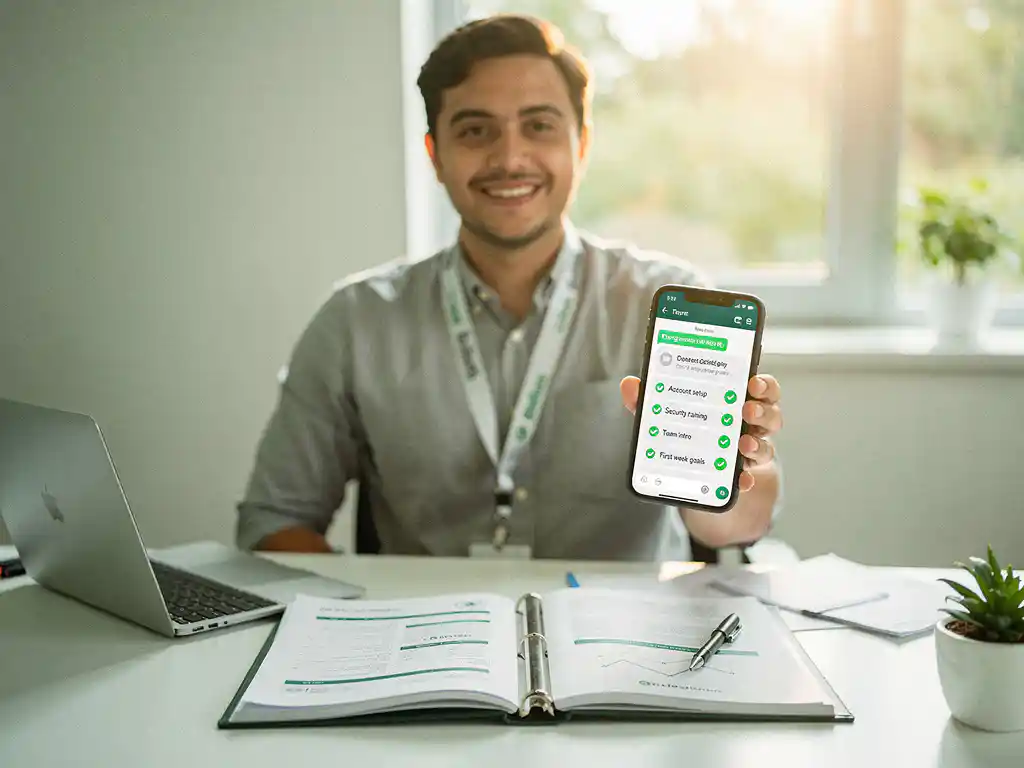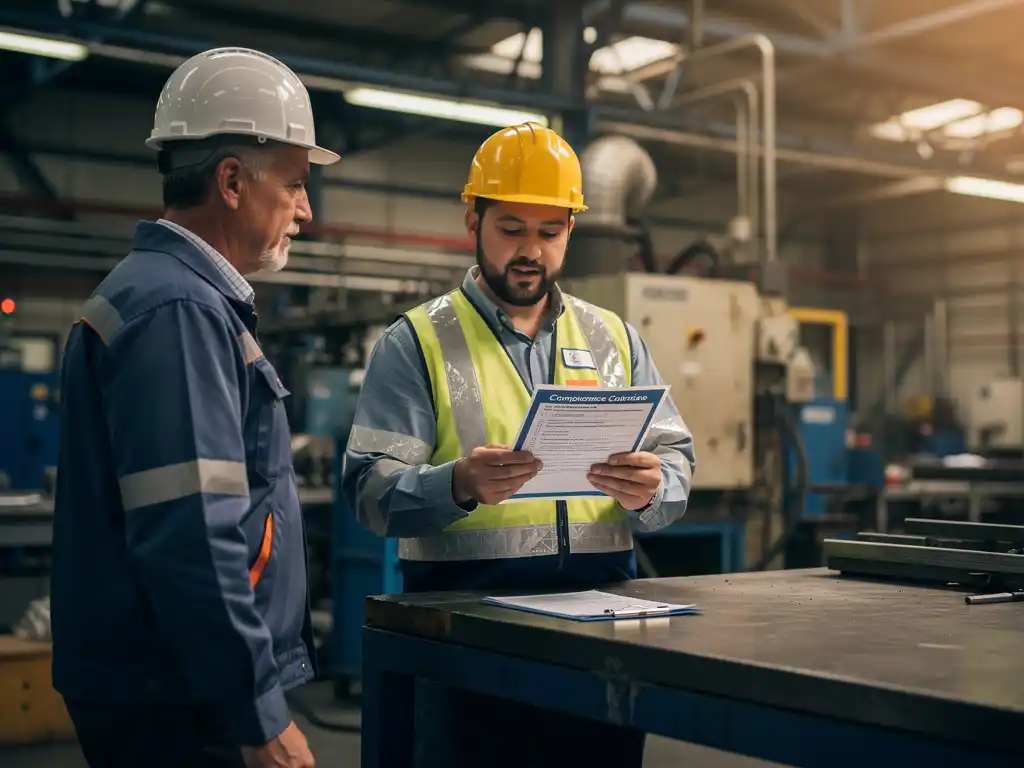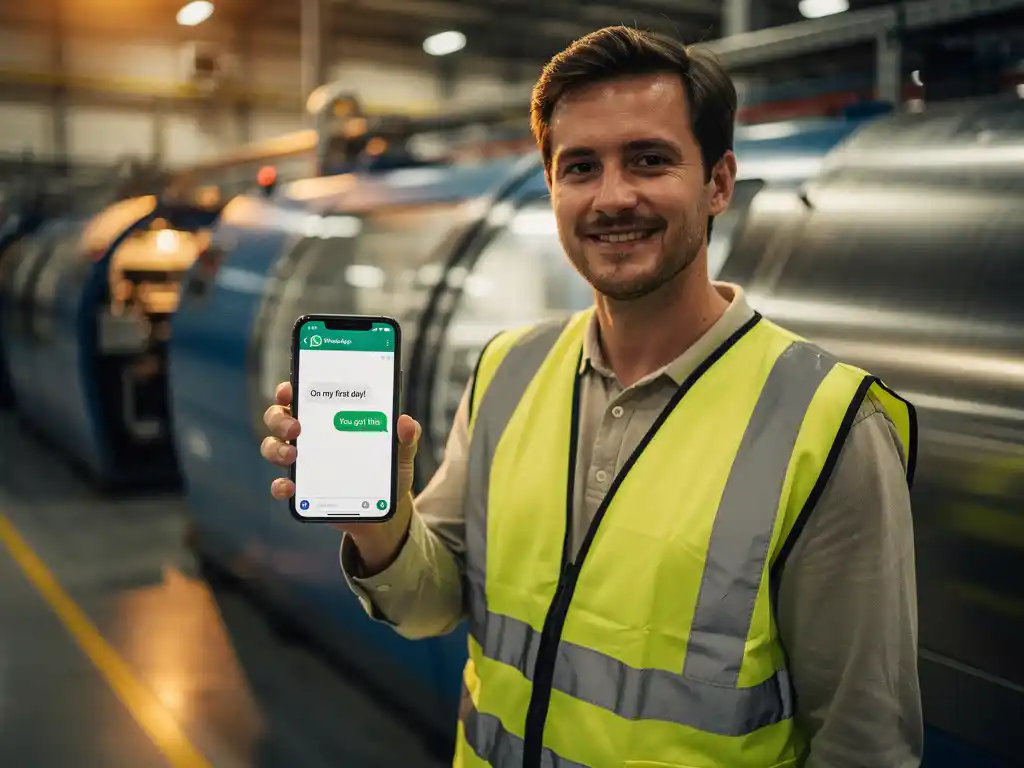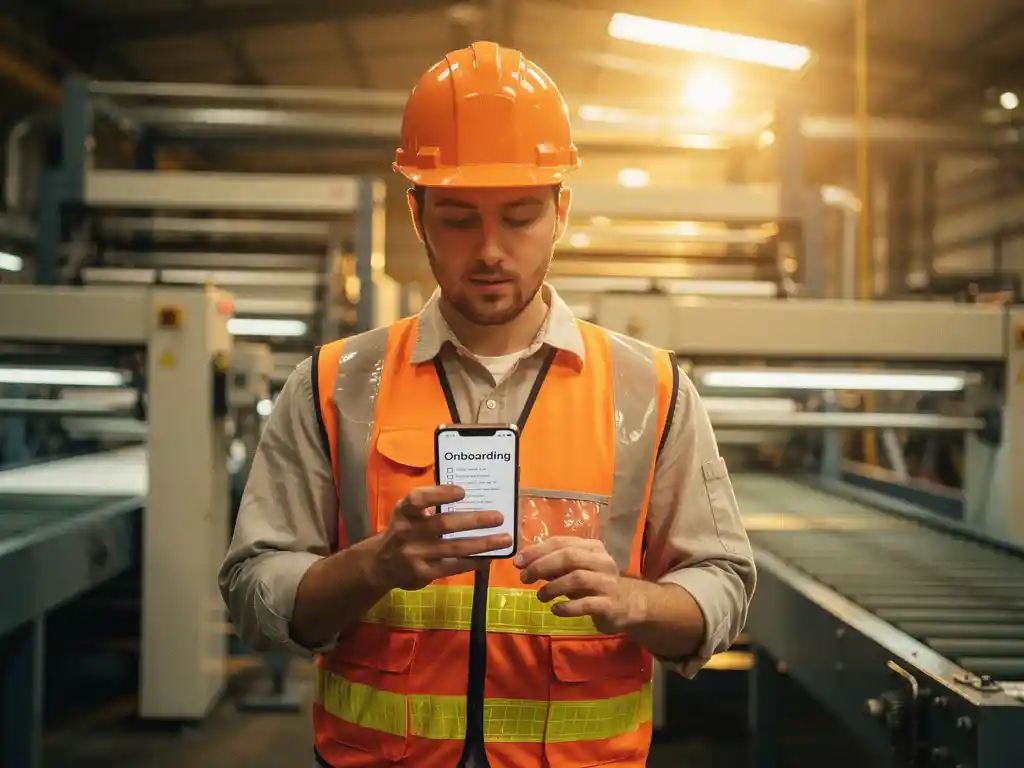
The best onboarding apps for manufacturing companies in 2026 are those built around simplicity, speed, and accessibility on the shop floor. Tools like E-Lia, TalentLMS, Axonify, and Connecteam consistently stand out because they meet workers where they already are, without requiring logins, extra devices, or lengthy sessions. This article walks through the key questions manufacturing teams ask when choosing onboarding software for their workforce.
What makes onboarding in manufacturing different from other industries?
Manufacturing onboarding is different because the workforce is largely deskless, multilingual, and operates in fast-paced environments where downtime is costly. Unlike office-based roles, new employees on a production floor need to absorb safety procedures, equipment handling, and quality standards quickly and correctly before they can work independently.
Several factors make manufacturing onboarding uniquely challenging:
- Safety compliance is non-negotiable. Workers must understand protocols before they touch equipment, making speed and accuracy equally important.
- High turnover rates mean onboarding cycles are frequent, so a scalable and repeatable process is essential.
- Shift-based schedules make it difficult to gather all new hires in one place at one time for traditional training sessions.
- Language diversity is common in production environments, requiring training content that works across multiple languages.
- Limited screen time means workers rarely sit at a desk, so mobile-first or messaging-based solutions outperform desktop platforms.
These constraints mean that the best digital onboarding tools for manufacturing are not simply repurposed office solutions. They need to be designed with the realities of the factory floor in mind.
What features should a manufacturing onboarding app have?
A manufacturing onboarding app should prioritise mobile accessibility, multilingual support, quick content delivery, and progress tracking without requiring workers to log into complex systems. The most effective platforms combine ease of use for both administrators and employees with the ability to deliver structured learning in very short sessions.
Key features to look for include:
- No-login access: Workers should be able to start training immediately without creating accounts or remembering passwords.
- Microlearning format: Short modules of three to six minutes fit naturally into shift breaks and pre-shift windows.
- Automated multilingual translation: Essential for diverse production teams where English may not be the first language.
- Scheduled and instant delivery: Managers need to push content at the right moment, whether that is day one, week one, or in response to a process change.
- Progress dashboards: HR and L&D managers need visibility into who has completed what, without manually chasing employees.
- Integration with HR and LMS systems: The platform should connect with existing tools via API to avoid double data entry and manual administration.
- Fast content creation: If building a module takes hours, it will not get done. Platforms where a module can be built in ten to fifteen minutes are far more likely to be used consistently.
Which onboarding apps are most used by manufacturing companies?
The most widely used onboarding apps in manufacturing settings in 2026 include platforms that prioritise mobile delivery, simplicity, and scalability. The right choice depends on company size, workforce demographics, and whether the priority is compliance training, cultural onboarding, or operational knowledge transfer.
Platforms built for deskless and frontline workers
Connecteam is popular with small to mid-sized manufacturers because it combines onboarding checklists, task management, and communication in one mobile app. It works well for teams that need structure without complexity.
Axonify is designed specifically for frontline workforces and uses spaced repetition to reinforce knowledge over time. It is a strong choice for companies where safety compliance and knowledge retention are the primary goals.
Platforms built around messaging and microlearning
E-Lia delivers onboarding modules directly via WhatsApp, which means workers receive training on a platform they already use daily without needing to download anything. This is particularly effective in manufacturing environments where smartphone penetration is high but willingness to adopt new apps is low. Learn more about how E-Lia supports employee onboarding in frontline environments.
TalentLMS is a flexible learning management system that works well for manufacturers who want a broader training library alongside onboarding content, though it requires more setup than messaging-first tools.
How long does digital onboarding take in a manufacturing setting?
Digital onboarding in manufacturing typically spans the first two to four weeks of employment, though the most intensive learning happens in the first three to five days. With microlearning-based platforms, the active training time per session is three to six minutes, making it easy to fit into shift schedules without pulling workers off the floor for long periods.
A well-structured digital onboarding programme for a manufacturing role might look like this:
- Pre-boarding (before day one): Company welcome, safety overview, and what to expect on the first shift.
- Day one to three: Role-specific equipment instructions, hygiene or safety protocols, and team introductions.
- Week one to two: Quality standards, process walkthroughs, and escalation procedures.
- Week three to four: Knowledge checks, reinforcement modules, and any compliance sign-offs.
The advantage of digital onboarding is that this content can be delivered automatically on a schedule, so new hires receive the right information at exactly the right moment without relying on a manager to remember to send it. Structured work instructions and toolbox talks can be integrated directly into this flow to reinforce critical knowledge at each stage.
How do you measure whether your onboarding app is working?
You measure onboarding app effectiveness by tracking completion rates, knowledge retention scores, time-to-productivity, and early turnover figures. No single metric tells the whole story, but together they reveal whether your digital onboarding process is genuinely preparing workers or simply ticking a compliance box.
Practical metrics to monitor include:
- Module completion rate: What percentage of new hires finish each module? Low completion often signals the content is too long, too complex, or delivered at the wrong time.
- Quiz or knowledge check scores: Do workers demonstrate understanding of safety and process content after completing a module?
- Time to independent working: How quickly can a new hire operate without supervision? A shorter ramp-up time suggests onboarding is effective.
- 90-day retention rate: High early turnover is often linked to poor onboarding. If workers leave within the first three months, the onboarding experience is worth examining.
- Manager feedback: Are team leaders reporting that new hires arrive on the floor better prepared than before the platform was introduced?
Most modern onboarding platforms include dashboards that surface completion and progress data automatically. The key is to review this data regularly and use it to refine content, not just to confirm that modules were sent. Platforms that also support retaining and maintaining knowledge over time give you a longer-term view of how well your workforce is absorbing critical information.
How E-Lia helps with manufacturing employee onboarding
We built E-Lia specifically to solve the onboarding challenges that manufacturing teams face every day. Our platform delivers microlearning modules directly via WhatsApp, so new employees receive structured training on a tool they already know, with no app to download and no login required.
Here is what makes E-Lia a strong fit for manufacturing onboarding:
- Modules take ten to fifteen minutes to build and three to six minutes to complete, keeping both administrators and workers productive.
- Automatic multilingual translation ensures every worker receives training in their own language.
- Scheduled delivery means new hires receive the right content at the right moment, automatically, without manual follow-up.
- A clear progress dashboard gives HR and L&D teams instant visibility into who has completed what.
- Pre-onboarding support lets you reach new hires before their first shift, so they arrive prepared and confident.
- API integrations connect E-Lia with your existing HR systems and LMS platforms for seamless data exchange.
Beyond onboarding, E-Lia also supports workplace inspections, HACCP training, and ongoing knowledge reinforcement — making it a complete solution for frontline workforce development. E-Lia is already used by organisations in healthcare, logistics, and manufacturing to reduce onboarding complexity and improve knowledge retention. If you want to see how it works in practice, book a free demo and we will walk you through a live example built around your team’s needs.
Frequently Asked Questions
Can we use an onboarding app if our factory workers don't have company-issued smartphones?
Yes, most modern manufacturing onboarding platforms are designed with BYOD (Bring Your Own Device) in mind. Tools like E-Lia work via WhatsApp, which the majority of frontline workers already have on their personal phones, eliminating the need for company-issued devices entirely. If smartphone penetration is a concern, consider surveying your workforce first and choosing a platform that matches the devices your team already owns and uses daily.
What's the biggest mistake manufacturing companies make when implementing a new onboarding app?
The most common mistake is migrating existing, overly long training materials directly into a new platform without reformatting them for digital delivery. A 40-slide PowerPoint does not become effective just because it lives inside an app. Before launching, audit your content and break it down into focused microlearning modules of three to six minutes each, ensuring each module covers one clear topic or skill rather than trying to cover everything at once.
How do we handle onboarding for workers who speak different languages across the same production site?
Choose a platform with automated multilingual translation built in, so you only need to create content once and the system handles the language conversion automatically. Platforms like E-Lia translate modules without requiring you to maintain separate content libraries for each language. It is also worth having a native speaker from each language group review translated safety-critical content at least once before it goes live, since automated translation, while highly accurate, can occasionally miss industry-specific terminology.
Is digital onboarding suitable for highly regulated manufacturing environments, such as food production or pharmaceuticals?
Absolutely, and in many ways digital onboarding is better suited to regulated environments because it creates an automatic, timestamped audit trail of who completed what and when. This documentation is invaluable during compliance audits and inspections. Make sure the platform you choose allows you to capture digital sign-offs or acknowledgements for specific modules, particularly those covering safety, hygiene, or regulatory procedures, so you have verifiable proof of completion.
How do we get buy-in from floor managers and supervisors who are skeptical about digital onboarding tools?
Start by framing the tool as something that reduces their workload rather than adds to it. Show supervisors the progress dashboard and explain that they will no longer need to manually chase new hires or repeat the same safety briefings every time someone new joins the team. Running a small pilot with one team or shift before a full rollout also helps, as real results from their own colleagues are far more persuasive than vendor case studies.
How quickly can we realistically get a manufacturing onboarding program up and running on a new platform?
With a platform designed for fast content creation, you can have a basic but functional onboarding program live within one to two weeks. Start with your highest-priority content, typically day-one safety procedures and role-specific equipment instructions, and build out from there. Avoid waiting until every module is perfect before launching; a lean onboarding flow that gets refined over time based on real completion data will always outperform a comprehensive program that takes months to build and never quite gets finished.
What should we do when a process or safety procedure changes after onboarding content has already been distributed?
This is where digital onboarding has a significant advantage over printed manuals or static slide decks. When a process changes, you update the relevant module in your platform and push it out as a refresher to all affected workers, including those already past their initial onboarding period. Treat your onboarding content as a living library rather than a one-time exercise, and schedule a quarterly review of all modules to ensure the information stays accurate and aligned with current procedures.