


To actively involve managers in the onboarding of new employees, organisations need to give managers a clear role, practical tools, and structured touchpoints from day one. Manager involvement in onboarding is not optional — research consistently shows that employees who feel supported by their direct manager in the first weeks are more likely to stay, perform, and feel connected to the team. The questions below unpack exactly how to make that involvement consistent, meaningful, and easy to sustain — even for managers who are stretched thin. If you want to explore how digital tools can support this, book a demo to learn more.
What role should managers actually play in onboarding?
Managers should act as the primary guide and cultural connector during onboarding, not just as an administrative checkpoint. Whilst HR handles paperwork and compliance, the manager’s role is to translate company values into day-to-day reality, set clear expectations, and make the new employee feel genuinely welcome and supported in their specific team context.
In practice, this means managers are responsible for three core areas during the employee onboarding process. First, they set the tone by being present and engaged in the first days, not just forwarding welcome emails. Second, they clarify role expectations by walking the new hire through what success looks like in the first 30, 60, and 90 days. Third, they build the relationship by scheduling regular one-to-one conversations that go beyond task updates.
The distinction between HR-led and manager-led onboarding is important. HR creates the framework; managers bring it to life. When managers treat onboarding as a people priority rather than an administrative formality, new employees integrate faster, ask better questions, and feel psychologically safe enough to flag problems early. Learn more about how a structured onboarding programme can support this approach.
Why do managers often disengage from the onboarding process?
Managers disengage from onboarding primarily because they are not given a clear, manageable structure for their involvement. Without defined responsibilities and simple tools, onboarding becomes one more item on an already overloaded agenda — and it gets deprioritised in favour of more urgent operational demands.
Several factors compound this problem:
- Lack of clarity: Managers are told to “support” new hires but are rarely given specific actions, timelines, or scripts to follow.
- Time pressure: In sectors like logistics, production, and healthcare, managers are managing active operations whilst simultaneously trying to onboard someone new.
- No accountability: When onboarding success is measured only by HR completion rates rather than by manager engagement, there is no visible consequence for low involvement.
- Over-reliance on self-service: Many organisations send new hires a stack of documents or a login to a learning management system and assume the manager’s job is done.
Understanding why managers disengage is the first step towards fixing onboarding best practices in your organisation. The solution is not to add more to managers’ plates — it is to make their involvement simpler, faster, and more structured.
How can organisations make onboarding easier for busy managers?
Organisations can make onboarding easier for managers by standardising the process, reducing the cognitive load, and providing ready-to-use tools that fit into existing workflows. The goal is to make good onboarding behaviour the path of least resistance, not an extra effort.
Standardise manager actions with a clear checklist
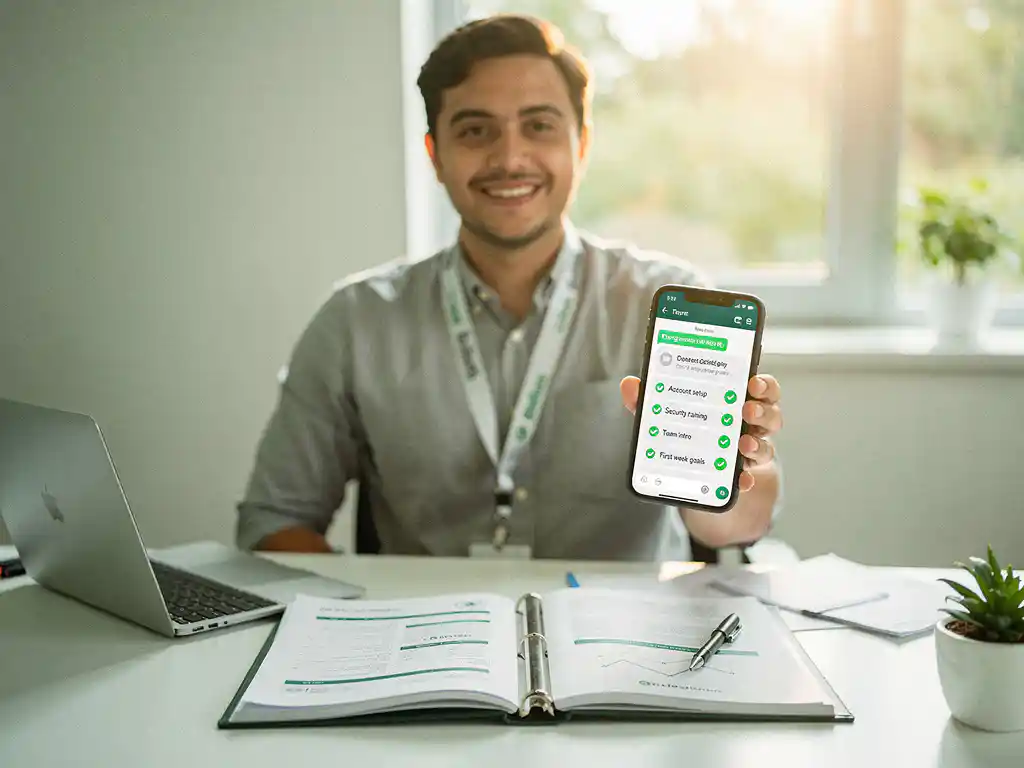
Give every manager a simple, time-stamped checklist of actions tied to specific milestones: before the first day, on day one, at the end of week one, at the end of month one. This removes the need for managers to figure out what to do next and ensures consistency across teams and departments. Each action should take no more than a few minutes to complete.
Use tools that fit into how managers already communicate
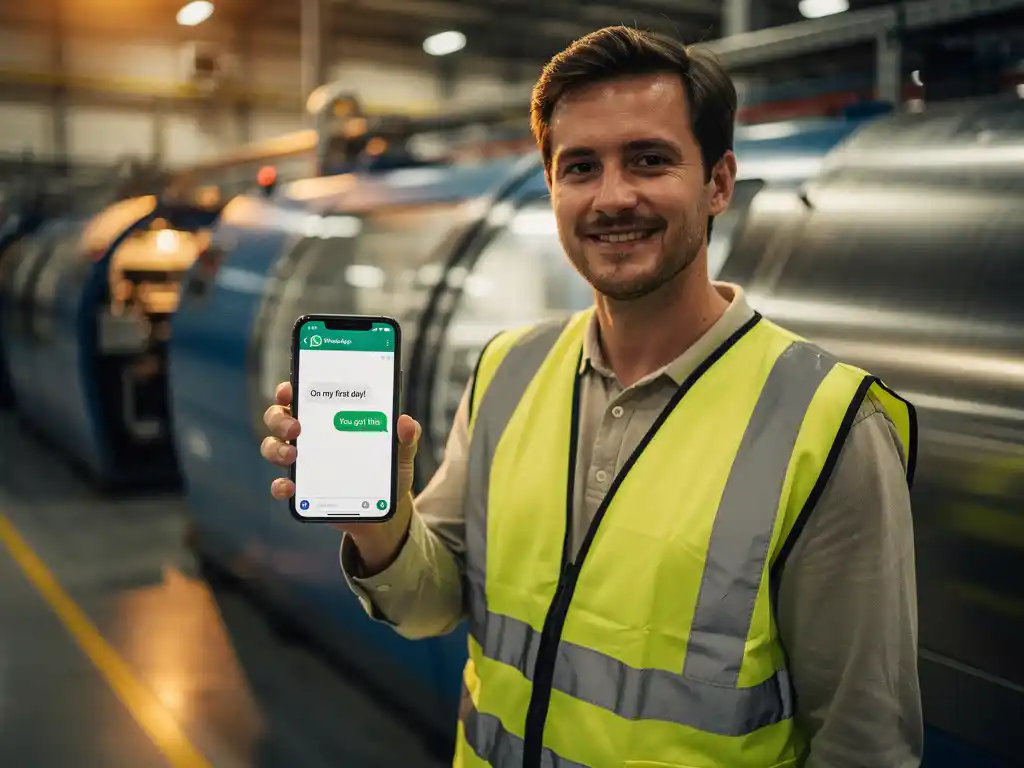
Managers are far more likely to stay engaged when onboarding tools live inside platforms they already use. Sending structured microlearning modules or check-in prompts via familiar channels like WhatsApp, for example, removes friction entirely. There is no new app to learn, no system to log into, and no disruption to the manager’s existing routine. This is exactly the approach we take at E-Lia, where managers can schedule and send short onboarding content directly through WhatsApp in minutes.
Beyond tools, organisations should also build onboarding into team rituals. A brief mention in the weekly team standup, a shared lunch in the first week, or a buddy system pairing the new hire with a colleague all reduce the burden on the manager whilst maintaining high-quality integration. Explore how retaining and maintaining knowledge can be built into this process from day one.
What should managers communicate to new employees in the first week?
In the first week, managers should communicate four things: what the team does and why it matters, what the new employee’s specific role contributes to that mission, what the practical norms and expectations are, and that the manager is genuinely available and approachable.
Breaking this down into concrete conversations makes it actionable:
- Team purpose and context: Help the new hire understand how the team fits into the wider organisation and what the team is currently working towards.
- Role expectations: Be explicit about priorities for the first 30 days, how performance is measured, and what a good start looks like.
- Unwritten rules: Share practical norms like how the team communicates, how decisions get made, and what the culture actually looks like beyond the handbook.
- Open-door signal: Explicitly invite questions. New employees often hesitate to ask for help because they do not want to appear incompetent — a direct invitation from the manager removes that barrier.
Managers do not need to cover everything in one conversation. Spreading these topics across short, focused check-ins throughout the first week is more effective than a single overwhelming orientation session. Clear work instructions delivered at the right moment can also help new employees get up to speed faster.
How do you measure whether managers are actively involved in onboarding?
You can measure manager involvement in onboarding by tracking a combination of completion data, new hire feedback, and early retention indicators. Measurement does not need to be complex, but it does need to be intentional — what gets measured gets managed.
Useful indicators include:
- Onboarding task completion rates: Are managers completing their assigned onboarding actions on time? A dashboard that shows which modules or check-ins have been sent and completed makes this visible at a glance.
- New hire satisfaction scores: A short pulse survey at the end of week one and week four asking new employees how supported they feel by their manager provides direct, actionable insight.
- 30-day and 90-day retention: Early attrition is one of the clearest signals that onboarding is failing. Tracking which teams or managers have higher early turnover reveals where engagement gaps exist.
- Time-to-productivity: How quickly new employees reach full performance in their role is partly a function of how well their manager guided them through the onboarding process.
Sharing these metrics with managers directly — rather than only reporting them to HR or leadership — creates ownership. When managers can see how their involvement correlates with their team’s performance and retention, the case for prioritising onboarding becomes concrete and personal. Regular toolbox talks and workplace inspections can further reinforce the standards set during onboarding.
How E-Lia helps with manager involvement in onboarding
We built E-Lia specifically to remove the friction that causes managers to disengage from onboarding. Our platform lets organisations create structured onboarding modules in 10 to 15 minutes and deliver them directly to new employees via WhatsApp — no app download, no login, no new system for managers to learn. Here is what that looks like in practice:
- Pre-built and custom modules: Managers or L&D teams can choose from standard onboarding content or build role-specific modules tailored to their team.
- Scheduled delivery: Content is sent automatically at the right moment — before day one, on the first morning, or at the end of week one — so managers stay on track without manual effort.
- Multilingual support: Automatic translations mean every new employee receives onboarding content in their own language, reducing misunderstandings from day one.
- Progress dashboard: Managers and HR teams can see exactly who has completed which modules, making it easy to spot where follow-up is needed.
Organisations like Erasmus MC and ETZ already use our platform to make onboarding consistent, measurable, and genuinely manager-friendly. If you want to see how it works for your team, plan a demo and we will walk you through it.
Frequently Asked Questions
How much time should a manager realistically dedicate to onboarding a new employee?
Most of the high-impact manager actions during onboarding take far less time than managers expect. A brief 15-minute check-in on day one, a focused 30-minute role expectations conversation in week one, and a few short pulse check-ins over the first month can make a significant difference without disrupting daily operations. The key is scheduling these touchpoints in advance so they happen by default, not by chance.
What if a manager has multiple new hires starting at the same time?
When onboarding multiple new hires simultaneously, managers should lean heavily on standardised tools, buddy systems, and group touchpoints to avoid bottlenecks. A shared team welcome session, a peer buddy for each new hire, and automated content delivery (such as scheduled WhatsApp modules) allow managers to maintain consistent quality without multiplying their personal time investment. Reserve one-to-one time for role-specific conversations that genuinely require the manager’s direct input.
How do you get managers to actually buy into the importance of onboarding?
The most effective way to build manager buy-in is to connect onboarding outcomes directly to metrics managers already care about — team performance, early turnover, and time-to-productivity. Sharing data that shows how manager involvement in the first 90 days correlates with retention and output makes the business case concrete and personal. Framing onboarding not as an HR obligation but as a direct lever for team results shifts the mindset from compliance to ownership.
What are the most common mistakes managers make during the onboarding process?
The most frequent mistakes include disappearing after day one, overloading new hires with information in a single session rather than spreading it across the first weeks, and assuming that completing administrative tasks equals successful onboarding. Another common pitfall is failing to explicitly invite questions — new employees often stay silent to avoid appearing incompetent, and only a direct, repeated signal from the manager breaks that pattern. Consistent, low-effort check-ins beat infrequent, high-intensity sessions every time.
At what point should HR hand over onboarding responsibility to the manager?
HR and managers should run onboarding in parallel from day one rather than sequentially handing it off. HR owns the structural and compliance layer — contracts, system access, policy briefings — whilst the manager owns the relational and role-specific layer from the very first day. Treating it as a handoff creates a gap where new employees feel neither fully supported by HR nor yet integrated into their team, which is one of the most common causes of early disengagement.
How should onboarding differ for remote or hybrid employees compared to on-site staff?
For remote and hybrid employees, managers need to be more intentional and more frequent in their communication, since the informal touchpoints that happen naturally in a physical workplace — a quick hallway conversation, overhearing team dynamics — simply do not occur. Scheduled video check-ins, digital onboarding content delivered through familiar channels, and explicit introductions to team communication norms become even more critical. The structure of onboarding should be the same; the delivery method and frequency of contact need to compensate for the lack of physical presence.
How long should a structured onboarding programme actually last?
Research and practice consistently point to 90 days as the minimum effective onboarding period, with the most critical window being the first 30 days. Many organisations make the mistake of treating onboarding as a one-week event, leaving new employees to navigate the rest of the integration on their own. A well-structured programme extends meaningful manager touchpoints through the full 90-day period, gradually shifting from guided support to independent performance as the employee builds confidence and context.