A workplace inspection in an office focuses primarily on ergonomics, fire safety, and psychosocial risks, whilst a production floor inspection centres on machinery guarding, chemical exposure, noise levels, and physical hazards that can cause immediate injury. The core difference lies in the nature and severity of the risks present. Both environments require structured, regular inspections, but the checklists, frequency, and expertise involved differ significantly. The sections below walk through the most common questions organisations have about running effective safety inspections in both settings.
What hazards are inspectors looking for in each environment?
In an office, inspectors focus on ergonomic risks such as poorly adjusted chairs and screens, trip hazards from cables or cluttered walkways, inadequate lighting, fire escape routes, and stress-related or psychosocial concerns. On a production floor, the hazard profile is broader and more immediately dangerous, covering moving machinery, falling objects, chemical or dust exposure, excessive noise, extreme temperatures, and manual handling risks.
Office-specific hazards
Office inspections tend to flag issues that build up gradually rather than cause instant harm. Repetitive strain injuries from poor workstation setup, eye strain from screen glare, and blocked emergency exits are among the most common findings. Inspectors also look at electrical safety, the condition of communal areas, and whether staff have access to adequate welfare facilities.
Production floor-specific hazards
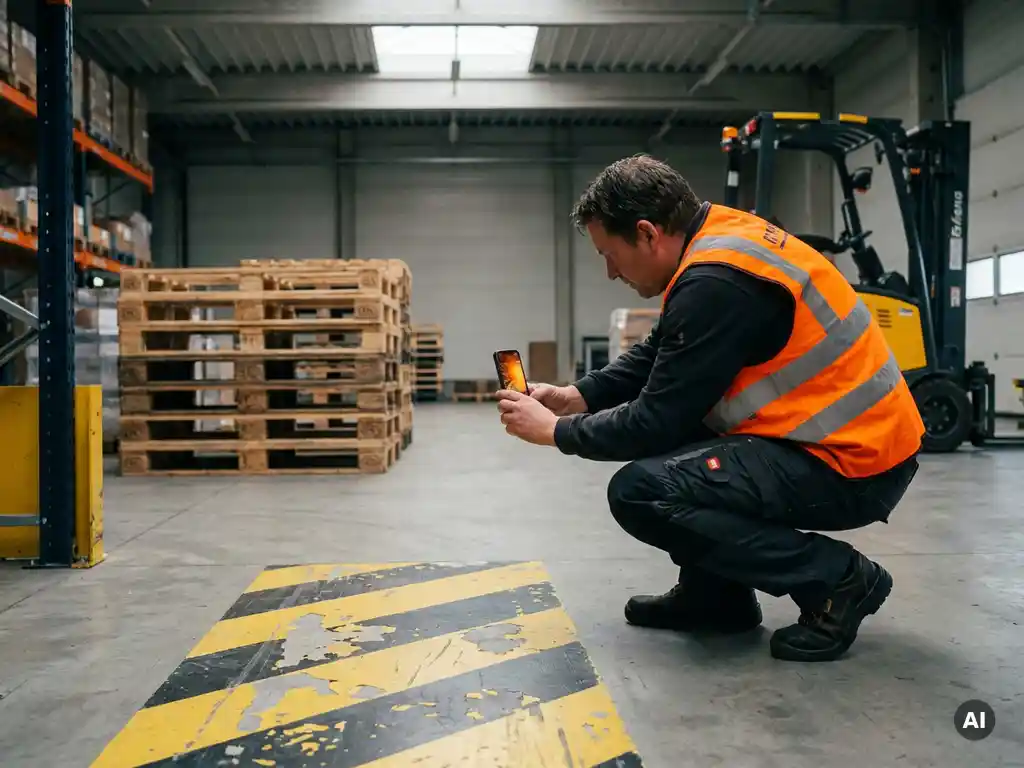
On the production floor, hazards are often immediate and high-consequence. Inspectors check whether machine guards are in place and functioning, whether personal protective equipment is being worn correctly, whether hazardous substances are stored and labelled properly, and whether floor markings and safety signage are clearly visible. Forklift traffic routes, lockout and tagout procedures, and emergency stop accessibility are also standard inspection points in manufacturing and logistics environments.
How often should a workplace inspection be carried out?
Most organisations conduct a formal workplace inspection at least once per quarter, though high-risk production environments often require monthly or even weekly checks in certain areas. Office environments with stable layouts and lower risk levels can typically operate on a quarterly cycle, provided informal daily checks are encouraged amongst staff.
Regulatory requirements vary by country and industry, so it is worth reviewing the specific obligations that apply to your sector. In general, any significant change to the workplace, such as new equipment, a layout change, or an incident, should trigger an additional inspection regardless of the scheduled cycle. Seasonal factors, such as increased slip risks in winter or heat stress in summer, may also justify more frequent reviews in certain environments.
Who is responsible for conducting a workplace inspection?
Responsibility for a workplace inspection typically sits with the employer, but in practice it is delegated to a safety officer, facilities manager, or a trained member of the health and safety team. In larger organisations, a joint inspection team that includes both management representatives and employee representatives tends to produce more thorough results.
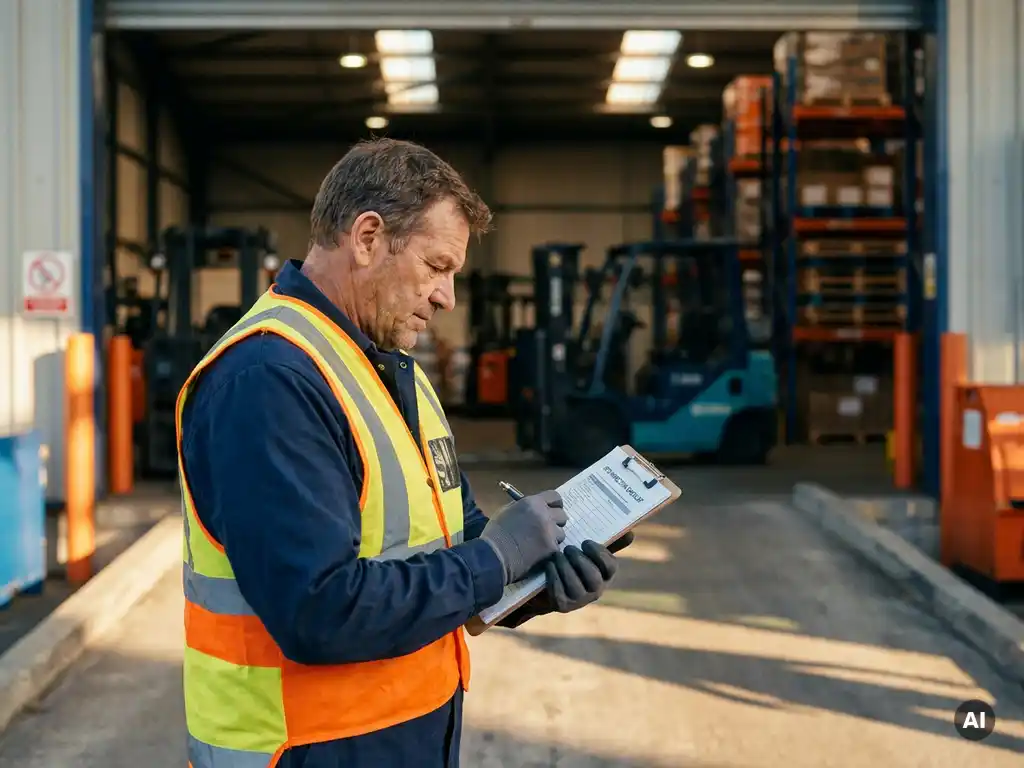
On production floors, it is common for team leaders or shift supervisors to carry out informal daily checks, with a formal inspection conducted by a dedicated safety professional at regular intervals. In offices, the facilities or HR team often leads inspections, sometimes supported by an external health and safety consultant. Regardless of who carries out the inspection, findings must be reported to someone with the authority to act on them.
What does a workplace inspection checklist include for each setting?
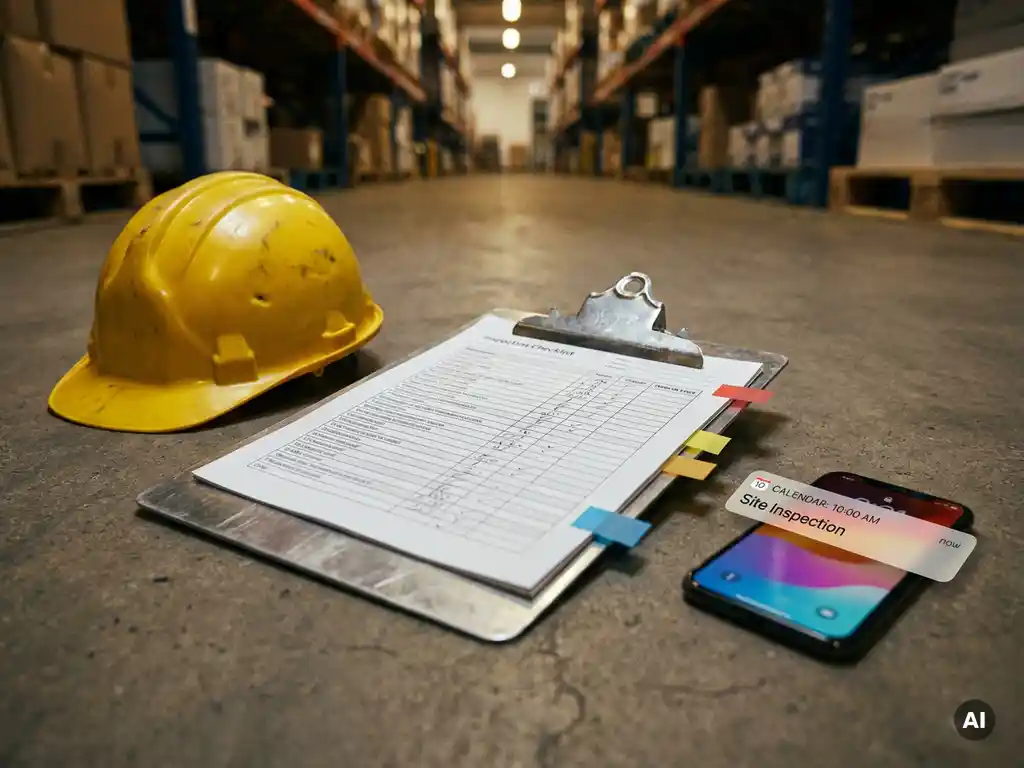
A workplace inspection checklist is tailored to the specific risks of the environment. An office checklist covers workstation ergonomics, lighting, electrical safety, fire exits and extinguisher access, first aid provision, and general housekeeping. A production floor checklist goes further, addressing machinery guarding, PPE compliance, chemical storage, noise and vibration exposure, emergency procedures, and the condition of floors and walkways.
Core items on an office checklist
- Workstation setup: chair height, screen position, keyboard and mouse placement
- Lighting levels and absence of glare on screens
- Clear and unobstructed fire exits and escape routes
- Condition and accessibility of fire extinguishers
- Electrical safety: no overloaded sockets, no damaged cables
- First aid kit stocked and accessible
- Slip and trip hazards: cables, loose flooring, wet surfaces
Core items on a production floor checklist
- Machine guards: present, correctly fitted, and in working order
- PPE availability and correct usage by all personnel
- Hazardous substance storage, labelling, and safety data sheets
- Noise and vibration levels within acceptable limits
- Lockout and tagout procedures in place for maintenance work
- Floor markings, pedestrian routes, and vehicle traffic separation
- Emergency stop buttons accessible and clearly marked
- Manual handling aids available and in good condition
How are inspection findings documented and communicated to staff?
Inspection findings should be recorded in a written report that captures each identified hazard, its location, its risk level, the recommended corrective action, and the person responsible for resolving it. This report becomes the basis for follow-up and provides a documented audit trail. Communicating findings to staff promptly and clearly is just as important as the inspection itself.
In practice, many organisations share a summary of findings with the relevant team shortly after the inspection, either through a team briefing, a notice board update, or a digital message. For production environments where workers may not sit at a desk, short and accessible formats work best. The goal is to ensure that the people most affected by the findings are aware of what was found and what is being done about it. Closing the loop with staff once corrective actions are completed builds trust and reinforces a safety culture. Structured toolbox talks are an effective way to communicate findings and reinforce safe behaviours with frontline teams.
What happens when a workplace inspection reveals non-compliance?
When a workplace inspection uncovers non-compliance, the organisation must take corrective action proportionate to the risk level. Immediate dangers, such as an unguarded machine or a blocked fire exit, require instant remediation. Lower-priority issues are assigned to a responsible person with a clear deadline and tracked until resolved.
Non-compliance findings should be documented formally and escalated to management if the corrective action requires budget or authority beyond the inspection team. In regulated industries, repeated non-compliance can result in enforcement action from health and safety authorities, so maintaining a clear record of findings and the steps taken to address them is essential. Beyond regulatory risk, unresolved non-compliance signals to employees that safety is not taken seriously, which undermines the broader culture of the organisation. Treating every finding as an opportunity to improve rather than a box-ticking exercise is what separates organisations with genuinely strong safety records from those that simply go through the motions.
How E-Lia helps with workplace inspection training
One of the most common gaps in workplace safety is not the inspection itself but the knowledge that staff need to prepare for it, act on findings, and maintain safe behaviours day to day. We built E-Lia to close exactly that gap by making safety training and work instructions easy to share, easy to complete, and easy to track, without requiring anyone to log in to a new platform or download an app.
With E-Lia, organisations can:
- Send targeted microlearning modules via WhatsApp to production staff, office teams, or new starters, covering inspection procedures, PPE use, hazard reporting, and more
- Build a custom module in 10 to 15 minutes and have staff complete it in 3 to 6 minutes, making it realistic to deliver training around shift patterns and busy schedules
- Share updated checklists, corrective action instructions, or process changes instantly after an inspection, ensuring the right information reaches the right people at the right time
- Track completion and comprehension through a straightforward dashboard, so managers know exactly who has received and understood the latest safety updates
- Deliver content in multiple languages, which is especially valuable in production and logistics environments with multilingual teams
- Support structured onboarding so new employees understand inspection procedures and safety expectations from day one
- Help teams retain and maintain knowledge over time, ensuring safety awareness does not fade after the initial training
- Deliver HACCP training for food production and catering environments where hygiene and safety inspections are tightly regulated
Whether you want to standardise how inspection findings are communicated across your organisation or improve the safety knowledge of frontline workers before the next audit, we are happy to show you how it works in practice. Plan a demo to see E-Lia in action.
Frequently Asked Questions
Can the same inspection checklist be used for both an office and a production floor?
No — using a single generic checklist across both environments will almost always result in significant hazards being missed. A production floor checklist must account for machinery, chemical exposure, PPE compliance, and lockout/tagout procedures that are simply irrelevant in an office setting, while an office checklist places much greater emphasis on ergonomics and psychosocial risks. The best approach is to develop environment-specific checklists and review them annually or whenever the workplace layout, equipment, or processes change.
How do I get started with workplace inspections if my organisation has never done them formally before?
Start by identifying the highest-risk areas in your workplace and conducting a simple walkthrough using a basic checklist drawn from your national health and safety regulator’s guidance. Assign a responsible person — ideally someone already familiar with the day-to-day operations — to lead the first inspection, and focus on documenting findings and agreeing on corrective actions rather than achieving perfection on the first attempt. Building a consistent routine matters more than a flawless first inspection, so prioritise getting the process started and refining it over time.
What is the most common mistake organisations make during workplace inspections?
The most common mistake is treating the inspection as a one-off compliance exercise rather than part of an ongoing safety management cycle. This typically shows up as findings that are recorded but never followed up on, or inspection reports that are filed away without being communicated to the staff most affected. A close second is conducting inspections without involving frontline workers, who often have the most practical insight into where hazards exist and why certain procedures are not being followed.
How should corrective actions be prioritised when an inspection uncovers multiple issues at once?
Prioritise corrective actions based on risk level: any hazard with the potential to cause immediate serious injury — such as an unguarded machine, a blocked fire exit, or an unlabelled chemical container — must be addressed before the inspection team leaves the area if at all possible. Medium-priority issues should be assigned a specific owner and a deadline of no more than a few days to two weeks. Lower-priority housekeeping or ergonomic issues can be scheduled into a longer-term action plan, provided they are tracked and not forgotten.
Do frontline production workers need formal safety training before they can participate in an inspection?
Frontline workers do not need to be qualified health and safety professionals to contribute meaningfully to an inspection, but they do benefit from a basic understanding of what to look for in their specific area, how to report a hazard, and why inspections matter. Short, targeted training on inspection procedures and hazard recognition — delivered in a format that fits around shift patterns — is usually sufficient to prepare them for an active role. Involving workers in the process also tends to improve the quality of findings, since they are closest to the day-to-day realities of the work.
How can organisations with multilingual workforces ensure inspection findings and safety updates are understood by everyone?
The key is to deliver safety information in the languages your workforce actually uses, rather than assuming everyone can read or understand content in the dominant business language. This applies both to the inspection findings themselves and to any follow-up training or corrective action instructions. Practical formats — such as visual checklists, short video or audio messages, and translated microlearning modules — are particularly effective in production and logistics environments where literacy levels and language backgrounds vary across the team.
How long should workplace inspection records be kept, and why does it matter?
Most health and safety regulations require inspection records to be retained for a minimum of three to five years, though the exact requirement varies by country and industry — regulated sectors such as construction, chemicals, and food production often have stricter obligations. Beyond legal compliance, maintaining a clear historical record of inspections, findings, and corrective actions is invaluable if an incident occurs, as it demonstrates that the organisation was actively managing its safety responsibilities. It also helps identify recurring hazards that may point to a deeper systemic issue worth addressing.