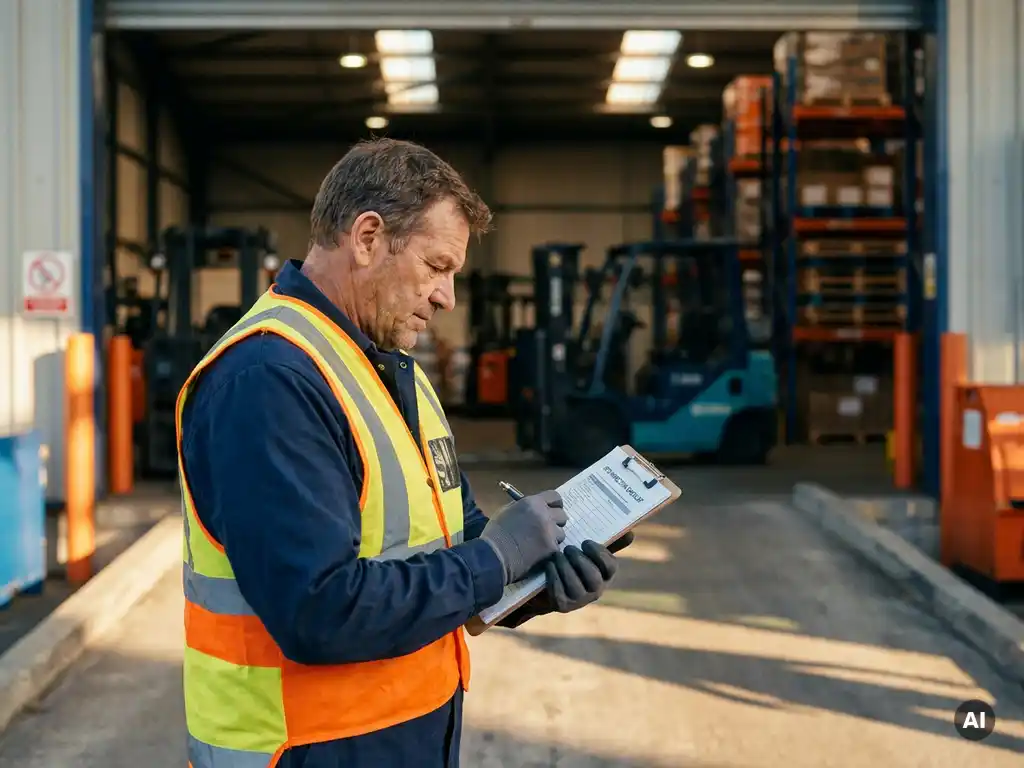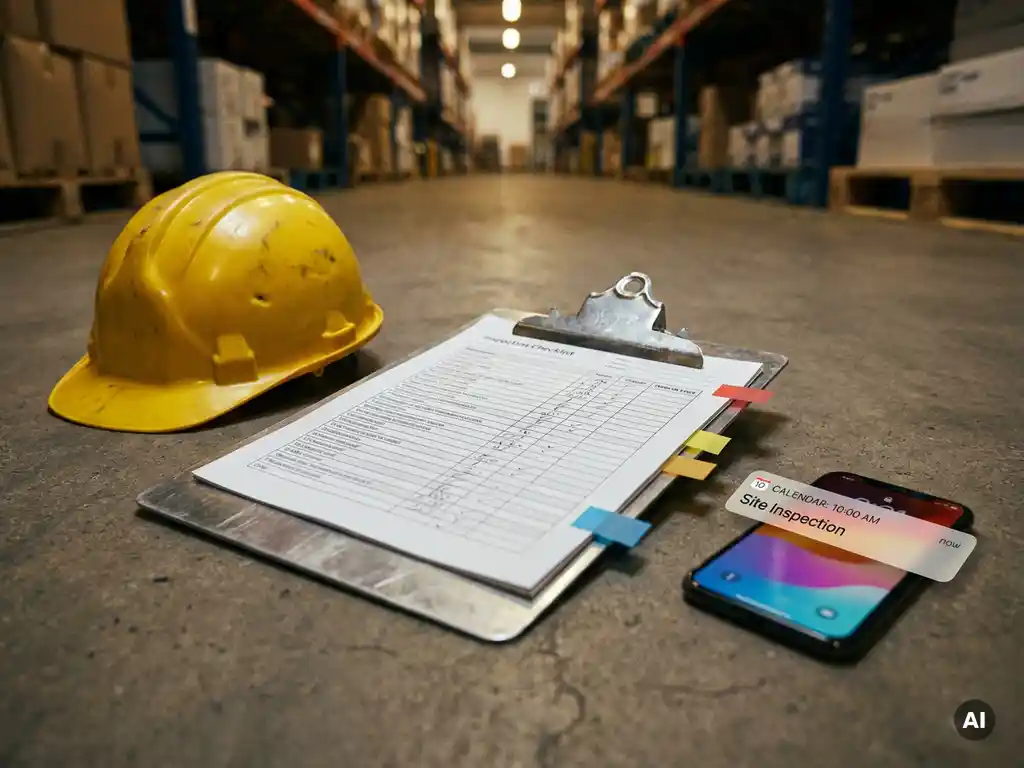



You integrate workplace inspections into your daily routine by treating them as a fixed, non-negotiable part of the workday rather than an occasional task. The most effective approach is to assign clear ownership, use a consistent checklist, and keep each inspection short enough that it does not compete with core work responsibilities. The sections below walk through everything from what a daily inspection covers to how to keep your team consistent over time.
Why should workplace inspections happen every day?
Workplace inspections should happen every day because hazards, equipment conditions, and compliance risks change constantly. A single daily safety walkthrough catches problems before they escalate into incidents, near-misses, or regulatory violations. Consistent daily checks also build a culture where safety is part of normal operations rather than a reactive response to something going wrong.
Many workplace hazards are incremental. A spill that sits unaddressed for a shift becomes a slip risk. A blocked emergency exit that goes unnoticed for a week becomes a compliance violation. Daily workplace safety checks interrupt that accumulation cycle and ensure that small issues are resolved while they are still small. Beyond physical hazards, daily routines create accountability. When employees know an inspection happens every morning, they are more likely to maintain standards throughout the day because the environment signals that safety is actively monitored.
From a workplace compliance perspective, many industry regulations and insurance requirements also expect evidence of regular safety monitoring. A documented daily inspection log provides that evidence and demonstrates due diligence if an incident ever needs to be reviewed.
What does a daily workplace inspection actually include?
A daily workplace inspection includes a structured check of physical conditions, equipment status, emergency systems, and housekeeping standards relevant to the specific work environment. The exact scope varies by industry, but the core categories remain consistent: walkways and exits, machinery and tools, storage and materials, personal protective equipment availability, and any hazard-specific items unique to the site.
In a warehouse or logistics setting, a daily safety walkthrough typically covers forklift charging areas, racking integrity, floor cleanliness, and loading dock conditions. In a healthcare environment, the focus shifts towards hygiene stations, emergency equipment readiness, and medication storage compliance. In a production facility, machine guards, lockout-tagout stations, and chemical storage are common inspection points.
A useful daily inspection is not exhaustive. It is focused. The goal is to identify anything that has changed since the last check and flag items that need immediate attention. Longer, comprehensive audits happen weekly or monthly. The daily routine is the early warning system that keeps those deeper audits from uncovering surprises. Learn more about how structured workplace inspections can be supported with the right digital tools.
How long does a daily workplace inspection take?
A well-designed daily workplace inspection takes between five and fifteen minutes for most standard work environments. The exact duration depends on the size of the space, the number of inspection points, and how familiar the person conducting the check is with the checklist. A focused, experienced inspector in a mid-sized facility can complete a thorough daily walkthrough in under ten minutes.
The key to keeping inspections short without sacrificing quality is a well-structured checklist. When inspection points are clearly defined and logically ordered to follow a physical route through the space, there is no backtracking, no guesswork, and no time lost deciding what to check next. The inspector moves through the space with purpose and records findings in real time rather than trying to recall observations afterwards.
If daily inspections consistently take longer than fifteen minutes, that is usually a signal that the checklist is too broad or that the inspection is being merged with a deeper audit. Separating the daily safety check from periodic comprehensive reviews keeps both processes efficient and effective.
Who is responsible for conducting daily workplace inspections?
Responsibility for daily workplace inspections typically sits with frontline supervisors, team leads, or designated safety representatives who are physically present at the start of each shift. The person responsible should have enough familiarity with the environment to recognise what is out of place, and enough authority to initiate corrective action when something is found.
In smaller organisations, a single safety officer or operations manager may conduct all daily checks. In larger facilities with multiple departments or shifts, responsibility is often distributed across team leads who each own a specific zone or area. This distributed model keeps inspections manageable and ensures that no single area goes unchecked because one person was absent.
What matters more than the specific job title is that responsibility is named, not assumed. When everyone thinks someone else is doing the inspection, it does not get done. Clear ownership, documented in a schedule or role description, is what makes daily safety inspections reliable rather than occasional.
What tools and checklists make daily inspections easier?
The most effective tools for daily workplace inspections are digital checklists that can be completed on a mobile device, systems that automatically log and timestamp entries, and platforms that send reminders or escalate unresolved findings. Paper checklists work but create friction around storage, retrieval, and trend analysis. Digital tools reduce that friction significantly.
A good daily inspection checklist has a few defining characteristics. It is specific enough to guide a consistent check but short enough to complete in a single walkthrough. It uses yes or no responses for routine items and open fields only where a description genuinely adds value. It is organised to follow the physical layout of the space so the inspector moves logically from one area to the next without doubling back.
Beyond the checklist itself, tools that support photo capture, automatic notifications to supervisors when a finding is flagged, and dashboard views of inspection history make the routine far more actionable. When findings are visible to the right people immediately, corrective actions happen faster and the inspection process stops being a documentation exercise and starts being a genuine safety management tool. Explore how toolbox talks can complement your inspection routine by keeping teams informed and aligned on safety priorities.
How do you keep employees consistent with inspection routines?
You keep employees consistent with daily inspection routines by making the process as simple as possible, anchoring it to an existing habit, and providing regular feedback on what the inspections have actually prevented or resolved. Consistency breaks down when inspections feel burdensome, arbitrary, or disconnected from real outcomes.
Anchoring the inspection to a fixed moment in the shift, such as the first ten minutes after handover or immediately after a morning briefing, removes the decision of when to do it. When the inspection has a regular slot, it becomes part of the rhythm of the day rather than an extra task competing for attention.
Feedback is often the missing piece in inspection programmes that lose momentum. When employees see that a finding they logged led to a repair, a policy change, or a near-miss being avoided, the routine gains meaning. When findings disappear into a system and nothing visibly changes, motivation to conduct careful inspections erodes. Closing the loop, even briefly, sustains engagement over time.
Training also plays a role. Employees who understand why each inspection point matters are more thorough than those who are simply following a list. Short, focused training on what to look for and why it matters builds the judgement needed to conduct genuinely useful daily safety walkthroughs rather than mechanical box-ticking. Structured work instructions and onboarding programmes can help new and existing employees build this understanding from day one. Supporting long-term competence through tools designed to retain and maintain knowledge ensures inspection standards do not slip over time.
How E-Lia helps with daily workplace inspections
Keeping inspection routines consistent across shifts, departments, and languages is one of the practical challenges organisations face every day. We built E-Lia specifically to make that kind of structured knowledge delivery simple, without requiring employees to log into a new system or download an app. Using WhatsApp as the delivery channel, we help organisations send daily inspection instructions, safety reminders, and short training modules directly to employees’ phones, in their own language.
Here is what that looks like in practice for workplace inspection routines:
- Automated daily reminders sent via WhatsApp at the start of each shift, prompting the right person to complete their inspection
- Microlearning modules that train employees on what to look for during a walkthrough, completable in three to six minutes
- Multilingual support so inspection instructions reach every employee in the language they work best in
- Progress tracking via a dashboard that shows which teams have completed their daily checks and where follow-up is needed
- Quick module creation so safety managers can build or update inspection guidance in ten to fifteen minutes when procedures change
Whether you are onboarding new team members to your inspection process or reinforcing standards with existing staff, we make it easy to keep everyone aligned without adding administrative burden. Book a demo to see the platform in action and find out how E-Lia can support your daily workplace inspection routine.
Frequently Asked Questions
How do I get started with daily workplace inspections if we have never had a formal routine before?
Start by walking your workplace once and listing every area, piece of equipment, and condition that could realistically change from one day to the next. Use that list to build a first-draft checklist of no more than 15–20 items, assign one person per shift to own it, and run the routine for two weeks before refining it. A simple start that actually gets done every day is far more valuable than a perfect checklist that feels too heavy to use consistently.
What is the difference between a daily inspection and a full safety audit, and do I still need both?
A daily inspection is a quick, focused early-warning check designed to catch new or changing hazards before they escalate — it typically takes 5–15 minutes and covers routine conditions. A full safety audit is a deeper, scheduled review that examines systems, documentation, compliance records, and root causes, often taking several hours. Yes, you need both: the daily check keeps the environment safe day to day, while the periodic audit ensures your overall safety management system is sound and up to date.
What should I do when a daily inspection uncovers a hazard that cannot be fixed immediately?
Log the finding immediately with a description, photo if possible, and the date and time it was identified, then apply interim controls right away — such as cordoning off the area, posting a warning sign, or taking equipment out of service. Escalate the item to the responsible person or maintenance team with a clear deadline for resolution, and track it as an open item until it is closed. Never leave a flagged hazard unaddressed simply because a permanent fix is not yet available.
How do I adapt a daily inspection checklist for multiple shifts or departments with different hazard profiles?
Create a shared core checklist that covers universal items like emergency exits, housekeeping, and PPE availability, then add department- or shift-specific sections for hazards unique to each area. Store these as separate but linked templates so inspectors only see what is relevant to their zone, which keeps each checklist short and focused. Review the department-specific sections whenever processes, equipment, or layouts change to make sure the checklist stays accurate.
How can I tell if our daily inspection routine is actually working or just becoming a box-ticking exercise?
Track three indicators over time: the number of findings logged per inspection, the average time from finding to corrective action, and whether the same issues keep reappearing. A healthy routine surfaces a steady stream of small findings that get resolved quickly and rarely recur. If inspections consistently return zero findings or the same issues appear week after week without resolution, the routine has likely become mechanical and needs a reset — either through retraining, checklist revision, or a change in ownership.
Are there any common mistakes organisations make when rolling out daily inspection programmes?
The most common mistakes are making the checklist too long (which turns it into a burden), failing to assign explicit ownership (which means it gets skipped when things get busy), and not closing the loop on findings (which kills motivation over time). Another frequent error is treating the inspection log as a compliance document rather than an operational tool — if findings are filed away but never acted on visibly, employees quickly learn that the routine has no real consequence. Keep the process lean, ownership clear, and feedback visible to avoid these pitfalls.
Can daily workplace inspections help reduce insurance costs or support regulatory compliance?
Yes — documented daily inspection logs are direct evidence of proactive safety management, which many insurers and regulators view favourably. In the event of an incident, a consistent inspection record demonstrates due diligence and can significantly affect liability assessments and claim outcomes. Some industry-specific regulations explicitly require evidence of regular safety monitoring, and a timestamped daily log is one of the clearest ways to satisfy that requirement.