

Delivering toolbox talks across multiple projects means sending the right safety content to the right teams at the right time, regardless of where they are working. The biggest challenge is not the content itself but the logistics: different sites, different schedules, and workers who are rarely sitting behind a desk. The questions below unpack the most common obstacles and the most practical ways to solve them.
What makes toolbox talks hard to deliver across multiple project sites?
Delivering toolbox talks across multiple project sites is difficult because workers are dispersed, schedules vary by site, and there is no single moment when everyone is in the same place. Coordinating a consistent safety message across teams that may be working different shifts, speaking different languages, or rotating between locations adds significant logistical complexity.
In construction and logistics especially, the traditional approach relies on a supervisor gathering the team before a shift starts. That works on a single site with a stable crew. Across multiple projects, it breaks down quickly. A site manager at one location cannot physically attend a toolbox talk at another. Paper sign-in sheets get lost or forgotten. Workers who miss a session have no easy way to catch up.
The result is uneven coverage. Some teams receive regular safety briefings while others go weeks without one. That inconsistency creates gaps in awareness and makes it harder to demonstrate that safety information has actually reached the people who need it.
A few factors make this especially challenging:
- No fixed workplace: Workers move between sites, making it hard to plan a consistent schedule
- No shared communication channel: Many frontline workers do not have a company email address or access to an intranet
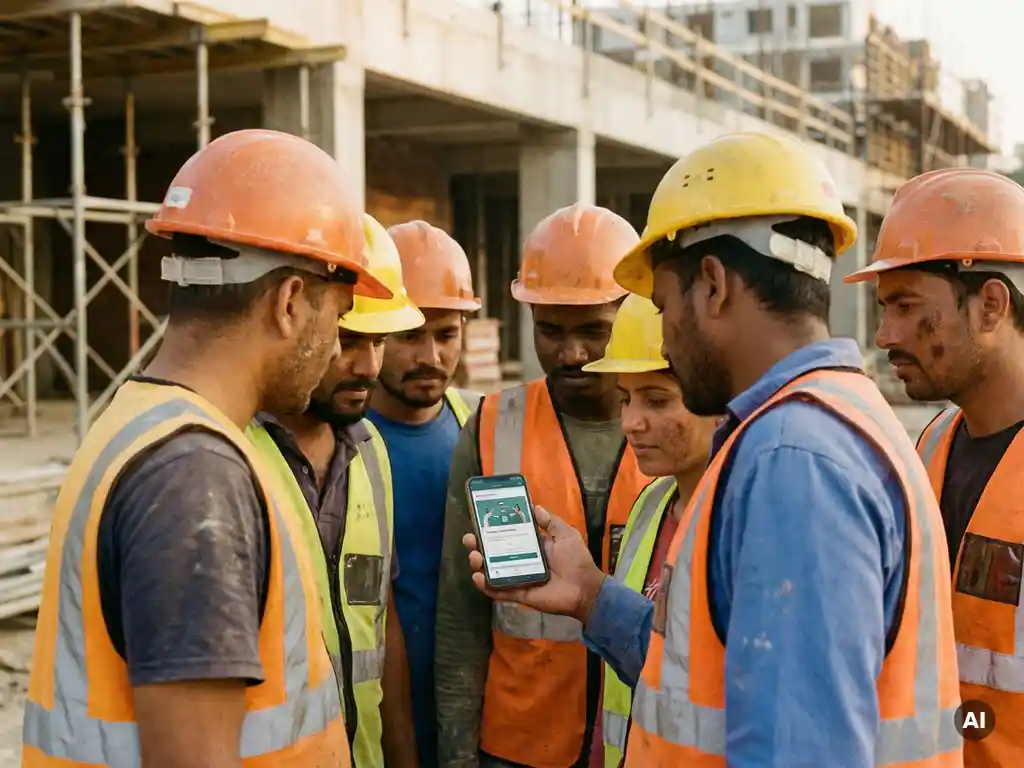
- Language diversity: Multilingual teams need content in their own language to understand and retain it
- Manual administration: Tracking attendance across sites using paper or spreadsheets is time-consuming and error-prone
- Supervisor dependency: When one person is responsible for delivering talks at multiple locations, something always gets skipped
What are the most effective formats for toolbox talks?
The most effective formats for toolbox talks for frontline workers are short, focused, and interactive. Whether delivered in person or digitally, a toolbox talk works best when it covers one topic, takes no longer than a few minutes to complete, and includes a brief check to confirm the message landed.
Long presentations and dense documents are not well suited to the toolbox talk format. Workers on a construction site or in a warehouse need information they can absorb quickly and apply immediately. The format should match that reality.
In-person formats
A brief team huddle at the start of a shift remains a reliable option when a supervisor is present and the team is together. The talk should be structured around a single topic, use plain language, and leave time for questions. Visual aids like photos of hazards or diagrams of correct procedures make the content more memorable.
Digital formats
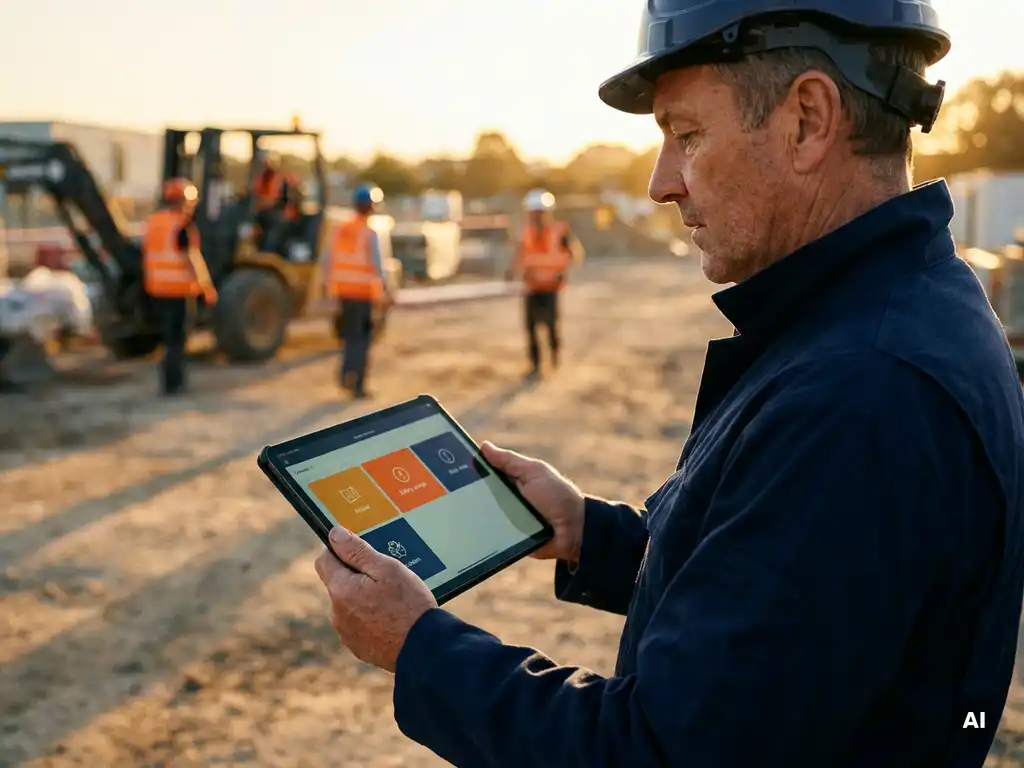
Digital toolbox talks remove the dependency on a supervisor being physically present. Sent directly to a worker’s phone, a digital safety talk can include short text, images, video clips, and a knowledge check at the end. Workers complete it at a convenient moment before or during their shift, and their participation is recorded automatically.
Microlearning modules work particularly well here. A module covering one specific topic, completed in a few minutes, fits naturally into a worker’s day without requiring them to step away from the job for long. The knowledge check at the end confirms understanding rather than just attendance.
How do you ensure consistent toolbox talk delivery across all teams?
Consistent toolbox talk delivery across all teams requires a centralized system where the same content is sent to every relevant group at the same time, without relying on individual supervisors to remember, prepare, and deliver it manually.
When delivery depends entirely on local managers, consistency is fragile. One busy week, one absent supervisor, or one site with a different routine is enough to break the pattern. A centralized approach removes that dependency.
Practical steps to build consistency include:
- Create a content library: Develop a set of approved toolbox topics that all teams draw from, so the quality and accuracy of the content are the same everywhere
- Schedule in advance: Plan which topics go to which teams and when, rather than deciding week by week
- Use a single delivery channel: Sending content through one platform means you can confirm delivery and track completion across all sites from one place
- Separate content creation from delivery: A safety coordinator or L&D professional can prepare and schedule content centrally, freeing site supervisors from that responsibility
- Set up automatic reminders: Workers who have not completed a talk can receive a follow-up prompt without requiring manual intervention
Consistency also means using the same knowledge checks and the same standards for what counts as completion. If one site accepts verbal confirmation and another requires a digital sign-off, your records will not be comparable.
How can you track who has completed a toolbox talk?
You can track toolbox talk completion by using a digital delivery system that automatically records when each worker receives, opens, and completes a safety talk, including any knowledge check responses. This replaces paper sign-in sheets with a real-time overview that is accessible from any location.
Paper-based tracking has a fundamental problem: it only records presence, not understanding. A worker can sign a sheet without having engaged with the content at all. Digital tracking solves both issues at once. When a worker completes a module and answers a knowledge check, you have a record of both participation and comprehension.
A live dashboard that shows completion rates by team, site, or individual makes it straightforward to identify who has not yet completed a talk and follow up accordingly. This is particularly useful when managing multiple projects simultaneously, because you can see the full picture without contacting each site manager individually.
Good tracking also supports documentation for audits or inspections. Digital records can show which topics were covered, when they were sent, who completed them, and what scores were achieved on any knowledge checks. That level of detail is difficult to produce reliably from paper records.
What’s the best way to deliver toolbox talks to multilingual workers?
The best way to deliver toolbox talks to multilingual workers is to provide the content in each worker’s preferred language, using the same source material translated accurately rather than creating separate versions manually. Automatic translation tools make this scalable even for teams that speak many different languages.
A safety message that a worker cannot fully understand does not achieve its purpose. This is one of the most common gaps in toolbox talk delivery on diverse job sites. Supervisors often deliver talks in the dominant language of the site, leaving workers who speak other languages to rely on colleagues for a rough translation.
A practical multilingual approach includes:
- Translate at the point of delivery: Rather than maintaining separate content libraries for each language, use a platform that translates content automatically when it is sent
- Let workers choose their language: Where possible, allow each worker to receive content in the language they are most comfortable with
- Use visuals to support text: Images, diagrams, and short videos reduce reliance on language alone and make content more accessible across language groups
- Check comprehension in the same language: A knowledge check should be presented in the worker’s language, not in the language the content was originally written in
Supporting a wide range of languages is no longer a logistical barrier when translation is handled automatically. Workers in construction, logistics, and production environments often come from many different countries, and reaching each of them in their own language significantly improves both understanding and engagement.
When should toolbox talks be sent, and how often?
Toolbox talks are most effective when they are timed to match the work being done, such as before a new phase of a project, when a specific hazard becomes relevant, or when working conditions change. The right frequency depends on the nature of the work, the risks involved, and the requirements of any applicable certification or safety management framework your organization follows.
There is no universal rule about how often toolbox talks must happen. What matters is that the content is relevant to what workers are actually doing and that it reaches them at a moment when they can act on it. A talk about working at height is most useful the day before that work begins, not weeks earlier.
Some practical timing principles:
- Before a new task or phase: Send a relevant safety talk before workers start an activity they have not done recently or at all
- After an incident or near miss: A toolbox talk is a useful way to share lessons learned and reinforce safe behavior quickly across all teams
- When conditions change: Seasonal hazards, new equipment, or changes to site layout are all good triggers for a targeted talk
- As part of a regular rhythm: Many organizations find it useful to maintain a steady cadence of safety communication, even when no specific trigger has occurred, to keep safety awareness active
Digital delivery makes timing more flexible. Instead of waiting for the next scheduled team meeting, you can send a talk the moment a topic becomes relevant and reach every team simultaneously, regardless of where they are working.
How E-lia helps you deliver toolbox talks across multiple projects
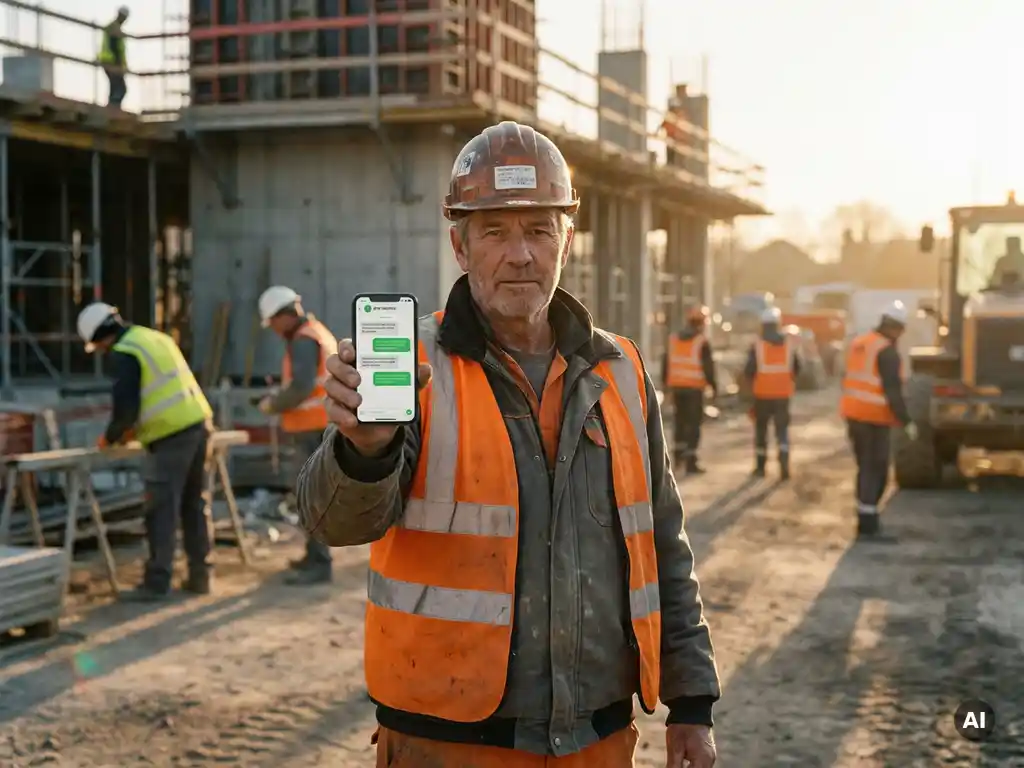
We built E-lia specifically for organizations that need to reach workers on the ground, across multiple locations, without relying on paper, email, or extra apps. Toolbox talks go directly to workers’ phones via WhatsApp, the channel most workers already use every day. No account creation, no password, no friction.
Here is what that looks like in practice:
- Send to any team, any location: Schedule and distribute toolbox talks centrally, so every site receives the same content at the same time
- Automatic translation into 50+ languages: Workers receive content in their own language without any manual effort from your team
- Knowledge checks built in: Every talk can include a short check to confirm understanding, not just attendance
- Live dashboard: See completion rates across all teams and sites in real time, and follow up with anyone who has not yet responded
- Content library of 60+ topics: Use ready-made safety topics updated by a qualified safety professional, or upload your own content
- Physical meetings supported too: If a toolbox talk happens in person, you can register it through the platform as well
If you want to see how this works for your organization, get in touch with our team and we will walk you through it.