

Scaling toolbox talks from 50 to 500 employees is achievable when you replace ad-hoc, in-person sessions with a structured system built around standardized content, clear ownership, and digital delivery. The core challenge is not the content itself but the logistics: reaching every employee, in every location, in a consistent and trackable way. This article unpacks the six most common questions organizations face when their safety communication needs to grow.
What breaks down when toolbox talks grow beyond 50 employees?
When toolbox talks grow beyond 50 employees, the informal systems that worked at smaller scale start to fail. Verbal reminders get missed, paper sign-in sheets go missing, and team leaders interpret topics differently across sites. The result is uneven coverage, gaps in documentation, and no reliable way to confirm who received which safety information.
At smaller team sizes, a single safety manager can personally oversee every session. Once you add multiple sites, shifts, or departments, that direct oversight disappears. A few specific problems tend to surface quickly:
- Inconsistent delivery: Different team leaders run the same topic in very different ways, so employees receive different levels of detail.
- Documentation gaps: Paper sign-in sheets get lost, are filled in after the fact, or simply never collected.
- Language barriers: Multilingual teams receive safety information in a language they do not fully understand.
- Scheduling conflicts: Coordinating a single session across rotating shifts or dispersed locations becomes a logistical burden.
- No visibility: Management cannot see, at a glance, which employees have completed which topics.
Recognizing these breakdowns early is useful because the solution is the same whether you are at 80 employees or 400: move from an informal, person-dependent process to a structured, system-supported one.
How do you standardize toolbox talk content across multiple teams?
You standardize toolbox talk content by creating a central content library with approved materials that all teams draw from, rather than letting individual supervisors build their own sessions from scratch. Standardization means every employee, regardless of team or location, receives the same core message on the same topic.
Practical steps to build that consistency include:
- Define a topic calendar: Plan which subjects will be covered and when, so all teams stay aligned rather than each choosing their own topics independently.
- Create approved materials: Develop a set of ready-to-use modules for each topic, including key points, discussion prompts, and a short knowledge check. These become the single source of truth.
- Set a format standard: Decide how long a toolbox talk should run and what structure it follows, and what counts as completion. Consistency in format makes delivery easier for team leaders and more predictable for employees.
- Include multilingual versions: For teams with employees who speak different languages, provide translated materials from the start rather than relying on informal interpretation.
- Review and update regularly: Safety topics evolve. Build a process for reviewing content when regulations change, incidents occur, or new equipment is introduced.
Standardization does not mean every session is identical in tone or delivery style. Team leaders can still adapt how they present a topic to their specific crew. What stays consistent is the substance: the key safety message, the knowledge check, and the documentation.
What tools help you deliver toolbox talks to a distributed workforce?
The most effective tools for delivering toolbox talks to a distributed workforce are those that reach employees where they already are, without requiring them to log in to a new system or download an additional app. For operational workers on construction sites, in warehouses, or on production floors, that typically means mobile-first solutions built around familiar communication channels.
Options worth considering include:
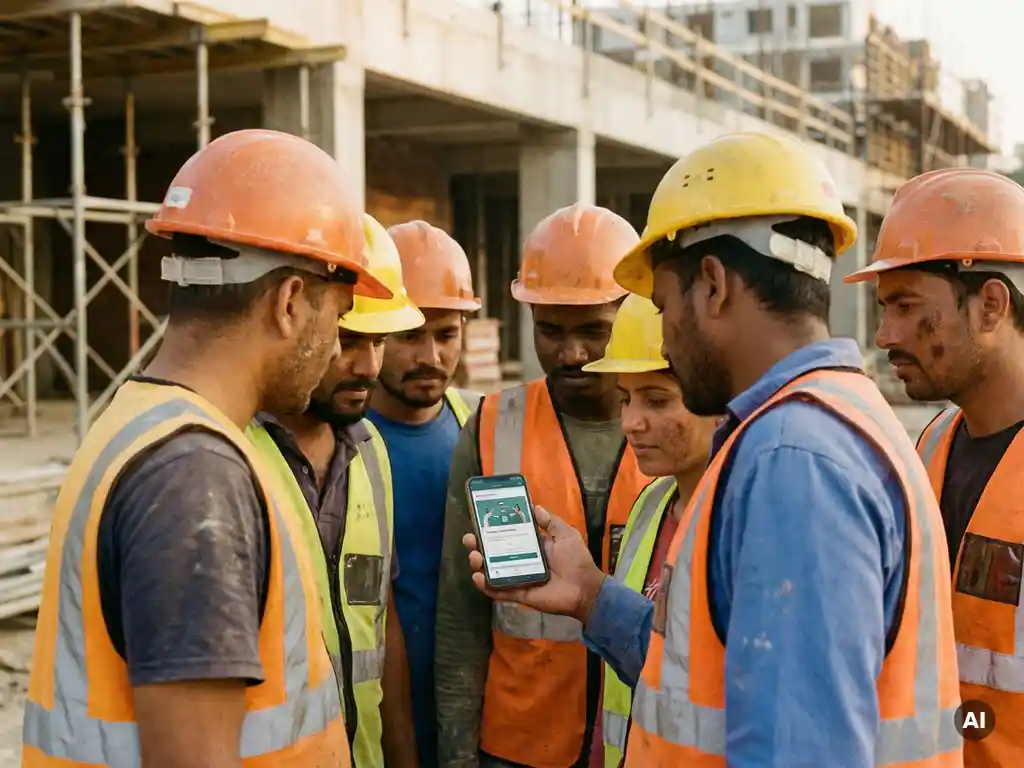
- Messaging-based platforms: Tools that send safety content directly to employees via channels they already use daily reduce friction and increase completion rates. Employees receive the toolbox talk on their phone, complete a short knowledge check, and the result is automatically recorded.
- Microlearning modules: Short, focused content delivered in three to six minutes fits naturally into the start of a shift or a brief break. This format works well for operational workers who cannot step away from their work for extended periods.
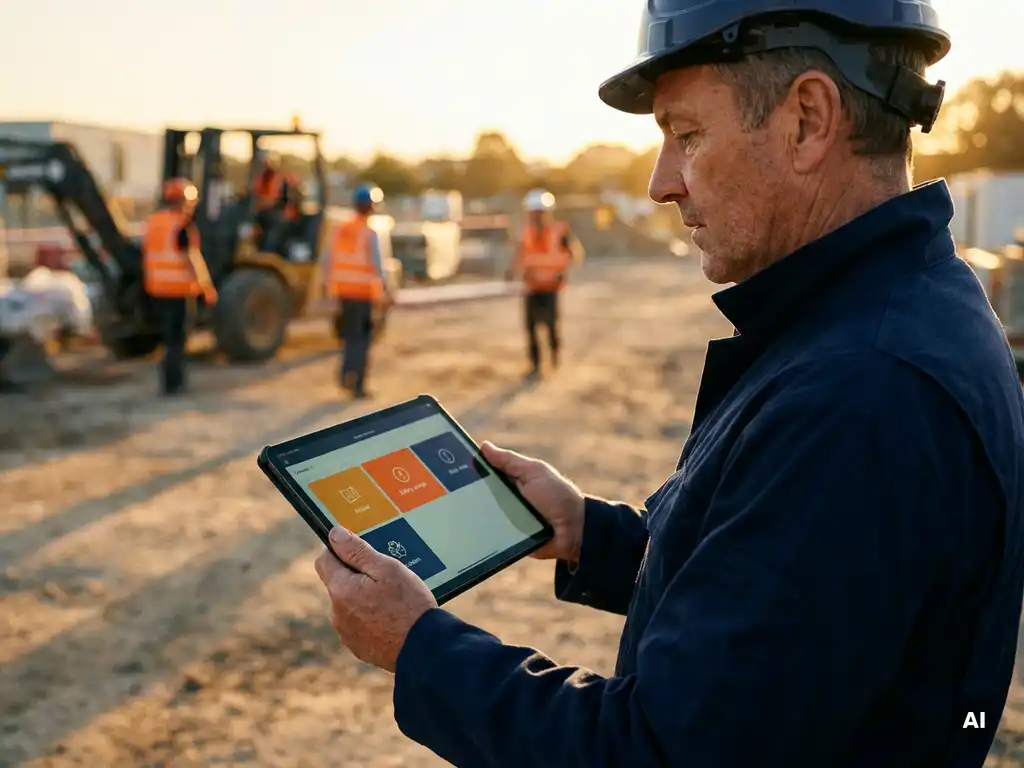
- Digital dashboards: A live overview showing who has completed which topics gives safety managers the visibility they need without chasing paper records.
- AI-supported translation: For multilingual teams, tools that automatically translate content into an employee’s preferred language remove a significant barrier to understanding and engagement.
The right tool depends on your workforce profile. If your employees do not have company laptops or email addresses, a platform that requires both will not work in practice, regardless of its features.
How do you track toolbox talk completion across 500 employees?
You track toolbox talk completion across 500 employees by moving away from paper records and manual spreadsheets toward a digital system that registers participation automatically. Manual tracking does not scale: it creates administrative work, introduces errors, and leaves you unable to answer basic questions like “which employees on site three have not yet completed this month’s topic?”
A reliable tracking approach for large teams includes these elements:
- Automatic registration: Completion is recorded the moment an employee finishes the session, without requiring a supervisor to collect and enter data manually.
- Knowledge checks: Short questions at the end of each toolbox talk confirm that the content was not just received but understood. This adds a layer of meaningful documentation beyond simple attendance.
- Real-time reporting: A dashboard that shows completion rates by team, location, or topic lets safety managers identify gaps quickly and follow up before they become a problem.
- Individual records: Each employee’s participation history should be stored and retrievable, so you can demonstrate what safety information was communicated, to whom, and when.
Good documentation also supports audits and inspections. When an auditor asks how you communicate safety information to your workforce, a complete digital record is far easier to present than a folder of paper sign-in sheets.
How often should toolbox talks be held as team size grows?
The right frequency for toolbox talks depends on the nature of your work, the risks involved, and the requirements of any applicable certification or contractual obligations, not on team size alone. Larger teams do not automatically require more frequent sessions, but they do require a more organized approach to ensure consistent coverage across all employees.
A few factors that typically influence frequency include:
- Risk level of the work: High-risk environments where conditions change frequently, such as construction sites or chemical processing facilities, generally benefit from more regular safety conversations than lower-risk settings.
- Operational changes: When new equipment is introduced, work methods change, or an incident occurs, a targeted toolbox talk is appropriate regardless of when the last scheduled session was held.
- Certification requirements: Some certification schemes set expectations around how organizations demonstrate ongoing attention to safety. Check the specific requirements that apply to your organization rather than assuming a universal rule.
- Workforce turnover: Teams with frequent new starters benefit from a steady cadence of foundational topics, while stable teams may focus more on refreshers and emerging risks.
Rather than asking “how often is required?”, a more useful question is “how often do our employees need to hear about safety topics to stay informed and alert?” Let that answer guide your planning.
Who should be responsible for toolbox talks in a large organization?
In a large organization, responsibility for toolbox talks works best when it is shared across three levels: a central owner who manages the content and system, team leaders who facilitate delivery, and management who monitor completion and follow up on gaps. No single person can run toolbox talks for 500 employees, but without clear ownership at each level, accountability disappears.
A practical structure looks like this:
- Safety or L&D team (central level): Owns the content library, sets the topic calendar, maintains quality standards, and manages the tracking system. This team ensures that what gets delivered is accurate, up to date, and consistent.
- Team leaders and supervisors (delivery level): Facilitate the actual sessions with their crew, whether in person or by prompting employees to complete a digital module. They are the human connection between the content and the employee.
- Site or department managers (accountability level): Monitor completion rates for their area, follow up with team leaders when participation is low, and escalate persistent gaps. They make toolbox talks a priority by treating completion as a management metric.
When this structure is in place, scaling from 50 to 500 employees becomes a matter of adding team leaders and sites to an existing system, rather than rebuilding the process from scratch each time the organization grows.
How E-lia helps you scale toolbox talks
We built E-lia specifically for organizations that need to reach operational, distributed, and multilingual employees without adding complexity to their processes. Here is what that looks like in practice:
- Delivery via WhatsApp: Employees receive toolbox talks directly on their phone, in a channel they already use. No app download, no account, no password required.
- Multilingual content: AI-supported translations make it straightforward to send the same toolbox talk in multiple languages, so every employee receives the information in their own language.
- Built-in knowledge checks: Short questions at the end of each session confirm understanding and create a meaningful participation record.
- Live dashboard: See completion rates by team, location, or topic in real time, so you can act on gaps before they become a problem.
- Content library: Access a library of more than 60 practical safety topics, updated regularly, or upload your own company-specific content. Building a module takes around 10 to 15 minutes.
- Physical session registration: If you run in-person toolbox talks, you can register those through the platform as well, keeping all your records in one place.
If you want to see how E-lia works for your team size and sector, request a demo and we will walk you through it.