

An onboarding programme that actually works on the production floor combines clear, role-specific instructions with a format employees can access immediately, without needing a computer or a classroom. The key is meeting workers where they already are, delivering short bursts of practical information at the right moment. Below, we answer the most important questions about building an onboarding programme that sticks in a manufacturing environment.
What makes onboarding on the production floor so challenging?
Onboarding manufacturing employees is challenging because production floor workers rarely have access to a desk, a computer, or uninterrupted time to sit through training sessions. The environment is fast-paced, shift-based, and often multilingual, which means traditional onboarding formats, such as printed manuals or classroom sessions, quickly become impractical and ineffective.
Several factors compound the difficulty. New employees often need to be productive almost immediately, leaving little room for lengthy induction programmes. Safety and compliance requirements mean that critical information must land correctly from day one. And in sectors like manufacturing, logistics, and production, high turnover rates mean onboarding is a near-constant process rather than a one-time event.
Language barriers add another layer of complexity. A production team may include workers who speak five or six different languages, and a single onboarding document in Dutch or English will simply not reach everyone equally. Any effective onboarding programme for factory workers must account for this reality from the start.
What should an effective production floor onboarding programme include?
An effective onboarding programme for production floor employees should include role-specific safety instructions, clear process walkthroughs, equipment handling guidance, and an introduction to team communication norms, all delivered in short, digestible formats that fit around shift schedules. The programme should prioritise practical knowledge over administrative formalities.
More specifically, a strong production floor onboarding programme typically covers:
- Safety and compliance basics relevant to the specific workstation or role
- Step-by-step work instructions for the tasks the employee will perform immediately
- Equipment and tool handling with clear visual or written guidance
- Team structure and communication so new workers know who to turn to with questions
- Company culture and expectations framed in practical, day-to-day terms
- Escalation procedures for incidents, quality issues, or uncertainty
The format matters as much as the content. Instructions delivered in a format that workers can revisit during a break or before a shift are far more effective than a one-time classroom session. Onboarding should be a process, not a single event. Learn more about how structured onboarding can be delivered digitally to every new starter on the floor.
How long should onboarding take for production floor employees?
Onboarding for production floor employees typically takes between one and four weeks, depending on the complexity of the role, but the most critical knowledge transfer should happen within the first three days. The goal is not to deliver everything at once, but to sequence information so workers feel confident and safe as quickly as possible.
A phased approach works well in manufacturing environments. In the first day or two, focus exclusively on safety, immediate task instructions, and basic orientation. During the first week, introduce broader process knowledge and quality standards. In weeks two through four, deepen understanding through reinforcement and on-the-job experience.
Trying to compress all onboarding content into a single day is one of the most common mistakes in employee onboarding for manufacturing. Cognitive overload leads to poor retention, which creates safety risks and performance gaps. Spreading content across the first few weeks, in short sessions, produces far better results.
How can microlearning improve onboarding for factory workers?
Microlearning improves onboarding for factory workers by breaking training content into short, focused modules that take three to six minutes to complete, making it possible to learn between tasks, during breaks, or at the start of a shift without disrupting production flow. Each module covers one clear topic, which dramatically improves knowledge retention compared to longer formats.
The benefits of microlearning onboarding in a production context are concrete:
- Workers can revisit a specific instruction the moment they need it, rather than trying to recall a training session from a week ago
- Content can be updated quickly when processes change, without reprinting manuals or rescheduling training days
- Modules can be translated automatically, ensuring every employee receives information in their preferred language
- Progress can be tracked centrally, so managers know exactly who has completed which training
Microlearning also reduces the burden on supervisors and trainers. When onboarding content is structured and available on demand, experienced team members spend less time repeating basic instructions and more time on actual work. This is especially valuable in high-turnover production environments where new starters arrive regularly. Combining onboarding with tools like digital work instructions ensures workers always have the right guidance at their fingertips.
What tools work best for onboarding employees without a desk or computer?
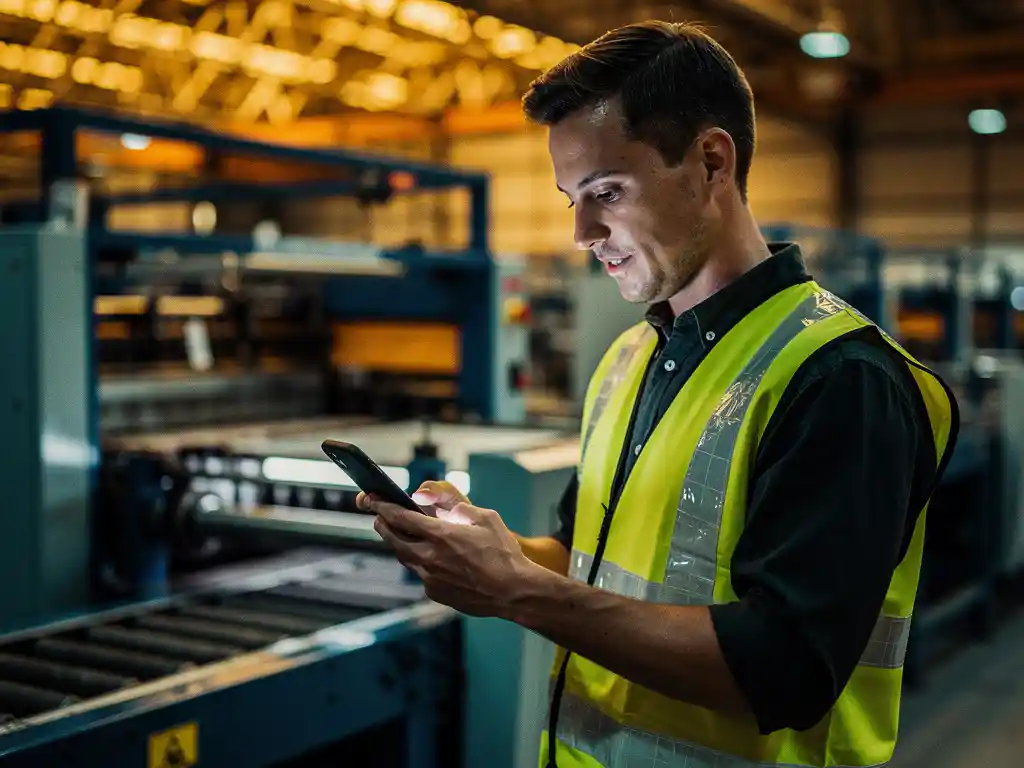
The most effective tools for onboarding employees without a desk or computer are those that work on a device workers already carry: their smartphone. WhatsApp-based training, SMS-delivered instructions, and mobile-first learning platforms remove the barrier of needing a company login, a laptop, or a dedicated training room to access onboarding content.
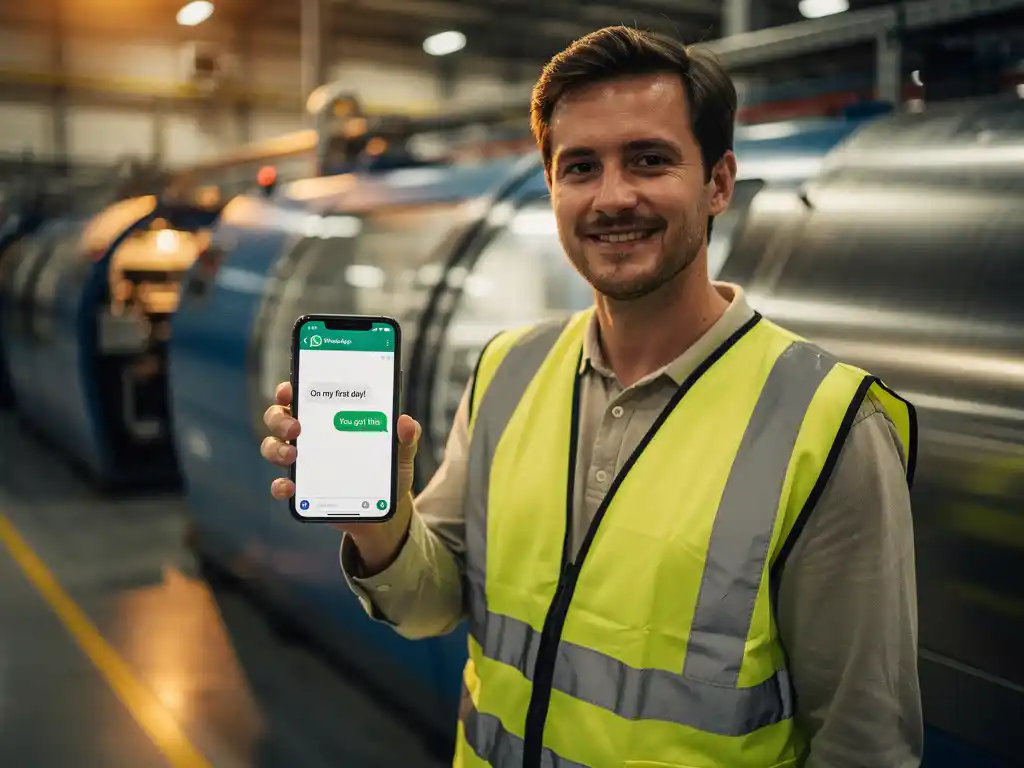
WhatsApp in particular is well-suited to production floor training because adoption is already near-universal across most workforce demographics and languages. Workers do not need to download a new app, create an account, or remember a password. Content arrives directly in a familiar interface, which removes friction and increases the likelihood that employees actually engage with it.
Other tools that support deskless onboarding include QR codes placed at workstations that link to specific instructions, digital checklists accessible via mobile, and short video walkthroughs sent directly to a worker’s phone. The common thread is accessibility: the best tool for onboarding new employees in a factory is the one that requires the fewest steps to reach the content. Platforms that also support knowledge retention help ensure what workers learn during onboarding stays with them long after their first week.
How do you measure whether your production floor onboarding is working?
You measure the effectiveness of production floor onboarding by tracking a combination of completion rates, time-to-productivity, error and incident rates amongst new starters, and early retention figures. These metrics together give a clear picture of whether your onboarding programme is actually transferring the knowledge workers need to perform safely and confidently.
Specific indicators to monitor include:
- Module completion rates: Are new employees finishing the onboarding content assigned to them?
- Knowledge check scores: Where quizzes or assessments are included, are workers demonstrating understanding?
- Time to independent performance: How quickly can a new starter complete their tasks without supervision?
- Incident and error rates: Are new employees involved in more quality issues or safety incidents than experienced ones?
- 30 and 60-day retention: Are new hires still with the organisation after the critical early period?
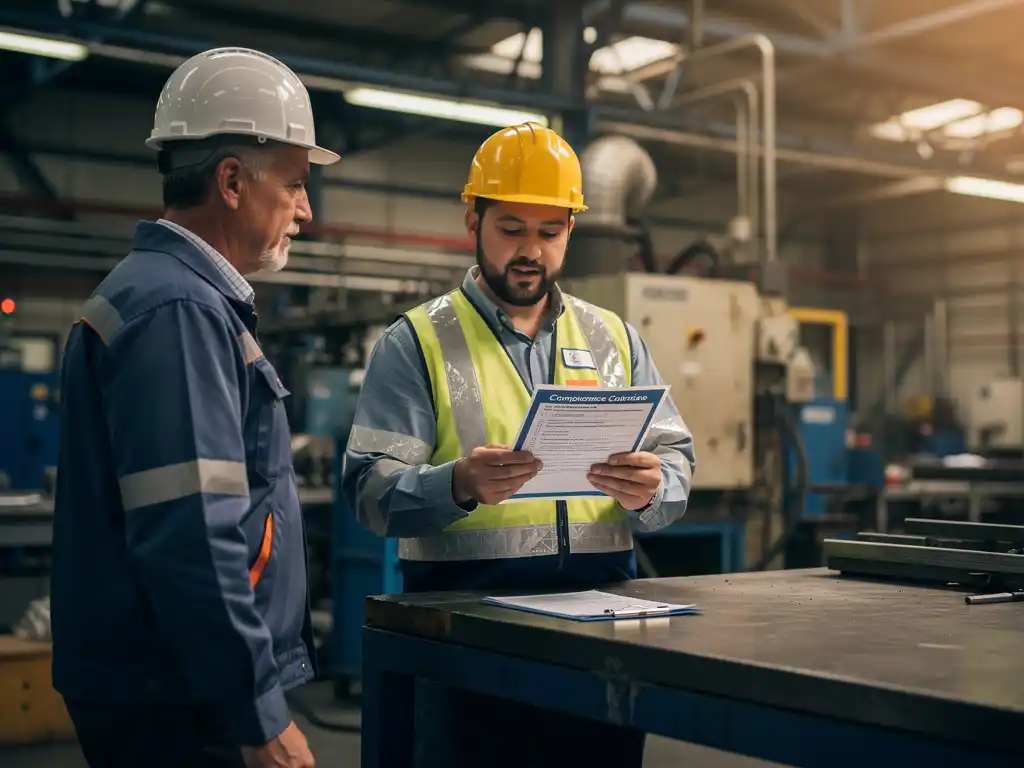
Gathering this data requires a platform that tracks progress automatically rather than relying on manual record-keeping. When managers can see at a glance who has completed which modules, they can intervene early if someone is falling behind, rather than discovering gaps only after a problem occurs. Regular workplace inspections and toolbox talks can complement onboarding data by revealing where knowledge gaps persist on the floor.
How E-Lia helps with onboarding on the production floor
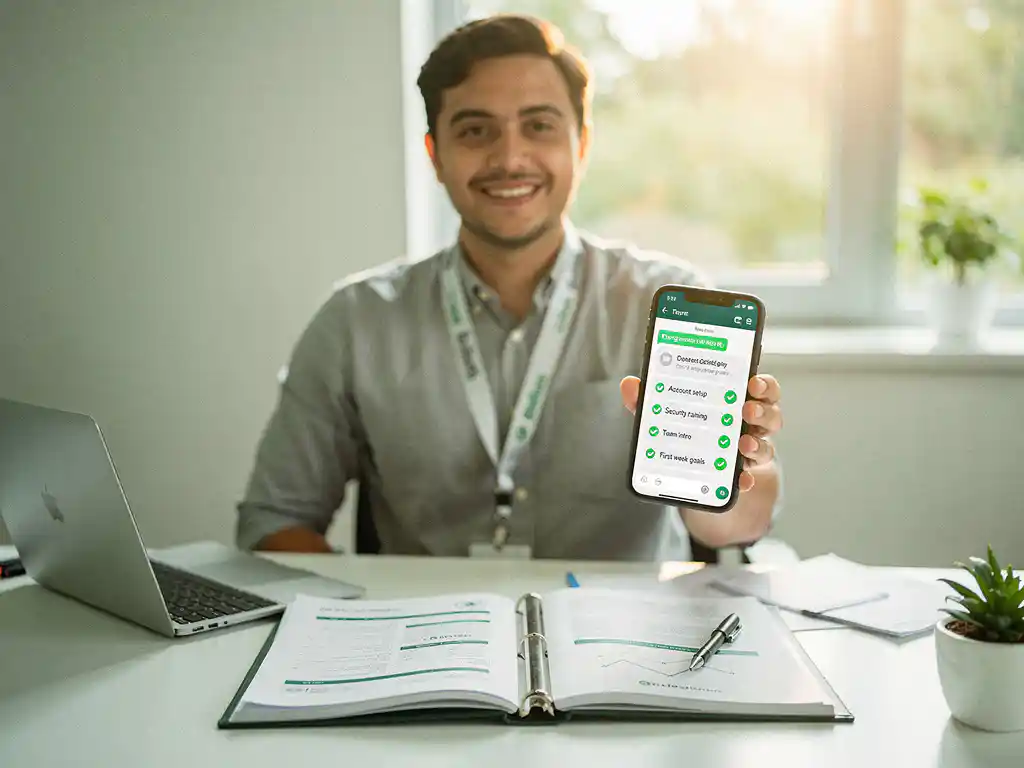
We built E-Lia specifically to solve the onboarding challenges that production floor teams face every day. Our platform delivers microlearning modules and work instructions directly via WhatsApp, meaning new employees can access everything they need on their own phone, in their own language, without a login or app download. Here is what that looks like in practice:
- Modules ready in 10 to 15 minutes: Trainers and L&D teams can build a complete onboarding module in under a quarter of an hour
- Completion in 3 to 6 minutes: Workers finish each module quickly, fitting learning into natural breaks in the working day
- Automatic translation: Content is delivered in the employee’s preferred language without any extra effort from the creator
- Scheduled delivery: Modules can be sent immediately or planned to arrive at the right moment in the onboarding journey
- Progress dashboard: Managers see completion rates and results in real time, with no manual tracking required
- No new app or login: Everything runs through WhatsApp, which workers already use and trust
E-Lia is already used by organisations including Universiteit Utrecht and ETZ to make onboarding faster, more consistent, and more effective. For teams in food production or regulated environments, E-Lia also supports HACCP training directly through the same platform. If you want to see how it works for a production environment like yours, plan a demo and we will walk you through it.
Frequently Asked Questions
Can we use E-Lia or WhatsApp-based onboarding if some employees don't have a personal smartphone?
This is a common concern, but in practice the vast majority of production floor workers do own a smartphone and use WhatsApp regularly. For the small number of employees who don’t, a practical workaround is to make shared devices available at a break room or entrance area, or to pair new starters with a buddy who can walk through modules together. The key advantage of a WhatsApp-based platform is that it removes every other barrier, no login, no app, no computer, so the threshold to engage is as low as possible for the widest possible group.
How do we handle onboarding for employees who speak a language we haven't prepared content for?
With a platform that supports automatic translation, this concern largely takes care of itself. When a new employee’s preferred language is set in the system, content is delivered in that language without the trainer needing to create a separate version. For highly specialised or safety-critical instructions, it’s worth doing a quick review of the translated output to confirm accuracy, particularly for technical terminology. Building this check into your content creation process once, rather than for every new hire, keeps the workload manageable.
What's the biggest mistake companies make when rolling out a new onboarding program on the production floor?
The most common mistake is trying to digitise an existing, overloaded onboarding manual rather than redesigning the content for the new format. A 40-page PDF converted into a series of long modules is not microlearning — it’s just a different screen. Effective production floor onboarding starts by asking: what does a new employee absolutely need to know in their first hour, first day, and first week? Building from that prioritised core, in short focused modules, produces far better results than simply moving existing content to a new platform.
How do we get supervisors and team leads on board with a new digital onboarding approach?
The most effective argument for supervisors is a practical one: a well-structured digital onboarding programme means they spend significantly less time repeating basic instructions to every new starter. Showing them the progress dashboard, where they can see at a glance who has completed which modules, also addresses a common frustration around not knowing what new employees have actually been taught. Involving one or two team leads in the content creation process early on also builds ownership and buy-in before the rollout reaches the wider floor.
How often should we update our production floor onboarding content, and who is responsible for that?
Onboarding content should be reviewed whenever a process, piece of equipment, safety regulation, or quality standard changes — not on a fixed annual cycle. Assigning a named owner to each module, typically the team lead or process expert closest to that task, makes it clear who is responsible for flagging when an update is needed. One of the practical advantages of a digital platform over printed manuals is that updates can be made and redeployed in minutes, so there’s no reason to let outdated content remain in circulation.
Is it possible to tailor the onboarding program to different roles or workstations, or does everyone receive the same content?
Role-specific onboarding is not only possible with a modern microlearning platform, it’s strongly recommended. A new employee on the assembly line has different immediate knowledge needs than someone in the warehouse or on a packaging station. The most effective approach is to build a small library of universal modules covering company-wide safety and culture, and then layer role-specific modules on top depending on where the employee is placed. This keeps content relevant and avoids overwhelming new starters with information that doesn’t apply to their daily work.
At what point in the hiring process should onboarding content start being delivered?
Ideally, the first onboarding touchpoint happens before a new employee’s first shift, not after it. Sending a welcome message and one or two short introductory modules in the days before someone starts, covering basic safety expectations or a team introduction, reduces first-day anxiety and means less ground needs to be covered in the already-busy first few hours. Pre-boarding via WhatsApp is particularly frictionless because the employee can engage from home, at their own pace, without needing to come on-site or log into a system.