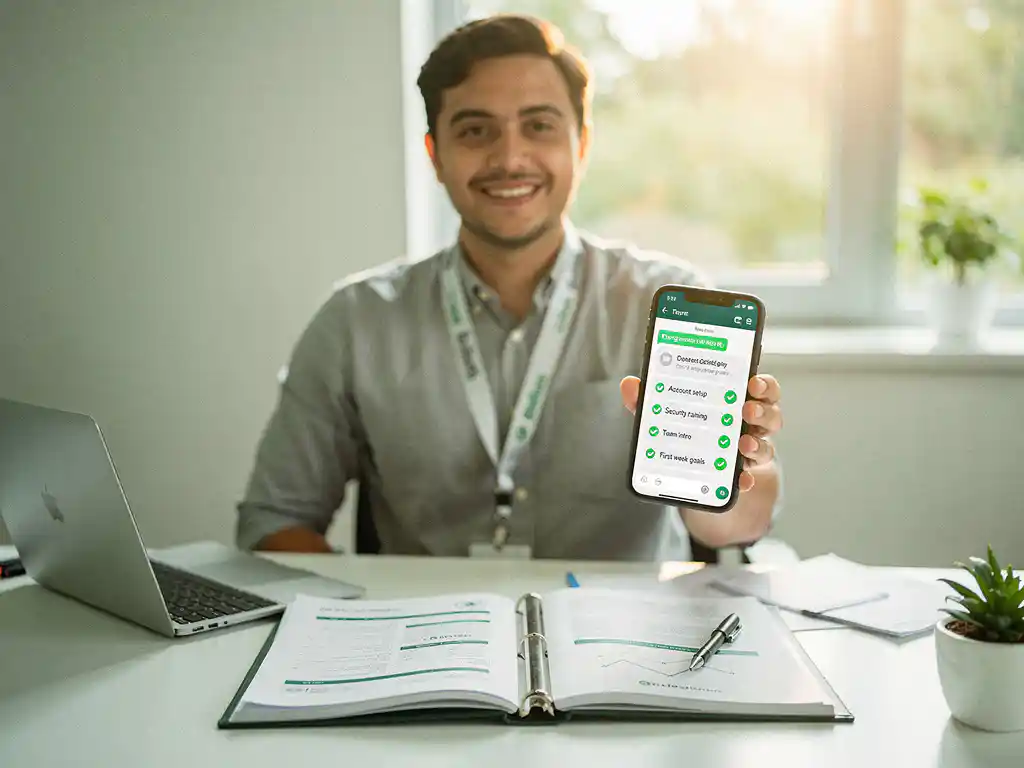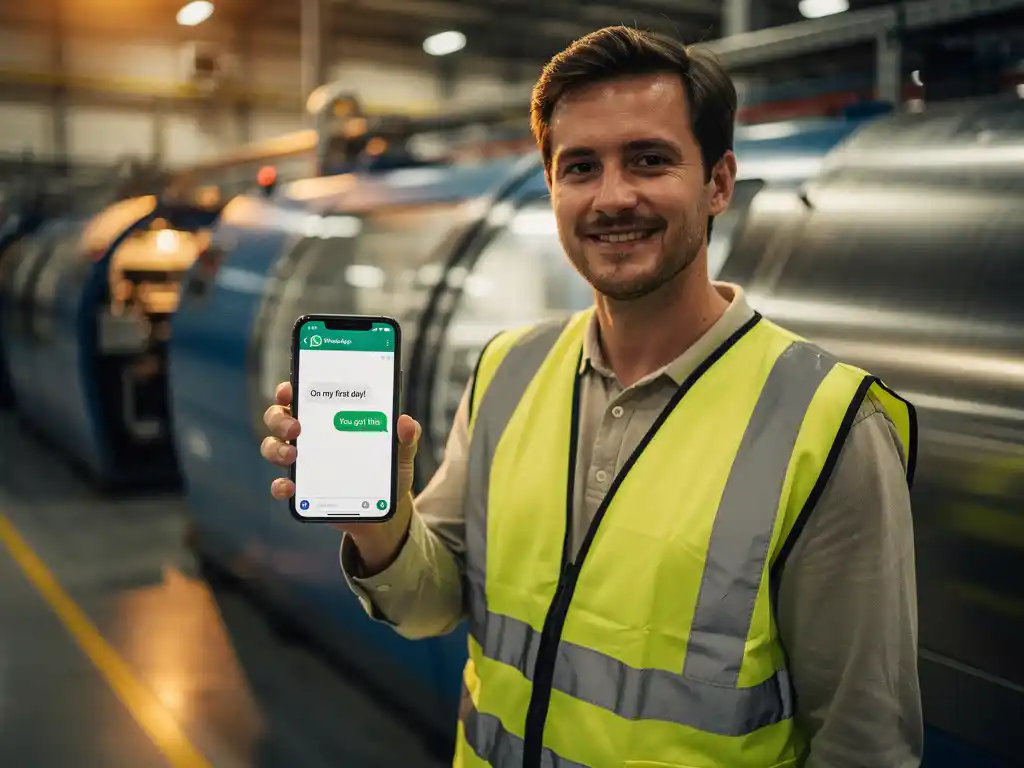



To set up an onboarding programme for employees who do not speak the local language, you need to build a multilingual onboarding structure from day one. This means translating core materials, using visual and audio formats where possible, and delivering content through channels your employees already know how to use. The sections below walk through the most common questions organisations face when designing onboarding for a multilingual workforce.
Why do language barriers make onboarding so difficult?
Language barriers make onboarding difficult because employees cannot fully absorb, retain, or act on information they do not understand. When new hires miss critical instructions due to a language gap, the consequences go beyond confusion. They affect safety, compliance, productivity, and confidence. For organisations with non-native speakers, a standard onboarding programme in the local language is not a neutral starting point. It is already an obstacle.
The challenge runs deeper than simple translation. Onboarding is dense with context: company culture, role expectations, safety protocols, and administrative processes all land at once. For an employee who is still processing a new language, this volume of information becomes overwhelming quickly. Research in workplace learning consistently shows that people retain far less when they are cognitively overloaded, and language strain adds a significant layer to that load.
There is also a social dimension. Employees who cannot follow onboarding content often feel isolated or hesitant to ask for clarification. This early experience shapes how connected they feel to the organisation, and a poor start is hard to recover from. Language barrier onboarding is not just a training problem. It is a retention and engagement problem too.
What types of content should be translated for new employees?
The content most critical to translate for new employees includes safety instructions, role-specific procedures, HR and administrative documents, and any compliance-related materials. These are the areas where misunderstanding carries the highest risk. Beyond those priorities, any content that shapes how an employee performs their daily tasks should be available in their preferred language.
A practical way to approach this is to categorise your onboarding content by urgency and risk:
- High priority: Safety protocols, emergency procedures, equipment handling instructions, and legal compliance documents
- Medium priority: Role-specific workflows, job expectations, team communication norms, and performance standards
- Supporting content: Company values, culture introductions, benefits explanations, and organisational structure overviews
Visual content, short videos, and illustrated step-by-step guides often travel across languages more effectively than text-heavy documents. Where translation is not yet available, clear visuals can bridge the gap. That said, relying solely on visuals is not a substitute for accurate translation in high-stakes areas like safety or compliance.
It is also worth thinking about format. Long documents translated word for word are rarely read thoroughly, regardless of language. Breaking content into short, focused units makes it easier for employees to find what they need and process it without fatigue. Learn more about how structured work instructions can support this approach.
How does multilingual microlearning improve onboarding outcomes?
Multilingual microlearning improves onboarding outcomes by delivering short, focused learning moments in an employee’s own language, exactly when they need them. Instead of a single overwhelming induction day, employees receive small pieces of relevant information over time. This approach reduces cognitive overload, increases retention, and allows non-native speakers to engage with content at their own pace without the pressure of a group setting.
The format works particularly well for multilingual workforce training because it separates language complexity from content complexity. When an employee reads a three-minute module in their native language rather than a forty-page handbook in an unfamiliar one, the barrier shifts from comprehension to application. That is a much better position to be in.
Microlearning also supports spaced repetition, a well-established principle in learning science. Spreading onboarding content across several days or weeks, rather than compressing it into one session, gives employees time to apply what they have learnt before the next piece arrives. For non-native speakers, this pacing is especially valuable because it reduces the pressure of processing everything at once. Explore how retaining and maintaining knowledge can be built into your onboarding programme.
Organisations in sectors like healthcare, logistics, and production have found that microlearning delivered through familiar channels, such as messaging apps employees already use, increases completion rates significantly compared to traditional e-learning platforms that require logins and dedicated screen time.
Which tools support onboarding in multiple languages?
The most effective tools for multilingual onboarding combine automatic translation capabilities with a delivery channel that employees can access without technical friction. This typically includes learning management systems with built-in language settings, mobile-first platforms, and messaging-based tools that reach employees on devices they already carry.
When evaluating tools for onboarding non-local language employees, consider the following criteria:
- Automatic translation: Can the platform translate content into multiple languages without requiring a separate workflow for each?
- Accessibility: Does the tool require a login, a downloaded app, or a specific device? The fewer barriers, the higher the adoption rate amongst employees who are less digitally confident.
- Content format flexibility: Can you include images, short videos, and simple quizzes alongside text?
- Progress tracking: Can managers see which employees have completed which modules, and in which language?
- Integration: Does the tool connect with your existing HR system or LMS to avoid duplicate data management?
For frontline workers in particular, tools that work through familiar platforms like WhatsApp remove a significant adoption barrier. Employees do not need to learn a new interface. The onboarding content arrives in an environment they already trust and use daily, which is a meaningful advantage when you are also asking them to absorb new job information. See how a structured onboarding platform can make this process seamless.
How do you measure whether multilingual onboarding is working?
You measure whether multilingual onboarding is working by tracking completion rates, knowledge retention, time to competency, and early retention figures for non-native speaker cohorts. These indicators, compared against a baseline or against local-language employee cohorts, give you a clear picture of whether your language barrier onboarding approach is closing the gap or leaving it open.
Specific metrics to monitor include:
- Module completion rates by language: Are employees completing onboarding content in their preferred language at the same rate as local-language employees?
- Assessment scores: How are employees performing on knowledge checks after each module? Low scores in a specific language version may signal a translation quality issue rather than a learning problem.
- Time to independent performance: How long does it take a new employee to work without direct supervision? A shorter timeline suggests the onboarding content is landing effectively.
- Early turnover rates: Employees who feel unsupported during onboarding leave sooner. Tracking 30, 60, and 90-day retention by language group reveals whether your programme is building confidence or eroding it.
- Manager feedback: Direct line managers often notice knowledge gaps before formal metrics capture them. Structured check-ins with managers of multilingual teams provide qualitative insight that numbers alone cannot.
Dashboards that show real-time progress across employee groups make this kind of monitoring practical. Without visibility into who has completed what, it is difficult to intervene early when a new employee is falling behind, regardless of the reason. Regular workplace inspections and toolbox talks can complement your onboarding data by surfacing practical gaps on the ground.
How E-Lia supports multilingual onboarding
We built E-Lia specifically to make onboarding accessible for every employee, including those who do not speak the local language. Our platform delivers microlearning modules directly via WhatsApp, with no login, no app download, and no new interface to learn. Employees receive short, focused content in their own language, exactly when they need it during the onboarding process.
Here is what we offer for organisations running multilingual onboarding programmes:
- Automatic translation so you can build a module once and deploy it across multiple languages without duplicating your work
- Modules that take 10 to 15 minutes to build and 3 to 6 minutes for employees to complete, keeping onboarding light and manageable
- Scheduled or instant delivery via WhatsApp, reaching employees on the device they already use every day
- A real-time progress dashboard so you can track completion and results by language group, team, or individual
- API integrations with HR systems and LMS platforms so onboarding triggers automatically when a new employee is added
E-Lia is already used by organisations like the University of Utrecht and ETZ to onboard employees effectively, including those working across language groups. If you are ready to see how it works in practice, plan a demo and we will walk you through the platform.
Frequently Asked Questions
How do I get started if my organization has never done multilingual onboarding before?
Start by auditing your existing onboarding content and categorizing it by risk level — safety and compliance materials first, then role-specific workflows, then supporting content like culture and benefits. From there, identify the top two or three languages spoken by your non-native workforce and prioritize translation for those groups. You do not need to have everything translated before you launch. A phased approach, starting with high-priority content and expanding over time, is more sustainable and still delivers meaningful improvement from day one.
What if we have employees who speak many different languages — is multilingual onboarding still practical?
Yes, especially when you use a platform with automatic translation capabilities. Rather than manually creating a separate version of every module for each language, tools that auto-translate your content allow you to build once and deploy across many languages simultaneously. The key is to review machine translations for high-stakes content like safety or compliance materials, where accuracy is non-negotiable. For supporting content, auto-translation is typically sufficient and dramatically reduces the effort required to scale across language groups.
How do I handle onboarding for employees with low digital literacy in addition to a language barrier?
The most effective approach is to reduce the number of steps an employee needs to take to access content. Platforms that deliver onboarding through a tool employees already use — such as WhatsApp — remove the need to learn a new interface, create a login, or download an app. Pairing digital content with a buddy or mentor who speaks the same language can also bridge the gap during the first few days. Keeping individual modules short (three to six minutes) further reduces the cognitive demand on employees who are navigating both a new language and a new digital environment.
What are the most common mistakes organizations make with multilingual onboarding?
The most common mistake is treating translation as the only requirement — assuming that if the content exists in another language, the problem is solved. In practice, poor translation quality, overly long documents, and content delivered all at once still produce poor outcomes, even when the language is correct. Another frequent error is failing to track completion and performance by language group, which means problems go undetected until they show up as turnover or safety incidents. Finally, many organizations overlook the social side of onboarding: non-native speakers need opportunities to ask questions and build relationships, not just receive information.
Can multilingual microlearning work for onboarding employees in physically demanding or frontline roles where screen time is limited?
Yes — this is actually where microlearning tends to perform best. Short modules of three to six minutes can be completed during a break, before a shift starts, or between tasks, without requiring employees to sit at a desk or step away from their work for extended periods. Delivery via mobile messaging apps means employees can engage on the same device they already carry. For roles where even brief screen time is restricted during work hours, scheduling modules to arrive before or after shifts ensures the content reaches employees without interfering with operational demands.
How do I ensure translation quality is accurate enough for safety-critical content?
For safety protocols, equipment instructions, and compliance documents, machine translation should always be reviewed by a fluent speaker before deployment — ideally someone familiar with the relevant industry terminology. One practical approach is to involve bilingual employees from your own workforce in a review step, which also has the added benefit of building ownership and trust in the content. After deployment, monitoring assessment scores by language version can flag translation issues early: if employees consistently score lower on a specific module in one language, the problem is often in the translation rather than the learning design.
How long does it typically take to see measurable results from a multilingual onboarding program?
Most organizations begin to see meaningful differences in completion rates and early retention figures within the first 30 to 60 days of rolling out a structured multilingual onboarding program. Time-to-competency improvements — how quickly employees can work independently — often become visible within the first 90 days. The key is having a baseline to compare against, so it is worth capturing your current metrics before you launch. Manager feedback tends to surface qualitative improvements even faster, often within the first two to three weeks, as new employees arrive better prepared and more confident.