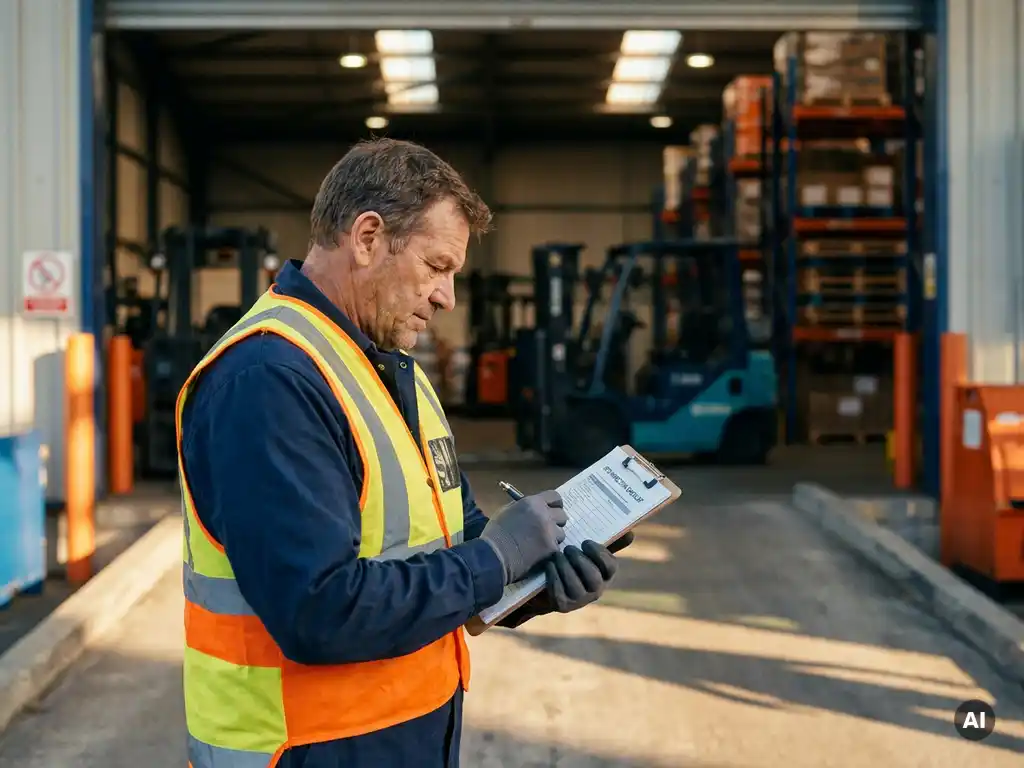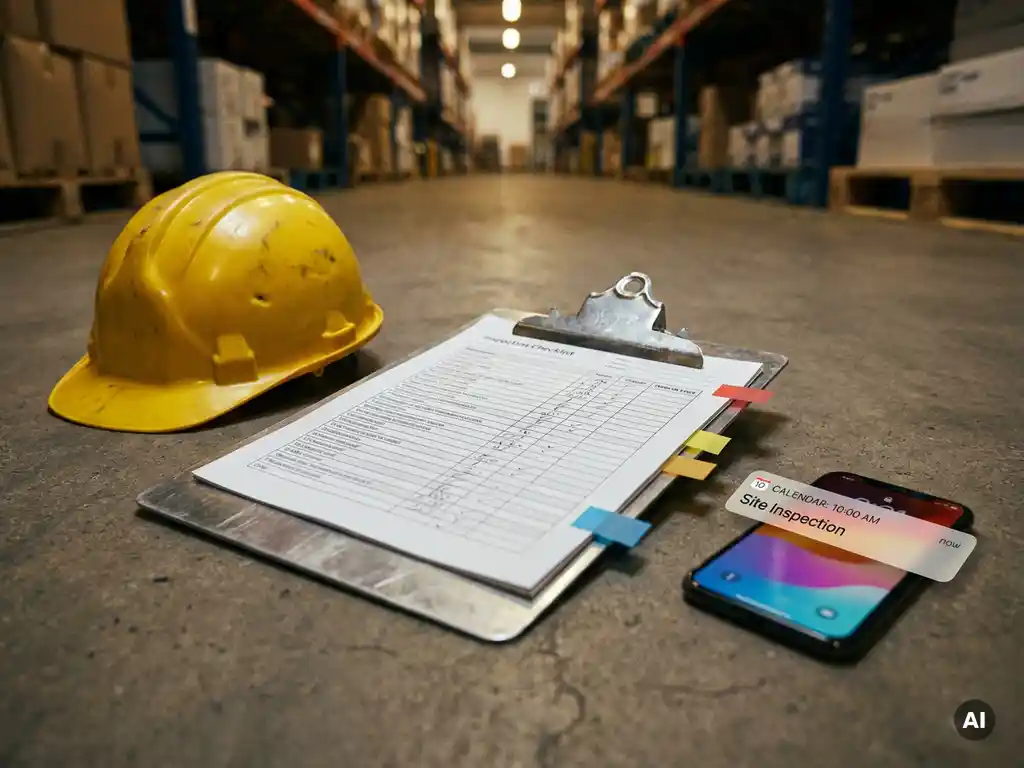


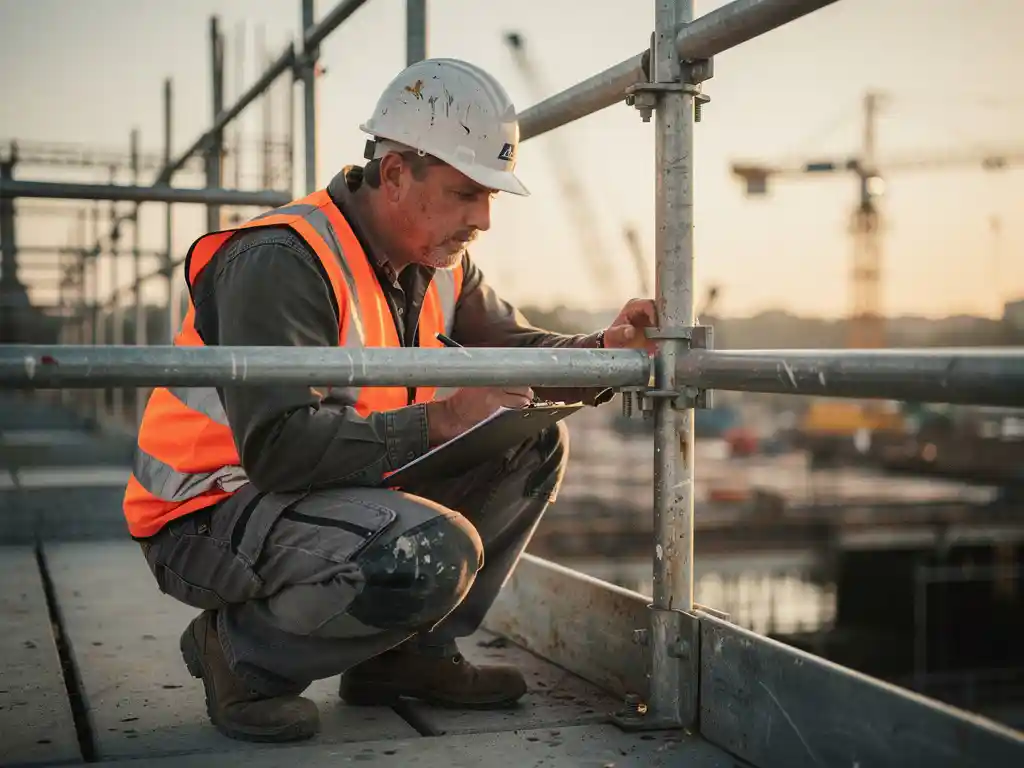
During workplace inspections in construction, specific attention must be given to fall protection, scaffolding integrity, PPE compliance, machinery safety, electrical hazards, housekeeping, and the availability of key documentation. These inspection points form the backbone of any effective construction safety inspection. The sections below walk through the most important questions site managers, safety officers, and L&D professionals face when preparing for or carrying out a construction site inspection.
What areas are covered during a construction workplace inspection?
A construction workplace inspection covers physical site conditions, worker behaviour, equipment status, and documentation compliance. Inspectors assess whether hazards are controlled, safety procedures are followed, and legal obligations are met. The scope typically spans the entire site, from entry points and storage areas to active work zones and welfare facilities.
In practice, most construction site inspections are structured around a set of consistent focus areas:
- Fall protection: Guardrails, edge protection, safety nets, and harness use at height
- Scaffolding and access: Structural integrity, load limits, and safe access routes
- Machinery and equipment: Condition, maintenance records, and operator certification
- Electrical safety: Temporary wiring, isolation procedures, and overhead line proximity
- Housekeeping: Clear walkways, waste disposal, and material storage
- Welfare facilities: Sanitation, drinking water, and rest areas
- Emergency preparedness: First aid provisions, fire extinguishers, and evacuation routes
Each of these areas reflects a category of risk that is consistently present on construction sites. Inspectors use checklists aligned with national regulations and sector-specific standards to ensure nothing is overlooked.
What are the most common safety hazards found during construction inspections?
The most common safety hazards identified during construction inspections are falls from height, being struck by moving objects, contact with electricity, manual handling injuries, and exposure to hazardous substances. These hazards account for the majority of serious incidents on construction sites and are therefore the primary focus of any construction safety inspection.
Falls from height remain the leading cause of fatal injuries in construction. Inspectors frequently identify missing or damaged guardrails, improperly secured ladders, and workers operating at height without appropriate harnesses. Scaffolding deficiencies, such as missing toe boards or unsecured platforms, are also a recurring finding.
Struck-by hazards are equally common. These include unsecured loads, vehicles operating near pedestrians, and overhead work without adequate exclusion zones. Inspectors look for clear separation between vehicle routes and foot traffic, as well as signage and barriers around active lifting operations.
Electrical risks often arise from temporary installations, damaged cables, or work carried out too close to live overhead lines. Inspectors verify that isolation procedures are in place and that workers are briefed on the location of underground services before excavation begins.
How is PPE compliance checked during a workplace inspection?
PPE compliance is checked during a construction workplace inspection by observing whether workers are wearing the correct protective equipment for their task, verifying that PPE is in good condition, and confirming that workers have received instruction on its proper use. Inspectors assess both the provision of PPE and its actual use on site.
During an inspection, the assessor will typically walk through active work areas and note whether helmets, high-visibility vests, safety boots, gloves, and eye protection are being worn consistently. They will also check whether the PPE in use is appropriate for the specific hazard, for example, whether hearing protection is available in high-noise zones or respiratory protection is used where dust or fumes are present.
Beyond observation, inspectors may ask to see records showing that PPE has been issued to workers and that training has been provided. A common finding is that PPE is available on site but not consistently worn, often because workers have not received clear, accessible instructions on when and why it is required. This is where structured safety briefings and accessible training play a critical role in closing the gap between provision and practice. Explore how structured onboarding can help workers understand PPE requirements from day one.
What documentation must be available during a construction site inspection?
During a construction site inspection, the following documentation must typically be available: the construction phase plan, risk assessments and method statements, equipment inspection records, worker competency certificates, site induction records, and emergency procedures. The exact requirements depend on the applicable national regulations and the scale of the project.
The construction phase plan is a foundational document that outlines how health and safety will be managed throughout the project. Inspectors will check that it is current, site-specific, and accessible to relevant personnel rather than filed away and forgotten.
Risk assessments and method statements, often referred to together as RAMS, must cover the specific tasks being carried out at the time of the inspection. Generic documents that do not reflect actual site conditions are a frequent non-compliance finding.
Equipment records are also scrutinised. Inspectors expect to see evidence that lifting equipment, scaffolding, and tools have been inspected at the required intervals and that any defects have been recorded and acted upon. Worker competency certificates, such as plant operator licences or working-at-height training records, confirm that individuals are qualified for the tasks they are performing.
Who is responsible for conducting workplace inspections on a construction site?
Responsibility for conducting workplace inspections on a construction site is shared across multiple roles. The principal contractor holds overall responsibility for site safety and must ensure inspections take place. Site managers, safety officers, and supervisors carry out day-to-day inspections, whilst workers themselves have a duty to report hazards they observe.
In larger organisations, a dedicated health and safety manager or external safety consultant may lead formal inspections. On smaller sites, the site manager often fulfils this role. Regardless of structure, the person conducting the inspection must have sufficient knowledge of construction hazards and relevant regulations to identify non-compliance accurately.
Subcontractors also bear responsibility for inspecting their own work areas and ensuring their workers comply with site safety rules. This layered accountability means that effective inspection requires clear communication between the principal contractor and all parties working on site. Induction processes and regular toolbox talks help align everyone on expectations before work begins.
How often should workplace inspections be carried out in construction?
Workplace inspections in construction should be carried out at multiple intervals: daily informal checks by supervisors, weekly formal site inspections, and periodic in-depth audits aligned with project phases or regulatory requirements. The frequency increases when new hazards are introduced, after incidents, or when significant changes occur on site.
Daily checks focus on immediate hazards such as blocked emergency routes, damaged equipment, or unsafe working practices observed in real time. These are typically carried out by supervisors or foremen as part of their routine responsibilities.
Weekly formal inspections are documented and cover a broader range of inspection points across the site. Scaffolding, for example, must be inspected at least every seven days under many national regulations, as well as after any event that could have affected its stability, such as severe weather.
Periodic audits go deeper, reviewing documentation, training records, and management systems rather than just physical conditions. These are often conducted quarterly or at key project milestones. The overall principle is that inspection frequency should match the level of risk: higher-risk activities and environments require more frequent review. Well-structured work instructions can help ensure workers follow the correct procedures consistently between inspections.
How E-Lia Supports Construction Safety Training
Knowing what to inspect is only part of the challenge. Workers need to understand safety procedures before they set foot on site, and that knowledge needs to be refreshed regularly. We help construction organisations close this gap by delivering microlearning modules directly via WhatsApp, with no app downloads or logins required.
With E-Lia, your organisation can:
- Build a site induction or safety briefing module in as little as 10 to 15 minutes
- Send PPE instructions, RAMS summaries, or inspection checklists directly to workers’ phones
- Deliver content in multiple languages to reach multilingual teams on site
- Schedule modules to align with project phases, new task introductions, or post-incident refreshers
- Track completion and comprehension through a straightforward dashboard
Whether you are preparing workers for their first site inspection or reinforcing safety standards across a large team, we make that training fast, accessible, and measurable. Learn more about how E-Lia supports retaining and maintaining knowledge on site, or plan a demo to see how E-Lia fits into your construction safety approach.
Frequently Asked Questions
What is the difference between a construction site inspection and a safety audit?
A construction site inspection focuses on observable, physical conditions at a specific point in time — checking whether guardrails are in place, PPE is being worn, and equipment is in working order. A safety audit is a broader, more systematic review that evaluates whether the entire safety management system, including policies, procedures, training records, and documentation, is functioning effectively. In practice, both are necessary: inspections catch immediate hazards, while audits identify deeper systemic gaps that could lead to recurring non-compliance.
What should I do if a serious hazard is found during a construction inspection?
If a serious or imminent hazard is identified during a construction inspection, work in that area should be stopped immediately and the affected zone cordoned off until the hazard is controlled. The finding must be reported to the site manager or principal contractor without delay, documented with photographic evidence where possible, and followed up with a corrective action that has a clear owner and deadline. Depending on the severity, regulatory authorities may also need to be notified in line with national reporting requirements.
How can I make sure workers actually follow safety procedures between inspections?
Consistent compliance between inspections depends on workers genuinely understanding why safety procedures exist, not just being told to follow them. Short, regular safety communications — such as toolbox talks, microlearning modules, or task-specific briefings delivered before work begins — help reinforce expectations in a practical, memorable way. Supervisors also play a critical role by modelling safe behaviour and addressing non-compliance on the spot, rather than waiting for the next formal inspection to flag issues.
Are there specific inspection requirements for scaffolding that I should be aware of?
Yes — scaffolding is subject to stricter inspection intervals than most other site elements. Under many national regulations, scaffolding must be formally inspected at least every seven days, as well as after any event that could have affected its structural integrity, such as high winds, heavy rain, or an impact from plant or materials. Inspections must be carried out by a competent person, and the findings must be recorded in writing. Any defects identified must be rectified before the scaffolding is used again.
How do I prepare my team for an upcoming construction site inspection?
Effective preparation starts well before the inspection date. Ensure all documentation — including the construction phase plan, RAMS, equipment records, and worker competency certificates — is up to date, accessible, and site-specific. Conduct a pre-inspection walkthrough to identify and correct obvious physical hazards, and brief your team on what inspectors will be looking for so workers are not caught off guard. Using structured induction modules or refresher briefings in the days leading up to the inspection can significantly improve both confidence and compliance on the day.
Can construction site inspections be conducted digitally, or do they need to be done on paper?
Construction site inspections can absolutely be conducted digitally, and many organisations are moving away from paper-based checklists entirely. Digital inspection tools allow inspectors to complete checklists on a mobile device, attach photos, assign corrective actions, and generate reports in real time — all of which improves both accuracy and accountability. The key requirement is that records are retained and accessible for review; whether that happens on paper or through a digital platform is generally left to the organisation’s discretion under most regulatory frameworks.
What are the most common mistakes organisations make when managing construction safety inspections?
The most common mistakes include treating inspections as a tick-box exercise rather than a genuine hazard identification process, using generic checklists that do not reflect the actual tasks and conditions on site, and failing to close out corrective actions after findings are recorded. Another frequent issue is inconsistent inspection frequency — conducting thorough audits at project milestones but neglecting daily and weekly checks in between. Organisations that address these gaps by combining regular physical inspections with ongoing worker training tend to see a measurable reduction in incidents over time.