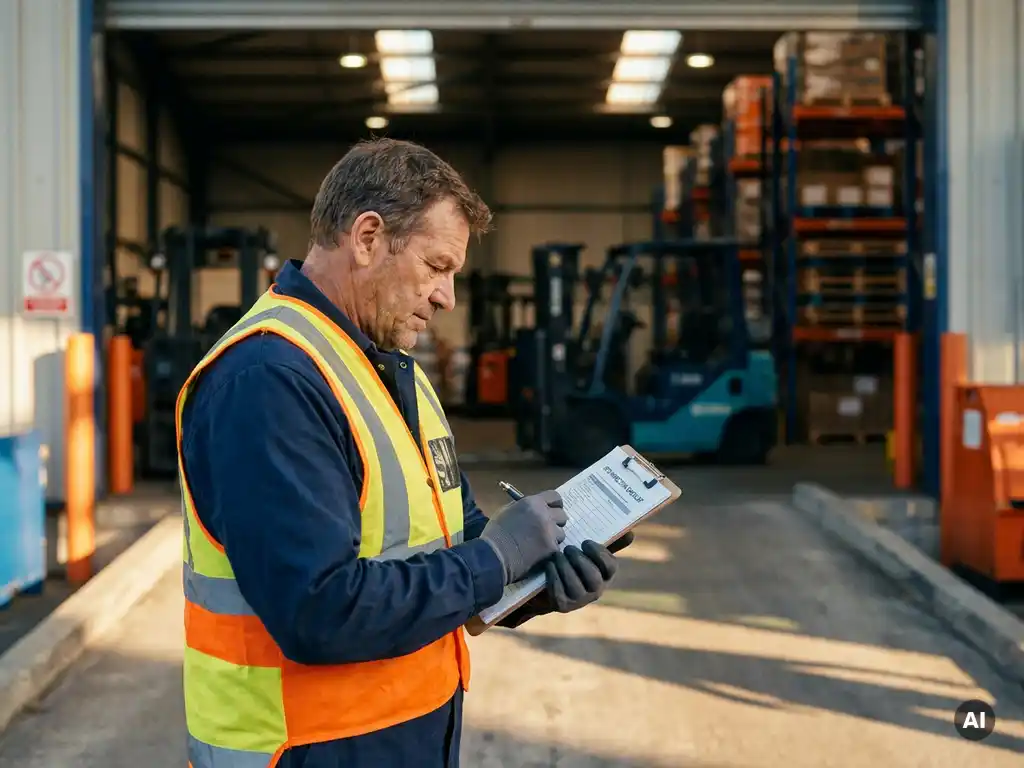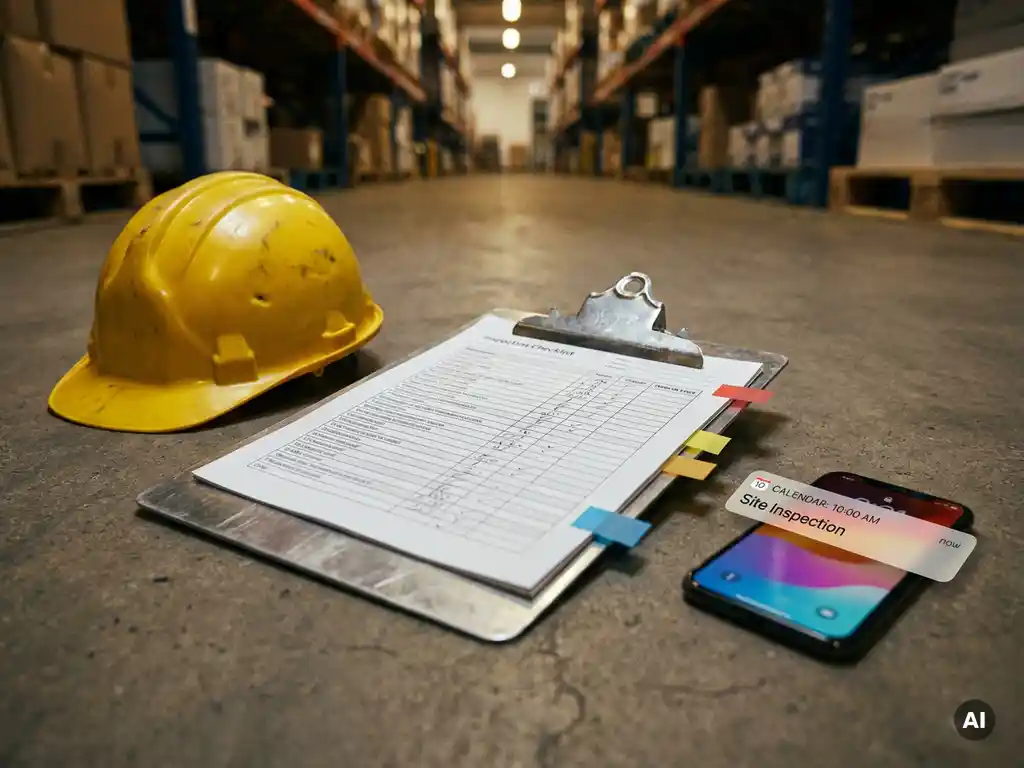


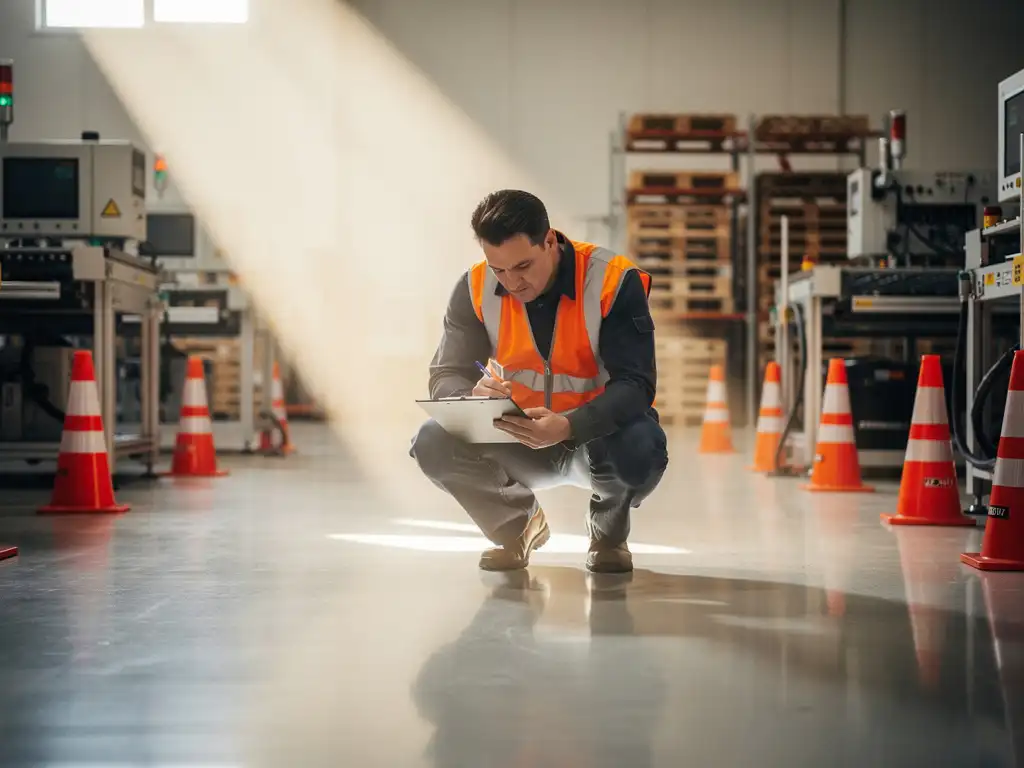
Regular workplace inspections can prevent a significant proportion of workplace accidents by identifying and eliminating hazards before they cause harm. Industry experience consistently shows that most workplace accidents are not random events but the result of known, preventable conditions that go unaddressed. The sections below explain exactly how inspections work, what they find, how often to run them, and who should be involved.
How do workplace inspections actually prevent accidents?
Workplace inspections prevent accidents by creating a systematic process for finding hazards before workers are exposed to them. Rather than reacting after an incident occurs, inspections shift safety management into a proactive mode. When a hazard is identified and corrected during an inspection, the chain of events that would have led to an injury is broken entirely.
The prevention mechanism works on several levels. First, inspections create accountability. When managers and team leaders regularly walk the floor with a structured checklist, unsafe conditions are harder to ignore or overlook. Second, they reinforce a safety culture. Employees who see inspections taken seriously are more likely to report hazards themselves between scheduled checks. Third, inspections generate a documented record that helps organisations spot recurring problems, seasonal risks, or areas of the workplace that consistently fall below standard.
The result is a compounding effect. Each inspection builds on the last, progressively reducing the number of unaddressed hazards in a workplace. Over time, organisations that maintain consistent inspection programmes tend to see fewer near-misses, lower incident rates, and reduced costs associated with workplace injuries.
What types of hazards do workplace inspections typically uncover?
Workplace safety inspections typically uncover physical, chemical, ergonomic, and behavioural hazards that would otherwise remain hidden until they cause harm. The specific hazards vary by industry, but certain categories appear consistently across sectors.
- Physical hazards: Slippery floors, poor lighting, blocked emergency exits, unsecured equipment, and damaged machinery are among the most common findings.
- Chemical hazards: Improper storage of hazardous substances, missing safety data sheets, and inadequate ventilation in areas where chemicals are used.
- Ergonomic hazards: Workstations set up in ways that cause repetitive strain, heavy lifting without mechanical aids, and poorly designed workflows that force awkward postures.
- Behavioural and procedural gaps: Workers not wearing required personal protective equipment, shortcuts in established procedures, and informal workarounds that have become habits.
- Maintenance issues: Equipment that is overdue for servicing, worn protective guards, and tools that have been repaired informally rather than replaced.
In sectors like logistics and manufacturing, inspections also frequently uncover housekeeping failures, such as materials stored in walkways or waste accumulating near heat sources. In healthcare settings, infection control breaches and manual handling risks tend to dominate findings. The inspection process is most valuable when it is tailored to the specific risks of the environment being assessed.
How often should workplace inspections be carried out?
The frequency of workplace inspections depends on the level of risk in the environment, but as a general principle, higher-risk workplaces require more frequent checks. A construction site or a chemical processing facility warrants daily or weekly inspections of critical areas, whilst a low-risk office environment may be adequately covered with monthly or quarterly reviews.
A practical framework for most organisations combines three layers of inspection activity:
- Informal daily checks: Supervisors or team leaders scan their area at the start of each shift for obvious hazards. These are brief, routine, and require no formal documentation beyond a quick log.
- Scheduled periodic inspections: A more thorough, structured inspection carried out weekly or monthly, covering the full range of hazards relevant to the area and documented with a formal checklist.
- Comprehensive audits: A detailed review conducted quarterly or annually, often involving safety specialists or external auditors, that evaluates both physical conditions and the effectiveness of the overall safety management system.
Inspection frequency should also increase temporarily after an incident, after significant changes to equipment or processes, and when new employees join a team. Seasonal factors, such as winter conditions affecting outdoor work areas or increased heat in summer, are another reason to adjust inspection schedules dynamically.
What is the difference between a workplace inspection and a risk assessment?
A workplace inspection is an active, on-site review of actual conditions at a specific point in time, whilst a risk assessment is a structured analysis of potential hazards and their likelihood of causing harm. The two processes are complementary but serve different purposes in a safety management system.
A risk assessment typically happens before work begins or before a new process is introduced. It asks: what could go wrong, how likely is it, and how severe would the consequences be? The output is a documented evaluation that informs control measures, safe working procedures, and training requirements.
A workplace inspection, by contrast, checks whether those control measures are actually in place and working as intended. It asks: are the procedures being followed, is the equipment in good condition, and have any new hazards emerged since the last assessment? Inspections catch the gap between what a risk assessment recommends and what is actually happening on the ground.
Both are legally required in most jurisdictions under occupational health and safety legislation, and neither replaces the other. Think of risk assessments as the plan and workplace inspections as the ongoing check that the plan is being executed.
Who is responsible for conducting workplace inspections?
Responsibility for conducting workplace inspections is shared across an organisation, but the primary duty rests with employers and managers who have a legal obligation to maintain a safe working environment. In practice, inspections are most effective when they involve multiple roles working together.
Supervisors and team leaders are typically responsible for day-to-day and weekly inspections within their areas. They have the closest knowledge of normal conditions and are best placed to notice when something has changed. Health and safety officers or designated safety representatives take responsibility for more formal periodic inspections and for maintaining the documentation system.
Senior management plays a role by conducting occasional inspections themselves, which signals that safety is a genuine organisational priority rather than a compliance exercise. In unionised workplaces, worker safety representatives often have a legal right to participate in inspections and should be included as a matter of course.
External specialists, such as occupational hygienists or equipment engineers, may be brought in for technical assessments of specific hazards that require specialist knowledge. The key principle is that inspections should never be the sole responsibility of one person or one department. Shared ownership produces more thorough findings and stronger follow-through on corrective actions.
How can digital tools make workplace inspections more effective?
Digital tools make workplace inspections more effective by replacing paper checklists with structured, consistent formats that are easier to complete, harder to skip, and far simpler to act on. When inspection data is captured digitally, it becomes immediately available for analysis, trend identification, and follow-up assignment.
The practical advantages of digital inspection tools include:
- Standardised checklists: Every inspector covers the same points in the same order, reducing the risk of items being missed because of personal habit or time pressure.
- Instant reporting: Findings can be logged in real time and shared with relevant managers immediately, rather than sitting in a paper file until the next safety meeting.
- Photo documentation: Inspectors can attach images to specific findings, making it easier for maintenance teams to understand what needs to be fixed and providing a clear before-and-after record.
- Automated reminders: Scheduled inspections are less likely to be postponed or forgotten when the system sends automatic prompts to the responsible person.
- Data analysis: Over time, digital records reveal patterns, such as which areas generate the most findings or which hazard types recur, enabling targeted improvement efforts.
Mobile accessibility is particularly valuable in industries like logistics, manufacturing, and healthcare, where workers are rarely at a desk. When an inspection tool works on a smartphone and requires no login or app download, adoption rates are significantly higher and inspections happen more consistently.
How E-Lia supports workplace safety and inspection readiness
Effective workplace inspections depend not just on the inspection itself but on whether your team has the knowledge to recognise hazards, follow procedures correctly, and act on findings. That is where E-Lia comes in. We deliver safety training, work instructions, and procedural updates directly via WhatsApp, with no app to download and no login required.
Here is what that means in practice for organisations focused on accident prevention:
- Send microlearning modules on hazard recognition, safe working procedures, or PPE requirements directly to employees’ phones before a shift or inspection cycle. Learn more about our approach to workplace inspections.
- Distribute updated work instructions instantly when processes change or new risks are identified, ensuring the entire team is working from the same information.
- Support multilingual teams with automatic translations, so language is never a barrier to safety understanding.
- Build a new training module in 10 to 15 minutes and have employees complete it in 3 to 6 minutes, keeping safety knowledge current without disrupting operations. Explore our onboarding and knowledge retention tools.
- Track completion and comprehension through a simple dashboard, so you always know which team members have received and engaged with safety content.
When your team is well-informed and consistently trained, workplace inspections become more productive and corrective actions are implemented faster. Strengthen your safety culture further with toolbox talks and HACCP training. Book a demo to see how we can support your safety training and inspection readiness programme.
Frequently Asked Questions
What should happen after a workplace inspection finds a hazard?
Every hazard identified during an inspection should be logged, assigned to a responsible person, given a priority level, and tracked through to resolution. Critical hazards — those posing an immediate risk of serious injury — should be addressed the same day, while lower-priority items are scheduled for correction within a defined timeframe. The inspection is only as valuable as the follow-through: an unresolved finding is a known hazard that has been documented but not eliminated, which can actually increase liability if an incident occurs.
How do I create an effective workplace inspection checklist?
Start by reviewing your existing risk assessments, any previous incident or near-miss reports, and relevant industry-specific safety regulations to identify the hazard categories most relevant to your environment. Organise the checklist by area or hazard type rather than a random list of items, so inspectors can work through it logically without backtracking. Review and update the checklist at least annually, and whenever a new process, piece of equipment, or significant incident changes the risk profile of the workplace.
What are the most common mistakes organisations make with their inspection programmes?
The most common mistake is treating inspections as a compliance tick-box rather than a genuine hazard-finding exercise, which typically results in rushed, superficial checks that miss real risks. A second frequent failure is poor follow-up: hazards are logged but corrective actions are never assigned, prioritised, or verified as completed. A third pitfall is using the same inspector for the same area every time, which leads to familiarity bias — inspectors stop noticing conditions they have seen repeatedly, even when those conditions are unsafe.
Can employees report hazards between scheduled inspections, and how should that process work?
Yes, and establishing a clear hazard reporting process between scheduled inspections is one of the most effective ways to close the gaps that periodic checks inevitably leave. Employees should have a simple, low-friction way to report a hazard — whether that is a digital form, a dedicated message channel, or a physical reporting card — and they need to trust that reports will be acted on without personal consequences. Organisations that acknowledge every report and communicate what action was taken see significantly higher rates of ongoing employee reporting, which directly reduces incident rates.
How do I get buy-in from employees and managers who see inspections as a burden?
The most effective way to shift perception is to make inspections visibly useful rather than purely administrative — when employees see that a hazard they flagged was fixed quickly as a result of an inspection, their attitude toward the process changes. Keep inspection formats as lean as possible by focusing checklists on genuinely relevant hazards rather than exhaustive generic templates that feel disconnected from the actual workplace. Senior leaders conducting inspections themselves, rather than delegating entirely, sends a clear signal that the programme is a genuine priority and not simply a task pushed down to frontline staff.
Are there legal requirements around how workplace inspection records should be stored and for how long?
Legal requirements vary by jurisdiction, but most occupational health and safety regulations require that inspection records be retained for a minimum period — commonly between three and seven years — and be available for review by regulatory authorities on request. Beyond minimum legal requirements, retaining records for longer is generally advisable because historical inspection data is valuable evidence in the event of an incident investigation or legal claim. Digital storage with version control and access logs is preferable to paper filing, as it makes records easier to retrieve, harder to lose, and simpler to audit.
How should inspection programmes be adapted for remote workers or multi-site organisations?
For multi-site organisations, the core inspection framework — checklists, frequency, roles, and follow-up processes — should be standardised across all locations to ensure consistent safety standards, while allowing site-specific customisation to account for local hazards and regulatory differences. Remote or home-based workers present a different challenge: employers still have a duty of care for home working environments, which can be addressed through self-assessment checklists that employees complete and submit digitally. Centralised digital inspection management becomes especially important in multi-site contexts, as it allows safety managers to monitor compliance and identify underperforming locations without needing to be physically present.