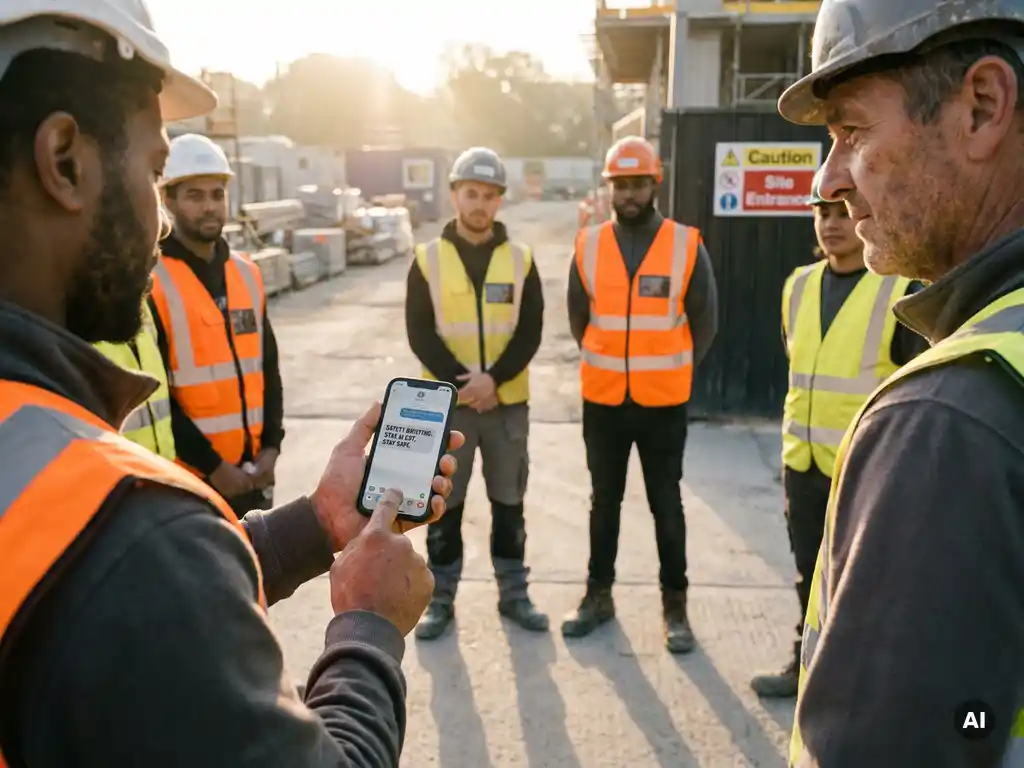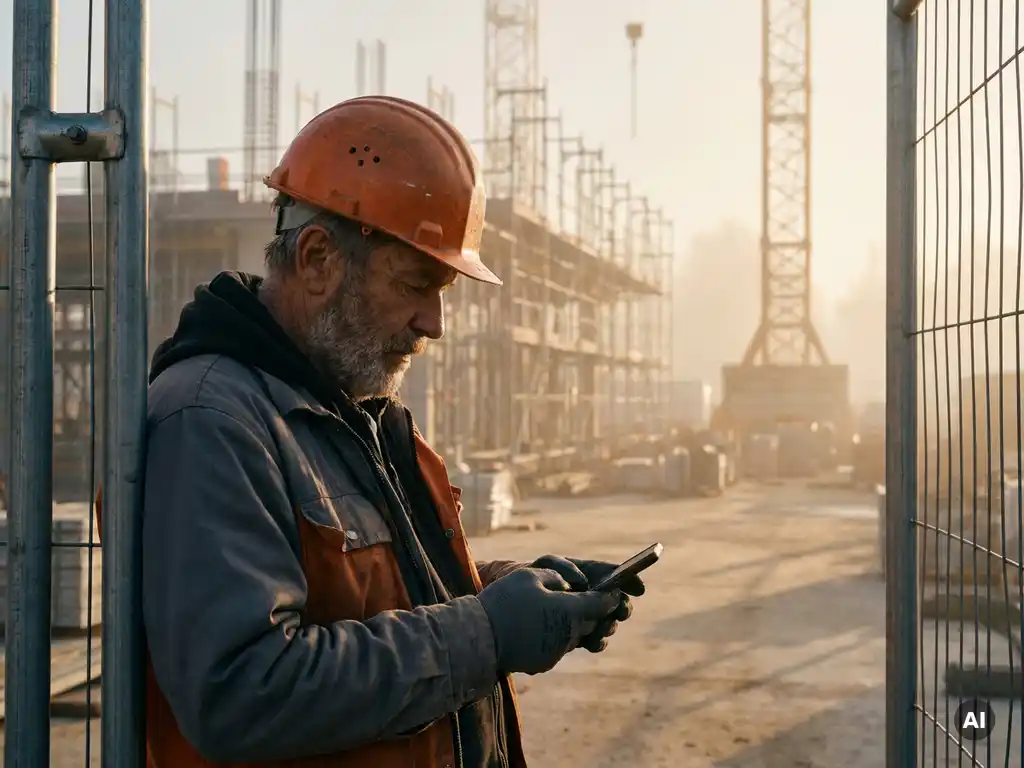
You can most effectively reach external technicians with safety information through channels they already use daily, such as WhatsApp or SMS, without requiring them to log in to a portal or download an additional app. The core of the problem is that traditional communication tools such as email or intranet simply do not align with the reality of field service workers who are constantly on the move, work at varying locations, and rarely sit behind a desk. In this article, we answer the most frequently asked questions about reaching external technicians with safety information before work begins.
Which channels work best for external technicians?
For external technicians, channels work best that arrive directly on their smartphone, require no login procedure, and are suited to short, practice-oriented information. WhatsApp is a familiar way of communicating for many field service workers and therefore has a high reach. SMS and push notifications via existing apps are good alternatives when WhatsApp is not preferred.
The reason email and intranet work less well for this target group is structural. External technicians often have no business email address, do not work with a laptop, and are rarely connected to the company network. A message that arrives on the channel they already use has a much greater chance of being read before they arrive on site.
The following factors are relevant when choosing a channel:
- Accessibility: the channel must work without an additional account or password
- Familiarity: technicians must already know the channel and use it daily
- Mobile-friendliness: the information must be easily readable on a smartphone
- Confirmation of receipt: the channel should preferably be able to record who has received and read the information
- Language support: for multilingual teams, automatic translation is an important consideration
Digital toolbox meetings sent via WhatsApp combine all of these advantages. They are directly accessible, familiar, and can be supplemented with knowledge checks that allow you to see who has actually gone through the information.
Why do external technicians often receive safety information too late?
External technicians often receive safety information too late because communication depends on channels or moments that do not align with their working rhythm. Information is sent via email that they do not open, shared during a physical briefing that they miss, or handed over as a paper document that gets lost along the way.
A number of causes play a role here:
- No fixed workplace: external technicians are rarely present in the office and therefore miss briefings that take place in person
- No business email address: many field service workers do not have a company account through which they receive digital communications
- Paper-based processes: work instructions and safety information are still frequently handed over on paper, which is not scalable and provides no confirmation of reading
- Timing of sending: information is sometimes only sent at the moment the technician is already on their way or has already arrived on site
- Language barriers: in multilingual teams, information in a single language does not reach all employees equally well
The result is that technicians start work without having read the current safety instructions. This increases the likelihood of unsafe situations and makes it difficult to demonstrate afterwards that instructions were provided.
How do you ensure technicians read safety information before work begins?
You ensure technicians read safety information before work begins by actively sending the information to them via a channel they already use, at a time when they can still process the information before arriving on site. Waiting for the technician to look up information themselves does not work in practice.
Practical steps that help with this:
- Send information the evening or morning before: give technicians time to go through the instructions at their own pace before they leave
- Use short, focused messages: a long PDF or extensive document is rarely read in full; microlearning modules of a few minutes work better
- Add a knowledge check: a short question after the instruction confirms that the information has been read and understood
- Record who has responded: this allows you to take timely action if someone has not yet received or gone through the information
- Make the information available in the native language: in multilingual teams, this increases the likelihood that everyone understands the instructions
Toolbox meetings sent digitally lend themselves well to this approach. They are short, focused on a single topic, and can be supplemented with a simple knowledge check. Registration takes place automatically, without the need for paper signature lists.
What are the legal obligations regarding safety instructions for external personnel?
Employers have obligations regarding the provision of information and instruction to employees on safe working practices. This also applies to external personnel carrying out work on behalf of or at the location of the organisation. The precise interpretation of those obligations depends on the situation, the nature of the work, and the applicable regulations.
A number of points are relevant in practice:
- Information about risks: employees must be informed about the risks associated with their work and the measures that apply to those risks
- Demonstrability: it is advisable to record which instructions were provided, when this took place, and who received them
- VCA requirements: for organisations working with VCA certification, additional requirements apply regarding safety management. VCA is not a statutory obligation, but is often contractually required by clients in construction, infrastructure, and industry
- Division of responsibilities: when working with subcontractors or external personnel, responsibilities regarding safety and collaboration may apply. Which division applies depends on the specific situation and the applicable regulations
For questions about the precise obligations in your situation, always consult an up-to-date primary source or an expert in the field of occupational safety.
Which tools are suitable for safety communication with field service workers?
Suitable tools for safety communication with field service workers are tools that work without employees needing to create an account, remember a password, or download an additional app. The barrier must be as low as possible, because high barriers directly lead to lower participation.
The following criteria are useful when evaluating a tool:
- No installation required: the tool works via a channel already on the phone
- Registration of participation: the tool automatically records who has received and gone through the information
- Support for multiple languages: for international or multilingual teams, automatic translation is a relevant feature
- Possibility of knowledge checks: a short quiz after the instruction helps confirm that the information has been understood
- Integration with existing systems: connection with HR or planning systems makes it easier to reach the right people at the right time
- Reporting capabilities: a dashboard or export function makes it possible to make participation visible for internal reporting or audits
Paper-based processes and Excel records no longer meet the needs of many organisations, particularly when teams work in dispersed locations, change location frequently, or consist of employees with different backgrounds and languages.
How E-lia helps with safety communication for external technicians
We developed E-lia specifically for organisations that want to reach employees on the work floor, without those employees needing to download an additional app or create an account. Safety information, toolbox meetings, and work instructions are sent directly via WhatsApp, straight to the technician’s phone, before work begins.
What E-lia concretely offers for safety communication with field service workers:
- Digital toolbox meetings that you build in a short time and send immediately or on a scheduled basis via WhatsApp
- Knowledge checks that confirm the information has been read and understood
- Automatic registration of participation, visible via a live dashboard
- AI-supported translations in more than 50 languages, so that technicians who speak other languages also receive instructions in their own language
- Access to a library of practice-oriented safety topics, compiled by a senior safety professional
- Integration options with HR and planning systems for automatic data exchange
Would you like to see how this works for your organisation? Get in touch with us or request a demo and discover how you can reach external technicians easily and demonstrably with safety information before work begins.