

Employees ignore safety information more often than you would like, but this is rarely intentional. The problem almost always lies in the channel, the timing, or the format of the information. By choosing a familiar communication tool, a recognisable tone, and a well-chosen moment, you increase the likelihood that employees will actually open and retain safety information. In this article, we answer the most frequently asked questions about how to put this into practice.
Why do employees ignore safety information so often?
Employees rarely ignore safety information deliberately. The information simply does not reach them at the right moment, through the right channel, or in an accessible format. Operational employees in construction, logistics, or manufacturing rarely work behind a computer and therefore miss emails, intranet messages, or paper instructions that are only available after their working day.
There are a few recurring causes that result in safety information being overlooked:
- Wrong channel: Email and intranet simply do not reach employees without a business email address or laptop.
- Content that is too long or too technical: A ten-page PDF is not something you read quickly between tasks.
- No personal relevance: Generic messages do not feel urgent to the employee receiving them.
- No indication that reading is expected: Without a knowledge check or confirmation, it feels optional.
- Language barrier: In multilingual teams, not all employees understand instructions written in the language in which they were drafted.
The solution therefore does not start with the employee, but with the way the information is presented. Toolbox talks sent via a familiar digital channel, in short and accessible modules, have a much higher open rate than traditional methods.
Which channel reaches operational employees most effectively?
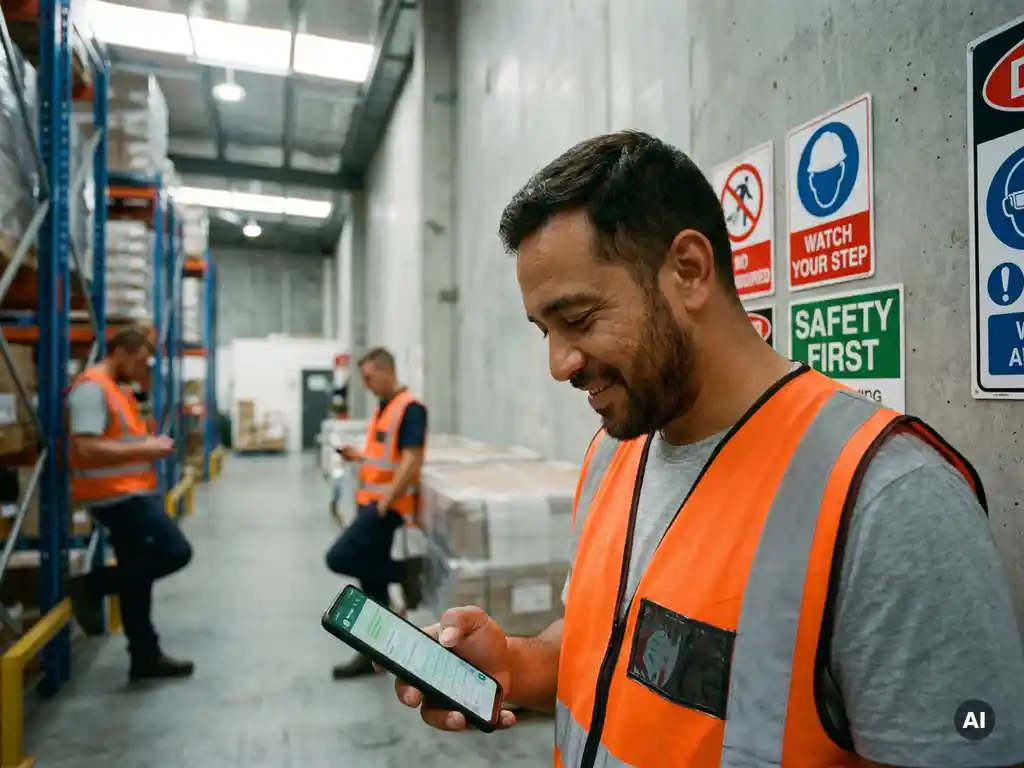
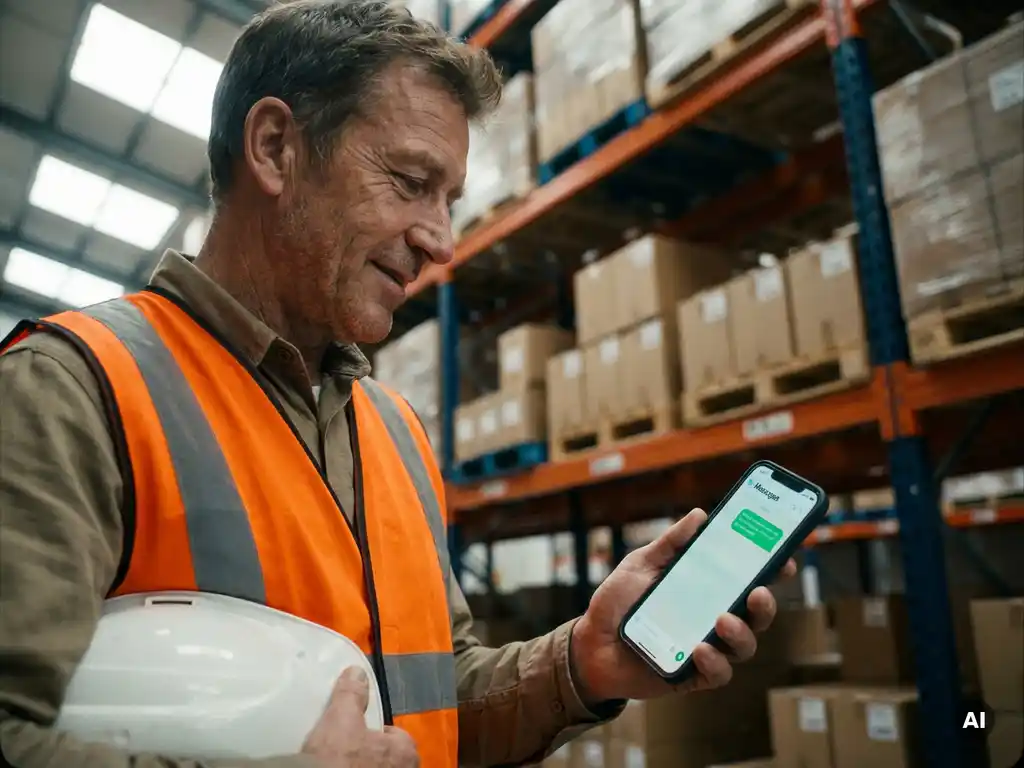
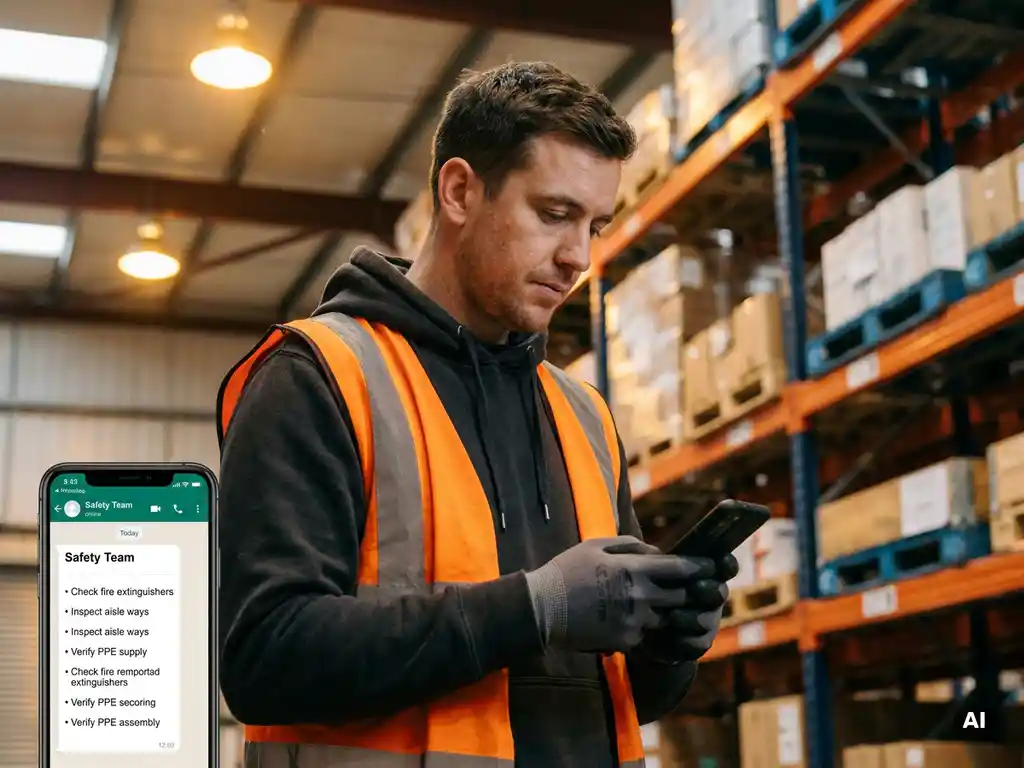
For operational employees, WhatsApp is the most effective channel for sending safety information. For many employees, it is a familiar way of communicating that they use daily, including in their personal lives. Messages via WhatsApp are generally seen quickly, without employees needing to download an additional app or log in.
Traditional channels such as email, intranet, or paper sign-off sheets have an important drawback: they require employees to actively seek out the information. WhatsApp reverses this. The information comes to the employee, directly on their phone, at the moment you choose.
This makes WhatsApp particularly well suited for:
- Employees without a business email address or laptop
- Dispersed teams across multiple locations or construction sites
- Multilingual employees who need information in their own language
- Situations where rapid distribution of a safety instruction or toolbox talk is necessary
The channel is not the only factor that matters, but it is the first barrier. If the information does not reach the employee’s device, the content no longer makes a difference.
How does the right message format lead to more opens?
The right format for safety information increases the likelihood that employees will actually open and read the message. Short, visually clear messages with a concrete reason for sending them work better than long, text-heavy documents. Employees decide within a few seconds whether to read on, so the opening sentence and the format are decisive.
A few concrete principles that make a difference:
- Short and to the point: Limit the content to what the employee needs at that moment. Microlearning modules that can be completed in a few minutes align with the reality of the workplace.
- Clear reason for sending: Explain why the information is relevant now. “New instruction for the use of personal protective equipment at location X” works better than a generic message.
- Visual support: Images, short videos, or icons make safety instructions more accessible and easier to understand, particularly for employees who struggle with lengthy texts.
- Own language: Send the information in the employee’s native language. Instructions that employees do not understand are ignored or misinterpreted.
- Setting expectations: Make it clear that a response or knowledge check is expected. This significantly increases engagement.
Toolbox talks offered as interactive modules rather than static documents invite employees to participate actively rather than read passively.
When is the best time to send safety information?
The best time to send safety information is just before or at the start of a working day, shift, or new task. At that moment, the information is immediately applicable and feels relevant. Safety instructions sent in the middle of a busy working day or late in the evening are more likely to be ignored or forgotten.
The right moment depends on the working context:
- Before the start of a project or location: Send relevant safety instructions and toolbox talks during the pre-onboarding phase, so that employees start well prepared.
- When a new task or risk situation arises: Send a targeted instruction at the moment the task is current, not weeks in advance.
- At the start of the working week: A consistent routine helps employees to see safety information as part of their working rhythm.
- After an incident or near-miss: This is the moment when safety information feels most urgent and is most likely to be read.
Planned distribution has a significant advantage: you can align the timing with the work schedule of specific teams or locations, without needing to be present yourself at that moment. This allows you to reach employees at the time when the information is most useful to them.
How do you know whether employees have actually read the safety information?
You can tell whether employees have actually read safety information by using knowledge checks and digital registration. A confirmation that a message has been delivered or opened says nothing about comprehension. Only when an employee answers a question or confirms an action do you know that the content has been processed.
Effective ways to measure this:
- Knowledge checks: Ask one or more short questions after a safety instruction or toolbox talk. This encourages employees to process the content and gives you insight into who has understood the information.
- Participation registration: Automatically record who has received, opened, and completed the module. This replaces paper sign-off sheets and spreadsheet-based records.
- Live dashboard: A real-time overview shows who has not yet participated, so you can follow up in a timely manner.
- Follow-up messages: Automatically send a reminder to employees who have not yet opened or completed the information.
Without registration, you rely on assumptions. With a digital system, you can see exactly who has participated and who has not, and act on that in a targeted way.
How we help you reach employees through toolbox talks
We developed E-lia specifically for organisations that want to reach employees on the work floor with safety information, without the barrier of additional apps, login procedures, or paperwork. Via WhatsApp, we send toolbox talks, work instructions, and knowledge checks directly to employees’ phones, in their own language.
What you can do with our platform:
- Send toolbox talks as interactive microlearning modules, directly via WhatsApp
- Automatically register participation, including knowledge checks and results
- Track progress via a live dashboard, per employee and per location
- Automatically translate content into more than 50 languages for multilingual teams
- Choose from a library of more than 60 practice-oriented safety topics, compiled by a senior safety professional and updated monthly
- Also register in-person toolbox meetings via the platform
Would you like to see how this works for your organisation? Get in touch with us and discover how to make safety information accessible to every employee, at every location.