


Safety instructions for employees working night shifts are best organised using communication channels that actually reach employees at the time they are working. That means: no email that is only read the following morning, but direct, accessible instructions via channels that are available during the night as well. In this article, we answer the most frequently asked questions about safety instructions in night shifts, from legal obligations to practical tools.
Why are night shift employees harder to reach with safety instructions?
Night shift employees are harder to reach with safety instructions because they work outside regular office hours, which means most standard communication channels reach them poorly or not at all. Managers are often not present, intranet messages are posted during the day, and toolbox meetings are typically scheduled in the morning or afternoon.
A number of practical barriers add to this. Employees on night shifts often do not have a work email address or laptop. They work in sectors such as logistics, production, or healthcare, where the focus is on carrying out the work rather than keeping up with digital communications. In addition, shifts rotate regularly, meaning not every employee receives the same briefing or instruction.
Another consideration is fatigue. Night shift employees are less alert towards the end of their shift, which means lengthy or complex instructions are less likely to be absorbed. Short, focused safety information works better than extensive documents or presentations.
Which safety instructions are required for employees on night shifts?
Employers are obliged to provide employees with information and instruction on safe working, regardless of when their shift takes place. This therefore applies to employees on night shifts as well. Which specific instructions are needed depends on the work activities, the risks involved, and the sector.
The basis for these obligations lies in the risk assessment and evaluation. This assessment maps the risks in the workplace and forms the starting point for determining which instructions employees need. Think of instructions covering:
- The use of personal protective equipment (PPE)
- Safe working with machinery or hazardous substances
- Emergency procedures and first aid response
- Ergonomics and physical load
- Specific risks associated with night work, such as reduced visibility or limited staffing
Organisations working with VCA certification must also be able to demonstrate that employees have been demonstrably informed about safety topics relevant to their work activities. VCA is not a statutory requirement, but is often contractually required by clients in sectors such as construction, industry, and logistics. Which requirements apply exactly depends on the situation and the applicable regulations.
How do you ensure safety instructions are actually read during the night?
Safety instructions are actually read during the night when you deliver them via a channel employees already use, at a time that fits their shift, and in a format that is concise and easy to understand. The combination of timing, channel, and format determines whether an instruction gets through.
Practical measures that help:
- Send instructions before the night shift. Employees who receive an instruction just before they start are alert and can apply the information straight away.
- Use short formats. An instruction that can be read or viewed in two to five minutes fits the working context better than an extensive document.
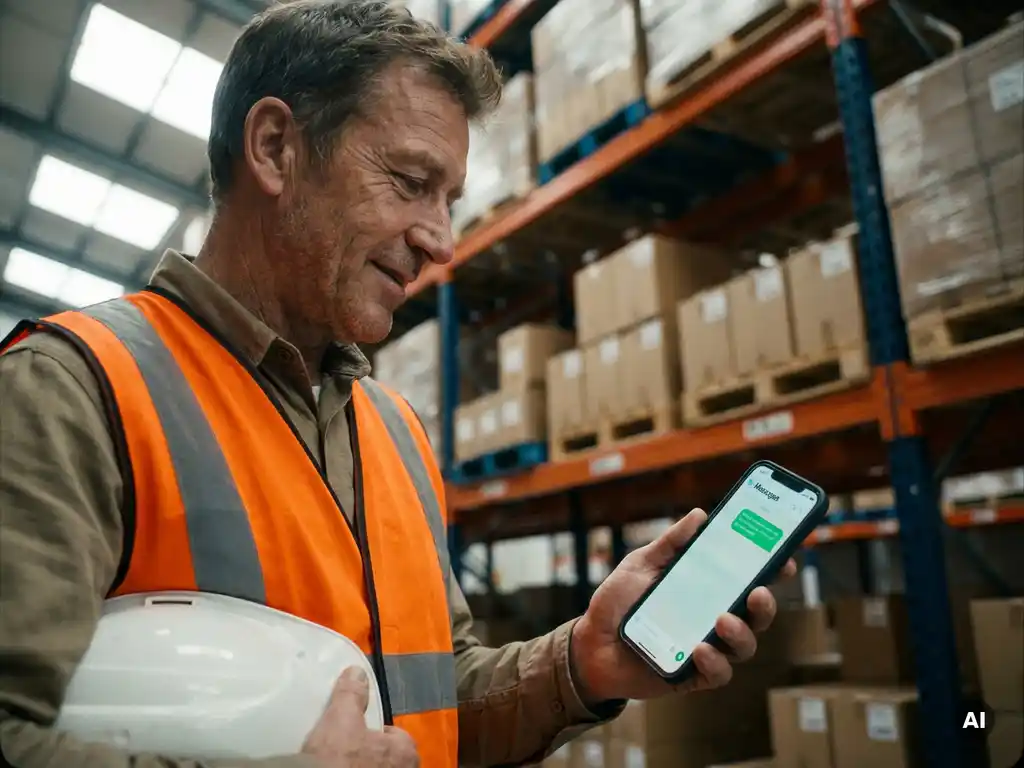
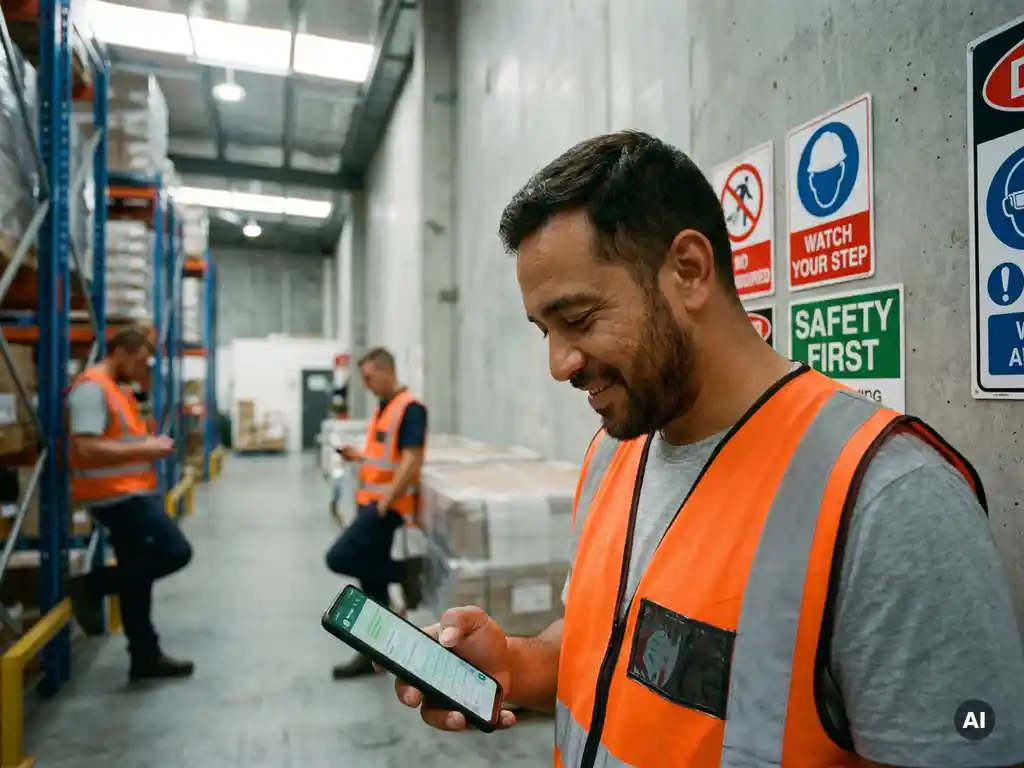
- Choose a familiar channel. Many employees on the work floor use their phone for everyday communication. Instructions delivered via a channel they already know lower the barrier to actually reading them.
- Add a knowledge check. A short question after the instruction confirms that the employee has gone through the content and helps your organisation to record participation.
- Provide multilingual instructions. In sectors with international employees, it is important that instructions are available in the recipient’s native language.
What is the difference between a safety instruction and a safety training?
A safety instruction is a focused, brief communication about a specific risk or a concrete action in the workplace. A safety training is a broader learning activity in which knowledge and skills are systematically built up over a longer period. Both serve their own purpose and complement each other.
A safety instruction answers the question: “What do I need to know or do right now?” Think of a toolbox on safe working in the workplace, an instruction when a new machine is introduced, or a reminder of the correct procedure in an emergency. Toolbox meetings are a good example of focused safety instructions: short, practically oriented, and directly applicable.
A safety training goes further. It teaches not only what to do, but also why, how to recognise risks, and how to act in different situations. Examples include a VCA Basic course, a first aid course, or a HACCP training. Trainings require more time and are generally offered less frequently than instructions.
For night shift employees, safety instructions can be deployed more frequently and flexibly than trainings. They are better suited to the working context of people who are operationally engaged and have little time for extensive learning moments.
How do you demonstrate that night shift employees have received and understood the safety instructions?
You can demonstrate that night shift employees have received and understood safety instructions by recording participation and knowledge check results digitally. Paper signature lists are less suitable for this purpose, as they are difficult to manage with rotating shifts and night work.
A good record contains at minimum:
- Who received the instruction
- When the instruction was sent and viewed
- Whether the employee completed a knowledge check
- What the result of that knowledge check was
Digital recording makes it easier to show during an inspection or audit which instructions were offered, to whom, and at what time. This is not a guarantee of compliance, but it helps your organisation to make safety activities transparently visible in a structured way. Also ensure that records are retained for as long as necessary based on the applicable requirements within your organisation and sector.
For night shifts, it is especially important that recording takes place automatically. Manual processes are prone to errors when managers are not present or when shifts change quickly.
Which tools are most suitable for safety instructions in night shifts?
The most suitable tools for safety instructions in night shifts are those that reach employees without requiring them to download an additional app, create an account, or depend on a computer. Mobile, asynchronous communication tools have a clear advantage over traditional LMS systems or intranet solutions.
Criteria a good tool meets for night shifts:
- Mobile accessible: employees work with their phone, not a laptop
- No login barrier: a password or account creates dependency and drop-off
- Schedulable by time: instructions can be planned for the start of a night shift
- Multilingual: international employees receive instructions in their own language
- Automatic recording: participation is logged without manual action from a manager
- Short and practically oriented: the format suits the working environment and the available attention
Paper-based processes and Excel records do not meet these criteria. They are time-consuming, error-prone, and offer no real-time insight into who has received which instruction.
How E-lia helps with safety instructions in night shifts
With E-lia, you send safety instructions and toolbox meetings directly via WhatsApp to your employees’ phones, at the moment you choose. That can be just before the start of a night shift, without employees needing to download an additional app or create an account.
What E-lia concretely offers for night shifts:
- Schedule by time: send instructions automatically at the moment that suits the shift
- Knowledge checks: confirm that employees have gone through the instruction with a short question
- Live dashboard: see in real time who has received and completed the instruction, even when you are not present yourself
- AI translations in more than 50 languages: reach employees who speak other languages in their own native language
- Library of practically oriented topics: choose from existing safety topics or create your own module in a matter of minutes
- Digital recording: no paper lists, but structured logging of participation
Would you like to see how E-lia works for your organisation and night shifts? Get in touch with us for a no-obligation demo.