


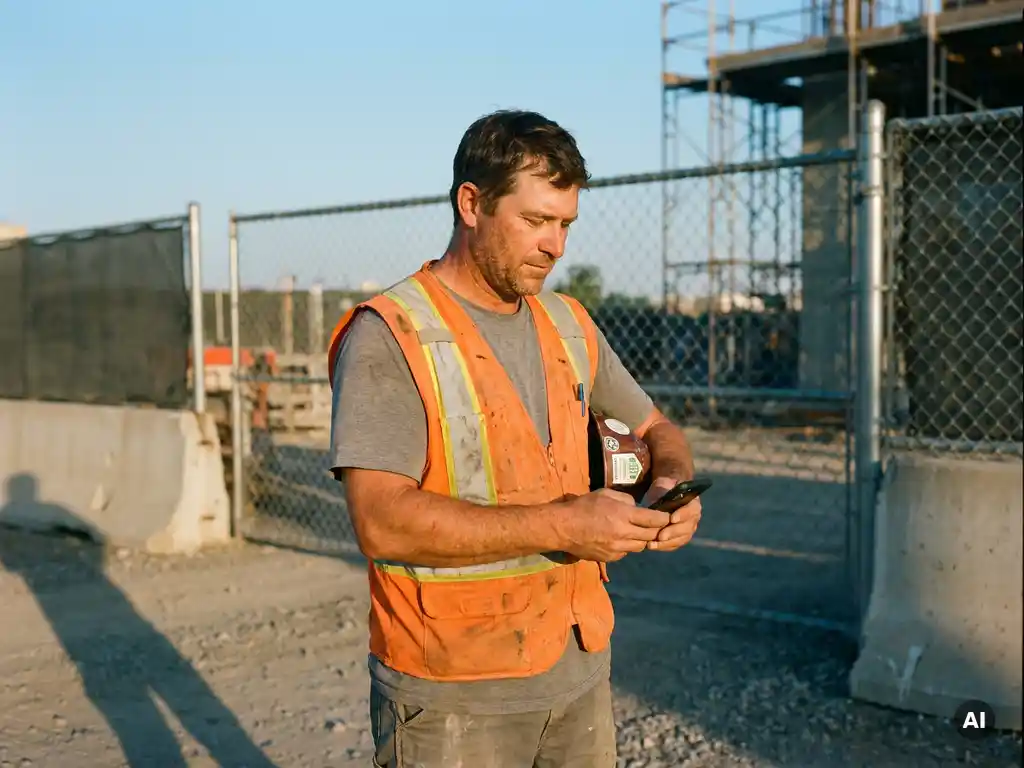
You can provide project-specific safety instructions before the first working day by offering them to employees during pre-onboarding, directly after signing the contract. This way, an employee does not start a project without preparation, but with the right knowledge about the specific risks, location, and working method. In this article, we answer the most frequently asked questions about how to approach this in a practical and effective way.
What safety information should an employee know before day one?
Before the first working day, an employee should at minimum know which hazards are present at the specific work location, which personal protective equipment is required, how the emergency procedures work, and who the point of contact is in the event of an incident. These are the basic elements that are directly related to safety at that specific location.
In addition to these basic elements, there are project-specific instructions that depend strongly on the nature of the work. Consider:
- Access procedures and secured zones at the work location
- Specific hazardous substances or machinery present on that project
- Reporting and notification arrangements for near-misses
- Location-specific evacuation routes and assembly points
- Agreements with the client regarding safety behaviour and work permits
The goal is not for an employee to know everything by heart, but for the information to be available and understandable before someone enters the workplace. An employee who only hears about the risks of a location for the first time on day one starts with a disadvantage that is avoidable.
Why are project-specific safety instructions different from general safety training?
Project-specific safety instructions are focused on the concrete risks of one particular project, location, or client. General safety training lays a broad foundation, but does not tell an employee anything about the specific situation at the construction site in Rotterdam or the distribution centre in Venlo where they are starting next week.
General training covers topics such as the correct use of PPE, basic principles of fire safety, or recognising hazardous situations. That is valuable, but it does not replace the instruction about what applies at that specific location. Project-specific instructions supplement that general knowledge with:
- The unique layout and risks of the work location
- Requirements that the client sets for contractors or agency workers
- Current conditions, such as ongoing work by other parties
- Specific work permits or access requirements
In sectors such as construction, logistics, and industry, projects change regularly. Employees work at multiple locations, sometimes for different clients. Each location has its own context. Those who rely solely on general training miss the layer that has the most direct impact on the day-to-day safety of the employee.
How do you deliver safety instructions on time to dispersed employees?
You deliver safety instructions on time to dispersed employees by sending them digitally via a channel that employees already use, without requiring them to install a new app or log in. Timing is important: send the instructions well before the first working day, so that an employee has time to read them and ask questions.
Dispersed teams are one of the biggest challenges when it comes to delivering safety information on time. Employees in construction, logistics, or care often do not have a business email address or laptop. They work at varying locations and are not always reachable through traditional channels. A few practical principles help:
- Choose a channel that employees already know. The fewer barriers, the greater the chance that the instruction will actually be read.
- Schedule the sending in advance. Link the sending of instructions to a fixed step in the onboarding process, so that it does not depend on someone remembering to do it.
- Keep instructions short and to the point. Employees do not read lengthy documents on their phone. Microlearning modules of a few minutes work better than extensive PDFs.
- Offer instructions in the employee’s language. In multilingual teams, language is one of the biggest barriers to understanding.
By scheduling instructions as part of the pre-onboarding, you ensure that the information arrives before the employee is on the work floor, regardless of where that employee is located.
What are the legal obligations regarding safety instructions before the start of work?
Employers have obligations to provide employees with information and instruction on working safely. This also applies to temporary employees, agency workers, and employees starting at a new location or for a new client. The precise requirements depend on the applicable legislation, sector, and situation. The general principle is clear: employees must be sufficiently informed to be able to carry out their work safely.
A few important points of attention that are relevant to safety instructions:
- The employer is responsible for providing information and instruction, even when the work takes place at a third party’s premises.
- A Risk Inventory and Evaluation forms the basis for the content of those instructions. Without an up-to-date risk assessment, it is difficult to determine which risks employees need to be aware of.
- Making personal protective equipment available is not enough; employees must also know how and when to use it.
In addition to the legal basis, clients may impose additional requirements, for example through a VCA certification requirement or project-specific safety plans. VCA is not a law, but a private certification scheme that clients may require contractually. The precise obligations depend on the situation, the sector, and the applicable regulations. If in doubt, consult a health and safety professional or the relevant legislation and regulations.
How do you ensure that employees also understand and retain the instructions?
Employees understand and retain safety instructions better when they are short, visual, and interactive, and are offered in their own language. A lengthy text that someone reads once rarely produces lasting knowledge. Repetition, active processing, and recognisable examples make the difference.
Keep instructions short and concrete
Limit each instruction to one topic or one risk. An employee who receives one clear message in three minutes retains it better than someone who goes through ten topics in twenty minutes. Use images, short videos, or illustrations to clarify situations that are difficult to convey in text.
Include a knowledge check
A short question after the instruction, also known as a knowledge check, helps employees actively process the information. It prompts them to briefly reflect on what they have just read or watched. At the same time, it gives you as an organisation insight into who has completed the instruction and whether the key message has been understood. This is useful for your own records and for any follow-up with employees who have not completed the instruction.
Offer instructions in the employee’s native language
In multilingual teams, language is one of the most underestimated barriers. An employee who receives instructions in a language they do not speak well may not fully understand the content, even if they appear to have completed the instruction. Instructions in the employee’s native language significantly increase understanding and engagement.
Which tools help with sending safety instructions digitally?
Tools that help with sending safety instructions digitally are platforms that allow you to create, schedule, and send content via channels that employees already use, preferably without requiring them to have an account or additional app. Consider platforms that work via WhatsApp, SMS, or other familiar communication channels, supplemented by registration and reporting capabilities.
When choosing a tool, the following criteria are relevant:
- Low barrier for the employee: no mandatory app download, no login procedure, no password.
- Multilingual support: automatic translations so that instructions arrive in the employee’s native language.
- Registration and reporting: insight into who has received, read, and completed the instruction.
- Integration possibilities: connection with HR systems or other platforms so that employee information is automatically kept up to date.
- Speed of content creation: how quickly can you create and send a new instruction when a project or situation requires it?
Traditional LMS systems or intranets are often not suitable for employees on the work floor, because those employees do not have a business email address or laptop. A tool that fits the daily habits of the target group works better in practice than a technically advanced system that nobody uses.
How E-lia helps with project-specific safety instructions before the first working day
With our platform, you send project-specific safety instructions directly via WhatsApp to employees, even before their first working day. Employees do not need to download an app, create an account, or remember a password. This way, you also reach employees without a business email address or laptop.
What you can concretely do with our platform:
- Create instructions in a matter of minutes, using AI-assisted content creation and a library of practice-oriented safety topics.
- Automatically translate into more than 50 languages, so that multilingual employees receive instructions in their own language.
- Add knowledge checks to measure whether employees have understood the instruction, not just completed it.
- Register participation via a live dashboard, so that you can see at a glance who has completed the instruction and who has not.
- Send and register toolbox meetings digitally, as a replacement for paper signature lists and separate Excel files.
Would you like to see how you can record safety instructions in a simple and structured way before the first working day? Request a demo and discover how our platform suits your organisation. Do you have questions or would you like more information? Contact our team for personal advice.