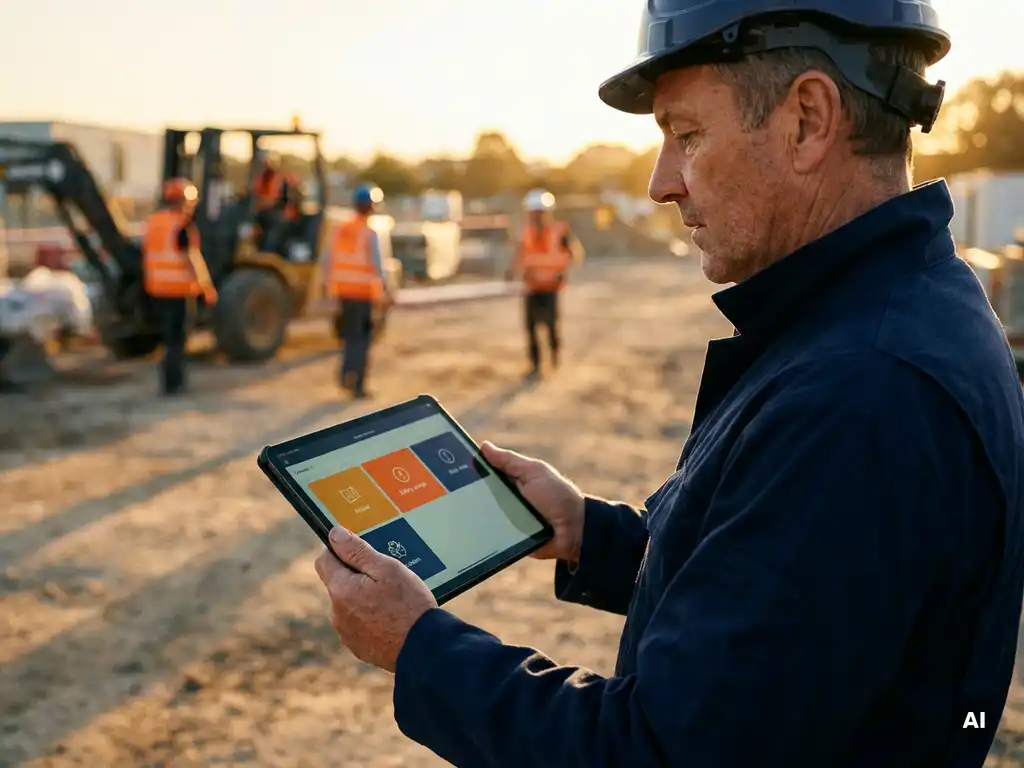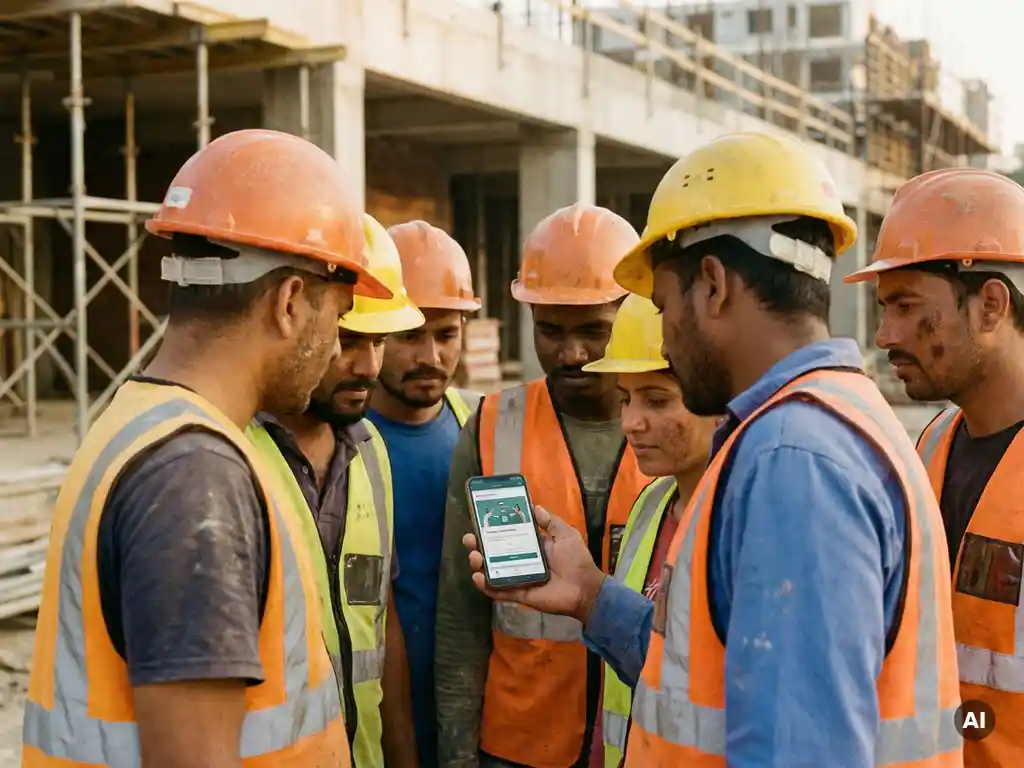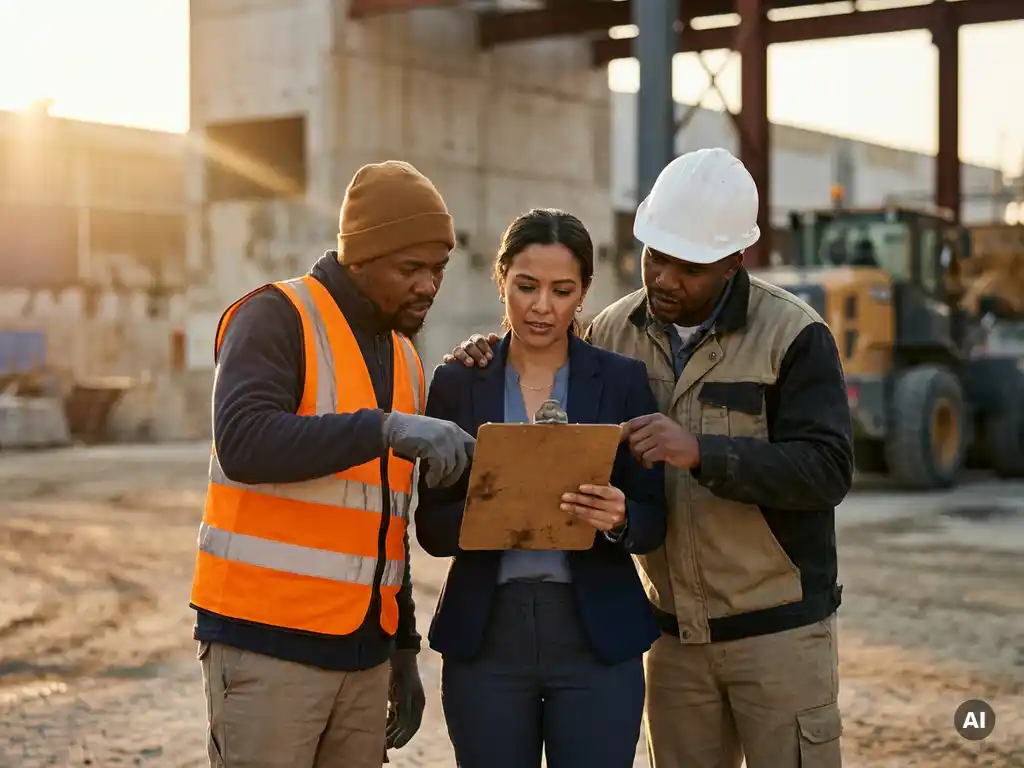


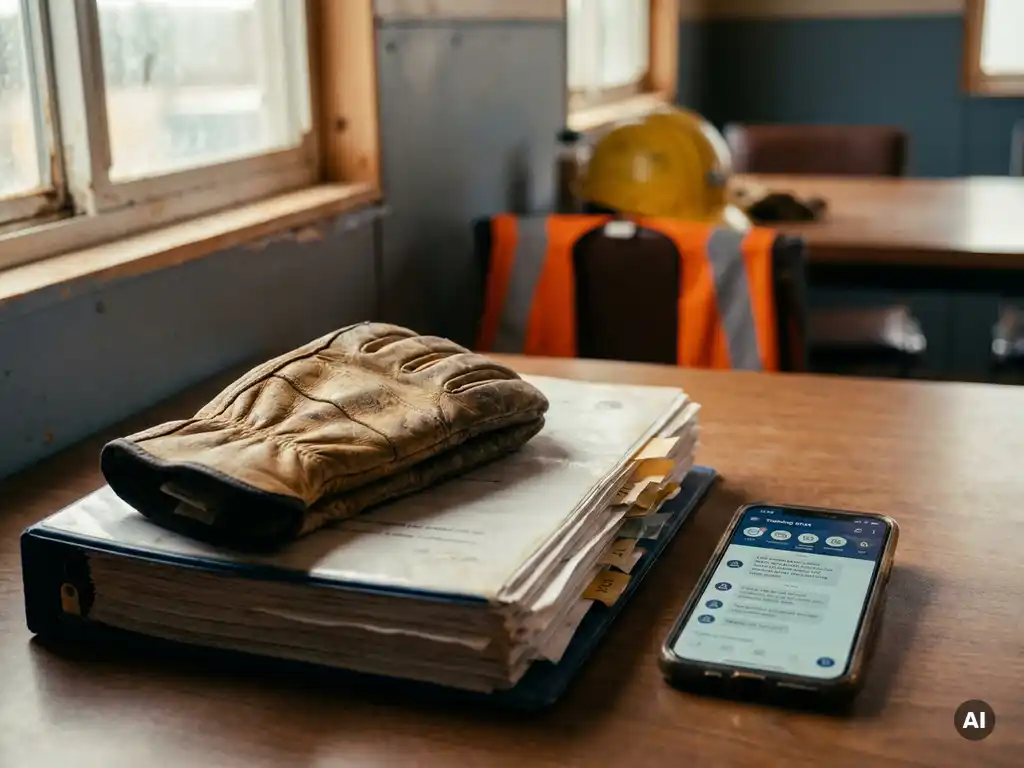
The best format for a toolbox talk depends on your team’s location, language needs, and how you need to document participation. Physical toolbox talks work well when your whole team is on-site and discussion is the priority. Digital formats suit dispersed or multilingual teams that need flexible access. Hybrid approaches combine both, giving you the reach of digital with the engagement of face-to-face. The sections below break down each format so you can make a confident, practical choice.
What are the main differences between physical, digital, and hybrid toolbox talks?
A physical toolbox talk happens in person, usually at the start of a shift or before a specific task begins. A digital toolbox talk delivers safety content through a digital channel, such as a messaging app, so workers receive it on their own device. A hybrid toolbox talk combines both: the session happens in person, but registration, knowledge checks, or follow-up content are handled digitally.
Each format has a different relationship between delivery, documentation, and reach:
- Physical: Face-to-face delivery, verbal discussion, often paper-based sign-in sheets for registration
- Digital: Content sent directly to workers’ phones or devices, participation tracked automatically, no shared physical space required
- Hybrid: In-person session with digital registration and reporting, or digital pre-reading followed by a brief on-site discussion
The right format is not purely a technology question. It is a question of who your workers are, where they are located, what languages they speak, and how you need to demonstrate that the safety talk actually took place.
When does a physical toolbox talk work best?
A physical toolbox talk works best when your team is already gathered in one place, the topic benefits from live discussion or hands-on demonstration, and immediate questions or reactions from workers add real value to the session. It is particularly effective for complex or sensitive topics where back-and-forth conversation matters.
Situations where a physical format tends to be the stronger choice include:
- Introducing a new work method or piece of equipment that workers need to see in action
- Addressing a recent near miss or incident where team discussion helps identify what went wrong
- Smaller, stable teams that work together on a single site every day
- Topics that require a supervisor to read the room and adjust the conversation in real time
The main challenge with physical toolbox talks is documentation. Paper sign-in sheets can be lost, incomplete, or difficult to retrieve during an audit or inspection. If your organisation needs to demonstrate which workers attended which session and when, a paper-based process can create gaps. That is one reason many organisations that still run physical sessions are moving their registration and reporting to a digital tool, even if the talk itself stays face-to-face.
What are the advantages of digital toolbox talks for dispersed teams?
Digital toolbox talks give dispersed teams access to the same safety content regardless of where individual workers are located. There is no need to gather everyone in one place, which makes digital formats particularly practical for organisations with workers spread across multiple sites, vehicles, or locations that change day to day.
The practical advantages go beyond convenience:
- Flexible timing: Workers can receive and complete a safety toolbox talk at the start of their shift, wherever they are, without waiting for a group to assemble
- Consistent content: Every worker receives the same information, reducing the risk of important details being skipped or communicated differently across teams
- Automatic registration: Participation is logged as it happens, so you always have a clear record of who completed what and when
- Knowledge checks: Short questions after the content help confirm that workers have understood the key points, not just opened the message
- Scalability: You can reach a large workforce simultaneously without needing supervisors to run parallel sessions across different locations
For industries like logistics, construction, and field services, where workers are rarely all in the same place at the same time, digital delivery removes one of the biggest practical barriers to consistent safety communication.
How does a hybrid toolbox talk format actually work?
A hybrid toolbox talk format combines an in-person safety session with digital tools for registration, knowledge verification, or follow-up content. In practice, this usually means the supervisor runs the talk as normal, but workers confirm their participation through a digital channel rather than signing a paper list, and any knowledge checks or supporting materials are sent to their phones.
There are two common ways organisations structure a hybrid approach:
- Digital registration for physical sessions: The talk happens in person, but workers receive a short digital message to confirm attendance and complete a brief knowledge check. This replaces paper sign-in sheets and creates an automatic record.
- Digital pre-reading with in-person follow-up: Workers receive the core safety content on their device before the session. The in-person time is then used for questions, discussion, or a practical demonstration rather than reading through information from scratch.
The hybrid format is a good fit for organisations that value the engagement of face-to-face conversation but need the documentation reliability of a digital system. It also works well when some workers are on-site and others are remote, allowing both groups to receive the same content and have their participation recorded in the same place.
Which format is best for multilingual or deskless workers?
For multilingual or deskless workers, a digital or hybrid toolbox talk format is generally the most practical choice. Deskless workers do not have regular access to a computer or company email, so digital delivery via a tool they already use on their personal phone removes a significant access barrier. For multilingual teams, digital formats make it straightforward to deliver content in each worker’s own language.
Physical toolbox talks can work for multilingual teams, but they rely on a supervisor who speaks all the relevant languages or on interpretation, which is not always available. When a worker receives safety instructions in a language they do not fully understand, the value of the session drops significantly.
Digital delivery solves this directly. Content can be translated and sent to each worker in their preferred language, so everyone receives the same safety message with the same level of clarity. This is especially relevant in sectors like construction, food production, and logistics, where teams often include workers from many different language backgrounds.
For deskless workers specifically, the format needs to work on a standard smartphone without requiring a new app download, a company login, or technical steps that create friction. The simpler the access, the higher the completion rate.
How do you measure toolbox talk completion across all three formats?
Measuring toolbox talk completion depends on the format, but the goal is the same across all three: a clear, retrievable record of who received the safety content, when they received it, and whether they understood it. The main difference is how that record is created and how reliable it is over time.
- Physical format: Completion is typically measured through paper sign-in sheets or attendance lists. The risk is that these can be incomplete, misfiled, or unavailable when you need them. Some organisations photograph sign-in sheets or transfer them to a spreadsheet, but this adds manual work and introduces the possibility of errors.
- Digital format: Completion is tracked automatically. When a worker opens the content and completes a knowledge check, that data is recorded in real time. A dashboard gives supervisors and safety managers an up-to-date view of who has completed the session and who has not, without any manual data entry.
- Hybrid format: Completion data comes from the digital component. Even if the talk itself is physical, the digital registration step creates the record. This means hybrid sessions can achieve the same documentation reliability as fully digital ones.
Knowledge checks are an important part of measuring completion meaningfully. Confirming that a worker opened a message or signed a list tells you they were present. A short set of questions after the content tells you whether the key points landed. This distinction matters when you need to demonstrate not just attendance, but genuine engagement with the safety information.
How E-Lia helps you run toolbox talks in any format
We built E-Lia specifically for organisations that need to reach workers on the floor, not behind a desk. Whether you run physical, digital, or hybrid toolbox talks, our platform helps you deliver safety content and document participation without paper lists, manual spreadsheets, or extra apps.
Here is what that looks like in practice:
- Workers receive toolbox content directly via WhatsApp, with no app download or login required
- Content is available in more than 50 languages through automatic AI translation, so multilingual teams receive instructions in their own language
- Knowledge checks are built into each session, giving you a record of understanding, not just attendance
- Physical toolbox talks can also be registered through the platform, so all your documentation lives in one place
- A live dashboard shows completion in real time, making it easy to follow up with workers who have not yet finished
- Our content library covers more than 60 practical safety topics, updated regularly by a qualified safety professional
If you want to see how this works for your team, get in touch with us and we will show you how E-Lia fits your current toolbox talk process.
Related Articles
- How do you give safety instructions to employees without a fixed workplace?
- How do you scale toolbox talks from 50 to 500 employees?
- How do you create a custom workplace inspection form?
- How do you set up an onboarding program for production employees?
- How do you create a safety culture in your organisation?