


Planning toolbox talks for an entire year means deciding in advance how many sessions you will hold, which topics you will cover, and who will be responsible for delivering them. A structured annual plan keeps safety conversations consistent, prevents last-minute scrambling, and makes it far easier to demonstrate that your team has received regular safety instruction. This article walks through every practical question you need to answer to build a toolbox talk schedule that actually holds up across twelve months.
How many toolbox talks should you hold per year?
There is no single universal number that applies to every organisation. The right frequency depends on the nature of your work, the risk level of your activities, and any certification or contractual requirements that apply to your sector. Many organisations in construction, logistics, and manufacturing find that holding toolbox talks regularly throughout the year, whether weekly, biweekly, or monthly, keeps safety awareness active without creating meeting fatigue.
When deciding on frequency, consider the following factors:
- Risk level of daily activities: Higher-risk environments generally benefit from more frequent sessions.
- Rate of change: If your work methods, equipment, or site conditions change often, more frequent talks help communicate updates quickly.
- Team size and shift patterns: Larger or rotating teams may need more sessions to ensure everyone is reached.
- Certification and contractual requirements: Some clients or certification schemes require documented evidence of regular safety communication. Check what applies to your situation.
- Seasonal risk patterns: Certain periods, such as winter weather or summer heat, may call for additional sessions.
A practical starting point for many organisations is to plan at least one toolbox talk per month as a baseline, then add extra sessions around high-risk periods, new projects, or after incidents. The goal is consistency, not just hitting a number.
What topics should a yearly toolbox talk schedule cover?
A well-rounded annual toolbox talk schedule covers the safety risks that are most relevant to your specific work, your sector, and the time of year. Topics should connect directly to real hazards your team faces, not just generic safety theory. A good annual plan balances recurring fundamentals with timely, situation-specific subjects.
Core safety topics to include
Regardless of sector, most annual schedules benefit from covering topics such as:
- Personal protective equipment: correct use, inspection, and storage
- Hazardous substances and safe handling procedures
- Emergency procedures and evacuation routes
- manual handling and ergonomics
- Working at height or in confined spaces (where relevant)
- Near-miss reporting and incident response
- Equipment inspection and safe use
- Fire safety and prevention
Timely and situational topics
Beyond the fundamentals, your schedule should include topics triggered by specific circumstances:
- Seasonal risks such as slippery surfaces in winter or heat stress in summer
- New equipment, processes, or work instructions introduced during the year
- Lessons learned from incidents or near misses in your organisation or sector
- Changes in regulations or certification requirements that affect your team
- Project-specific hazards at the start of a new job or phase
Mixing planned recurring topics with responsive, timely ones makes your schedule both structured and relevant throughout the year.
How do you structure a toolbox talk calendar for the whole year?
Building an annual toolbox talk calendar means mapping your chosen topics across the twelve months in a logical, manageable sequence. Start by listing all the topics you want to cover, then assign them to specific months or weeks based on relevance, risk patterns, and operational rhythm.
A practical approach to structuring your calendar:
- List your topics: Gather all the subjects you want to address over the year, including recurring fundamentals and any known upcoming changes.
- Group by season or project phase: Assign topics to the period when they are most relevant. Winter driving safety belongs in November or December, not July.
- Distribute evenly: Avoid clustering too many sessions in one month and leaving others empty. Spread the schedule so the pace feels sustainable for both planners and participants.
- Reserve slots for reactive topics: Leave a few open slots in your calendar for sessions triggered by incidents, new instructions, or unexpected changes.
- Align with operational milestones: Schedule talks around the start of new projects, seasonal transitions, or periods when new staff join.
- Review and adjust quarterly: Treat the calendar as a living document. Review it every three months and update it based on what has happened and what is coming up.
A simple spreadsheet or planning tool works well for this. What matters most is that the calendar is visible, shared with everyone responsible, and actually followed.
Who is responsible for planning and delivering toolbox talks?
Responsibility for toolbox talks typically sits with supervisors, team leaders, or safety officers, depending on how your organisation is structured. The person who plans the annual schedule is often different from the person who delivers individual sessions, and both roles need to be clearly assigned.
For planning, the annual schedule is usually owned by a safety manager, learning and development lead, or operations manager. They decide the topics, frequency, and format, and ensure the calendar is kept up to date.
For delivery, the most effective toolbox talks are led by someone close to the work, such as a direct supervisor or site foreman, rather than someone remote from day-to-day operations. This makes the conversation feel relevant and credible to participants. That said, specialist topics such as chemical safety or emergency procedures may be better delivered by a subject matter expert.
A few principles that help clarify responsibility:
- Name a specific owner for the annual plan, not just a department
- Assign a default presenter for each session in advance
- Identify a backup presenter so sessions are not cancelled when someone is absent
- Make sure presenters have access to the materials they need ahead of time
- Give team leaders enough notice to prepare, especially for topics outside their usual expertise
How do you keep toolbox talk attendance and completion records?
Keeping accurate records of toolbox talk attendance and completion means capturing who participated, when the session took place, and what topic was covered. Good records help you demonstrate that safety instruction has been provided, identify gaps in participation, and support any review or audit process.
Traditional methods such as paper sign-in sheets and Excel logs are common, but they create administrative work and can be difficult to maintain consistently across multiple teams or locations. Digital alternatives make the process faster and more reliable.
Regardless of the method you use, your records should capture:
- Date and time of the session
- Topic covered
- Name of the presenter
- Names of participants who attended
- Any knowledge check or confirmation of understanding, where applicable
Store records in a consistent location that is accessible to those who need them, and review participation data regularly to spot team members who are consistently missing sessions. Acting on those gaps is just as important as collecting the data in the first place.
What makes a toolbox talk plan actually work in practice?
A toolbox talk plan works in practice when it is realistic, consistently followed, and genuinely connected to the work people do every day. Many organisations create a solid plan on paper but struggle with execution because sessions are cancelled, topics feel irrelevant, or attendance is hard to track.
The most common reasons annual plans break down include:
- Sessions that are too long or too formal, making them easy to skip
- Topics that do not connect to current work or recent events
- No clear owner for follow-through when the plan falls behind
- Difficult or time-consuming registration processes that discourage documentation
- Multilingual teams that do not fully understand sessions delivered in a single language
To make your plan stick, keep individual sessions short and focused. A toolbox talk does not need to be a lengthy meeting. A focused discussion on one specific topic, followed by a simple check for understanding, is more effective than a broad presentation that tries to cover everything at once.
Involving team leaders in topic selection also increases buy-in. When the people delivering sessions have had a say in what gets covered, they are more likely to treat the plan seriously. And when participants recognise the topics as relevant to their actual work, engagement follows naturally.
How E-Lia helps with toolbox talk planning
Planning and delivering toolbox talks across an entire year involves a lot of moving parts: choosing topics, scheduling sessions, reaching every team member, and keeping records that hold up when needed. We built E-Lia to make that process straightforward, especially for organisations with operational teams that do not sit behind a desk.
Here is what E-Lia offers for annual toolbox talk planning:
- A library of over 60 practical safety topics, updated monthly by a qualified safety professional, so you always have relevant, ready-to-use content to fill your annual schedule
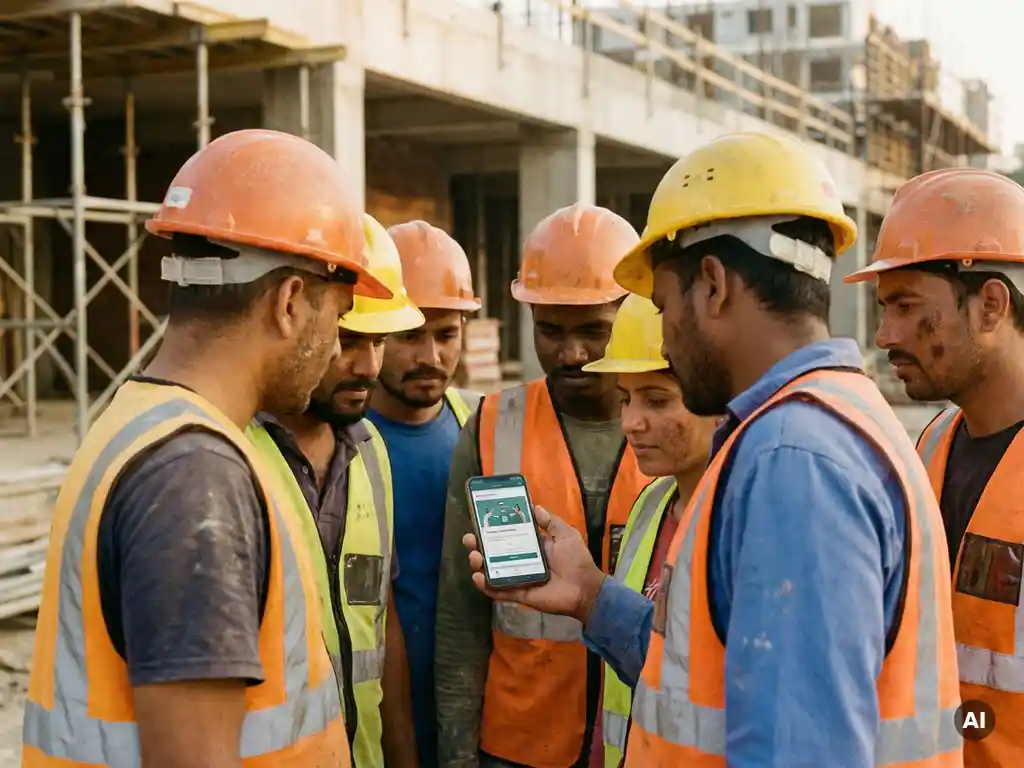
- Delivery directly via WhatsApp, with no app download or login required, so every team member can participate from their own phone
- AI-supported translations into more than 50 languages, so multilingual teams receive instructions in their own language
- Automated attendance registration and knowledge checks, replacing paper sign-in sheets with a digital record that is available in real time via a dashboard
- Scheduled sending, so you can set up your annual calendar in advance and have sessions go out automatically at the right time
- Support for physical toolbox meetings, which can also be registered through the platform when sessions take place in person
If you want to see how E-Lia can support your annual toolbox talk schedule, get in touch with our team and we will show you how it works in practice.