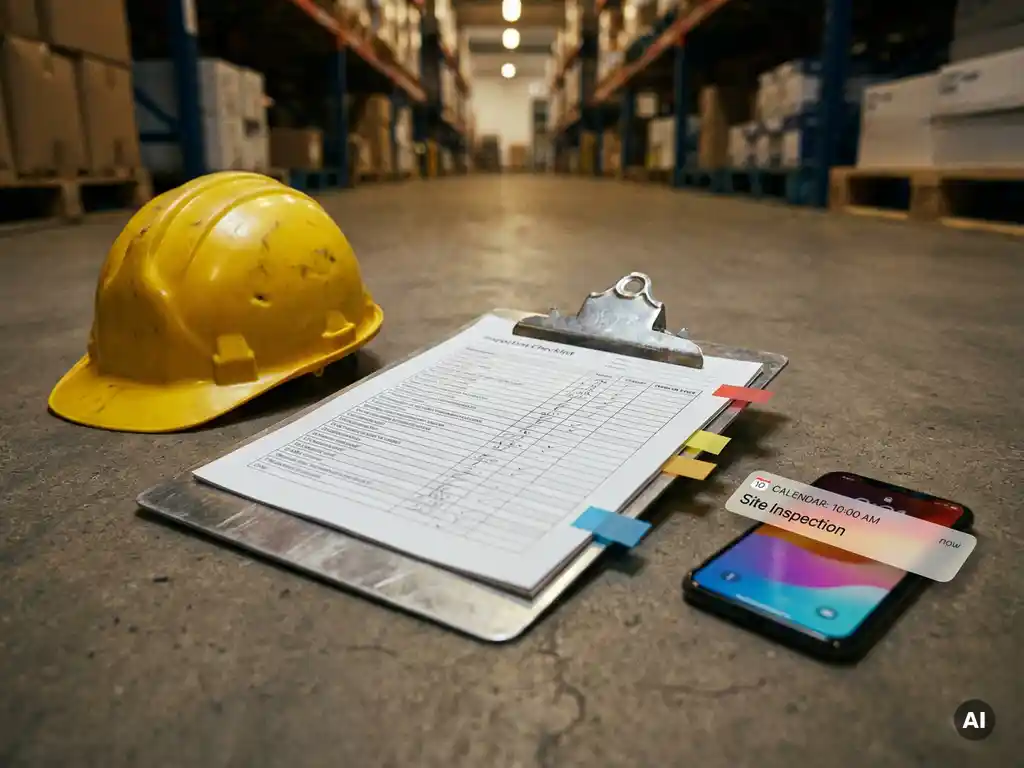
The most effective way to give feedback after a workplace inspection is to share prompt, specific, and solution-oriented information with the employees involved. Not circulating a general report, but clearly naming what you observed, what the impact is, and what needs to change. How you approach this in practice depends on the situation, the audience, and the resources available to you. The questions below provide practical guidance.
Why is giving feedback after a workplace inspection so difficult?
Giving feedback after a workplace inspection is difficult because inspections often uncover shortcomings that are sensitive, while the findings simultaneously need to be communicated quickly and clearly to people who are in the middle of their working day. The combination of urgency, emotional weight, and practical barriers makes this one of the more challenging communication moments in the workplace.
A few common obstacles:
- Vague findings: Inspection reports are sometimes formulated in technical or abstract terms, meaning employees do not understand what is concretely expected of them.
- Defensive reactions: When feedback feels like criticism of the person rather than the situation, people shut down.
- Accessibility: Employees on the shop floor rarely have a business email address or sit behind a computer. A report sent by email often does not reach them.
- Time pressure: Managers have little time to translate findings into clear, actionable information for each team member individually.
- Language differences: In sectors such as construction, logistics, and healthcare, many employees have a different mother tongue, which makes communication more challenging.
The good news: all of these barriers can be overcome if you consciously choose the right approach and the right channel.
What are the most important elements of effective inspection feedback?
Effective feedback after a workplace inspection is specific, factual, solution-oriented, and respectful in tone. After reading or hearing the feedback, the employee should know exactly what was observed, why it is relevant to safety, and what needs to change concretely.
The most important elements at a glance:
- Specificity: Name the exact situation, location, or action. Not “the workplace was untidy”, but “loose cables were lying in the walkway at the entrance to hall B.”
- Factuality: Stick to what you observed. Avoid interpretations or assumptions about the employee’s intentions.
- Relevance: Explain why the finding matters. Employees who understand what risk a situation poses are more motivated to address it.
- Action-oriented: Close with a clear, achievable action. Who does what, and when?
- Respectful tone: Feedback is not an accusation. A tone focused on improvement rather than blame creates more openness and better follow-through.
Feedback that meets these elements not only works better for the individual employee, but also strengthens the safety culture across the wider organisation.
How do you give feedback to employees who do not speak the language well?
The most effective way to give feedback after a workplace inspection to employees who speak a different language is to use visual support, plain language, and communication in the employee’s mother tongue. Language barriers are one of the most underestimated risk factors when it comes to following up on safety information.
Practical approaches that work:
- Use photos and videos: A photo of the situation says more than a written description, regardless of language. Add visual material to your feedback wherever possible.
- Write in plain language: Short sentences, no jargon, direct instructions. This also helps employees who do speak the language but are less confident readers.
- Offer translations: Translate the key message into the employee’s mother tongue. This does not always need to be done manually: there are digital solutions for workplace inspections that do this automatically for dozens of languages.
- Use an intermediary: A colleague or manager who speaks the language can explain the feedback verbally and answer questions.
- Use familiar channels: Communicate via a medium the employee already uses daily, such as a messaging service on their phone, so that the threshold for reading the message is as low as possible.
Employees who speak a different language understand safety information better when it is offered in their own language and through a channel that feels familiar to them. That is not an extra effort, but a prerequisite for effective communication.
When is the best time to share inspection feedback?
The best time to share inspection feedback is as soon as possible after the inspection, preferably on the same day. The longer you wait, the less the findings connect with what employees still remember about the situation, and the smaller the chance that they will act on them.
There are two situations that call for a different pace:
- Immediate safety risks: If the inspection has identified an acute hazard, communicate immediately. Do not wait for a formal report or a meeting. A brief, direct notification to the employees and manager involved is most appropriate in that case.
- Structural improvement points: Findings that do not pose an immediate risk but do warrant attention can be communicated in a slightly more structured way. Still share the feedback within a day or two, so that the context is still fresh.
Avoid the delays that arise when feedback has to pass through multiple layers of the organisation before it reaches the shop floor. The shorter the line between inspection and employee, the greater the impact of the feedback.
How do you ensure employees act on the feedback?
Employees act on inspection feedback when they understand what is expected of them, when the feedback reaches them personally, and when there is clear follow-up. Feedback that remains stuck in a report or a group chat without any follow-up quickly fades into the background.
Concrete steps that improve follow-up:
- Make the action as small as possible: The more concrete and achievable the requested action, the greater the chance that someone will actually carry it out. Break larger improvement points into small, manageable steps.
- Assign a responsible person: When everyone is responsible, no one is. Link each action to a specific person or role.
- Set a deadline: Indicate when the action should be completed. Without a deadline, an improvement point remains open indefinitely.
- Include a knowledge check: Ask employees to briefly confirm that they have understood the feedback. This can be done via a simple question or a short quiz. This increases both engagement and demonstrability.
- Follow up: Check after the agreed deadline whether the action has been completed. This shows that the feedback is taken seriously and that there are consequences if nothing is done with it.
Feedback without follow-up quickly loses its value. The combination of a clear action, a responsible person, and a deadline makes the difference between a notification that is read and one that actually brings about change.
Which tools help with the structured follow-up of inspection feedback?
Tools that help with the structured follow-up of inspection feedback are digital platforms that allow you to record findings, send feedback to the right people, and track follow-up in one central place. Paper lists and separate emails make it difficult to maintain an overview and to demonstrate that action has been taken.
Useful features to look for when choosing a tool:
- Digital recording with a timestamp: So that you can always demonstrate when an inspection took place and what the findings were.
- Direct communication to employees: The tool must be able to send feedback quickly and directly to the people involved, without them needing to create an account or download a new app.
- Progress monitoring: A dashboard or overview showing which action points have been completed and which are still outstanding.
- Knowledge checks: The ability to verify whether employees have understood the feedback, not just whether they have received it.
- Multilingual support: Automatic translation into the employee’s mother tongue, so that language barriers do not become an obstacle. Get in touch for more information about the options for your organisation.
How we help with the follow-up of workplace inspection feedback
With our workplace inspections via WhatsApp, you turn inspection feedback into a structured and demonstrable process, without extra apps or login procedures for employees. Here is how it works in practice:
- Send inspection findings and associated feedback directly via WhatsApp to the phone of the employee or manager involved.
- Add photos, videos, or short instructions so that the message is also clear for employees who speak a different language, supported by automatic translations in more than 50 languages.
- Use knowledge checks to verify whether employees have understood the feedback and to record that engagement digitally.
- View via the live dashboard which action points have been completed and follow up in a timely manner where needed.
- Export all records with a single click for audits or internal reports.
Would you like to see how this works for your organisation? Request a demo and discover how to make inspection feedback structured and accessible for everyone on the shop floor.