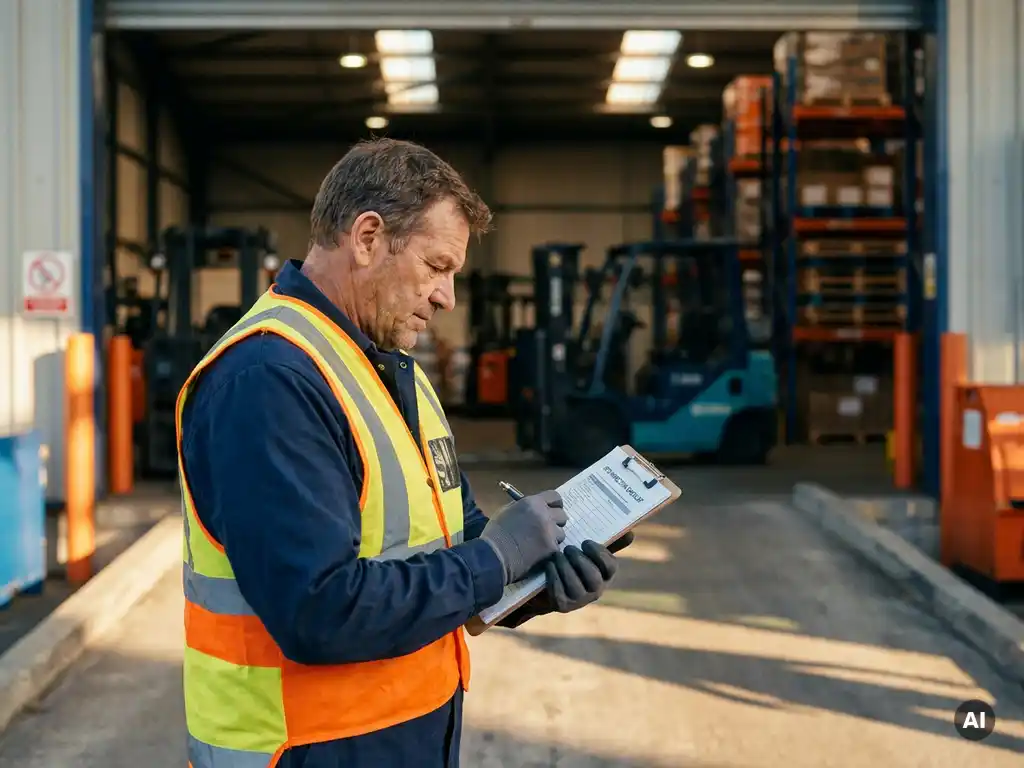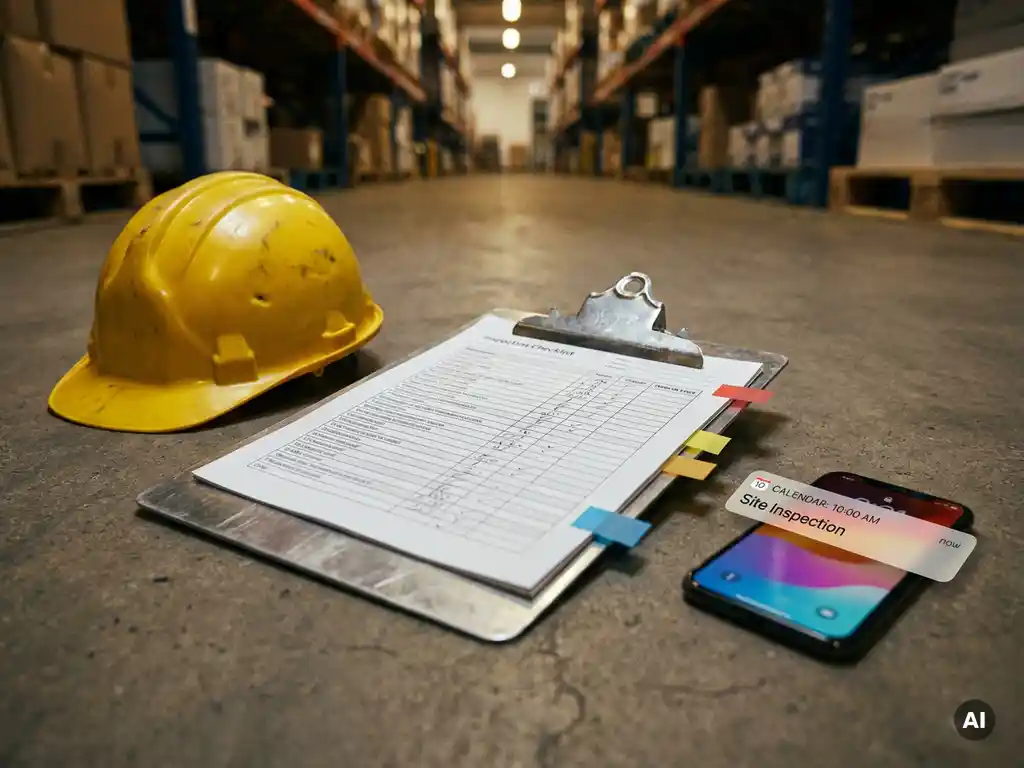


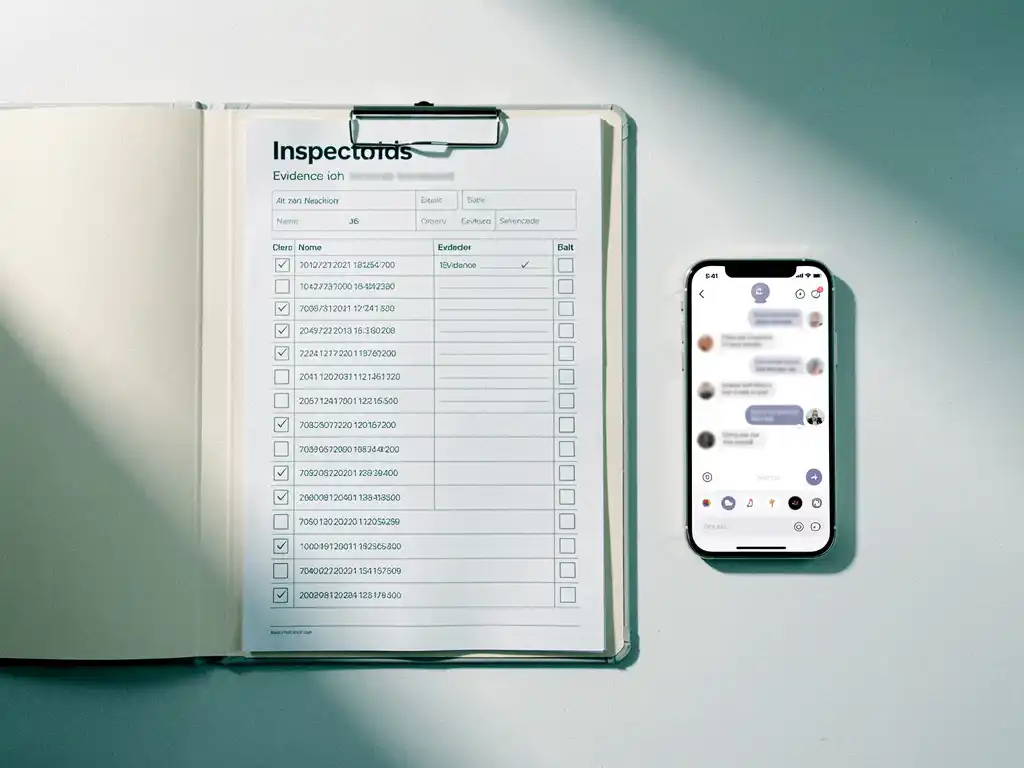
Every inspection comes down to trust and demonstrable compliance. Inspectors don’t just want to know that you understand the rules; they want to see proof that you actually follow them. Whether you’re dealing with a food safety inspection, a labour inspection, or a quality audit: good documentation is the difference between a flawless inspection and a costly shortcoming. For organisations working with HACCP guidelines, this is especially relevant: HACCP training teaches employees not only the rules, but also how to correctly record evidence.
In this article, we answer the most frequently asked questions about storing inspection evidence, so your organisation is always prepared, even when an inspector shows up unannounced.
What is inspection evidence and why is it so important?
Inspection evidence is all documented information with which an organisation demonstrates that it complies with laws and regulations. Think of training records, temperature logs, cleaning schedules, risk analyses, and signed procedures. Without this evidence, good practices exist only in theory, and that is not enough for an inspector.
The importance of solid evidence goes beyond passing an inspection. Documentation protects your organisation legally, makes areas for improvement visible, and ensures continuity when staff members change. In sectors such as the food industry, healthcare, and logistics, evidence is also a legal requirement, not a choice. Organisations that cannot provide evidence risk fines, temporary closure, or reputational damage.
What types of evidence are valid during an inspection?
Valid inspection evidence is objective, traceable, and dated. The most widely accepted forms are written or digital records, signed checklists, training certificates, measurement reports, and photo or video documentation. The evidence must show who did what, when, and in what manner.
Depending on the inspecting authority and the applicable regulatory framework, specific requirements apply. Within HACCP, the most commonly requested documents are:
- Temperature records for refrigeration and heating
- Cleaning and disinfection logs
- Records of HACCP training and refresher courses
- Written risk analyses and critical control points
- Supplier declarations and goods receipt checks
Verbal evidence, such as “we always do it that way,” does not count. For an inspector, only what is documented exists.
How long do you need to retain inspection evidence?
The retention period for inspection evidence depends on the sector and the type of document. As a general guideline in the food industry, a minimum retention period of two years applies to operational records, but training certificates and risk analyses are often kept for five years or longer.
Some practical guidelines per document type:
- Temperature logs: minimum two years
- Training records and certificates: minimum five years, or for as long as the employee is in service
- Risk analyses and HACCP plans: minimum five years, preferably longer
- Complaint records: minimum three years
Always check the specific requirements of the supervisory authority in your industry. When in doubt, retaining records longer is always safer than destroying them too early.
How do you ensure evidence is always up to date and complete?
Evidence stays up to date by making record-keeping part of the daily work routine, not an occasional tidying-up exercise before an inspection. The key is structure: fixed moments, fixed responsibilities, and a system that makes recording as straightforward as possible.
Make recording a habit
Employees record more readily and consistently when the process is simple. Digital checklists on a smartphone or tablet significantly lower the barrier compared to paper forms that get lost or become illegible. Assign a responsible person per department who checks daily that all records have been completed.
Use periodic internal audits
Schedule a monthly or quarterly internal review in which you spot-check whether documents are complete, correctly dated, and signed. This way, you identify gaps long before an external inspector does. Link findings directly to corrective actions and document those actions as well, because this demonstrates that your organisation is learning and proactive.
What are the most common mistakes when retaining evidence?
The most common mistake is filling in records after the fact, sometimes referred to as “paper reality.” Inspectors recognise this pattern immediately, for example when temperature logs contain identical handwriting or timestamps. This undermines the credibility of all other documentation.
Other frequently made mistakes include:
- Storing documents without clear version numbering, making it unclear which version is current
- Keeping training records without noting the name of the trainer or the content of the training
- Storing evidence in locations that are not accessible during an inspection, such as personal email inboxes
- Having no backup of digital records
- Not informing employees about the importance of correct documentation, causing them to make unintentional errors
The common thread is that mistakes rarely stem from unwillingness, but from a lack of knowledge or an inconvenient system. Training and clear working agreements resolve the majority of issues.
How do you prepare your organisation for an unannounced inspection?
Surviving an unannounced inspection means being inspection-ready at all times, not reacting to a notice. This means records are kept up to date daily, employees know what is expected of them, and documents can be retrieved immediately.
Practical steps for continuous readiness
- Establish a documentation protocol that describes which records are kept, when, and by whom.
- Train employees regularly on procedures and the importance of accurate documentation. Structured onboarding ensures new staff understand documentation requirements from day one.
- Store documents centrally and in an organised manner, so you can demonstrate within minutes what has been done over the past two years.
- Conduct regular internal audits and document the findings and improvement actions. Workplace inspections are a practical way to keep your organisation continuously audit-ready.
- Test your readiness by occasionally conducting an unannounced internal review. Toolbox talks are an effective way to keep teams sharp and aligned on current procedures.
Organisations that apply these steps consistently experience inspections as confirmation of good work rather than as a threat. The preparation becomes embedded in the daily way of working.
How E-lia helps with inspection readiness and HACCP documentation
We understand that consistently maintaining evidence and training employees in busy environments can be a challenge. That is why we offer a low-barrier way to train employees and secure knowledge via WhatsApp, exactly when it is needed, without extra apps or login procedures.
What we concretely offer for organisations that want to be inspection-ready:
- Microlearning modules on HACCP procedures that employees complete in 3 to 6 minutes
- Automatic recording of who has completed which training, directly usable as evidence during an inspection
- Modules in multiple languages, so that multilingual teams always receive the right information
- A clear dashboard that shows at a glance who is up to date and who is not — supporting your efforts to retain and maintain knowledge across the organisation
- Quick content updates when procedures change, so evidence always reflects the current way of working — easily distributed as digital work instructions
Want to know how we help your organisation stay inspection-ready at all times? Explore our HACCP training via WhatsApp and discover how straightforward it can be to secure evidence and continuously upskill your employees. You can also book a free demo to see E-lia in action.
Frequently Asked Questions
What is the difference between a HACCP plan and HACCP documentation?
A HACCP plan is the strategic document in which you describe risk analyses, critical control points, and control measures. HACCP documentation encompasses everything that proves you are actually implementing the plan, such as temperature logs, cleaning records, and training certificates. Both are necessary during an inspection: the plan shows that you understand the risks, while the documentation shows that you act on them every day.
Can I store inspection evidence digitally instead of on paper?
Yes, digital documentation is fully accepted in most sectors, provided the system meets certain requirements such as timestamp registration, access control, and demonstrable immutability of records. Ensure that digital files are always accessible during an inspection, even without an internet connection, and that backups are made regularly. When in doubt, check the specific requirements of the supervisory authority in your sector.
How do I ensure that my multilingual employees correctly understand and apply the documentation procedures?
Language barriers are one of the most underestimated causes of documentation errors in teams with diverse nationalities. Provide instructions, checklists, and training materials in the native languages of your employees, and verify that they genuinely understand the procedures rather than simply filling in forms. Digital microlearning solutions available in multiple languages, such as those offered by E-lia, can provide a practical and scalable solution.
What should I do if an inspector identifies a shortcoming in my documentation?
Stay calm, acknowledge the shortcoming, and indicate that you will immediately take corrective measures. Document the finding yourself as well, including the date, the nature of the shortcoming, and the actions you are taking to prevent recurrence. Inspectors assess not only the error itself, but also how an organisation responds to it; a proactive and documented follow-up demonstrates that your organisation has a learning capacity, which can significantly reduce the impact of the shortcoming.
How often do employees need to complete HACCP training or refresher courses to keep evidence valid?
There is no universally established frequency, but the common practice in the food industry is an annual refresher training, supplemented by an onboarding training for new employees and a refresher course whenever procedures or regulations change. Inspectors look not only at whether an employee has ever completed a training, but also at whether their knowledge is current. Regular, short refresher moments, such as microlearning modules, are more effective than one large annual session.
Can a small organisation or sole trader also meet all documentation requirements, or are these only for large companies?
Documentation obligations apply regardless of the size of the organisation; even a small catering business or independent caterer must be able to demonstrate compliance with HACCP guidelines. The good news is that the scale of documentation can match the complexity of the activities: a small organisation does not need an extensive quality management system, but does need consistent, traceable records. Simple digital tools and standardised checklists make this manageable even for small teams.
How do I know whether my current documentation system is strong enough to withstand a real inspection?
The best approach is to conduct an internal mock inspection: ask yourself the questions an external inspector would ask and try to produce the evidence within a few minutes. Check whether documents are complete, correctly dated, signed, and version-controlled, and whether training records show who learned what and when. If you discover gaps, you immediately have an improvement plan; if everything checks out, you have confirmation that your system works.
Related Articles
- How do you combine observations, photos and action points in one inspection report?
- Who is responsible for the workplace inspection when temporary workers are involved?
- How do you prevent toolbox talks from becoming boring?
- How do you deliver safety talks to part-timers and on-call workers?
- What skills do you need to lead toolbox meetings?