

The future of workplace inspections is being shaped right now by AI and sensor technology, and the shift is already well underway. By 2026, organisations across manufacturing, logistics, healthcare, and construction are moving from periodic manual checks to continuous, data-driven safety monitoring. This article unpacks the key questions driving that transformation, from how sensors detect hazards in real time to whether human inspectors still have a role to play.
How are AI and sensors already being used in workplace inspections?
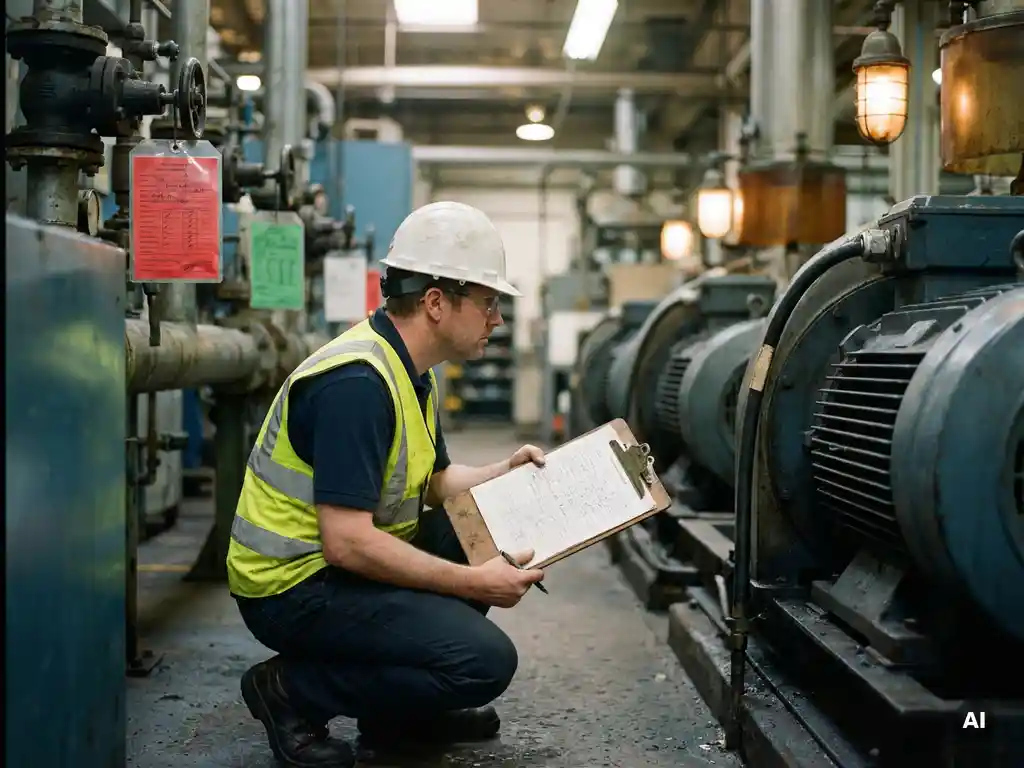
AI and sensors are already being used in workplace inspections to monitor environments continuously, flag hazards automatically, and generate inspection reports without manual data entry. Computer vision systems scan production floors for safety violations, gas sensors detect toxic concentrations before they reach dangerous levels, and machine learning models analyse patterns to predict equipment failures before they happen.
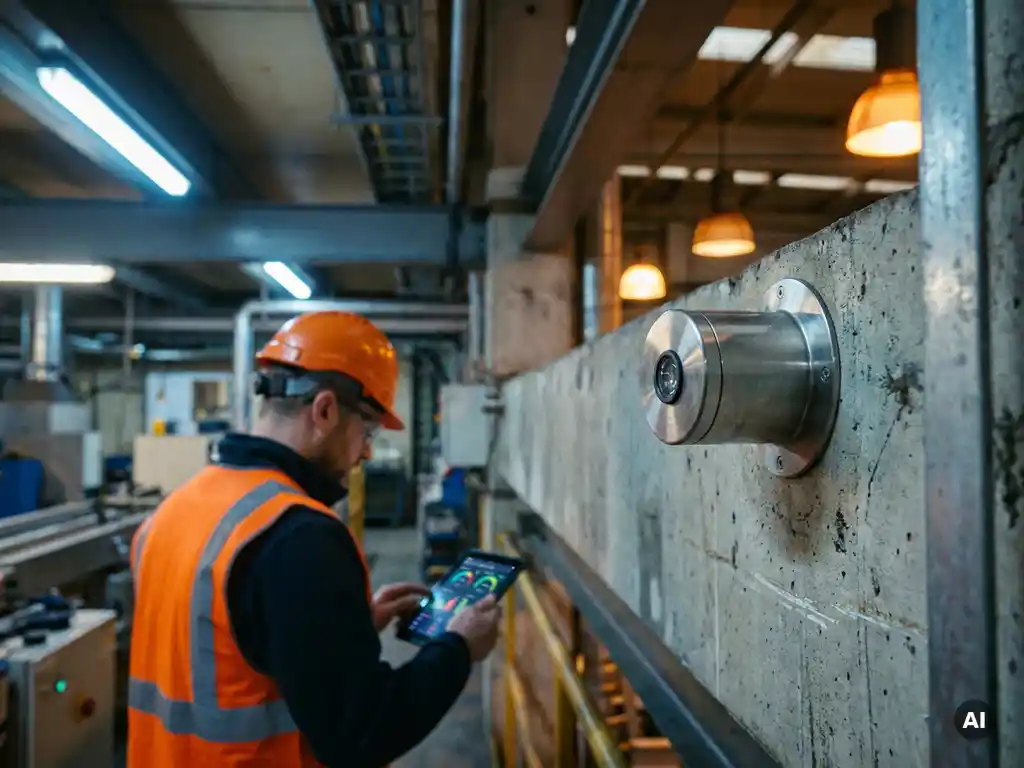
In practice, this looks like camera systems that identify whether workers are wearing the correct personal protective equipment, vibration sensors attached to heavy machinery that alert maintenance teams when readings fall outside safe ranges, and environmental monitors that track temperature, noise, and air quality around the clock. These tools do not replace the inspection process; they make it faster, more consistent, and far less dependent on someone being physically present at the right moment.
Industries with the highest physical risk, such as chemical processing, warehousing, and large-scale healthcare facilities, have been early adopters. The appeal is straightforward: sensors never get tired, never miss a shift, and never forget to log a reading.
What are the biggest limitations of traditional workplace inspections?
The biggest limitations of traditional workplace inspections are their infrequency, subjectivity, and reliance on human availability. A scheduled inspection captures a snapshot of conditions at one moment in time, which means hazards that develop between visits can go undetected for days or weeks. Inspector judgement also varies, making it difficult to maintain consistent standards across sites or shifts.
Beyond inconsistency, traditional inspections are resource-intensive. Sending a qualified inspector to every workstation, on every shift, in every facility is simply not scalable for most organisations. Documentation is another weak point: paper-based checklists and manually entered records are prone to errors, difficult to analyse at scale, and slow to surface trends that could prevent future incidents.
There is also a behavioural dimension. Workers who know an inspection is scheduled may adjust their behaviour temporarily, which means the inspection captures an artificially compliant picture rather than the everyday reality of how work gets done. These limitations are not a reflection of poor effort; they are structural constraints built into the model itself.
How does AI improve hazard detection compared to manual checks?
AI improves hazard detection by operating continuously rather than periodically, processing far more data points than any human inspector could monitor simultaneously, and identifying subtle patterns that indicate risk before an incident occurs. Where a manual check might happen weekly, an AI-powered system evaluates conditions every second.
The core advantage is pattern recognition at scale. A trained computer vision model can simultaneously monitor dozens of camera feeds, checking for blocked emergency exits, missing safety guards, or incorrect equipment use across an entire facility. Sensor networks feed environmental data into algorithms that compare current readings against historical baselines, triggering alerts when conditions drift towards unsafe territory rather than waiting until a threshold is breached.
AI also reduces the cognitive load that leads to human error. Inspection fatigue is real: when a person checks the same items repeatedly across a long shift, attention naturally drifts. Automated systems apply the same level of scrutiny to the thousandth check as to the first. The result is a more reliable safety net, particularly for high-frequency, high-stakes monitoring tasks where consistency matters most.
What role do wearable sensors play in future safety inspections?
Wearable sensors play a central role in future safety inspections by moving monitoring from the environment to the individual worker. Smart vests, helmets, wristbands, and boots can track location, posture, heart rate, fatigue indicators, and exposure to harmful substances in real time, creating a continuous picture of worker well-being rather than a periodic check.
For inspection workflows, wearables add a layer of data that fixed sensors cannot capture. A sensor mounted on a wall can detect a chemical spill; a wearable can confirm whether a specific worker was exposed and for how long. Ergonomic wearables monitor body mechanics to flag repetitive strain risks before they become injuries, which is particularly valuable in logistics and manufacturing environments where musculoskeletal problems are common.
The data collected by wearables also feeds into broader safety analytics. Over time, patterns emerge: certain tasks consistently produce elevated stress readings, specific locations correlate with more near-miss events, or particular shift patterns lead to higher fatigue scores. These insights allow organisations to redesign workflows proactively rather than responding to incidents after the fact. Privacy considerations are a genuine part of this conversation, and organisations implementing wearables need clear policies about data ownership, access, and retention.
Will AI replace human safety inspectors entirely?
AI will not replace human safety inspectors entirely, but it will fundamentally change what those inspectors spend their time doing. Automated systems excel at continuous monitoring, data collection, and pattern detection, but human judgement remains essential for contextual interpretation, stakeholder communication, regulatory compliance decisions, and responding to novel situations that fall outside a model’s training data.
The more realistic outcome is a division of labour where AI handles the high-volume, repetitive monitoring tasks and human inspectors focus on investigation, decision-making, and relationship-driven aspects of safety culture. An inspector who previously spent hours walking a facility with a checklist can instead spend that time reviewing AI-generated anomaly reports, conducting targeted investigations, and coaching frontline workers on safety behaviours.
Regulatory frameworks are also a factor. In most jurisdictions, safety compliance requires human accountability. Certifications, incident investigations, and enforcement actions involve legal and professional responsibilities that cannot be delegated to an algorithm. AI is a powerful tool in the inspector’s hands; it is not a replacement for the inspector.
How can organisations prepare their teams for AI-driven inspection workflows?
Organisations can prepare their teams for AI-driven inspection workflows by investing in digital literacy training, involving frontline workers in the rollout process, and ensuring that the transition is framed as a support tool rather than a surveillance mechanism. The technical implementation is rarely the hardest part; the human side of the change is where most organisations encounter resistance.
Practical preparation involves several parallel tracks:
- Training safety teams to interpret AI-generated alerts and dashboards rather than relying solely on physical observation
- Educating frontline workers about what sensors and cameras are monitoring and why, to build trust and reduce anxiety about being watched
- Updating inspection protocols to reflect the new workflow, clarifying which tasks are now automated and which still require human verification
- Establishing data governance policies that define how sensor data is stored, who can access it, and how it informs performance evaluations
- Running pilot programmes in one area before scaling, so teams can build confidence with the technology before it is deployed facility-wide
Change management matters as much as the technology itself. Workers who understand the purpose of smart safety monitoring and feel involved in its implementation are far more likely to engage with it constructively than those who experience it as something imposed from above.
How E-Lia helps teams get ready for smarter workplace safety
Preparing teams for AI-driven inspection workflows is not just a technical challenge; it is a training and communication challenge. That is exactly where we come in. At E-Lia, we help organisations deliver the knowledge workers need to work confidently alongside new safety technologies, using short, practical microlearning modules sent directly via WhatsApp. No app downloads, no logins, no disruption to the workday.
Here is what that looks like in practice:
- Microlearning modules on new safety protocols that explain how AI monitoring tools work and what workers should do when an alert is triggered — perfectly suited to support toolbox talks before or after a shift
- Onboarding workflows that introduce new hires to smart inspection systems from day one, so they are never left guessing
- Multilingual content delivered automatically in each worker’s own language, ensuring no one is left behind in a diverse team
- Progress tracking via dashboard so L&D managers and safety leads can see who has completed which modules and where knowledge gaps remain — supporting your wider goal to retain and maintain knowledge across the organisation
- Modules built in 10 to 15 minutes, completed by workers in 3 to 6 minutes, keeping training efficient without cutting corners — ideal for delivering work instructions alongside new inspection procedures
If your organisation is preparing to adopt sensor-based safety monitoring or AI inspection tools and you want your teams to be genuinely ready, we would love to show you how it works. Plan a demo and see how microlearning via WhatsApp can make the transition smoother for everyone involved.
Frequently Asked Questions
How do we know if our facility is ready to implement AI-powered inspection tools?
Start by auditing your current inspection workflows to identify where the biggest gaps exist — high-risk areas with infrequent checks, inconsistent documentation, or recurring near-misses are strong candidates for automation. From there, assess your existing infrastructure: reliable connectivity, data storage capacity, and basic digital literacy among your safety team are prerequisites before layering in AI or sensor technology. A readiness assessment does not need to be complex; even a simple gap analysis comparing your current inspection frequency against your actual risk exposure can reveal where smart monitoring would deliver the most immediate value.
What types of sensors are most commonly used in workplace safety monitoring, and how do we choose the right ones?
The most commonly deployed sensors in workplace safety include gas and air quality detectors, vibration and temperature sensors for equipment monitoring, computer vision cameras for PPE and behavioural compliance, and environmental monitors for noise and light levels. Choosing the right sensors depends on your specific hazard profile — a chemical processing plant has very different priorities than a logistics warehouse or a healthcare facility. Start by mapping your top five risk categories, then match sensor types to those specific hazards rather than trying to deploy a one-size-fits-all solution from the outset.
How should organisations handle false positives from AI hazard detection systems?
False positives are one of the most common frustrations during early AI deployment and, if not managed well, can lead teams to start ignoring alerts altogether — which defeats the purpose entirely. The solution is to build a clear triage protocol: categorise alerts by severity, assign response responsibilities, and track false positive rates over time so the system can be recalibrated. Most modern AI safety platforms allow threshold adjustments and model retraining based on site-specific conditions, so treating false positives as feedback data rather than failures is the most productive approach.
What are the key data privacy and legal considerations when deploying wearables and cameras in the workplace?
Deploying wearables and cameras introduces real obligations around employee privacy, data protection legislation (such as GDPR in Europe), and works council or union consultation requirements depending on your jurisdiction. Before rollout, you need documented policies covering what data is collected, how long it is retained, who can access it, and whether it can be used in performance or disciplinary contexts. Transparency with workers is not just a legal safeguard — it is a trust-building step that significantly affects adoption rates and the overall success of the programme.
How long does it typically take to see a measurable safety improvement after implementing AI inspection tools?
Most organisations begin seeing operational changes — faster hazard detection, reduced manual reporting time, and more consistent compliance data — within the first few months of deployment. Measurable safety outcomes, such as reductions in incident rates or near-miss frequency, typically become visible within six to twelve months, once enough data has been collected for meaningful trend analysis. The speed of improvement is closely tied to how well the technology rollout is supported by training and workflow integration; tools that workers understand and trust tend to deliver results significantly faster than those deployed without adequate change management.
Can small and mid-sized businesses realistically afford AI-driven safety inspection technology?
The cost of AI safety tools has dropped significantly in recent years, and many solutions are now available on subscription or modular pricing models that make them accessible to smaller operations. Cloud-based platforms, off-the-shelf sensor kits, and SaaS inspection software have largely replaced the need for expensive custom-built systems. A practical approach for SMBs is to start with a single high-risk area or process, measure the ROI in reduced incidents and inspection time, and expand from there rather than attempting a facility-wide deployment from day one.
How do we maintain human oversight and accountability in a largely automated inspection system?
Maintaining human oversight requires deliberately designing it into your workflows rather than assuming it will happen naturally. This means assigning specific team members to review AI-generated reports on a regular cadence, establishing escalation paths for high-severity alerts that always involve a qualified human decision-maker, and conducting periodic manual audits to validate that automated systems are performing as expected. Regulatory compliance in most jurisdictions already requires documented human accountability for safety decisions, so building that structure into your AI workflow is both a legal necessity and a practical safeguard against over-reliance on automated outputs.