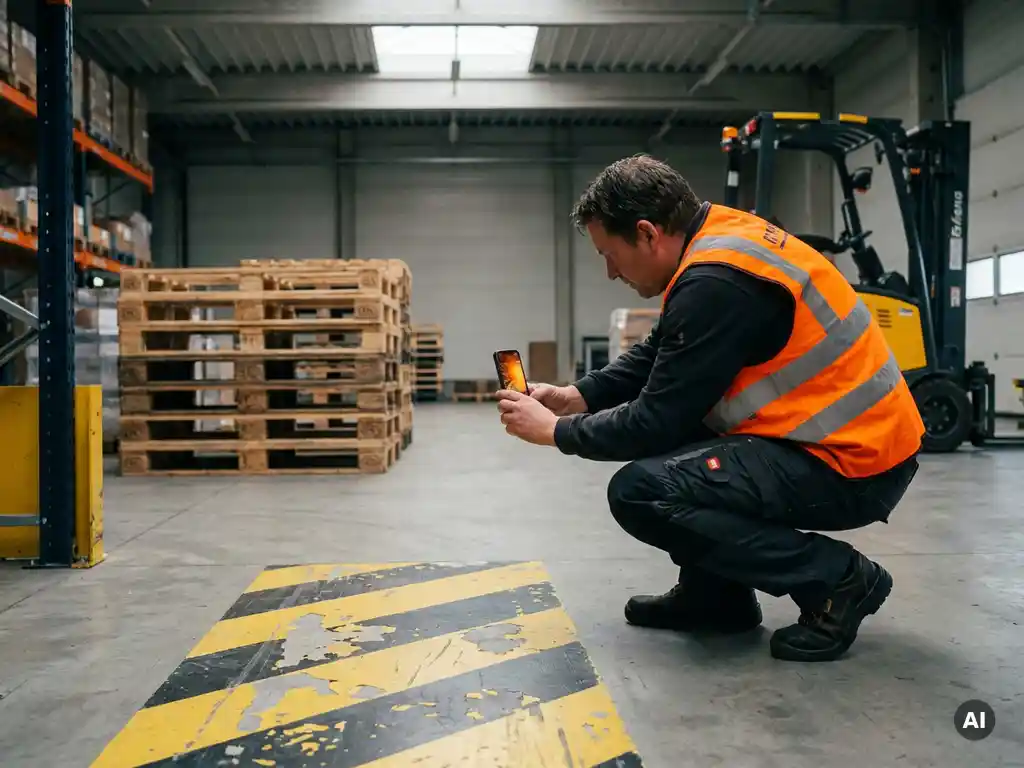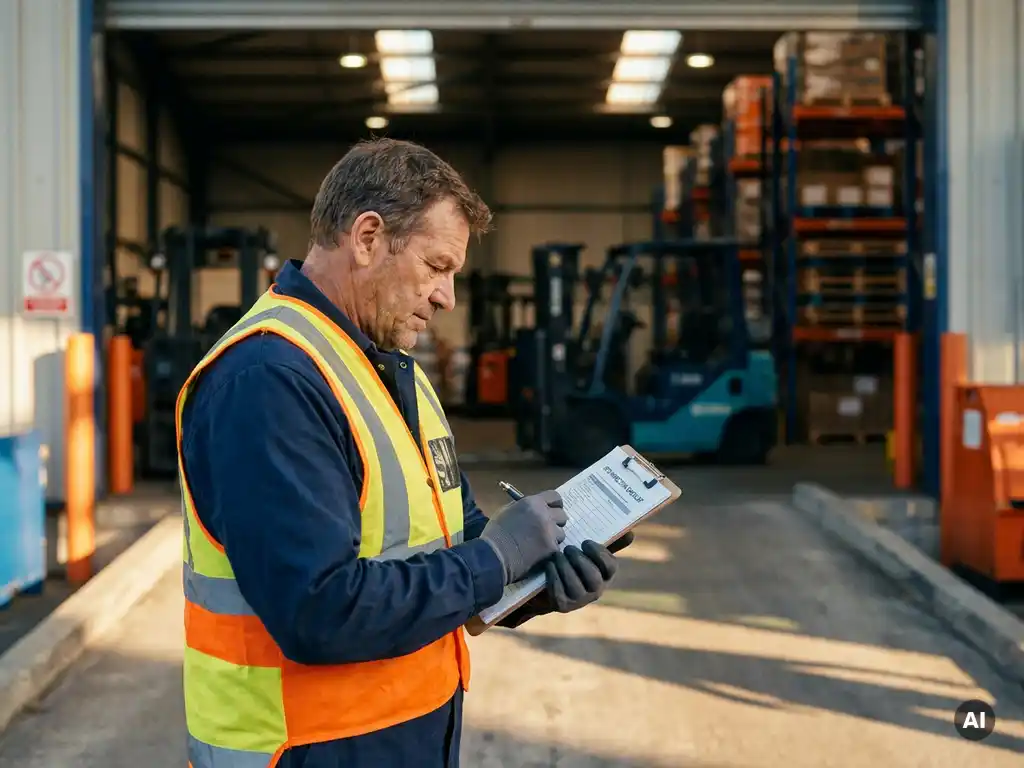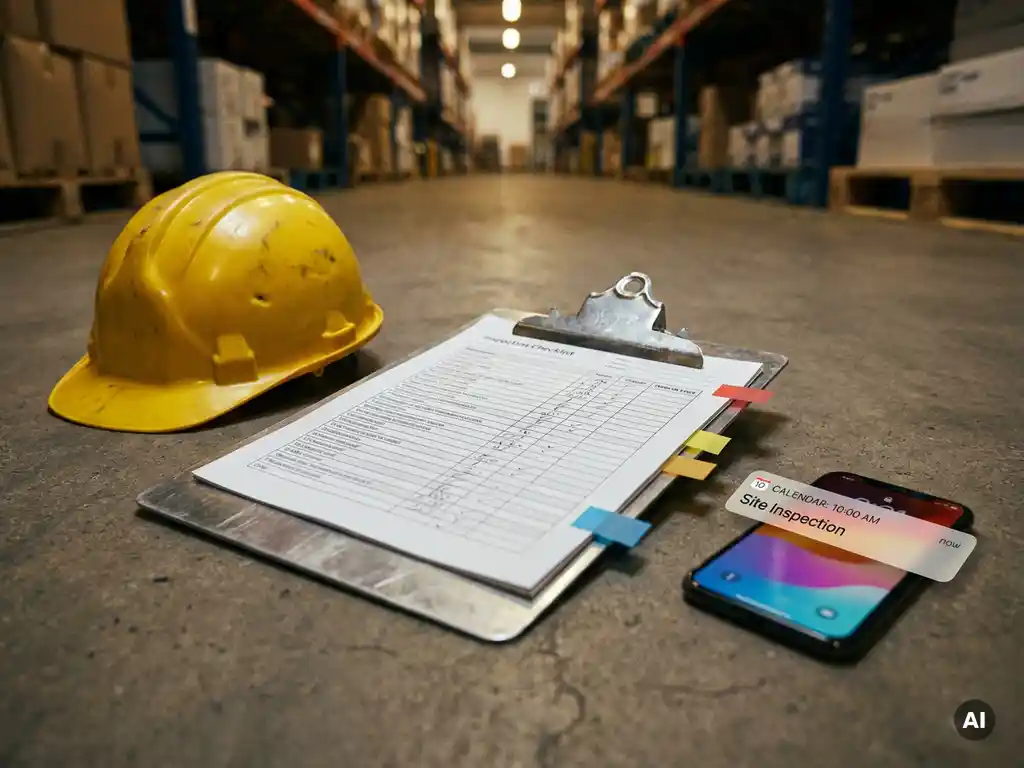


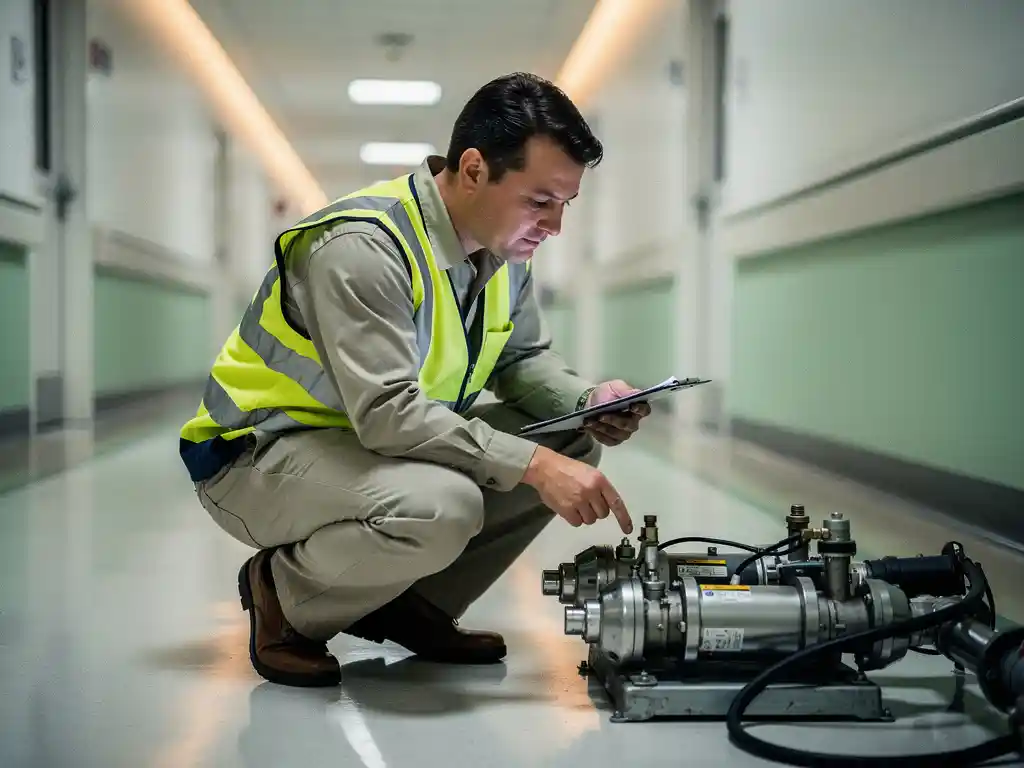
A workplace inspection is a formal assessment of a work environment to identify hazards, verify compliance with health and safety legislation, and ensure employees are protected from foreseeable risks. In most countries, workplace safety inspections are mandatory under national occupational health and safety law, meaning employers have a legal obligation to carry them out regularly. The sections below unpack who is responsible, what gets checked, how often inspections must happen, and how organisations can prepare their teams effectively — including a demo meeting for those looking for practical support.
Who is legally required to carry out a workplace inspection?
Employers are legally required to carry out workplace inspections in virtually every jurisdiction that has occupational health and safety legislation. This obligation sits with the organisation itself, not with an external authority. In practice, the responsibility is typically delegated to a health and safety officer, a line manager, or a designated safety representative, but ultimate accountability remains with the employer.
In many countries, the legal framework also gives workers the right to participate in inspections or to raise concerns without fear of reprisal. Trade unions and elected safety representatives often have a formal role in the process. Where a business operates across multiple sites, each location generally falls under the same inspection obligation, regardless of how many employees work there. Small businesses are not exempt — the threshold for compliance is usually set at having at least one employee.
What does a workplace inspector actually check?
A workplace inspector checks whether the physical environment, equipment, procedures, and people management practices meet the required safety standards. Inspections cover both visible hazards and systemic risks, meaning an inspector looks beyond what is immediately obvious to assess whether the organisation’s safety culture and processes are functioning as intended.
Common areas covered during a workplace safety inspection include:
- Physical hazards — trip and slip risks, inadequate lighting, blocked emergency exits, and unsafe storage of materials
- Equipment and machinery — whether tools and machines are maintained, guarded, and used correctly
- Chemical and biological hazards — proper labelling, storage, and handling of hazardous substances
- Fire safety — the presence and condition of fire extinguishers, evacuation routes, and alarm systems
- Ergonomics and workstation setup — particularly relevant in office and warehouse environments
- Documentation and training records — evidence that employees have received safety training and that risk assessments are current
- Personal protective equipment (PPE) — availability, condition, and correct usage
Inspectors also look at whether reported hazards from previous inspections have been addressed. An unresolved issue from a prior inspection is treated as a more serious failing than a newly identified one.
How often must a workplace inspection take place?
There is no single universal frequency for workplace inspections — the required interval depends on the nature of the work, the level of risk involved, and the applicable national legislation. High-risk environments such as construction sites, manufacturing facilities, and healthcare settings typically require more frequent inspections than low-risk office environments.
As a general guide, industry practice and regulatory guidance commonly point to the following:
- High-risk workplaces (manufacturing, construction, logistics, healthcare): monthly or quarterly inspections
- Medium-risk workplaces (retail, warehousing, food service): quarterly or biannual inspections
- Lower-risk workplaces (offices, administrative settings): at least annually
Beyond scheduled inspections, organisations are also expected to carry out unplanned inspections following an incident, a near-miss, a significant change in working practices, or the introduction of new equipment. The key principle is that inspections should happen often enough to catch hazards before they cause harm, not simply to satisfy a minimum legal threshold.
What happens if a workplace fails an inspection?
If a workplace fails a safety inspection, the consequences depend on the severity of the violations found and the regulatory body involved. Minor issues typically result in an improvement notice, which gives the organisation a defined period to correct the problem. More serious or immediate dangers can lead to a prohibition notice, which stops specific activities or closes part of the workplace until the hazard is resolved.
Repeated non-compliance or deliberate disregard for safety requirements can result in significant financial penalties, prosecution of individuals, or, in the most serious cases, criminal charges against directors and managers. Beyond legal consequences, a failed inspection damages employee trust, increases the risk of accidents, and can affect an organisation’s reputation with clients and partners.
The practical response to a failed inspection should follow a structured process: acknowledge the findings formally, assign clear ownership for each corrective action, set realistic deadlines, and document everything. Inspectors generally respond more favourably to organisations that demonstrate a genuine commitment to improvement than to those that dispute findings or delay action.
How can organisations prepare employees for a workplace inspection?
Preparing employees for a workplace inspection means ensuring that safety knowledge is embedded in daily behaviour, not just rehearsed before an inspector arrives. The most effective preparation happens continuously through regular training, clear communication of procedures, and a culture where safety concerns are reported and acted on promptly. Tools such as toolbox talks and structured onboarding programmes play a key role in building that foundation.
Practical steps organisations can take include:
- Conduct internal pre-inspections — walk the workplace with a checklist before the official inspection to identify and fix issues in advance
- Refresh safety training regularly — ensure all employees, including recent hires, know the relevant procedures for their role
- Make documentation accessible — risk assessments, training records, and maintenance logs should be easy to locate and up to date
- Brief employees on what to expect — explain what inspectors look for and encourage staff to answer questions honestly and confidently
- Address outstanding hazard reports — any previously flagged issues that remain unresolved will attract scrutiny
- Involve team leaders — managers and supervisors should be able to explain the safety procedures for their area without relying on central HR
The goal is not to stage a perfect performance for one day, but to demonstrate that safe working practices are genuinely embedded. Inspectors are experienced at distinguishing between organisations that live their safety standards and those that perform them temporarily.
How E-Lia helps with workplace inspection readiness
One of the most common reasons organisations struggle during a workplace inspection is that employees simply have not retained the safety information they were given during onboarding or annual training. Information delivered once, in a long session, rarely sticks. We built E-Lia to solve exactly that problem.
With E-Lia, organisations can prepare their teams for workplace safety inspections in a way that is practical, fast, and genuinely effective:
- Send targeted microlearning modules via WhatsApp — no app downloads, no logins, no barriers to access
- Build a safety refresher module in 10 to 15 minutes — covering specific procedures, hazard identification, or PPE requirements relevant to an upcoming inspection
- Reach every employee, including those without a desk or company email — ideal for logistics, production, healthcare, and retail teams
- Track who has completed which modules via a simple dashboard, giving you documented evidence of training for inspectors
- Support multilingual teams with automatic translation, so safety information reaches every employee in the language they understand best
- Schedule modules in advance so safety reminders go out automatically ahead of an inspection date
E-Lia also supports knowledge retention over time, helps teams follow work instructions consistently, and can be used to deliver HACCP training where food safety compliance is required. Workplace inspections reward organisations that can show consistent, documented safety training. We make that straightforward. Plan a demo to see how E-Lia fits into your safety and compliance workflow.
Frequently Asked Questions
What is the difference between a workplace inspection and a risk assessment?
A risk assessment is a proactive process of identifying and evaluating potential hazards before work begins, while a workplace inspection is an ongoing, periodic check to verify that safety measures are actually in place and working as intended. Think of the risk assessment as the plan and the inspection as the audit of that plan. Both are legally required in most jurisdictions, but they serve different purposes and should not be treated as interchangeable.
Can employees refuse to participate in a workplace inspection?
Employees generally cannot refuse to cooperate with a lawful workplace inspection, as participation is typically a condition of employment and a legal requirement under occupational health and safety legislation. However, workers do have the right to answer questions honestly without fear of reprisal, and they should never feel pressured to conceal genuine hazards or safety concerns. Encouraging open, honest participation from staff actually strengthens an organisation’s inspection outcome rather than weakening it.
What documentation should we have ready before an inspection?
At a minimum, you should have current risk assessments for all relevant work activities, training records showing which employees completed which safety programmes and when, maintenance and service logs for equipment and machinery, records of any incidents or near-misses and the corrective actions taken, and copies of any previous inspection reports along with evidence that outstanding issues were resolved. Inspectors pay close attention to whether documentation is genuinely up to date or has been hastily compiled, so maintaining these records continuously is far more effective than scrambling to produce them before an inspection date.
How should we handle a hazard we discover during our own pre-inspection walkthrough?
Fix it immediately if it can be resolved quickly, and document both the discovery and the corrective action taken. If the hazard requires more time or resources to address, log it formally, assign a responsible person, set a clear deadline, and record the interim control measures you have put in place to reduce risk in the meantime. Proactively identifying and acting on hazards before an official inspection actually demonstrates a healthy safety culture, which inspectors view positively.
What is the best way to get frontline or deskless workers genuinely engaged with workplace safety, not just compliant on inspection day?
The most effective approach is to make safety information short, relevant, and delivered in the flow of normal work rather than in occasional long training sessions that are easy to forget. Microlearning — bite-sized modules focused on a single procedure or hazard — has strong evidence behind it for improving retention, particularly when delivered through channels employees already use, such as messaging apps. Pairing regular refreshers with a culture where workers feel safe reporting hazards without blame is what turns one-day compliance into genuine, lasting safety behaviour.
Do remote or hybrid workers need to be included in workplace safety inspections?
Yes — in most jurisdictions, the employer’s duty of care extends to employees working from home or in hybrid arrangements, meaning the home workspace should also be assessed for safety risks. In practice, this is typically handled through a self-assessment questionnaire that the employee completes, covering factors such as workstation ergonomics, lighting, electrical safety, and emergency procedures. Employers are expected to act on the findings of those self-assessments, not simply file them away.
How long should corrective actions from a failed inspection take to complete?
The timeline depends entirely on the severity of the issue: immediate dangers must be addressed before work in that area resumes, while lower-priority improvements may be given a reasonable window of days or weeks depending on what the regulator specifies in the improvement notice. The critical thing is to set realistic, specific deadlines and stick to them — regulators take a much harder line on organisations that miss agreed correction dates than on those that flag a delay early and communicate proactively. Always document every step of the corrective process, as this evidence will be reviewed if a follow-up inspection takes place.