


An onboarding programme is a structured, long-term process that integrates a new employee into an organisation over weeks or months, whilst an induction plan is a shorter, more focused introduction that covers essential information in the first days. The two terms are often used interchangeably, but they serve different purposes and operate on different timescales. Understanding the distinction helps organisations design a more intentional approach to new employee training that covers both immediate needs and long-term development.
What does an onboarding programme actually include?
An onboarding programme is a comprehensive, structured experience that helps new employees become fully productive, engaged, and culturally aligned members of an organisation. It typically spans the first 30, 60, or 90 days of employment and covers far more than paperwork and introductions.
A well-designed onboarding programme usually includes the following elements:
- Role-specific training: Teaching the skills, tools, and knowledge needed to perform the job effectively
- Cultural integration: Helping the new hire understand the organisation’s values, behaviours, and ways of working
- Relationship building: Structured introductions to team members, managers, and key stakeholders
- Goal setting: Establishing clear performance expectations and milestones for the first months
- Ongoing check-ins: Regular conversations to address questions, provide feedback, and track progress
- Administrative tasks: Completing contracts, setting up accounts, and accessing necessary systems
The goal of an onboarding programme is not simply to inform, but to build confidence and commitment. A new employee who feels supported and prepared from day one is far more likely to stay, perform well, and contribute meaningfully to the team.
What is an induction plan and what does it cover?
An induction plan is a short, structured introduction to the organisation that takes place in the first hours or days of employment. It focuses on the essentials a new employee needs to know immediately: health and safety procedures, company policies, workplace logistics, and basic role expectations.
Think of an induction plan as the practical foundation. It answers the most immediate questions a new starter has: Where do I go? Who do I report to? What are the rules? What do I need to do to stay safe and compliant?
A typical staff induction covers:
- Health, safety, and emergency procedures
- Company policies such as data protection, conduct, and attendance
- A tour of the workplace or facility
- Introduction to immediate colleagues and line managers
- Overview of working hours, break times, and facilities
- Basic IT setup and access credentials
An induction plan is deliberately concise. It is not designed to develop skills or build deep knowledge. Its purpose is to ensure every new employee can function safely and confidently on their very first day.
What is the key difference between onboarding and induction?
The key difference between onboarding and induction lies in scope and duration. An induction plan is a short, practical introduction that happens at the very start of employment, whilst an onboarding programme is a longer, more strategic process designed to build competence, engagement, and belonging over time.
Put simply: induction is about orientation, onboarding is about integration. Induction tells a new employee where the fire exits are and what time lunch is. Onboarding ensures they understand their role deeply, feel connected to the team, and know how to grow within the organisation.
Another important distinction is ownership. An induction plan is often managed by HR or a designated buddy and follows a standardised checklist. An onboarding programme typically involves the direct manager, the wider team, and sometimes a learning and development professional, with content tailored to the specific role and individual.
Organisations that treat these two processes as identical tend to leave new employees feeling underprepared beyond the first week. Recognising them as separate but complementary phases leads to a much stronger employee experience.
Can an induction plan be part of an onboarding programme?
Yes, an induction plan can and should be part of an onboarding programme. The induction plan typically forms the first phase of onboarding, covering the immediate essentials before the broader, longer-term development work begins.
Structuring them this way creates a logical progression. The induction gives new employees the safety, compliance, and logistical knowledge they need from day one. Once that foundation is in place, the onboarding programme builds on it with role-specific training, cultural immersion, and relationship development. Learn more about how a structured onboarding programme can support this progression.
Treating induction as phase one of onboarding also prevents a common problem: organisations that run a strong induction but have no structured follow-up often see new hires feel lost or disengaged within the first few weeks. When the induction flows naturally into a broader onboarding journey, the transition from “new starter” to “confident contributor” is much smoother.
How long should an onboarding programme versus an induction plan last?
An induction plan typically lasts between one day and one week, depending on the complexity of the role and the workplace environment. An onboarding programme, by contrast, usually spans 30 to 90 days, though research and industry experience consistently suggest that the most effective onboarding programmes extend to at least 90 days, and sometimes up to a full year for complex roles.
The right duration depends on several factors:
- Role complexity: A specialist or leadership role requires a longer onboarding runway than an entry-level position
- Industry context: Sectors like healthcare or logistics often require more structured training before an employee can work independently
- Organisational culture: Companies with strong, distinct cultures may need more time to help new hires genuinely understand and adopt their values
- Prior experience: A new hire joining with extensive relevant experience may need less time to reach full productivity
A common mistake is ending onboarding too early. Many organisations consider a new employee “onboarded” after their first week, when in reality, most people need several months of structured support to feel truly confident and capable in a new role. Explore how tools like knowledge retention and work instructions can support employees throughout this period.
What happens when organisations skip proper onboarding?
When organisations skip or rush onboarding, new employees are more likely to feel confused, unsupported, and disengaged, which directly increases the risk of early turnover. Poor onboarding is one of the most frequently cited reasons employees leave a new role within the first six months.
The consequences extend beyond individual employees. Teams lose productivity when new hires take longer to reach competence. Managers spend more time answering basic questions that a structured onboarding programme would have addressed. Mistakes and compliance issues become more likely when employees have not received clear, consistent training.
There is also a cultural cost. Employees who experience a poor start often form a negative impression of the organisation that is difficult to reverse. First impressions shape long-term engagement, and a weak onboarding experience signals to a new hire that the organisation does not invest in its people.
In industries like healthcare, production, and logistics, where clear procedures and safety knowledge are critical, skipping proper onboarding is not just an HR problem. It can have direct operational and safety consequences. Structured tools such as toolbox talks, workplace inspections, and HACCP training can help organisations maintain safety and compliance from the very first day.
How E-Lia supports your onboarding programme and induction plan
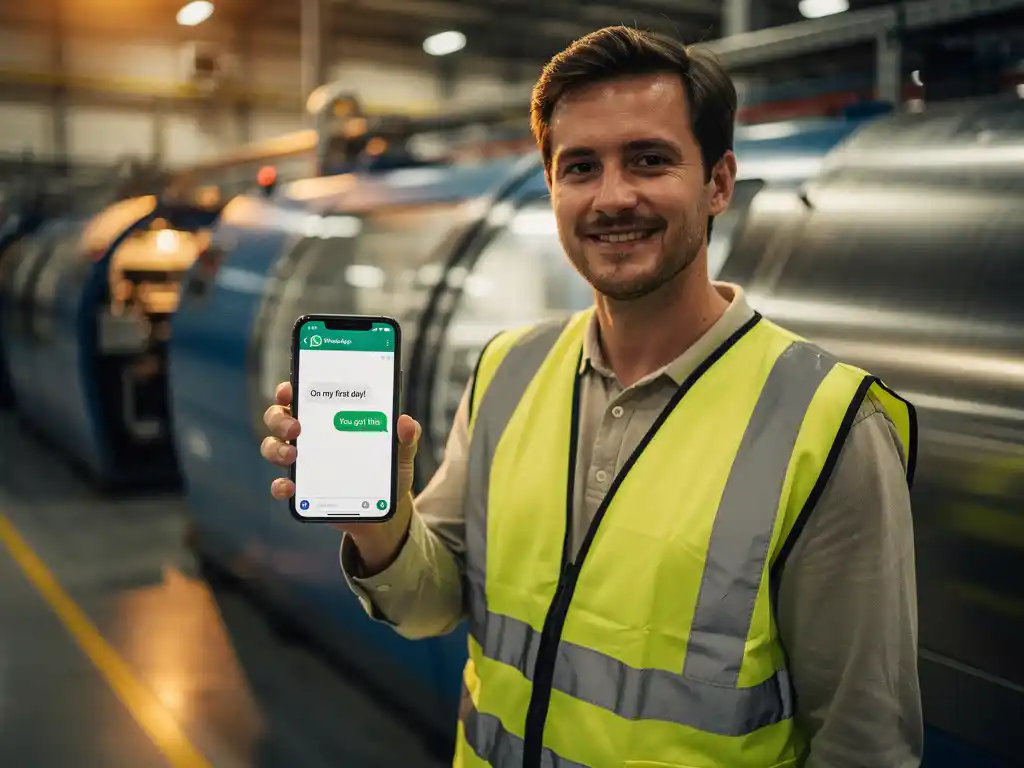
We make it easy to deliver both a structured induction plan and a full onboarding programme without the complexity of traditional training systems. E-Lia uses WhatsApp to send microlearning modules directly to new employees, with no app download or login required, so they can access the right information at the right moment, on any device.
Here is what we offer for onboarding and induction:
- Fast module creation: Build a complete induction module in 10 to 15 minutes using our intuitive platform
- Scheduled delivery: Plan and automate the rollout of onboarding content across 30, 60, or 90 days
- Multilingual support: Automatically translate modules so every employee learns in their own language
- Progress tracking: Monitor completion and results in real time through a clear, user-friendly dashboard
- Short, focused modules: Employees complete each module in just 3 to 6 minutes, keeping engagement high without overwhelming new starters
- No technical barriers: New hires receive their training via WhatsApp, a tool they already use, removing any friction from day one
Whether you are designing your first structured onboarding programme or looking to modernise an existing induction plan, we are here to help. Book a free demo to see how E-Lia can transform the way your organisation welcomes new employees.
Frequently Asked Questions
How do I know if our current onboarding program is actually working?
The clearest indicators are time-to-productivity, early turnover rates, and new hire engagement scores at the 30, 60, and 90-day marks. If new employees are still asking basic questions after several weeks, making avoidable mistakes, or leaving within the first six months, these are strong signals that your onboarding program needs more structure. Regular check-in conversations and a short survey at the end of the first 90 days can give you concrete data to act on.
Who should be responsible for managing the onboarding program — HR or the direct manager?
Both play distinct and equally important roles. HR typically owns the induction phase, ensuring compliance, administrative setup, and standardised company-wide content are covered consistently. The direct manager then takes the lead on role-specific training, goal setting, and ongoing check-ins throughout the broader onboarding program. Assigning clear ownership to each phase prevents new hires from falling through the cracks when one party assumes the other is handling it.
What is the biggest mistake organisations make when designing an induction plan?
The most common mistake is information overload on day one. Presenting new employees with hours of policies, procedures, and presentations before they have even settled in leads to low retention and high anxiety. A more effective approach is to spread essential induction content across the first few days, prioritising safety and immediate practicalities first, and using short, digestible formats such as microlearning modules rather than lengthy documents or back-to-back sessions.
How should onboarding look different for remote or hybrid employees?
Remote and hybrid onboarding requires more intentional structure because new hires miss out on the informal, in-person moments that naturally build familiarity and confidence. Scheduled virtual check-ins, digital onboarding modules they can access on their own device, and proactive introductions to colleagues across channels all become more important. Tools that deliver training directly through platforms employees already use — such as WhatsApp — remove friction and keep remote new hires engaged without requiring them to navigate unfamiliar systems.
Can a small business with limited HR resources still run an effective onboarding program?
Absolutely. Effective onboarding does not require a large HR team or complex learning management system. The key is having a clear, repeatable structure — even a simple 30-day plan with scheduled touchpoints, a short induction checklist, and a few focused training modules makes a significant difference. Modern tools that automate content delivery and track progress in real time make it entirely feasible for small businesses to run professional, consistent onboarding without heavy administrative overhead.
At what point should onboarding officially end, and what comes after?
Most onboarding programs formally conclude at the 90-day mark, though for complex or senior roles this can extend to a full year. The transition out of onboarding should be a deliberate moment — not something that simply fades out. A final review conversation between the manager and employee to assess confidence, performance against early goals, and development needs is a strong way to close the onboarding phase and open the door to ongoing learning and career development within the organisation.
How do we onboard employees who speak different languages or have varying levels of digital literacy?
Language and digital accessibility are two of the most overlooked barriers in onboarding, particularly in industries like logistics, healthcare, and production where workforces are often multilingual. Delivering training in each employee’s native language removes a significant comprehension barrier and signals genuine respect for the individual. Choosing platforms that require no app downloads, logins, or technical setup — and that work through familiar tools like WhatsApp — also ensures that employees with limited digital experience can access their training without frustration or support from IT.