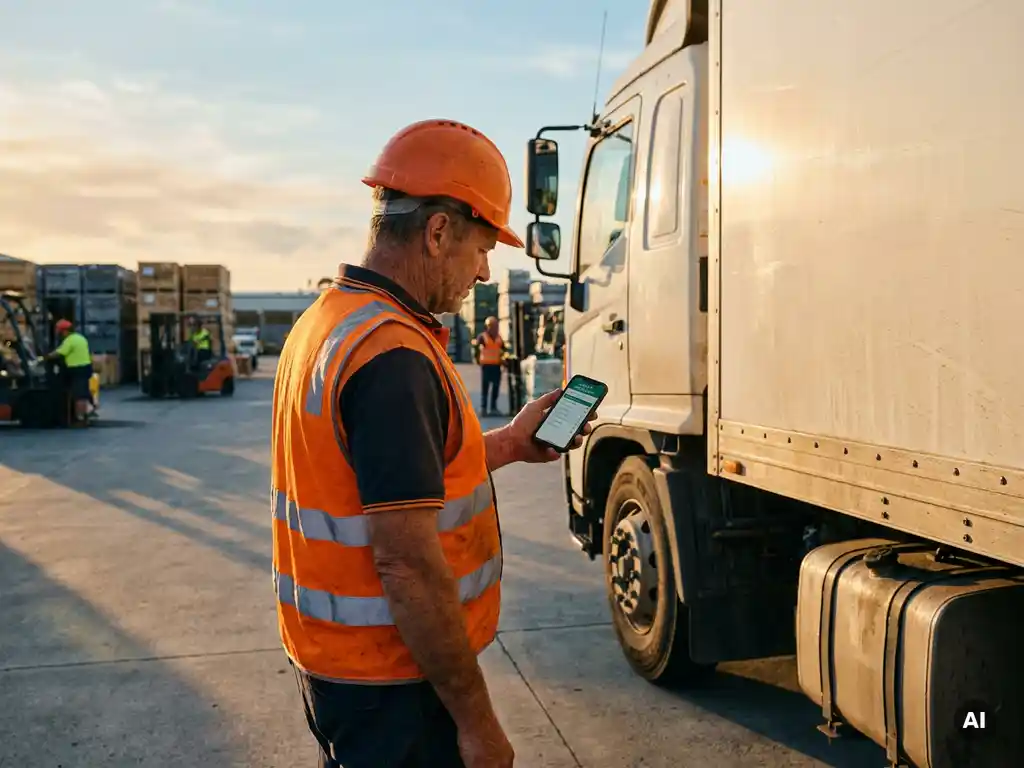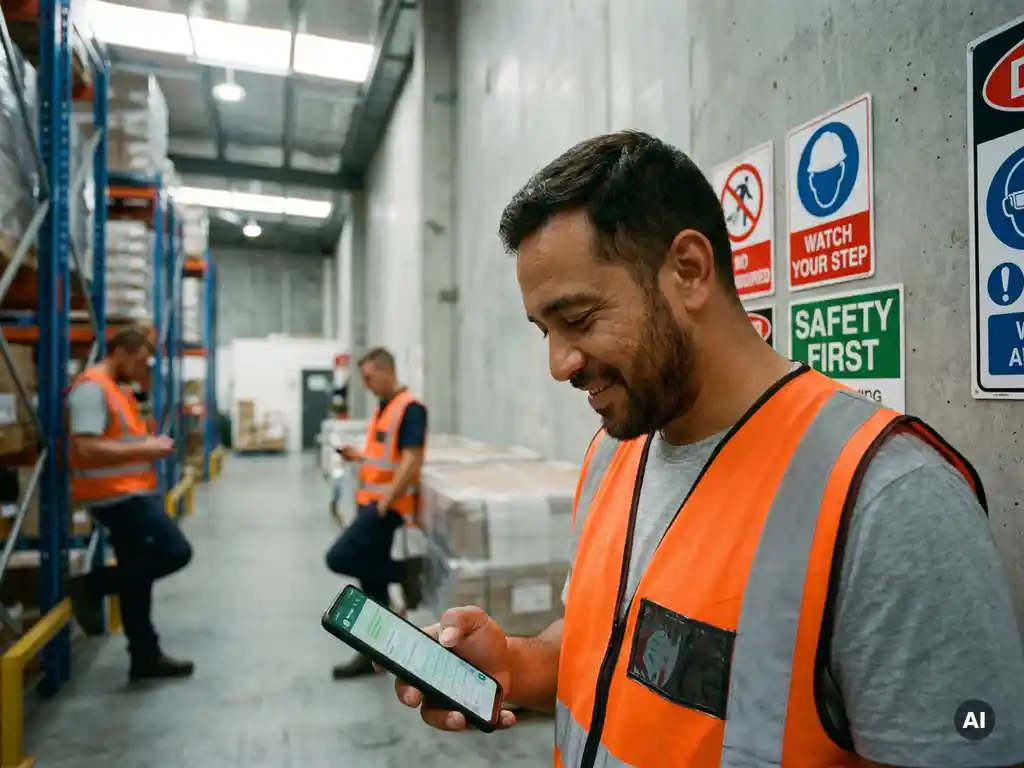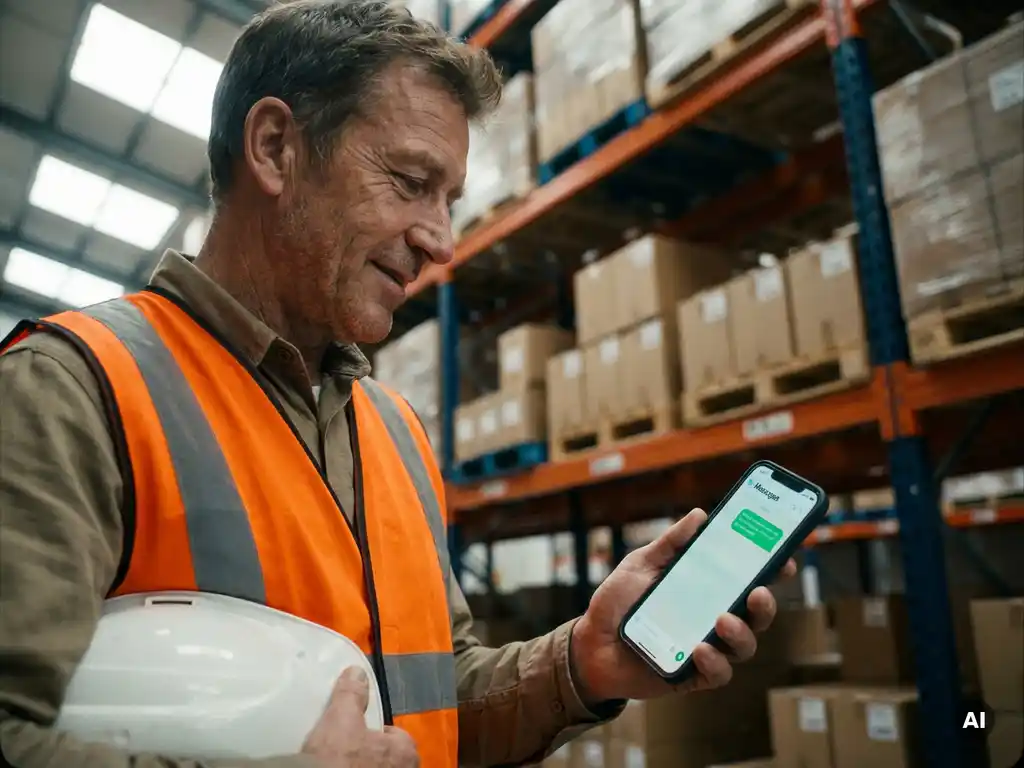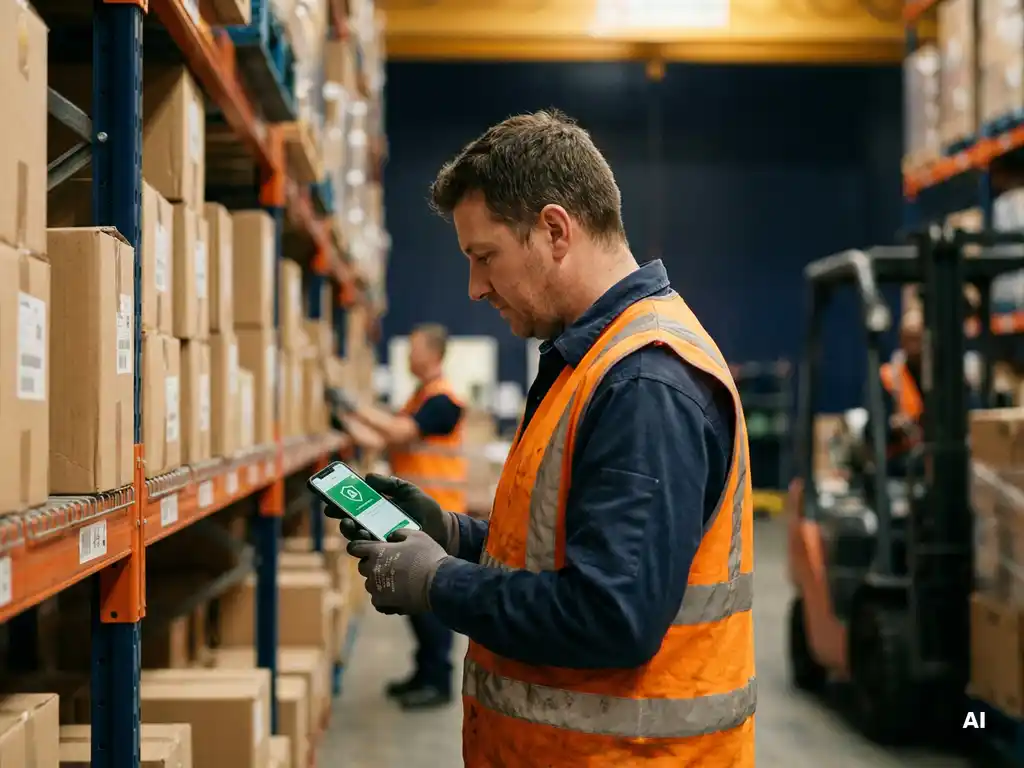
Safety information reaches frontline workers most effectively through channels they already use daily, such as WhatsApp. Email does not work for employees without a business email address or laptop, and paper-based lists are difficult to record and verify. This article answers the most frequently asked questions about safety communication beyond email, from the right channels to multilingual instructions and toolbox meetings via your phone.
Why does safety information sent by email fail to reach workers?
Safety information sent by email fails to reach workers because a large proportion of frontline employees do not have a business email address. Think of workers in construction, logistics, production and healthcare. They work without a laptop or company account and therefore miss all instructions, toolbox meetings and updates sent by email.
Even when employees do have an email address, safety messages are likely to get lost among other messages. Email requires actively logging in, remembering a password and navigating an inbox. For employees who spend their entire day on the work floor, that is a barrier many do not overcome.
In addition, email offers limited ways to measure who has actually read or understood the information. You send a message, but you do not know whether it was opened, read or retained. With safety instructions and toolbox meetings, that ability to demonstrate engagement is particularly important.
Which channels do reach frontline workers?
You reach frontline workers most directly through channels they already use in their personal lives, particularly WhatsApp. Other effective alternatives include digital screens in the workplace, brief verbal discussions and SMS messages. The common characteristic: no additional app, no login procedure and no barrier to getting started.
WhatsApp is a familiar way of communicating for many employees. They open messages quickly, respond actively and are accustomed to short, visual content. That makes it a logical choice for safety instructions, toolbox meetings and onboarding materials.
Other channels that work well for workplace communication:
- Digital screens in the workplace: useful for general updates, but not suitable for individual registration or knowledge checks
- Supporting physical toolbox meetings digitally: effective for group discussions, but time-consuming and difficult to record without digital support
- SMS messages: reach almost everyone, but offer limited scope for interactive content or proof of participation
The combination of a familiar channel with interactive content and automatic registration makes digital safety communication via WhatsApp particularly practical for organisations with dispersed or multilingual teams.
How does safety training via WhatsApp work?
Safety training via WhatsApp works by sending short, interactive modules directly to employees’ phones. Employees receive a message, complete a microlearning session of a few minutes and answer knowledge checks — without an additional app or login procedure. Participation and results are recorded automatically.
In practice, it works like this: a manager or HR employee puts together a module, chooses when it is sent, and the employee receives the message on their phone. The content can consist of text, images, video and questions. Afterwards, it is immediately visible who has participated and what the results are.
This model works well for:
- Toolbox meetings: short safety discussions delivered and recorded digitally, including a knowledge check
- Work instructions: step-by-step explanations that employees work through at their own pace
- Onboarding: new employees receive practical information via WhatsApp even before their first working day
- HACCP training: food safety topics delivered as practice-oriented modules
Building a module takes little time, and employees typically complete a module in a few minutes. That fits well with the reality of the workplace, where lengthy training sessions are rarely feasible.
What are the requirements for demonstrable safety training?
Employers are required to provide employees with information and instruction on working safely. How you fulfil and document this depends on the organisation, the work activities and any applicable certification requirements. There is no universal requirement prescribing one specific method or frequency.
What is clear is that demonstrability plays an important role. During an inspection or audit, you want to be able to show which instructions were provided, when that took place and who participated. Digital registration can help with this, as it allows you to record data in a structured way and retrieve it quickly.
For organisations working with VCA, it is worth noting that VCA is a private certification scheme operated by SSVV, not a law. VCA sets requirements for the way organisations address safety, and is often contractually required by clients. Toolbox meetings are a well-known element of that approach. What constitutes an appropriate implementation depends on the organisation, the work activities and the applicable certification requirements.
Digital recording of toolbox meetings and safety instructions can form part of a broader approach to safety management. It helps you document which instructions were provided and who participated, which is useful during audits or internal reviews.
How do you ensure multilingual employees understand safety information?
Multilingual employees understand safety information best when it is provided in their own native language. Translated instructions lower the barrier, reduce misunderstandings and increase the likelihood that information is actually retained and applied in the workplace.
In practice, manual translation is time-consuming and costly. AI-assisted translations offer a practical alternative: content is automatically translated into the employee’s language, without having to create a separate version for each language. This is particularly useful in sectors such as construction, logistics and production, where teams regularly consist of employees with different nationalities.
Beyond language, other factors also play a role in comprehension:
- Short, concrete sentences: avoid jargon and lengthy explanations
- Visual support: images and videos make instructions easier to understand, regardless of language proficiency
- Knowledge checks: by testing whether employees have understood the information, you can quickly identify where additional explanation is needed
- Repetition: regular short instructions work better than one comprehensive training session per year
Organisations with international teams benefit particularly from an approach where content is created once and automatically made available in multiple languages.
When is a digital platform the right choice for safety communication?
A digital platform for safety communication is the right choice when you cannot reach employees, or find it difficult to reach them, via email or paper-based processes, when registration and demonstrability are important, or when you work with dispersed, multilingual or changing teams. The greater the distance between the office and the work floor, the more relevant a digital approach becomes.
Organisations in construction, logistics, healthcare and production often recognise the same challenges: employees without a business email address, paper signature lists that are difficult to store, and toolbox meetings that do not always reach everyone. A digital platform addresses these problems by sending safety information directly to employees’ phones and recording participation automatically.
A digital platform is less appropriate when your organisation is small, all employees work at a computer and existing processes function well. In that case, an additional system adds little value.
How we help with safety communication in the workplace
We developed E-lia specifically for organisations that want to reach frontline workers with safety information, toolbox meetings and instructions — without email, without an additional app and without complicated login procedures. Everything runs via WhatsApp, a channel employees already know and use daily.
This is what you can do with our platform:
- Send and record toolbox meetings digitally: employees receive the toolbox meeting on their phone, complete a knowledge check and participation is recorded automatically
- Offer content in more than 50 languages: AI translations ensure every employee receives instructions in their own language
- Track progress in real time: via a clear dashboard you can see who has participated and who has not yet done so
- Get started with ready-made content: our library contains more than 60 practice-oriented safety topics, updated monthly
- Build your own modules: create your own work instructions, onboarding modules or HACCP training in a short amount of time
Would you like to see how this works for your organisation? Get in touch with us or request a demo.