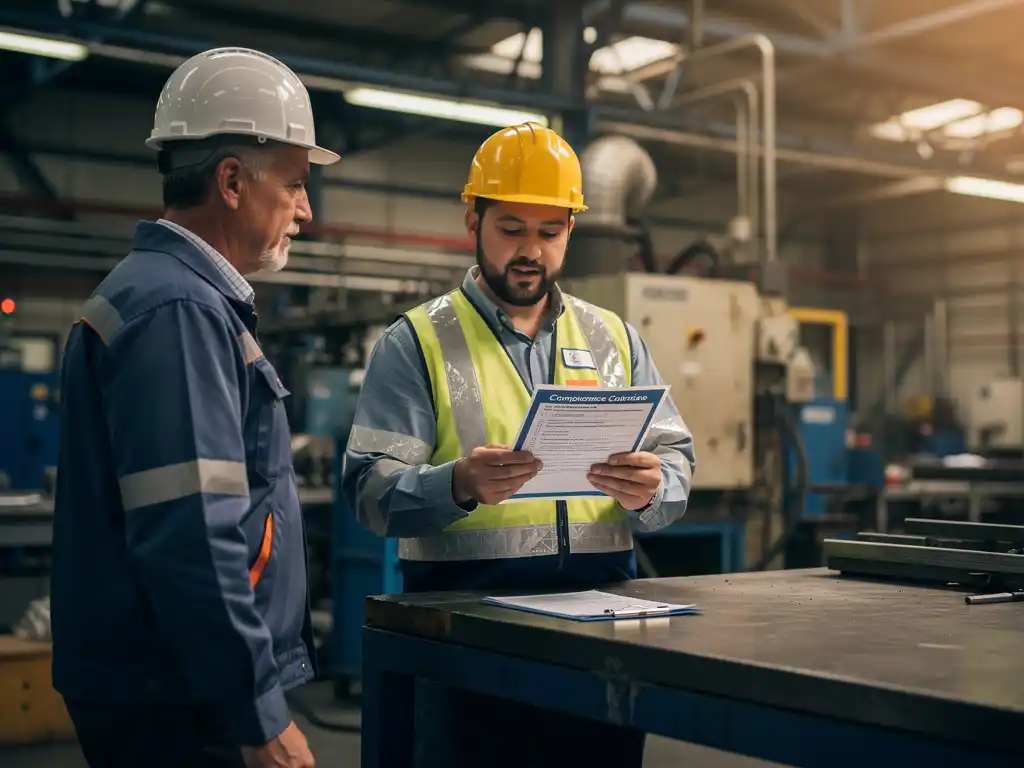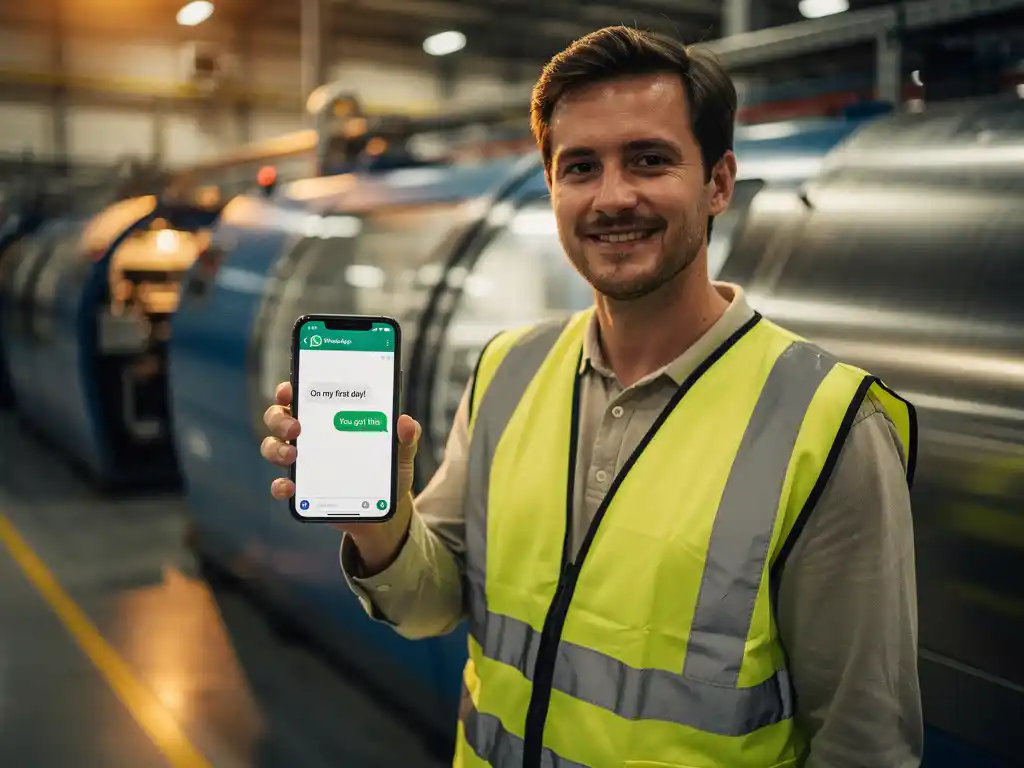



An onboarding checklist for production employees should cover safety procedures, role-specific tasks, equipment handling, team introductions, and compliance training. The goal is to give new hires everything they need to work safely and confidently from day one. A well-structured onboarding checklist reduces errors, shortens the learning curve, and helps production employees feel supported from the moment they step onto the floor. The sections below answer the most common questions about building and running an effective manufacturing onboarding process.
What should an onboarding checklist for production employees include?
A strong onboarding checklist for production employees should include safety orientation, equipment training, role-specific work instructions, hygiene or compliance requirements, team introductions, and a review of shift schedules and reporting lines. These elements ensure new employees can perform their tasks safely and understand the expectations placed on them from day one.
Breaking the checklist into clear phases makes it easier to manage. A practical structure looks like this:
- Before the first day: Send welcome information, safety rules, and any required documentation via a familiar channel like WhatsApp or email.
- Day one: Workplace tour, emergency procedures, introduction to the team and direct supervisor.
- First week: Hands-on equipment training, role-specific work instructions, and quality or hygiene standards.
- First month: Follow-up assessments, feedback conversations, and any additional compliance modules.
The more specific the checklist, the more consistent the results. Generic checklists often leave gaps that only become visible when something goes wrong on the production floor. Learn more about how a structured onboarding process can support your production teams, or explore digital work instructions that make role-specific training easier to deliver.
How long should onboarding take for production floor workers?
Onboarding for production floor workers typically takes between two and four weeks to cover the essentials, though full proficiency in complex roles can take up to three months. The right duration depends on the complexity of the machinery, the regulatory requirements in your industry, and the prior experience of the new employee.
A common mistake is treating onboarding as a one-time event rather than a phased process. Spreading training over several weeks allows new employees to absorb information between shifts, practise what they have learnt, and ask questions as real situations arise. Cramming everything into the first two days leads to information overload and poor retention.
For roles with strict safety or compliance requirements, such as those in healthcare logistics or food production, regulators may also define minimum training durations. Always align your onboarding timeline with those requirements. If your organisation operates in the food industry, our HACCP training module can help you meet those obligations efficiently.
What are the most common onboarding mistakes in production environments?
The most common onboarding mistakes in production environments include overloading new employees with information on day one, relying on paper-based or verbal-only instruction, skipping follow-up after initial training, and failing to adapt content for employees who speak different languages.
Here are the mistakes that cause the most problems in practice:
- No structured checklist: Without a defined checklist, what gets covered depends entirely on who is doing the onboarding that day, leading to inconsistency across teams and shifts.
- Too much information at once: Delivering all training content in a single session makes it nearly impossible for new hires to retain what matters most.
- Language barriers ignored: In production environments with multilingual teams, training delivered only in Dutch or English excludes a significant portion of the workforce.
- No progress tracking: Managers who cannot see which employees have completed which modules cannot intervene before gaps become safety risks.
- Onboarding ends too early: Many organisations stop structured onboarding after the first week, leaving employees to figure out the rest on their own.
Addressing these gaps early also supports long-term performance. Explore how tools designed to retain and maintain knowledge can extend the impact of your onboarding programme beyond the first month.
How do you standardise onboarding across multiple shifts and locations?
To standardise onboarding across multiple shifts and locations, you need a centralised set of training materials that every supervisor delivers in the same sequence, regardless of when or where a new employee starts. Digital tools that send content automatically and track completion are the most reliable way to achieve this consistency at scale.
When onboarding depends on individual supervisors or printed handouts, quality varies. A supervisor on the night shift may cover safety procedures differently than one on the morning shift, and a location in Rotterdam may have slightly different habits than one in Eindhoven. Over time, these small differences compound into real inconsistencies in how employees perform.
Standardisation works best when you:
- Document every step of the onboarding process in a single source of truth.
- Use a platform that delivers the same content automatically to every new employee, regardless of shift or site.
- Give managers a shared dashboard so they can see progress across all locations.
- Review and update the checklist regularly to reflect process changes on the floor.
Regular safety walkthroughs are another effective way to maintain standards across sites. See how workplace inspections and toolbox talks can complement your onboarding process and keep safety top of mind for every team.
When should onboarding content be delivered to production employees?
Onboarding content for production employees should start before their first day and be delivered in short, spaced intervals throughout the first month. Pre-onboarding messages, sent a few days before the start date, reduce first-day anxiety and ensure employees arrive knowing the basics. Microlearning modules delivered during or just after shifts keep information relevant and easier to retain.
Timing matters as much as content. A new employee who receives 40 pages of documentation on their first morning is unlikely to absorb more than a fraction of it. Delivering the same information in short, focused pieces, timed to match what the employee is actually doing on the floor, produces far better results.
A practical delivery schedule might look like this:
- Three days before start: Welcome message, what to bring, who to ask for.
- Day one: Safety essentials and emergency procedures.
- Days two to five: Role-specific work instructions, one topic per day.
- Week two onward: Quality standards, compliance modules, and reinforcement quizzes.
Scheduling content in advance means the process runs automatically, even when a manager is busy with production demands.
What tools work best for onboarding production employees?
The tools that work best for onboarding production employees are those that require no login, no app download, and no access to a desktop computer. Production workers are rarely sitting at a workstation, so training tools that rely on a company intranet or a learning management system often go unused. Mobile-first tools that reach employees through channels they already use, such as WhatsApp, are far more effective in practice.
When evaluating tools for a factory or production onboarding process, look for:
- Ease of access with no technical barrier for the employee.
- Support for multiple languages to reach multilingual teams.
- The ability to schedule and automate content delivery.
- A progress dashboard for managers and L&D teams.
- Short module formats that fit into a break or the start of a shift.
- Integration with existing HR systems or LMS platforms.
The simpler the tool is for the end user, the higher the completion rate. A platform that takes three minutes to complete a module and requires no login removes every practical barrier that causes employees to skip training. Discover how digital work instructions and structured onboarding flows can work together in a single, easy-to-use platform.
How E-Lia helps with onboarding production employees
We built E-Lia specifically for the kind of onboarding challenges that production environments face every day. Our platform delivers microlearning modules and work instructions directly via WhatsApp, with no app to download and no login required. New employees receive the right content at the right moment, whether they are starting a morning shift, a night shift, or joining a site in a different city.
Here is what we offer for manufacturing and production onboarding:
- Pre-onboarding via WhatsApp: Send welcome messages, safety basics, and practical information before day one.
- Automated content scheduling: Plan the full onboarding sequence in advance so it runs without manual effort.
- Automatic translations: Train multilingual teams in their own language without creating separate modules.
- Progress tracking dashboard: See exactly which employees have completed which steps across all shifts and locations.
- Fast module creation: Build a new module in 10 to 15 minutes; employees complete it in 3 to 6 minutes.
- No technical barrier: No app, no login, no computer needed — just a smartphone and WhatsApp.
Organisations like Erasmus MC and ETZ already use E-Lia to standardise their onboarding and improve knowledge retention across teams. If you want to see how it works for a production environment, plan a demo and we will walk you through it.
Frequently Asked Questions
How do I get started building an onboarding checklist if we have never had one before?
Start by shadowing an experienced production employee through a full shift and documenting every task, safety check, and interaction they perform. Group these into phases (pre-start, day one, first week, first month) and assign an owner to each item. Even a basic, structured checklist is far more effective than an informal walkthrough, so do not wait until it is perfect before using it.
How do we handle onboarding for employees who have limited reading ability or low digital literacy?
Use short video clips, visual work instructions, and image-based content wherever possible instead of relying on written text. Audio explanations paired with visuals can make content accessible to employees regardless of literacy level. Tools that deliver content via WhatsApp are particularly effective here because most production workers already know how to use the app daily, removing any digital learning curve.
What is the best way to measure whether our onboarding process is actually working?
Track a combination of leading and lagging indicators: module completion rates, quiz scores, and time-to-competency during the first month, alongside longer-term metrics like incident rates, error frequency, and 90-day retention. If new hires are completing all training steps but still making mistakes on the floor, that signals a content quality issue rather than a delivery problem. Regular check-in conversations between supervisors and new employees during the first month also surface issues that data alone will not reveal.
How should onboarding differ for temporary or agency workers compared to permanent production staff?
Temporary and agency workers still need full safety and compliance training — skipping this creates liability and increases accident risk regardless of contract type. The key difference is pace and depth: focus their onboarding on the specific tasks they will perform and the safety rules for those areas, rather than company-wide processes they will not interact with. A condensed but complete checklist tailored to their role and duration keeps onboarding efficient without cutting corners on what matters most.
What should we do when a new employee misses part of their onboarding due to absence or shift changes?
This is exactly why automated, digital delivery is more reliable than in-person-only sessions — missed content can be resent or rescheduled without requiring a supervisor to repeat the entire session manually. Build a clear policy into your onboarding process that defines which steps are mandatory before an employee can work unsupervised, and use your progress dashboard to flag incomplete items before they become a safety gap. Never assume a returning employee has caught up without verifying completion.
How often should we update our production onboarding checklist?
Review your onboarding checklist any time there is a change to equipment, processes, safety regulations, or compliance requirements — and conduct a full review at least once every six months even if nothing obvious has changed. Outdated onboarding content is one of the most common root causes of procedural errors, because employees learn a process that no longer reflects what actually happens on the floor. Assign a named owner to the checklist so updates do not fall through the cracks during busy production periods.
Can onboarding content be reused for retraining or refresher training later on?
Absolutely — well-structured onboarding modules are one of the most valuable assets you can repurpose for ongoing training. Safety refreshers, compliance recertifications, and process update communications can all be built from or linked back to your original onboarding content. Platforms that allow you to schedule and automate delivery make it easy to push a refresher module to an entire team after a process change, without building new content from scratch every time.