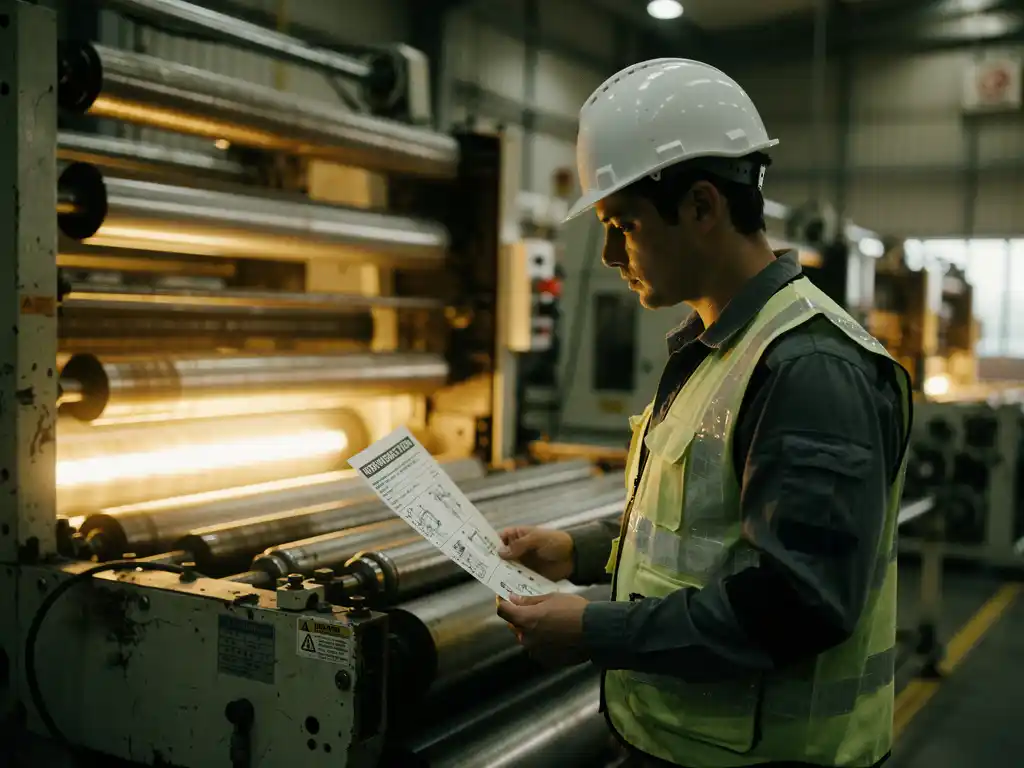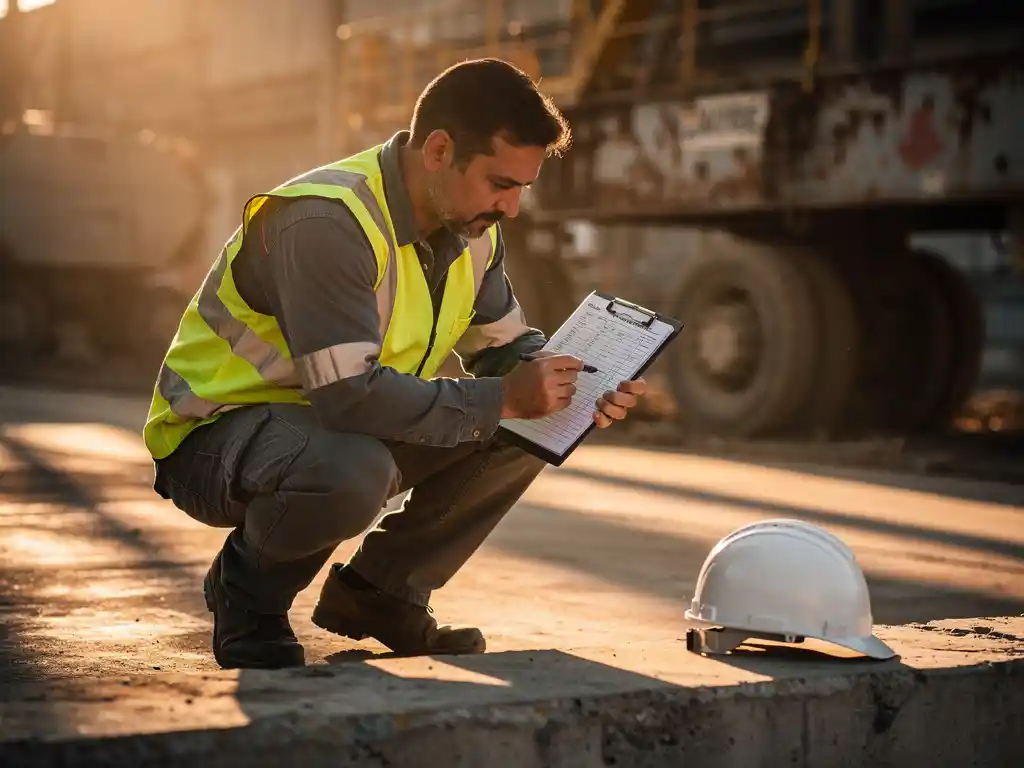


You make workplace inspections a positive habit on the shop floor by shifting the framing from surveillance to shared ownership. When employees understand that inspections exist to protect them rather than catch them out, resistance drops and participation rises. The sections below unpack the most common questions teams ask when building a healthier inspection culture.
Why do employees resist workplace inspections?
Employees resist shop floor inspections primarily because they associate them with blame, punishment, or being watched by management. When an inspection feels like an audit of personal performance rather than a check on systems and conditions, it triggers defensiveness. This reaction is not about laziness or indifference to safety. It is a natural human response to perceived judgement.
Several factors reinforce this resistance over time. If previous inspections led to disciplinary conversations without any visible improvements to equipment or processes, employees learn that inspections produce consequences for people rather than solutions to problems. The inspection then becomes something to survive rather than something to use.
Language also plays a bigger role than most managers realise. Words like “audit,” “compliance check,” and “non-conformance” carry institutional weight that signals authority over collaboration. Replacing these with “walkthrough,” “team check,” or “safety round” is a small change that carries a different emotional signal entirely.
Finally, employees who are never told what happens with inspection findings quickly become disengaged. If they report a hazard during a walkthrough and nothing changes, why would they bother next time? Closing the feedback loop, even briefly, is one of the most underrated drivers of inspection buy-in on the shop floor.
What does a positive inspection culture actually look like?
A positive workplace safety culture around inspections is one where employees initiate checks without being asked, raise concerns without fear, and see inspections as a routine part of doing good work rather than an interruption to it. In practical terms, it looks like short daily walkthroughs that feel as natural as a team meeting, with findings tracked visibly and acted on quickly.
In organisations where this culture is well established, a few consistent patterns tend to appear:
- Inspection findings are shared openly with the team, not just filed away
- Near-misses are reported and discussed without blame attached
- Employees at all levels participate in walkthroughs, not just supervisors
- Improvements that result from inspections are credited to the people who flagged them
- Safety conversations happen informally throughout the day, not only during formal checks
This kind of culture does not happen by accident. It is the result of consistent leadership behaviour, clear processes, and enough psychological safety for people to speak up without calculating the personal cost first. Manufacturing safety research consistently shows that organisations with high near-miss reporting rates tend to have lower serious incident rates, precisely because problems are caught and corrected early.
How can managers reframe inspections as a team activity?
Managers can reframe floor inspection routines as a team activity by involving employees in designing the process, rotating who leads walkthroughs, and making findings a shared agenda item rather than a management report. The shift is from “we inspect you” to “we inspect together.”
A practical starting point is to invite frontline workers to help build the inspection checklist. The people doing the work every day know which hazards are real, which checks are redundant, and which questions matter most. When employees co-create the checklist, they are far more likely to take it seriously when they use it. Learn more about how structured workplace inspections can be made more effective for your entire team.
Rotating inspection leadership is another effective tactic. When a different team member leads the walkthrough each week, inspections stop being something that happens to the team and start being something the team does. It also builds broader safety knowledge across the group rather than concentrating it in one person.
After each walkthrough, a brief five-minute team debrief where findings are shared and at least one action is agreed on closes the loop immediately. This signals that the inspection had a point, that someone listened, and that the team’s observations lead to real change. Over time, this builds the kind of trust that makes employee engagement in safety self-sustaining.
What role does microlearning play in building inspection habits?
Microlearning supports inspection habits by delivering short, targeted knowledge exactly when workers need it, without pulling them away from the shop floor for lengthy training sessions. Rather than a one-off safety training day that employees forget within a week, microlearning builds knowledge gradually through repeated, brief touchpoints that reinforce the right behaviours over time.
For workplace inspections specifically, microlearning can cover the reasoning behind each check, not just the mechanical steps. When an employee understands why a particular piece of equipment needs to be checked in a certain way, they are more likely to do it correctly and consistently. Context turns a checklist item into a meaningful action.
Short modules can also be timed to coincide with key moments in the working week. A two-minute refresher before a Monday walkthrough, a quick scenario about what to do when a hazard is found, or a reminder about how to log a near-miss all reinforce the habit loop without demanding significant time or attention. Explore how retaining and maintaining knowledge through microlearning keeps safety habits active long after initial training.
Microlearning also works particularly well in multilingual teams, which is common in manufacturing, logistics, and healthcare environments. When content is available in each employee’s own language, the information lands clearly rather than being lost in translation. This directly improves the quality of inspections because everyone understands what they are looking for and why.
How do you measure whether inspection habits are actually improving?
You measure improvement in workplace inspection habits by tracking both activity metrics and outcome metrics over time. Activity metrics tell you whether inspections are happening consistently. Outcome metrics tell you whether those inspections are making the workplace safer. You need both to get an honest picture.
Useful activity metrics include:
- Inspection completion rate: the percentage of scheduled walkthroughs that are actually completed
- Participation breadth: how many different employees are involved in inspections over a given period
- Near-miss reporting volume: an increase often signals growing psychological safety, not more problems
- Time to close findings: how quickly identified hazards are resolved after being logged
Outcome metrics to watch alongside these include incident rates, the severity of incidents that do occur, and employee feedback on whether they feel safe raising concerns. A drop in serious incidents combined with a rise in near-miss reports is one of the strongest signals that your inspection culture is genuinely improving.
It is also worth measuring engagement with any training or briefings connected to inspections. If employees are completing safety modules, retaining the content, and applying it during walkthroughs, that is a leading indicator that the habit is taking root rather than just being performed for compliance. Structured toolbox talks are a proven way to reinforce this kind of engagement consistently.
Review these metrics regularly as a team, not just in management reports. When employees see the data and understand what it means, they become invested in moving the numbers in the right direction. Measurement, shared openly, becomes part of the culture rather than an overhead.
How E-Lia helps build positive inspection habits on the shop floor
Building consistent workplace inspection habits is much easier when the right knowledge reaches the right people at the right moment. That is exactly what we built E-Lia to do. Our platform delivers microlearning modules directly via WhatsApp, with no app to download, no login required, and no disruption to the working day.
Here is how E-Lia supports inspection culture in practice:
- Short, targeted modules: Build an inspection briefing in 10 to 15 minutes and employees complete it in 3 to 6 minutes, directly on their phone
- Scheduled delivery: Send walkthrough reminders, safety refreshers, or post-incident briefings at exactly the right moment in the working week
- Automatic translation: Reach multilingual teams in their own language without creating separate content for each group
- Progress dashboard: Track who has completed which modules so you know where knowledge gaps still exist
- No barriers to access: Because it runs through WhatsApp, even employees without company devices or computer access can participate fully
Whether you are onboarding new floor workers, reinforcing a specific inspection procedure with clear work instructions, or rolling out an updated safety protocol, we make it simple to deliver consistent, engaging content to your entire team. Book a free demo to see how E-Lia can support your safety culture on the shop floor.
Frequently Asked Questions
How long does it typically take to shift from a compliance-driven inspection culture to a genuinely positive one?
Most organisations begin to see measurable shifts in employee participation and near-miss reporting within three to six months of consistently applying the right practices, such as rotating inspection leadership, closing the feedback loop, and involving frontline workers in checklist design. However, a deeply embedded culture change usually takes 12 to 18 months of sustained effort. The key is not to wait for the culture to feel perfect before celebrating early wins — visible progress reinforces the behaviours you want to see more of.
What should I do if employees are completing inspections but just ticking boxes without genuine engagement?
Box-ticking is usually a symptom of one of two problems: employees do not understand why each check matters, or they have learned that findings do not lead to action. Address the first by adding brief context to checklist items — even a single sentence explaining the risk behind each check makes a significant difference. Address the second by making the resolution of findings visible and quick, so employees see that their observations have real consequences for the better.
How do we handle inspection findings that reveal a systemic problem management cannot fix quickly?
Transparency is your best tool here. Acknowledge the finding openly with the team, explain what the constraint is (budget, timeline, supplier lead time), and share a realistic plan for resolution. Employees are far more tolerant of delays when they understand the reason and feel heard. What erodes trust is silence — when a hazard is flagged and nothing is communicated, employees assume nothing is being done, which is often worse than the hazard itself.
Is there a risk of inspection fatigue if walkthroughs happen too frequently?
Yes, frequency without purpose is one of the fastest ways to turn inspections into a chore. The solution is to match inspection frequency to actual risk levels and to keep individual walkthroughs short and focused rather than exhaustive. A daily five-minute targeted check is far more sustainable than a weekly two-hour sweep. Rotating who leads the walkthrough also helps distribute the effort and keeps the process feeling fresh rather than repetitive.
How do we get senior leadership more visibly involved in shop floor inspections without it feeling like a top-down audit?
The framing of the visit matters enormously. When senior leaders join a walkthrough as a participant rather than an evaluator — asking questions, listening to frontline observations, and following up on what they hear — the signal to employees is one of genuine interest rather than oversight. Brief, regular appearances are more effective than infrequent formal tours. Even a monthly ten-minute walkthrough where a senior leader visibly acts on one employee suggestion can have a disproportionate impact on psychological safety.
Can microlearning really replace traditional safety training for inspection procedures, or should it complement it?
Microlearning works best as a complement to foundational training, not a wholesale replacement for it. Initial onboarding and complex procedural training still benefit from more structured, longer-form instruction. Where microlearning excels is in reinforcing, refreshing, and contextualising that foundational knowledge over time — which is where most traditional training programmes fall short. Think of it as the system that keeps knowledge alive and applicable long after the induction day is forgotten.
What is the single most common mistake organisations make when trying to improve their inspection culture?
The most common mistake is focusing almost entirely on the inspection process itself — the checklist, the frequency, the reporting format — while neglecting the psychological safety that makes the process work. You can have the most well-designed inspection system in the industry, but if employees do not feel safe raising concerns without fear of blame, the data you collect will be incomplete and unreliable. Investing in trust and communication is not a soft add-on to inspection culture; it is the foundation everything else rests on.