

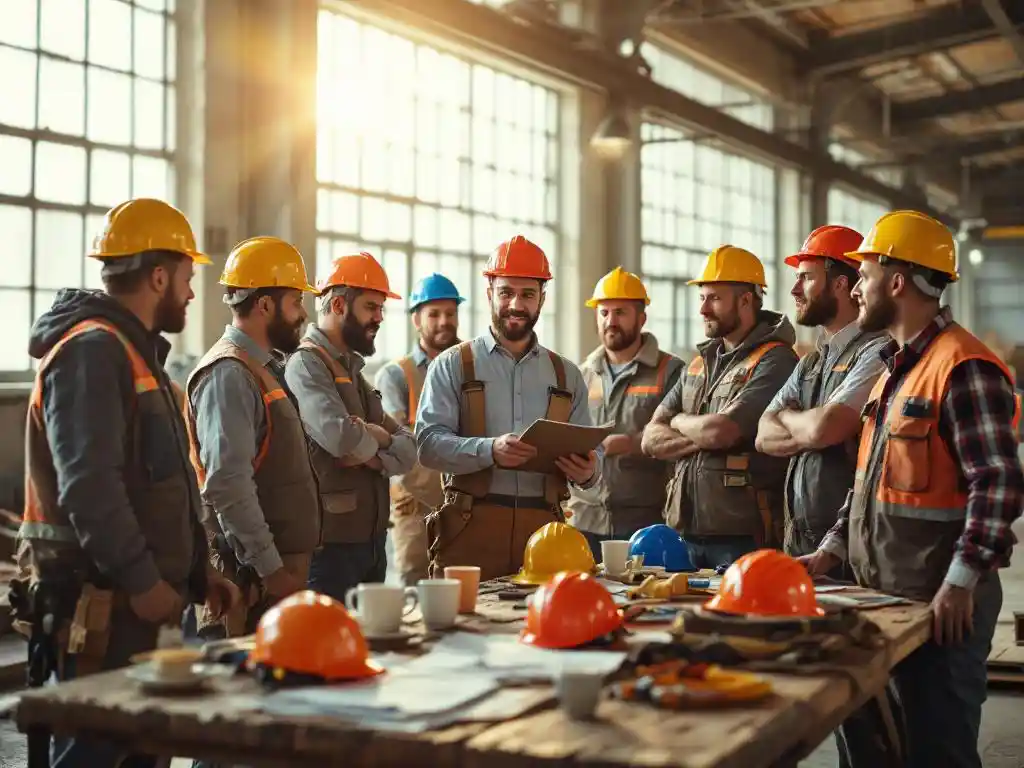
The responsibility for toolbox meetings lies primarily with employers and supervisors, but various parties have specific roles. Team leaders organise and conduct these safety discussions, while safety coordinators determine the content and HR staff support the planning. Employees are required to participate and actively contribute to discussions about workplace safety.
What are toolbox meetings and why are they important?
A toolbox meeting is a short, informal safety discussion where employees discuss specific safety topics that are relevant to their daily work activities. These meetings typically last 10 to 15 minutes and take place on the work floor or in a meeting room.
Toolbox meetings are essential because they increase safety awareness and help prevent accidents. They provide employees with the opportunity to discuss safety risks, share experiences, and review new procedures. Regular toolbox meetings create a safety culture where everyone is involved in identifying and solving potential hazards.
These meetings are particularly valuable because they address current safety topics, such as the proper use of personal protective equipment or new Last Minute Risk Assessment (LMRA) procedures. They ensure that safety information doesn’t just exist on paper, but is actually discussed and applied in practice. Learn more about how structured toolbox talks can elevate your safety culture.
What roles do different people have in toolbox meetings?
Team leaders and supervisors have the primary responsibility for organising and conducting toolbox meetings. They schedule the meetings, prepare the topics, and ensure that all team members are present. During the meeting, they lead the discussion and ensure that everyone has the opportunity to ask questions or share experiences.
Safety coordinators play a crucial role in determining content and providing expertise. They develop the safety topics, ensure current information about risks and new procedures, and support team leaders with materials and knowledge. They also evaluate the effectiveness of the meetings and suggest improvements.
HR staff support the process by organising training for those who lead toolbox meetings, maintaining records of who has participated, and ensuring that new employees are informed about the importance of these meetings. A well-structured onboarding programme can help new staff get up to speed with safety expectations from day one.
Employees have the responsibility to actively participate, ask questions, share their experiences and concerns, and apply the discussed safety measures in their daily work. Their input is valuable for identifying new risks or improving existing procedures.
Who determines the content and frequency of toolbox meetings?
The employer ultimately determines the frequency and general direction of toolbox meetings, often in collaboration with safety coordinators and supervisors. Most organisations hold weekly or bi-weekly toolbox meetings, depending on the risks in their sector and specific work activities.
Safety coordinators develop the specific topics based on risk analyses, recent incidents, new legislation, or changes in work processes. They ensure that the content remains relevant and current by regularly evaluating which safety topics need the most attention. Platforms that help retain and maintain knowledge can make this process significantly more effective.
Team leaders can adapt the content to their specific work situation and current circumstances. For example, if new equipment is being used or weather conditions bring additional risks, they can add these topics to the planned agenda. Clear work instructions can serve as a strong foundation for these discussions.
The frequency depends on various factors, such as the risk level of the work, legal requirements, previous incidents, and team size. Construction companies, for example, often hold brief daily toolbox meetings, while office environments may suffice with monthly meetings.
What are the legal obligations regarding toolbox meetings?
In many countries, health and safety legislation requires employers to inform employees about safety risks and preventive measures. Whilst toolbox meetings are not always explicitly mandatory, they are an effective way to fulfil this information obligation and can therefore be legally relevant.
Most workplace health and safety regulations state that employers must inform employees about the risks associated with their work and about the measures taken to limit these risks. Toolbox meetings are a practical implementation of this obligation, especially in sectors with increased safety risks. In food-related industries, for instance, HACCP training is a key component of meeting these legal requirements.
Employers are also required to ensure that employees receive proper training on safety measures and the use of personal protective equipment. Toolbox meetings can be part of this training and help demonstrate that the employer is fulfilling their duty of care.
In case of accidents or inspections by workplace safety authorities, well-documented toolbox meetings can demonstrate that the employer is actively engaged in safety. Keeping attendance lists and recording discussed topics is therefore advisable for legal protection. Regular workplace inspections complement this documentation and further strengthen your compliance position.
How E-lia helps with toolbox meetings
E-lia makes toolbox meetings more effective by sending microlearning modules via WhatsApp that perfectly align with safety topics. The platform supports organisations in systematically organising safety communication, without the hassle of logging in or downloading special apps.
Practical benefits of E-lia for toolbox meetings:
- Multilingual support: Automatic translations ensure that all employees receive safety information in their own language
- Quick module creation: Converting safety topics into microlearning modules takes only 10 to 15 minutes
- Flexible scheduling: Modules can be sent immediately or scheduled, perfect for toolbox meeting preparation
- Progress tracking: A simple dashboard shows who has completed which safety training
- No technical barriers: Employees receive training via WhatsApp, without new apps or login credentials
By using E-lia, organisations can supplement their toolbox meetings with consistent, professional safety communication that employees always have with them. This increases the impact of safety topics and ensures better knowledge retention.
Want to know how E-lia can strengthen your toolbox meetings? Book a demo and discover how our safety communication solutions via WhatsApp can work for your organisation.
Frequently Asked Questions
How often should we hold toolbox meetings to be effective?
The optimal frequency depends on your risk level and sector. For high-risk environments like construction sites, we recommend daily short meetings of 5-10 minutes. For office environments or lower-risk work, weekly or bi-weekly meetings of 15 minutes suffice. The most important thing is consistency – better weekly and structured than monthly and irregular.
What do I do if employees don't actively participate in toolbox meetings?
Start by identifying the cause: are the topics relevant, is the timing good, or do employees feel safe to speak? Make meetings more interactive by using concrete examples from your work environment, asking employees for experiences, and ensuring everyone takes turns speaking. Also emphasise that participation is mandatory under applicable health and safety legislation.
How do I document toolbox meetings correctly for legal protection?
Keep an attendance list with signatures, note the date, time and location, and briefly describe which topics were discussed. Save any photos of materials used or demonstrations. Ensure this documentation is kept for at least 5 years and is easily accessible during inspections or after accidents.
Can we organise toolbox meetings digitally or hybrid?
Yes, especially since COVID-19, digital toolbox meetings have been accepted. For office staff, video calls work well, but for practical demonstrations of safety equipment, physical presence remains important. A hybrid approach where theory is covered digitally and practice on location can be very effective.
What are the most common mistakes when organising toolbox meetings?
Many organisations make these mistakes: meetings that are too long (more than 20 minutes), only theory without practical examples, no follow-up on discussed points, and covering topics that are not relevant to the team. Ensure short, relevant meetings with concrete examples and clear action points.
How do I adapt toolbox meetings for teams with different nationalities?
Use simple, clear language and many visual aids like photos and diagrams. Provide translations of important safety terms in relevant languages. Check understanding by asking questions and having employees explain what they have learned. Tools like E-lia can automatically support multilingual safety communication.
Related Articles
- How to conduct workplace inspections across multiple sites at once?
- How do you verify that corrective actions after an inspection have actually been carried out?
- What is a workplace inspection and why is it mandatory?
- Why do companies fail audits?
- What is the difference between a toolbox meeting and a toolbox talk?