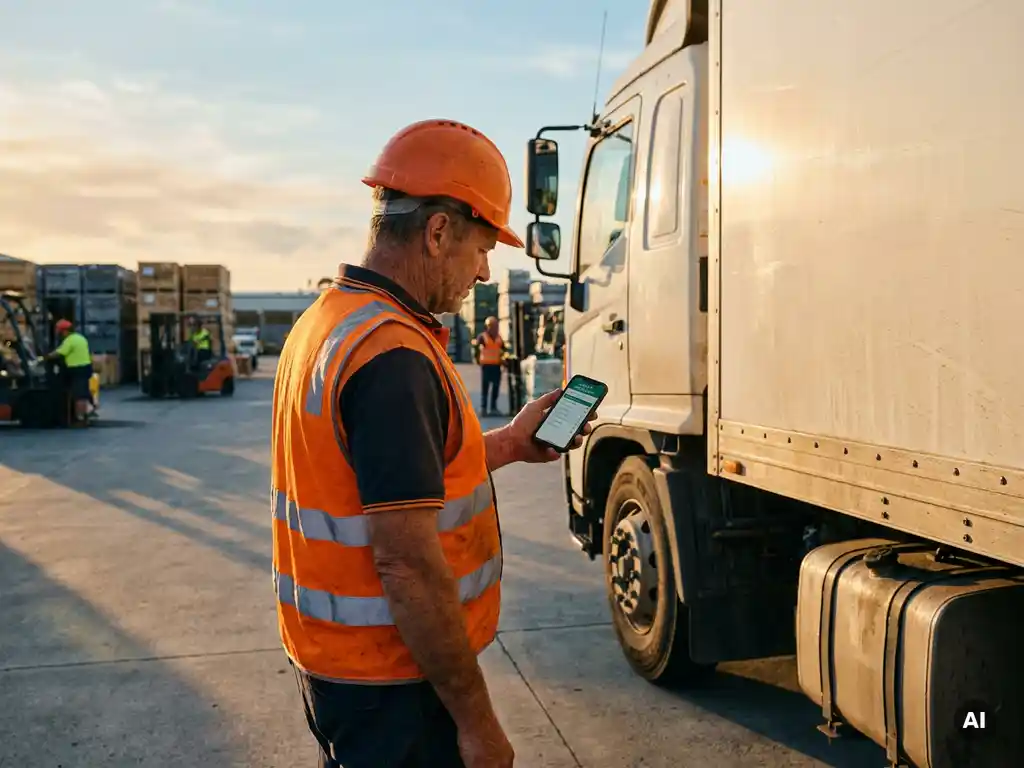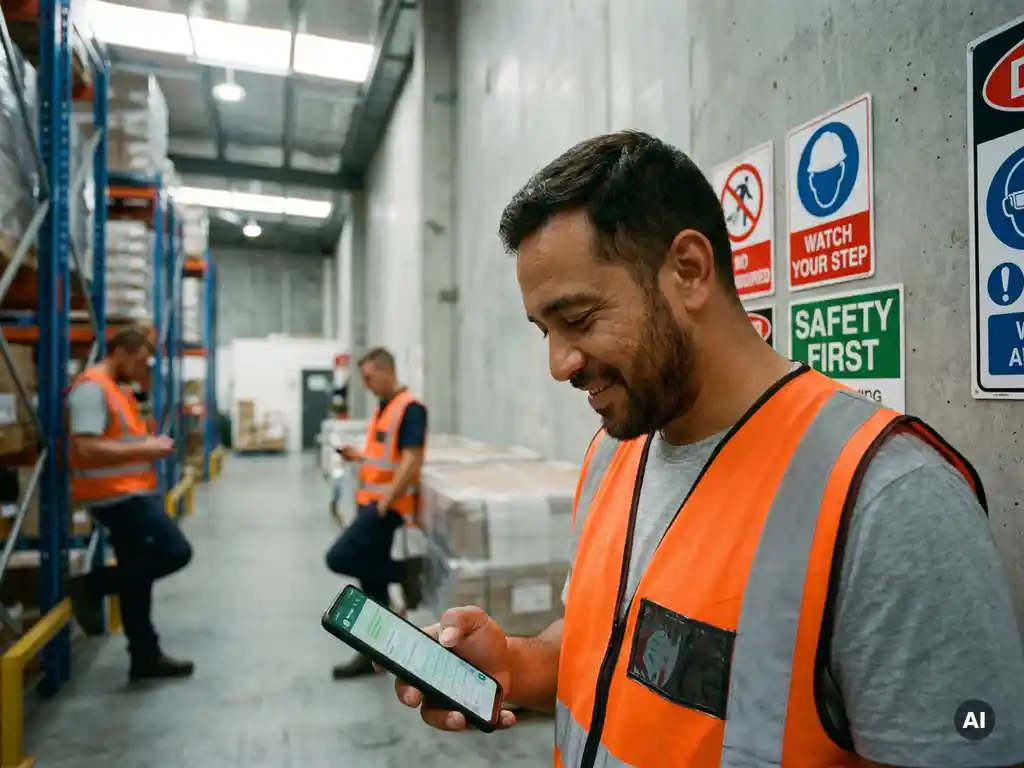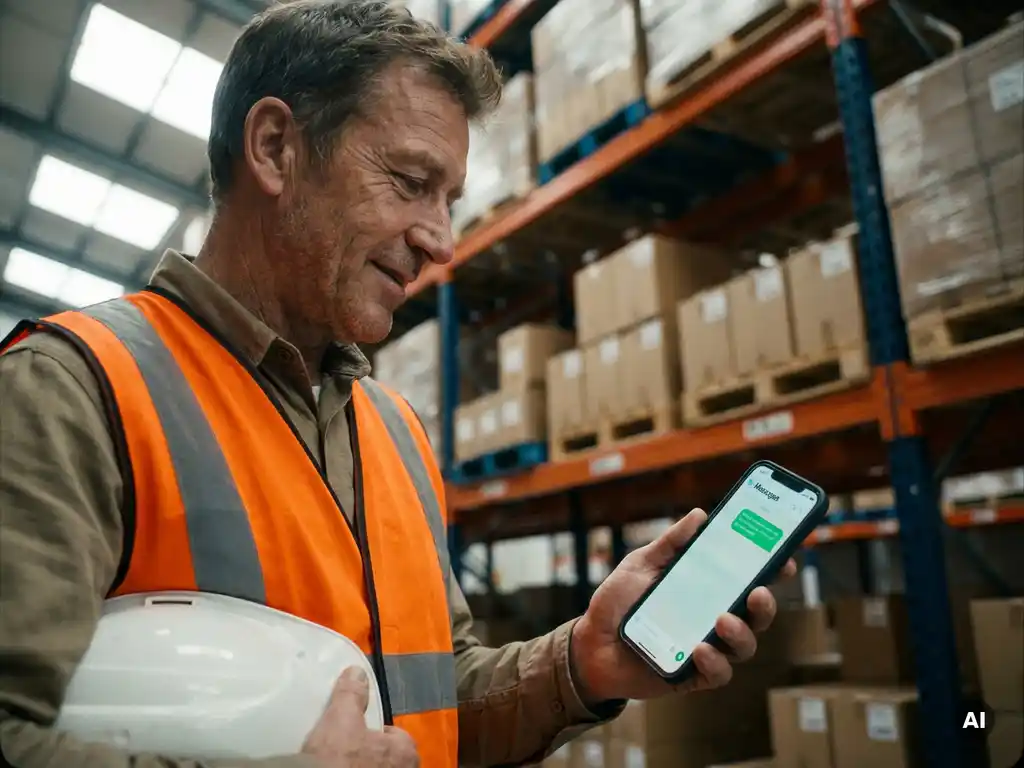



A large share of the workforce never sits behind a desk: engineers, drivers, site workers, cleaners and community care staff. These employees without a fixed workplace — often called deskless workers — are also the hardest to reach with important information and safety instructions. This article explains why, and how to fix it.
The challenge: why deskless workers are hard to reach
They simply don’t check a company inbox or intranet, and have no time to log into a separate system while on the move. At the same time, they’re often the ones carrying out the highest-risk tasks on site. The result? Important instructions don’t land, or arrive far too late. That puts safety and compliance at risk.
Why intranets, email and standalone apps fall short
Many organisations reach for traditional internal communication tools, but on the shop floor or site they simply don’t work:
| Intranet and email | Even though intranet and email are now available through an app, this group doesn’t check them, because these tools assume people sit at a screen. Deskless workers don’t. |
| Dedicated safety apps | A separate app sounds logical, but stalls in practice. Downloads, account creation, and passwords all create friction. The result is very low uptake. |
| No company device | Many frontline staff don’t have a company phone or laptop. So what do you do when employees don’t have a work phone? You still need to reach them without any hassle. |
5 ways to reach deskless employees
To genuinely activate and inform deskless employees, communication needs to meet a few hard requirements:
- Use an existing channel: build on what employees already use on their own phone, instead of pushing a new platform.
- Short and to the point: no long blocks of text. Go for bite-sized microlearning of no more than 2-3 minutes.
- Their own language: make sure instructions are available straight away in the employee’s own language, to remove language barriers.
- No barriers: cut out downloads, logins and passwords. One tap should be enough to get started.
- Measurable: keep records of who has read and completed the message, for audits and compliance.
WhatsApp: the channel everyone already uses
The easiest way to reach employees without email is WhatsApp. Almost everyone already has it on their phone and uses it daily. There’s no training, manual, or installation required. That’s why reach is far higher than with a different app or email newsletter. It means nobody is left out — including colleagues who speak another language or are less confident with technology.
Reach and proof, together, with E-lia
With E-lia you send toolbox talks, essential work instructions, and internal updates straight to your employees’ phones via WhatsApp. No hassle with apps or logins. Your team works through short learning sessions in their own language. Meanwhile, your dashboard shows you exactly who has read and completed the instruction. That means you reach your deskless employees effortlessly, and you have solid proof on hand for the HSE.
Want to reach your deskless employees effectively too?
See how easily you can share work instructions and toolbox talks via WhatsApp.