

You can speed up the onboarding period in the manufacturing industry by replacing lengthy classroom sessions and paper-based manuals with short, structured learning moments that fit directly into the workflow. The key is delivering the right information at the right time, in a format that workers can access and complete quickly, without disrupting production. The sections below break down the most common obstacles and practical ways to overcome them.
Why does onboarding take so long in manufacturing?
Onboarding in the manufacturing industry takes so long because the learning curve is steep, the environment is high-stakes, and most training methods are not designed for the factory floor. New employees need to absorb safety protocols, machine-specific procedures, quality standards, and team workflows, often before they can contribute meaningfully to production. When training relies on thick manuals, scheduled classroom sessions, or shadowing a colleague who is also expected to meet output targets, the process stretches out by default.
There are a few structural reasons this problem persists. First, manufacturing roles require procedural knowledge that is difficult to transfer without hands-on context. Second, training materials are often outdated or inconsistent across shifts and locations. Third, many organisations lack a standardised onboarding process altogether, meaning each new hire’s experience depends on who happens to be available to guide them. The result is a ramp-up period that is longer than it needs to be and inconsistent in quality.
What are the biggest risks of a slow onboarding process?
A slow onboarding process in manufacturing creates three major risks: safety incidents, early employee turnover, and lost productivity. When new employees are not fully trained before they begin working independently, the likelihood of errors, near-misses, and accidents increases significantly. In environments involving heavy machinery, chemicals, or strict hygiene requirements, this is not an abstract concern.
Beyond safety, slow onboarding directly affects retention. Employees who feel underprepared or unsupported in their first weeks are more likely to leave, which means the organisation absorbs both the cost of the failed hire and the cost of starting the recruitment process again. Meanwhile, every day a new hire is not fully productive represents a real output gap on the production floor. Reducing ramp-up time is not just an HR priority, it is a business-critical one.
How can microlearning speed up onboarding in manufacturing?
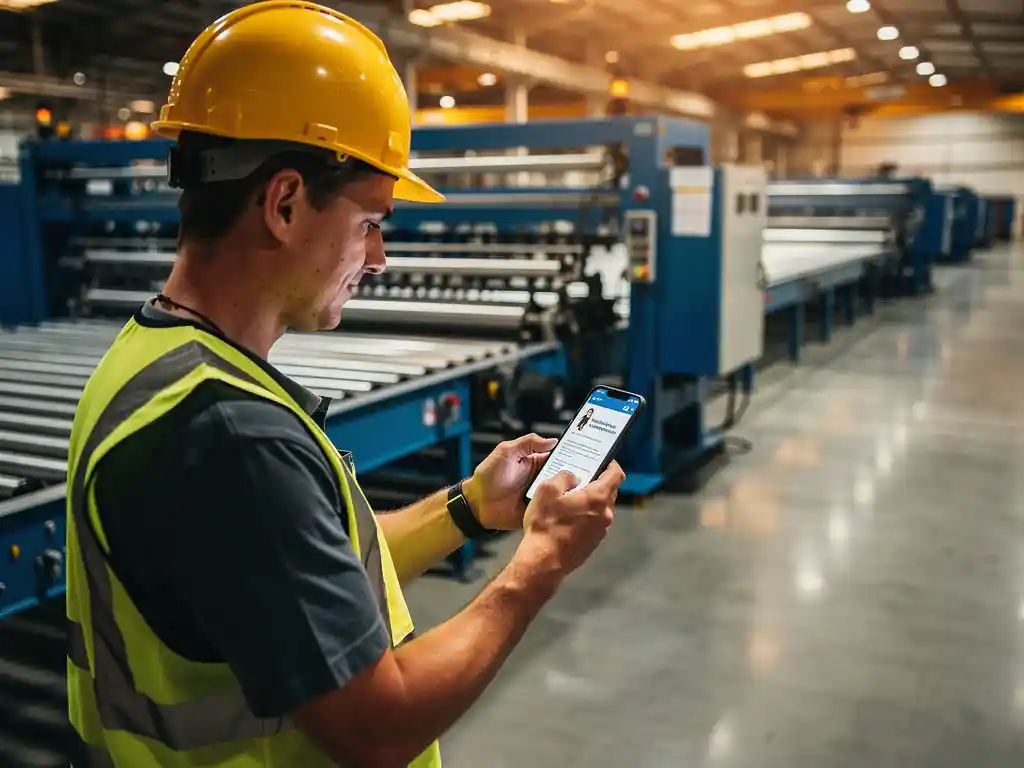
Microlearning speeds up onboarding in manufacturing by breaking down complex processes into short, focused learning moments that workers can complete in three to six minutes, directly on their phone, without leaving the floor. Instead of asking a new hire to sit through a two-hour induction, microlearning delivers exactly what they need at the moment they need it, whether that is how to operate a specific machine, follow a quality check procedure, or report a safety issue.
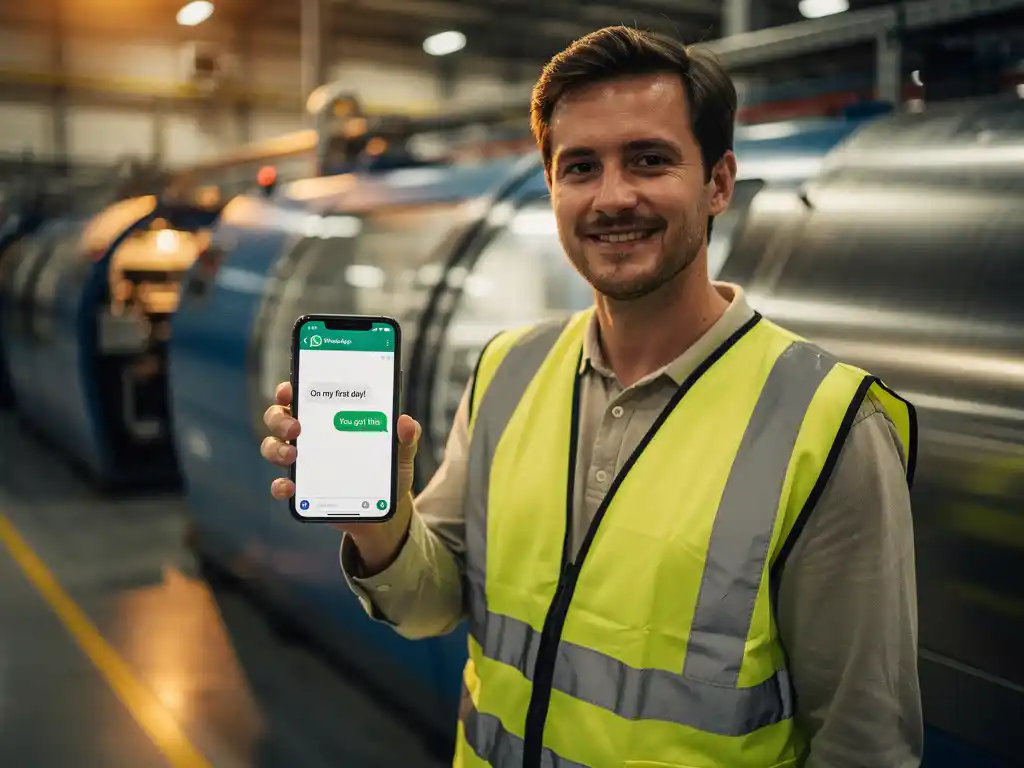
This format works particularly well in manufacturing for several reasons. Workers are often on their feet, moving between stations, and do not have access to a desk or computer during their shift. A short module sent via a familiar channel like WhatsApp removes the barrier of logging into a separate system or finding a training room. The knowledge is also more likely to stick because it is applied immediately in context, rather than absorbed in a classroom and forgotten before it becomes relevant.
Microlearning also makes it easier to keep training content current. When a process changes or a new safety protocol is introduced, a short update module can be created and distributed within minutes, rather than waiting for the next scheduled training session. This keeps the entire workforce aligned without disrupting production schedules. Learn more about how structured work instructions can support this approach.
What role does pre-onboarding play in reducing ramp-up time?
Pre-onboarding reduces ramp-up time by giving new manufacturing employees their first exposure to essential information before their first day on the floor. When a new hire arrives already familiar with safety basics, company values, and what to expect in their first week, the formal onboarding process can focus on hands-on practice rather than starting from scratch with foundational knowledge.
In practice, pre-onboarding in manufacturing might include a short welcome module explaining the facility layout, a safety overview covering the most critical rules, and a checklist of what to bring and what to expect. These can be delivered via phone in the days leading up to the start date, requiring no login or app download. The new hire arrives more confident, and the team receiving them can move faster towards productive work.
Pre-onboarding also signals to new employees that the organisation is organised and takes their integration seriously. This has a measurable effect on early engagement and reduces the likelihood of no-shows or early dropouts, which are particularly costly in high-turnover manufacturing environments. Explore how a structured onboarding programme can make this process consistent and scalable.
How do you handle onboarding for multilingual manufacturing teams?
Onboarding multilingual manufacturing teams effectively requires delivering training content in each employee’s preferred language, rather than assuming a single language works for everyone. In manufacturing environments where teams are often composed of workers from multiple countries, language barriers are one of the most common reasons onboarding fails to land, even when the content itself is well-designed.
The practical solution is to build training modules that support automatic translation, so the same core content can reach every worker in a language they understand. This is not just about compliance or fairness, it directly affects safety outcomes. A worker who does not fully understand a machine operation instruction or an emergency procedure is at greater risk, regardless of their skill level.
When selecting a training approach for multilingual teams, look for platforms that handle translation without requiring you to manually create separate versions of every module. This keeps the content management workload manageable and ensures that updates are applied consistently across all language versions at the same time. Regular toolbox talks delivered in each worker’s own language can further reinforce safety awareness across the team.
How do you measure whether your onboarding process is actually improving?
You measure onboarding improvement in manufacturing by tracking a combination of time-to-productivity, completion rates, knowledge retention, and early turnover. If your onboarding process is improving, new employees should reach full productivity faster, complete their training modules at higher rates, make fewer errors in their first weeks, and stay with the organisation longer.
Start with the metrics you can observe directly. How many days does it currently take a new hire to work independently without supervision? What percentage of new employees complete their required training before their first shift on the floor? Are there recurring errors or incidents that trace back to gaps in onboarding content? These questions give you a baseline to measure against.
Progress tracking dashboards built into your training platform can surface completion data in real time, showing which employees have finished which modules and flagging anyone who has fallen behind. This removes the guesswork from onboarding management and allows team leaders to intervene early when someone is struggling, rather than discovering the gap after a costly mistake. Tools for retaining and maintaining knowledge can help ensure that what employees learn during onboarding stays with them over time.
How E-Lia helps speed up onboarding in manufacturing
We built E-Lia specifically for organisations where traditional training methods create more friction than they solve. Our platform delivers microlearning via WhatsApp, which means your manufacturing employees receive structured, bite-sized training directly on their phone, with no app to download and no login required. Here is what that looks like in practice:
- Fast module creation: Build a complete onboarding module in 10 to 15 minutes, so your team can respond to process changes without delay.
- Pre-onboarding from day one: Send welcome modules and safety essentials before a new hire’s first shift, so they arrive prepared.
- Multilingual support: Automatic translations ensure every worker receives training in their own language, without extra manual effort.
- Real-time progress tracking: A clear dashboard shows exactly who has completed what, so nothing slips through the cracks.
- Scheduled or instant delivery: Send modules at the right moment in the onboarding journey, whether that is a week before the start date or five minutes before a new procedure goes live.
E-Lia also supports workplace inspections and HACCP training, making it a complete solution for manufacturing teams that need to meet regulatory and safety requirements alongside their onboarding goals.
Organisations like the Universiteit Utrecht and ETZ already use E-Lia to make onboarding faster, more consistent, and more accessible for their teams. If you want to see how this works for a manufacturing environment, plan a demo and we will walk you through it.
Frequently Asked Questions
How long does it typically take to build a microlearning onboarding program for a manufacturing facility?
With the right platform, you can build a complete onboarding track in a matter of days rather than weeks. Individual modules take 10 to 15 minutes to create, and a full onboarding sequence covering safety, machine procedures, and quality standards can be ready to deploy within a week. The key is starting with your highest-priority content, such as safety-critical procedures, and expanding the program from there based on real gaps you observe in new hire performance.
What if some of our manufacturing employees don't use smartphones or aren't comfortable with digital tools?
This is a common concern, but in practice the barrier is lower than most managers expect. Delivering training via a familiar app like WhatsApp removes most of the friction because workers are already using it in their personal lives. No login, no new app, and no desktop required. For employees who are genuinely less comfortable with technology, pairing the first module with a brief walkthrough from a team leader is usually enough to get them started confidently.
How do we make sure new hires are actually retaining what they learn, not just clicking through modules?
Retention is best supported by combining short knowledge checks at the end of each module with immediate on-the-job application. When a new hire completes a module on a specific machine procedure and then performs that procedure within the same shift, the learning sticks far more effectively than any classroom review. Progress dashboards that flag low quiz scores or incomplete modules also allow team leaders to follow up with targeted support before gaps become costly mistakes.
Can microlearning replace hands-on training and mentoring on the factory floor, or does it work alongside it?
Microlearning is not a replacement for hands-on practice; it is what makes hands-on time more productive. When a new hire arrives on the floor already familiar with the procedure, the safety rules, and the expected standard, the time spent with a mentor or trainer can focus entirely on practical application rather than explanation. Think of microlearning as the preparation layer that makes every in-person training interaction faster and more effective.
What's the most common mistake organisations make when redesigning their manufacturing onboarding process?
The most common mistake is trying to digitise everything at once rather than starting with the content that has the highest impact on safety and early productivity. Organisations often spend months rebuilding their entire training library before deploying anything, which means new hires continue going through the old process in the meantime. A more effective approach is to identify the two or three knowledge gaps most responsible for errors or slow ramp-up, build modules for those first, and iterate from there.
How do we keep onboarding content up to date when processes and safety protocols change frequently?
This is one of the strongest arguments for moving away from printed manuals and static PDFs. When your training content lives in a digital platform, updating a module takes minutes and the revised version is immediately available to all current and future employees. For manufacturing environments where procedures change with new equipment, regulatory updates, or seasonal production shifts, this ability to push updates instantly, without reprinting or rescheduling sessions, is a significant operational advantage.
At what point in the hiring process should pre-onboarding content be sent to new manufacturing employees?
Ideally, pre-onboarding content should be sent within 24 to 48 hours of a new hire accepting their offer, not just in the days immediately before their start date. Sending a short welcome module early reinforces their decision to join, reduces first-day anxiety, and gives you more time to cover essential safety and facility content before they step onto the floor. A simple sequence might include a welcome message and facility overview in week one of the notice period, followed by safety essentials and first-day logistics in the final few days before they start.