


Linking safety instructions to specific roles and tasks starts with identifying the risks associated with each role, translating those risks into concrete instructions, and sending those instructions to the right employees at the right time. Generic safety information reaches everyone, but rarely resonates with anyone. Role-specific instructions are more relevant, easier to retain, and simpler to assess. In this article, we answer the most frequently asked questions about how to put this into practice.
Why are generic safety instructions insufficient per role?
Generic safety instructions fall short because they do not align with the specific risks, tasks, and context of an individual employee. A warehouse operative who receives instructions about office-related risks will not recognise that situation. Relevance determines whether information actually sticks and is applied on the shop floor.
When safety information is too broad, a number of concrete problems arise. Employees disengage because the content does not connect with their day-to-day work. Managers find it difficult to verify whether the right person has received the right instruction. And during an inspection or incident, it becomes hard to demonstrate that specific risks for a specific role were addressed.
Employers have obligations to provide employees with information and instruction on working safely. How concrete and role-relevant that information is largely determines whether employees actually act on it. A warehouse operative faces different risks than a maintenance technician, and a new employee has different needs than an experienced one. Generic instructions treat all those situations the same way, and that is precisely where things go wrong.
How do you map which risks belong to which role?
You map role-specific risks by linking the risk inventory and evaluation (RI&E) to concrete roles and tasks. Translate the risks from the RI&E not only at the organisational level, but also to the specific tasks associated with each role. This way, you know exactly which instructions are relevant for which employee.
A practical approach consists of the following steps:
- Create an overview of all roles and positions within the organisation, including temporary employees, agency workers, and employees working across multiple locations.
- Describe the core tasks for each role and the associated working environment, machinery, substances, or situations the employee will encounter.
- Link the risks from the RI&E to those tasks: what hazards are present when carrying out those specific activities?
- Prioritise based on severity and likelihood: which risks require immediate instruction, and which are less urgent?
- Involve managers and employees in this process. They know the practical reality and can identify risks that are not always visible on paper.
Industry associations and sector-specific safety catalogues often provide a good starting point for identifying common risks. Use these as a reference, but always supplement them with the specific situation in your organisation.
What is the best way to structure safety instructions per role?
The best structure for role-specific safety instructions builds from general to specific: start with the basic rules that apply to everyone, then move on to the risks and instructions relevant to the role group, and finish with task-specific details. This builds knowledge in a logical sequence that employees can follow.
Layer 1: Organisation-wide basic instructions
These are the safety instructions that apply to every employee, regardless of role. Think of emergency procedures, house rules, the use of personal protective equipment (PPE), and the incident reporting procedure. This layer forms the foundation and is particularly well suited to onboarding.
Layer 2: Role group-specific instructions
For each role group, such as production staff, logistics personnel, or technical maintenance, you compile a set of instructions that aligns with the risks of that group. Think of working with forklifts, hazardous substances, or machinery. Toolbox sessions as recurring safety meetings are a good way to repeat and keep these instructions up to date.
Layer 3: Task- and location-specific instructions
The most detailed layer contains instructions for specific tasks or work locations. Think of working at height, working in confined spaces, or carrying out maintenance on specific installations. These instructions are the most context-dependent and require the greatest precision.
By maintaining this layered structure, you prevent employees from being overwhelmed with information that is not intended for them. At the same time, you ensure that no one misses an instruction that is relevant to their work.
How do you ensure employees receive the right instructions at the right time?
You ensure employees receive the right instructions at the right time by linking instructions to role, work location, and moment in the work process, and delivering them through a channel that employees actually use. Timing and relevance are at least as important as the content itself.
A few principles help with this:
- Link instructions to moments: new employees receive onboarding instructions before or on their first working day. Employees taking on a new task receive the relevant work instruction at the moment that task begins. Seasonal risks are addressed before the season starts.
- Use role as a filter: do not send instructions to the entire organisation, but only to the employees for whom they are relevant. This requires accurate registration of roles and positions in your system.
- Choose an accessible channel: employees on the shop floor often do not have a company laptop or a business email address. Instructions delivered through an unfamiliar system are less likely to be opened and read.
- Keep instructions short and concrete: an employee who receives an instruction in the middle of their working day does not have time for lengthy texts. Microlearning, short videos, or concise knowledge checks work better than extensive documents.
Consider repetition as well. An instruction that has been delivered once is not automatically viewed and understood. Regular repetition through toolbox sessions helps to keep safety knowledge current, particularly when tasks or risks change.
How do you measure whether employees understand and follow safety instructions?
You measure whether employees understand and follow safety instructions by recording participation, using knowledge checks, and observing behaviour on the shop floor. Registration alone says nothing about understanding; only when you also assess whether the content has been understood can you tell whether the instruction has truly landed.
Concrete measurement methods include:
- Participation registration: record who has received and opened which instruction. This provides insight into reach, but not yet into understanding.
- Knowledge checks: short questions after an instruction reveal whether the key message has been understood. Keep them focused on the most relevant points, so employees do not disengage.
- Repeat scores: when employees answer a question incorrectly multiple times, this is a signal that the instruction is unclear or that the topic requires more attention.
- Workplace inspections and observations: check on the shop floor whether what has been learned is also being applied. Behaviour is the ultimate measure, not a completed knowledge check.
- Incident analysis: when an incident occurs, investigate whether the employee involved had received and understood the relevant instruction. This helps to identify gaps in the instruction process.
A dashboard that provides insight into participation and results per employee and per role group helps managers to quickly see where follow-up is needed. This allows you to intervene in a timely manner without having to search through records manually.
How E-lia helps with role-specific safety instructions
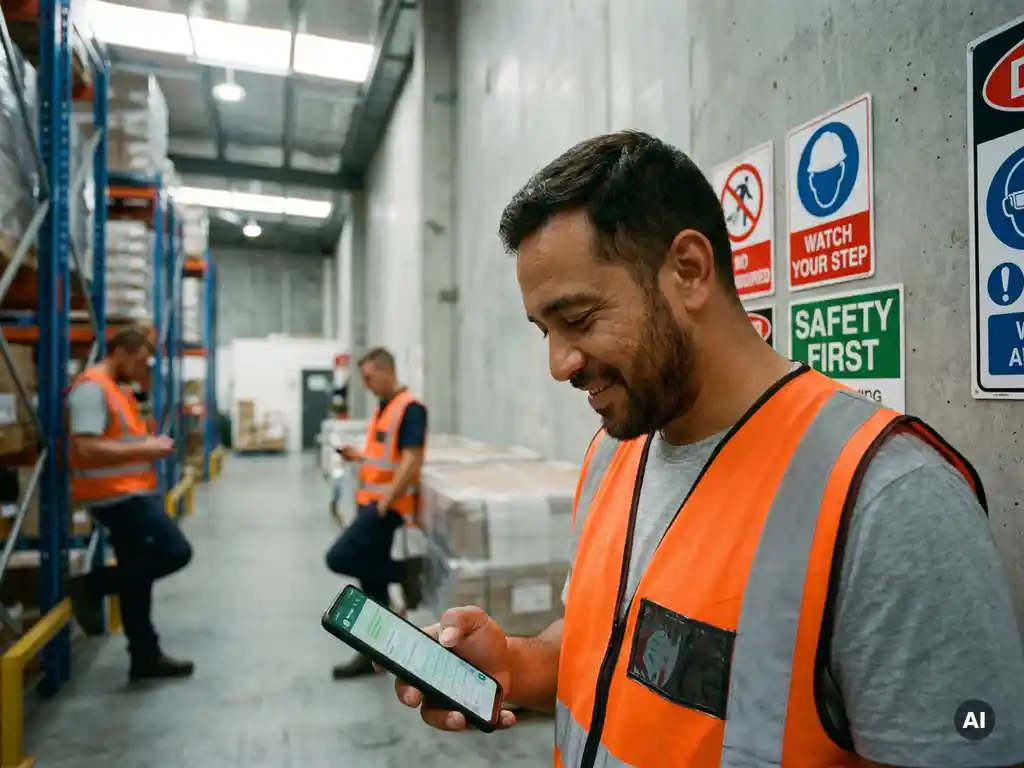
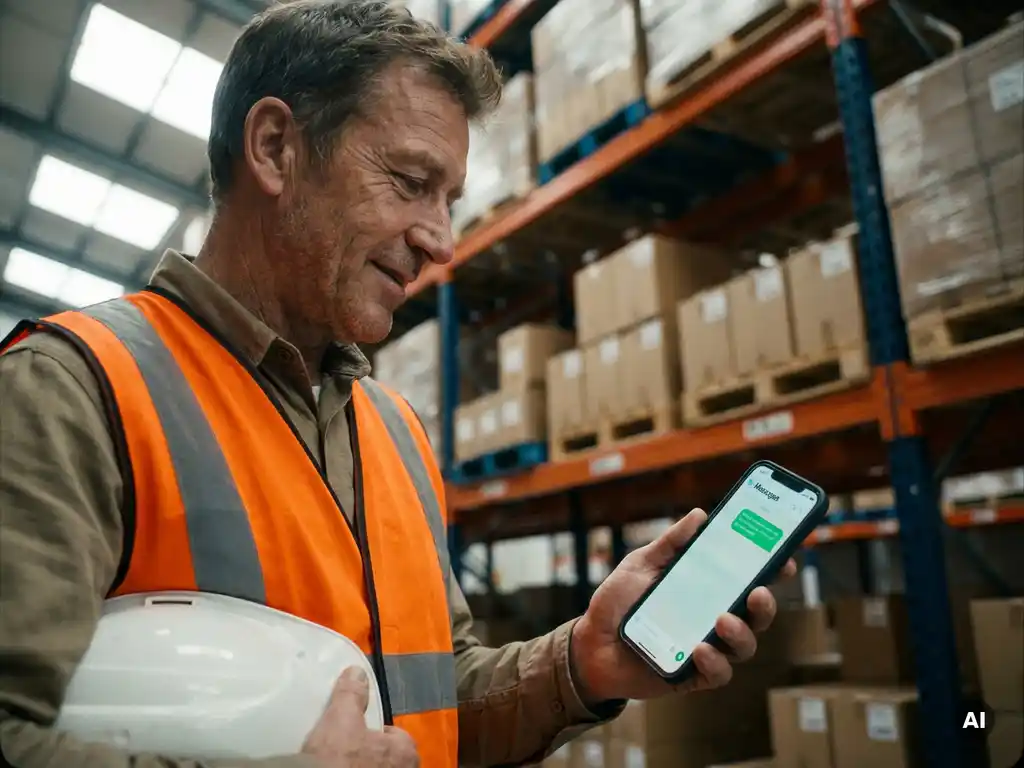
With our platform, you send safety instructions and toolbox sessions directly to the right employees, based on their role, location, or team. Employees receive the instructions directly via WhatsApp, without needing to download an additional app or create an account. This makes it accessible for everyone on the shop floor, including employees without a business email address or laptop.
What our platform specifically offers for role-specific safety instructions:
- Send instructions and toolbox sessions based on role, team, or location
- Knowledge checks immediately after the instruction, so you know whether the content has been understood
- A live dashboard with participation and results per employee and role group
- AI-assisted translations in more than 50 languages, so employees who speak other languages receive instructions in their own language
- A library of more than 60 practical safety topics, updated monthly
- Registration of both digital and in-person toolbox meetings
Would you like to see what role-specific safety instructions look like in practice? Request a demo via our contact form and discover how to reach employees on the shop floor easily and effectively.