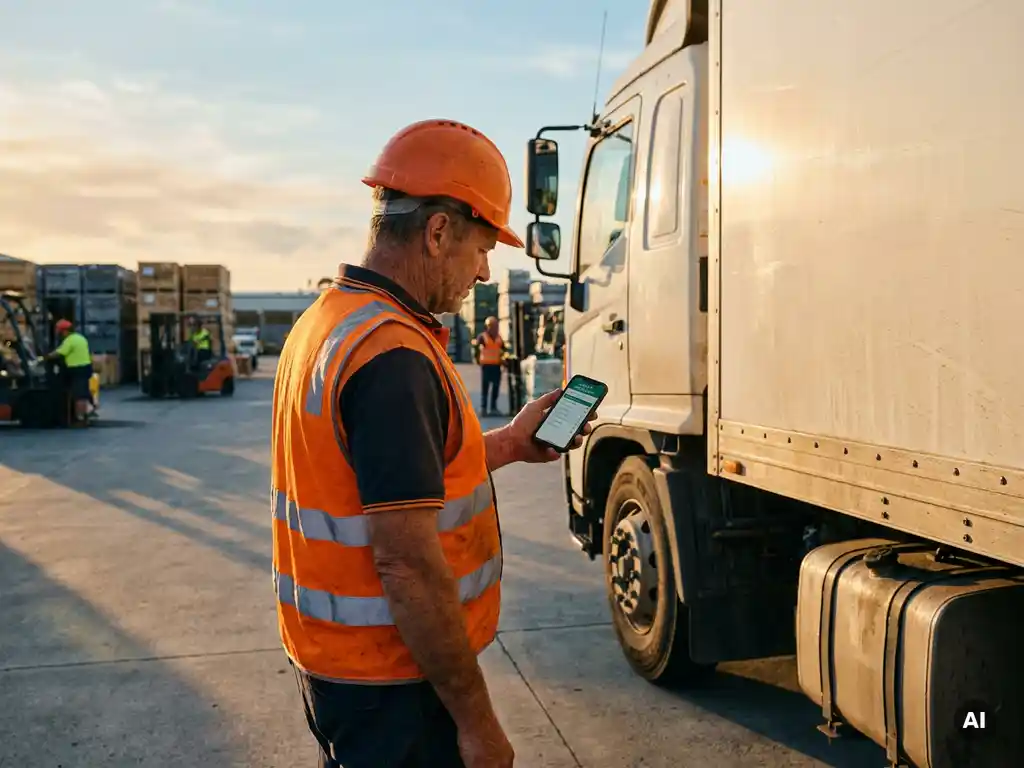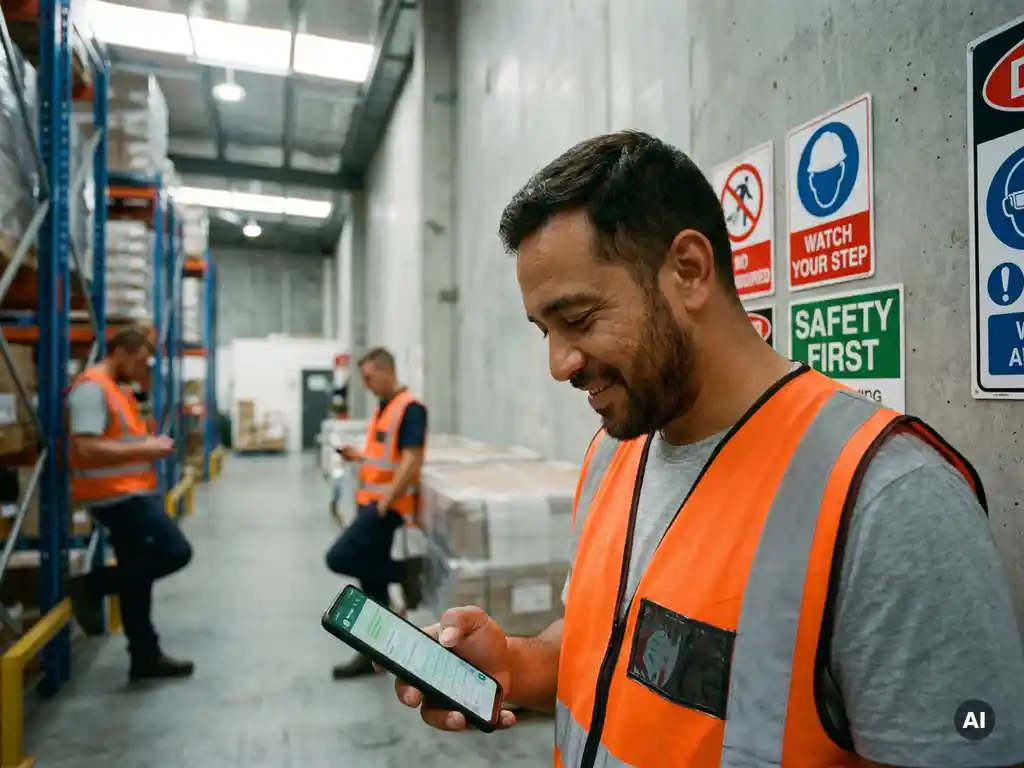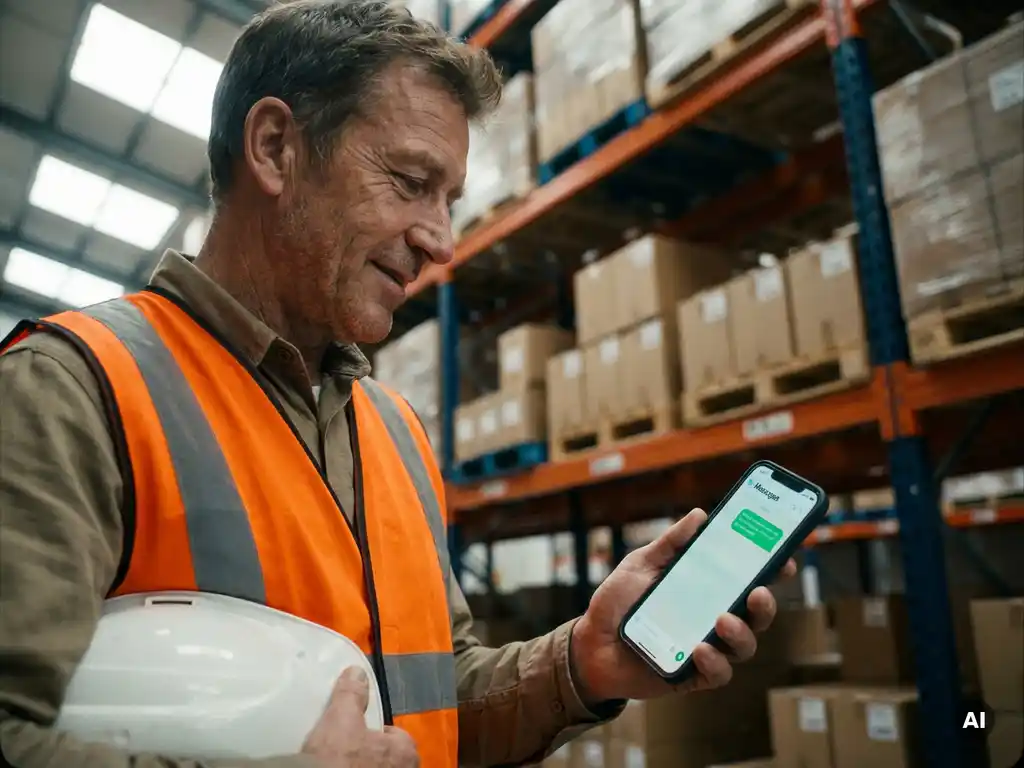



More and more businesses employ people who don’t speak English as a first language. If they don’t understand a safety instruction, that’s a direct risk. Offering safety instructions in someone’s own language isn’t a nice-to-have, it’s the foundation of a safe workplace with an international team.
Language barrier = safety risk
An employee who doesn’t understand the instruction will often nod along anyway. Not out of unwillingness, but because they can’t follow the explanation or don’t want to stand out. The result is a false sense of safety: on paper everyone has been briefed, but in practice the message never landed. That leaves you exposed if something goes wrong.
Pictograms alone aren’t enough
Pictograms help, but they only show what, not how or why. Real understanding needs language the employee actually speaks.
Safety instructions in someone’s own language: how do you do it?
In a multilingual environment, a targeted approach works best:
- Translate the whole instruction, not just individual words.
- Deliver it through a channel the employee genuinely uses.
- Keep the text short and concrete, without difficult jargon.
- Use automatic translation to make it scalable: you create the instruction once and everyone receives it in their own language.
Test understanding, don’t just translate
Translating is step one; checking whether the message landed is step two. A few short questions after the briefing show whether the employee has genuinely understood it.
How E-lia handles multilingual safety instructions
With E-lia you create a toolbox talk or work instruction once; your employees automatically receive it in their own language via WhatsApp, with no app or login. Short quiz questions let you check understanding, and you can see, per person and per language, who has completed the instruction.
Ready to modernise your multilingual safety instructions?
See how easily it works and boost reach across your organisation straight away.