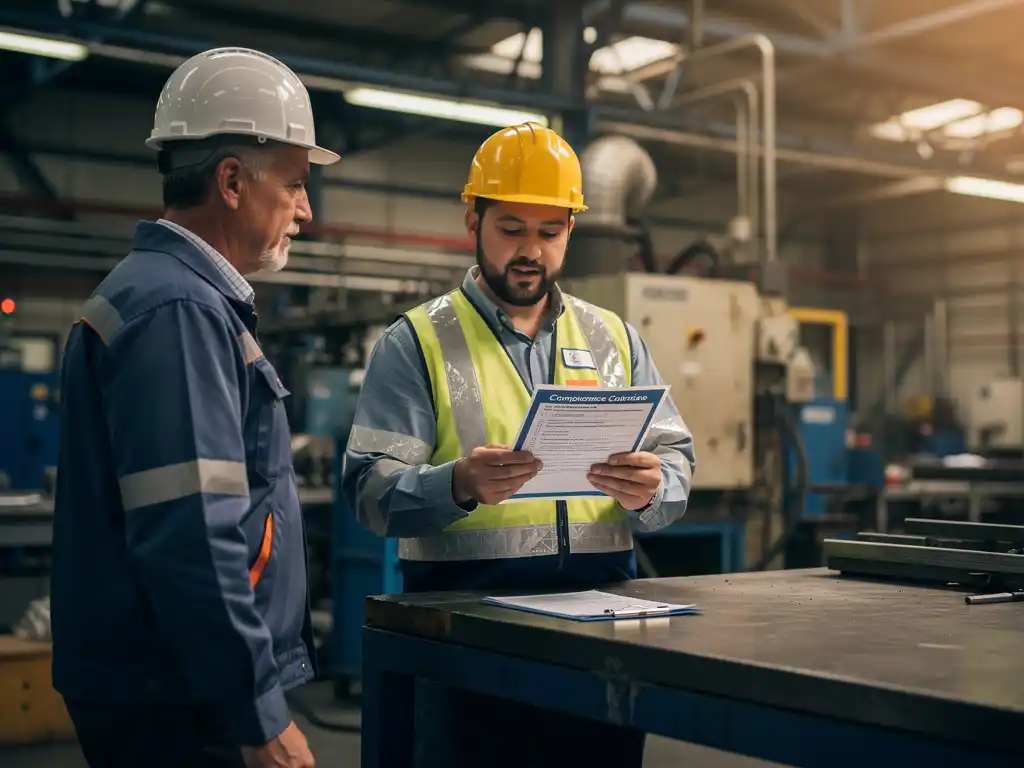



Preboarding gives manufacturing companies a measurable advantage by preparing new workers before their first shift, reducing early turnover, accelerating safety readiness, and cutting the administrative pressure on supervisors and HR teams. For manufacturing specifically, where physical hazards, complex machinery, and shift-based schedules make the first few weeks particularly demanding, structured preboarding before day one is not a nice-to-have but a genuine operational necessity. The questions below unpack exactly how preboarding delivers these benefits and what a practical programme looks like on the factory floor. If you want to explore how a digital tool can support this, you can always book a demo directly.
How does preboarding reduce early employee turnover in manufacturing?
Preboarding reduces early employee turnover in manufacturing by closing the anxiety gap between signing a contract and starting work. When new hires receive clear information, a warm welcome, and practical preparation before day one, they arrive with confidence rather than uncertainty. That psychological readiness directly lowers the likelihood of no-shows and first-week departures.
Manufacturing environments can feel overwhelming to newcomers. Loud production floors, unfamiliar equipment, strict safety protocols, and shift-based routines create a steep learning curve. Workers who have not been prepared for this reality are far more likely to reconsider their decision in those first critical days. Preboarding addresses this by setting honest, grounded expectations before the person ever walks through the door.
Beyond expectations, preboarding also builds an early sense of belonging. Receiving a message from the team, a short introduction to the site layout, or a preview of the first week’s schedule signals to the new hire that the organisation is invested in them. That signal matters enormously in sectors like manufacturing, where competition for reliable workers remains high and the cost of replacing someone who leaves within the first month is significant.
What should a preboarding programme for manufacturing workers include?
A preboarding programme for manufacturing workers should include a welcome message, practical logistics, an introduction to safety rules, a preview of the first week, and any required documentation. The goal is to give new hires the information they need to arrive prepared, confident, and ready to contribute from day one.
More specifically, a well-structured programme typically covers:
- Welcome and team introduction: A short, personal message from the direct supervisor or team lead that makes the new hire feel expected and valued
- Site logistics: Parking, entry procedures, shift times, dress code, and where to go on the first day
- Safety essentials: An overview of mandatory personal protective equipment, key hazard zones, and emergency procedures relevant to the role
- Role preview: A brief description of what the first week will look like, including who will guide the new hire and what tasks they will start with
- Administrative preparation: Any forms, ID requirements, or certifications that can be completed before arrival to reduce day-one paperwork
- Cultural context: Core values, workplace norms, and any specific conduct expectations relevant to the production environment
Keeping each piece of content short and digestible is essential. Manufacturing workers are rarely sitting at a desk waiting to consume lengthy documents. Microlearning formats, delivered in bite-sized modules of three to six minutes, respect their time and dramatically improve completion rates. Learn more about how structured onboarding and work instructions can support this approach.
How does preboarding improve safety compliance on the factory floor?
Preboarding improves safety compliance on the factory floor by introducing critical safety knowledge before the new hire is exposed to real hazards. Workers who have already encountered the rules, understood the reasoning behind them, and reflected on the consequences arrive with a safety mindset rather than having to absorb that mindset in a rushed first-day briefing.
Traditional onboarding often compresses safety training into the first day alongside role introductions, HR paperwork, and site tours. That information overload means safety content competes for attention at exactly the moment when a new hire is most distracted. Preboarding separates safety preparation from the noise of day one, giving it the dedicated space it deserves.
There is also a retention argument. Information introduced before the first shift has time to settle. When a worker then encounters the actual machinery, signage, or safety procedures on day one, they are reinforcing something familiar rather than learning it for the first time in a high-stimulation environment. That recognition strengthens retention and makes compliant behaviour more instinctive from the start. Structured toolbox talks and workplace inspections can further embed this safety-first culture once workers are on the floor.
What is the difference between preboarding and onboarding in manufacturing?
The difference between preboarding and onboarding in manufacturing is timing and purpose. Preboarding happens between the moment a contract is signed and the first working day. Onboarding begins on day one and continues through the weeks or months it takes for a new employee to become fully productive. Preboarding prepares; onboarding integrates.
In manufacturing, this distinction has practical consequences. Onboarding is dense. New hires must learn machinery operation, safety procedures, team dynamics, shift routines, quality standards, and company culture in a compressed period whilst also physically performing their role. Expecting workers to absorb all of this from a standing start creates unnecessary risk and slows productivity.
Preboarding offloads the preparatory layer so that onboarding can focus on applied, hands-on learning. When a worker arrives already knowing the safety basics, the site layout, and what their first week looks like, the supervisor can spend that time on practical coaching rather than administrative orientation. The two phases are most effective when they are designed as a connected sequence rather than treated as separate events. Explore how tools for retaining and maintaining knowledge can help bridge the two phases effectively.
How can manufacturing companies deliver preboarding without extra admin burden?
Manufacturing companies can deliver preboarding without extra admin burden by using automated, mobile-first tools that send structured content to new hires on a schedule, without requiring HR or supervisors to manually coordinate each step. The key is building the programme once and letting the system handle delivery, reminders, and progress tracking automatically.
The most common barrier to preboarding in manufacturing is not a lack of will but a lack of capacity. HR teams are stretched, supervisors are managing production targets, and no one has time to personally guide every new hire through a pre-start checklist. The solution is a system that runs in the background.
Practically, this means:
- Creating a set of short, reusable modules covering the core preboarding content once
- Scheduling those modules to be sent automatically after a contract is signed
- Using a channel that requires no app download or login from the new hire
- Tracking completion through a dashboard so HR can see at a glance who has engaged and who needs a nudge
- Integrating with existing HR systems so new hire data flows automatically without duplicate data entry
When the logistics are handled automatically, preboarding stops feeling like extra work and starts feeling like a system that works for the organisation rather than requiring it. Book a demo to see how this works in practice.
Which manufacturing sectors benefit most from structured preboarding?
The manufacturing sectors that benefit most from structured preboarding are those with high worker turnover, complex safety requirements, multilingual workforces, or frequent onboarding cycles. This includes food and beverage production, logistics and warehousing, automotive assembly, pharmaceutical manufacturing, and industrial cleaning and facilities services.
These sectors share common characteristics that make preboarding employees especially valuable:
- High volume hiring: Sectors that regularly bring in large cohorts of new workers benefit from a standardised preboarding process that scales without proportional increases in HR effort
- Strict compliance requirements: Pharmaceutical and food production environments require workers to understand hygiene, safety, and regulatory standards before they touch anything on the production floor. Dedicated HACCP training is a strong example of compliance content that fits naturally into a preboarding programme
- Multilingual teams: Many manufacturing workforces include workers whose first language is not the dominant workplace language. Preboarding content delivered in a worker’s own language removes a significant barrier to comprehension and compliance
- Seasonal or contract-based staffing: Sectors that rely on temporary or seasonal workers need to get people productive quickly. Preboarding compresses the time from hire to contribution
- Shift-based operations: When new hires join rotating shifts, they may not have access to a dedicated supervisor during their first days. Preboarding ensures they have already received key information independently of who is on shift
How E-Lia helps manufacturing companies with preboarding
We built E-Lia specifically to make structured preboarding and manufacturing employee onboarding practical for organisations that cannot afford extra admin burden. Here is what that looks like in practice:
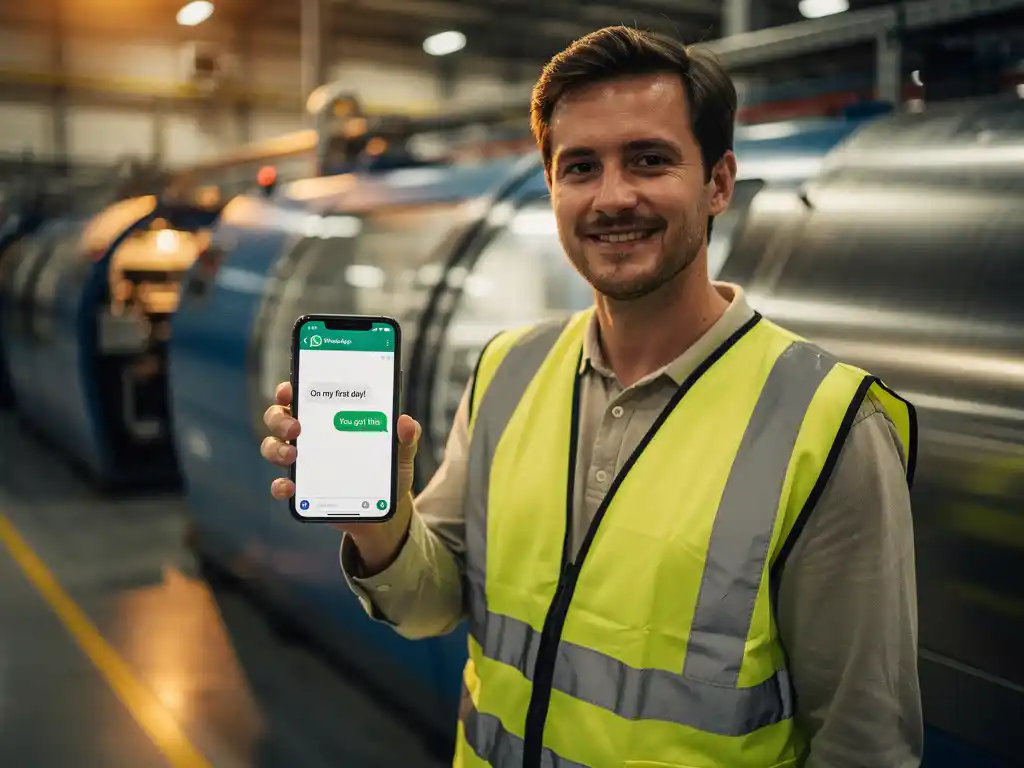
- WhatsApp delivery: New hires receive preboarding modules directly on WhatsApp, the app they already use every day. No app download, no login, no technical barrier
- Fast module creation: Building a preboarding module takes an average of 10 to 15 minutes. Workers complete each module in 3 to 6 minutes, keeping content focused and completion rates high
- Automatic scheduling: Modules are sent on a schedule you define, triggered automatically when a new hire is added to the system
- Multilingual support: Content is automatically translated so every worker receives preboarding in their own language
- Progress dashboard: HR and L&D teams can track who has completed which modules without chasing individuals manually
- HR system integration: E-Lia connects with existing HR systems and LMS platforms via API, eliminating duplicate data entry
Whether you are onboarding five new workers a month or five hundred, a consistent, automated preboarding process protects your safety standards, reduces early turnover, and frees your supervisors to focus on production rather than paperwork. Plan a demo to see how E-Lia fits into your manufacturing onboarding process.
Frequently Asked Questions
How long before the start date should preboarding begin?
Preboarding is most effective when it starts within 24 to 48 hours of a contract being signed, giving new hires enough time to absorb information without losing momentum. For most manufacturing roles, a preboarding window of one to two weeks before the first shift is the sweet spot — long enough to cover safety essentials, logistics, and role previews without overwhelming the new hire. If the gap between signing and starting is shorter, prioritise safety content and practical logistics above everything else.
What if a new hire doesn't engage with preboarding content before their first day?
Non-engagement is worth tracking, but it doesn’t mean the programme has failed. Automated reminders can nudge new hires who haven’t opened their modules, and a dashboard gives HR visibility into who needs a personal follow-up. For workers who arrive without completing preboarding, supervisors should be briefed so they can fill critical gaps — particularly around safety — during the first shift. Over time, monitoring completion rates helps you identify whether the content, timing, or delivery channel needs adjustment.
How do you handle preboarding for workers who have limited digital literacy or older phones?
Delivering preboarding via WhatsApp significantly lowers the digital barrier, since most workers already use it daily regardless of their technical skill level. Keeping modules short, visual, and conversational — rather than text-heavy or document-based — makes them accessible to workers with lower literacy levels as well. For teams with known digital access challenges, a brief phone call or printed summary can supplement the digital content without replacing the structured programme entirely.
Can preboarding content be reused across different roles or production lines?
Yes, and this is one of the biggest efficiency gains of a well-designed preboarding programme. A core set of modules covering company culture, general site safety, and logistics can be reused across all new hires, while role-specific or department-specific modules are added on top. This modular approach means you build once and adapt rather than starting from scratch for every new position, which is especially valuable in manufacturing environments with high-volume or recurring hiring.
How do you measure whether your preboarding programme is actually working?
The most direct indicators are early turnover rate, no-show rate on the first day, and time-to-productivity for new hires. Compare these metrics before and after implementing structured preboarding to establish a baseline impact. Completion rates within the preboarding platform itself are a leading indicator — low completion suggests a content or delivery issue worth addressing before it affects day-one readiness. Supervisor feedback on new hire preparedness is also a practical, qualitative signal that’s easy to collect.
Is preboarding relevant for temporary or agency workers, or just permanent hires?
Preboarding is arguably more important for temporary and agency workers than for permanent hires. Temp workers often have shorter lead times, less organisational loyalty, and greater exposure to safety risk because they move between sites and roles more frequently. A streamlined preboarding programme that covers safety essentials and site-specific logistics ensures that even short-term workers arrive prepared, which protects both the individual and the organisation’s compliance record.
What's the biggest mistake manufacturing companies make when setting up preboarding for the first time?
The most common mistake is trying to include too much content — essentially moving the entire first-day orientation into the preboarding phase. This creates the same information overload problem it was meant to solve, just earlier. Effective preboarding is selective: it covers what a new hire genuinely needs to know before they arrive, not everything they will eventually need to learn. Start with a lean programme covering safety basics, logistics, and a warm welcome, then expand based on what supervisors and new hires tell you is missing.
Related Articles
- How do you turn inspection results into concrete improvement actions?
- How do you deliver toolbox talks to subcontractors without access to your company systems?
- What is the difference between a toolbox meeting and a toolbox talk?
- What fines do you risk with inadequate safety instruction?
- How long does an average toolbox meeting last?