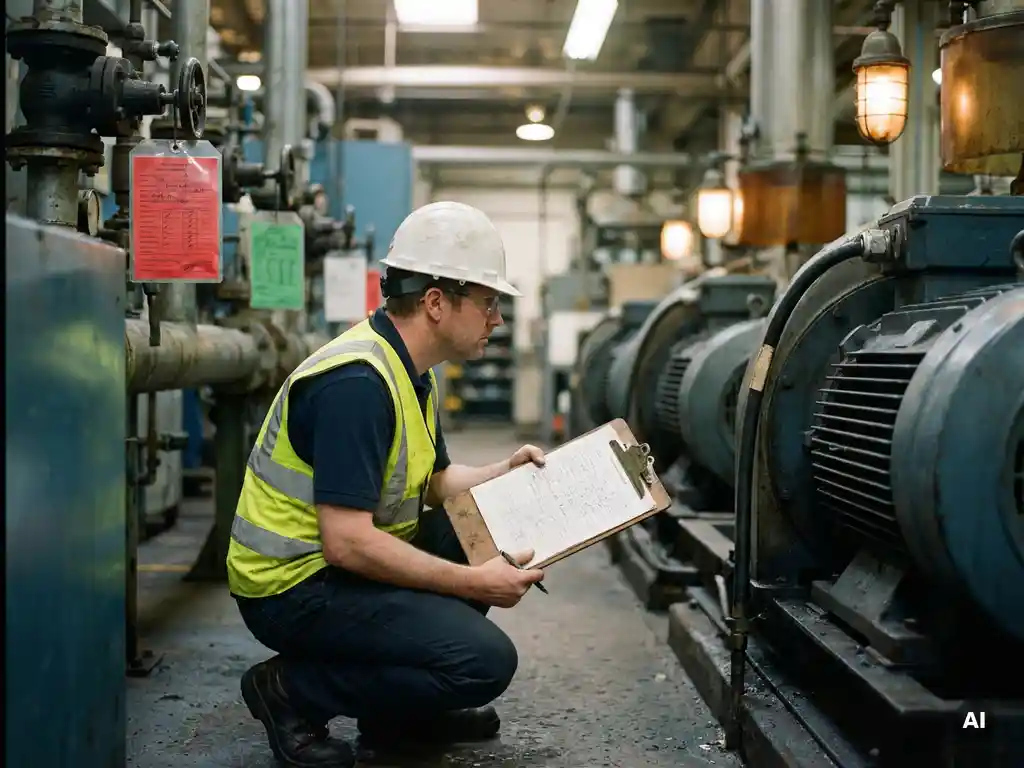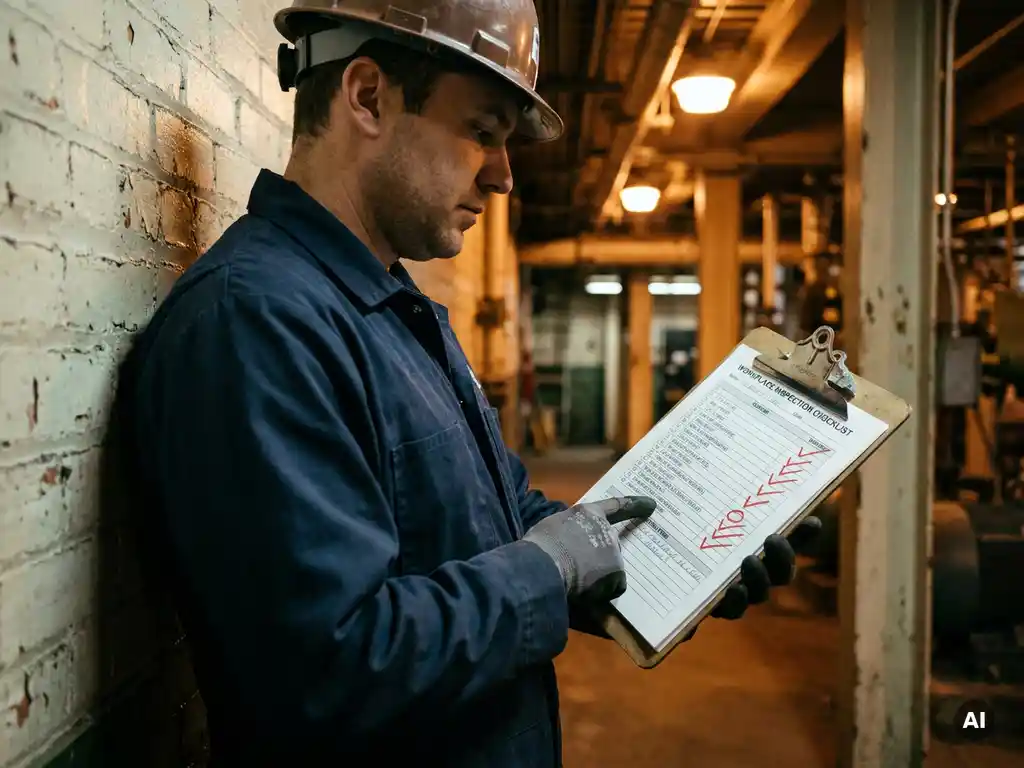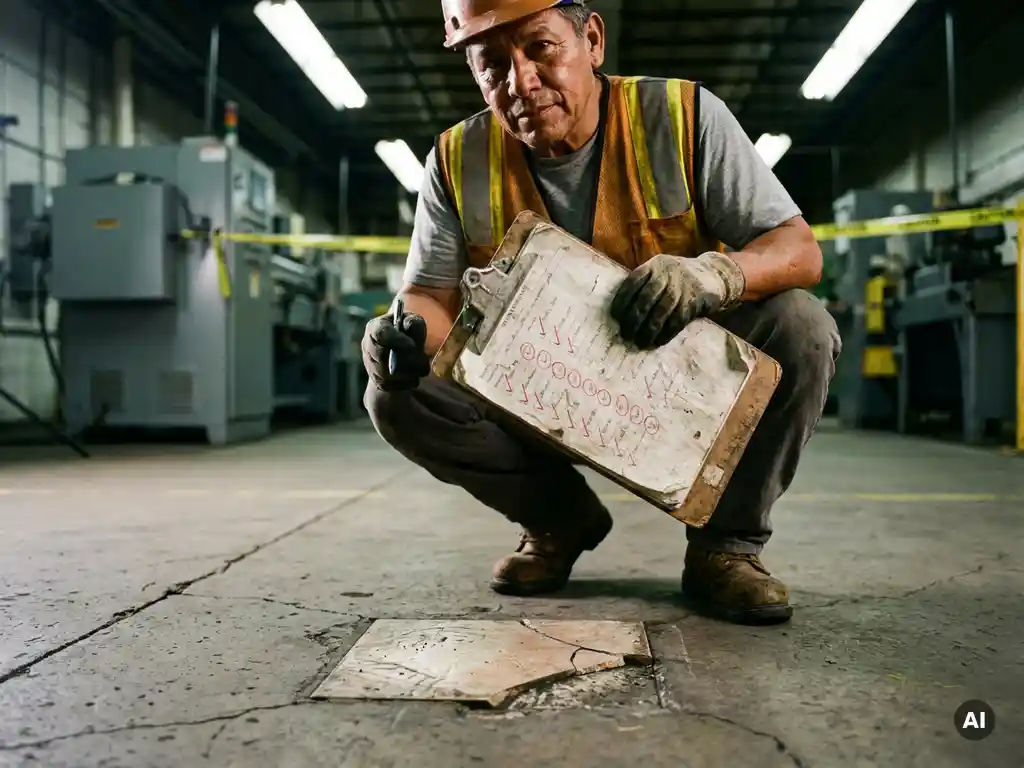


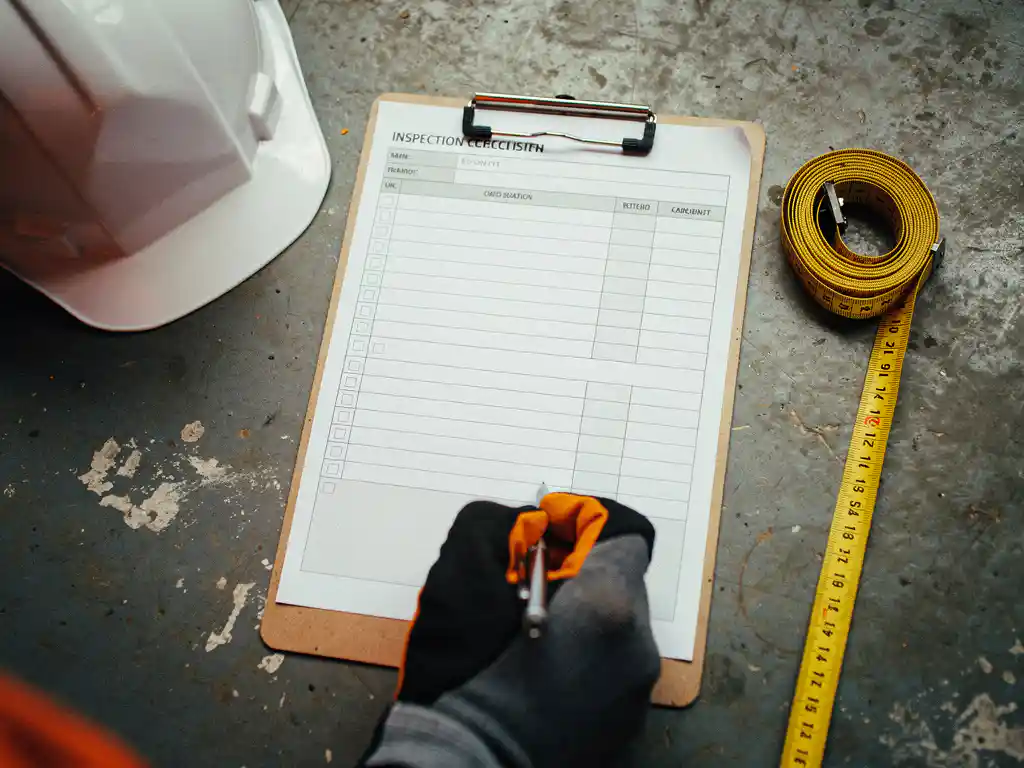
During a workplace inspection, you should record the type and location of each hazard, the names of responsible personnel, an assessment of risk severity, photographic or physical evidence, and any corrective actions required. Thorough workplace inspection data creates a clear, defensible record that supports safety compliance and drives real improvement. The questions below break down exactly what to capture in each category so your inspection checklist covers every essential detail.
Getting this right matters more than many teams realise. Incomplete safety inspection records leave organisations exposed to repeated incidents, regulatory gaps, and unclear accountability. Whether you are conducting a routine walkthrough or a post-incident review, the quality of what you document directly shapes the quality of the corrective action that follows. Contact us if you want to discuss how structured knowledge sharing can support your safety processes.
What types of hazards should be documented during a workplace inspection?
Every workplace inspection should document physical, chemical, biological, ergonomic, and psychosocial hazards. Recording all hazard categories ensures that workplace safety documentation reflects the full risk picture rather than only the most visible dangers.
Physical hazards include things like exposed wiring, slippery floors, blocked emergency exits, and faulty equipment. Chemical hazards cover improper storage of substances, missing safety data sheets, or inadequate ventilation near fumes. Biological hazards are especially relevant in healthcare and food production settings, where contamination risks must be tracked carefully.
Ergonomic hazards such as poorly adjusted workstations or repetitive strain risks are often overlooked during inspections but contribute significantly to long-term injury. Psychosocial hazards, including workload pressures or harassment risks, are increasingly recognised as legitimate inspection items under modern occupational health frameworks.
For each hazard type, note not just its existence but its current condition. A chemical storage area that is partially non-compliant tells a different story than one that is entirely unmanaged, and your documentation should capture that distinction. Learn more about how structured workplace inspections can support your safety programme.
What location and context details need to be recorded?
For every hazard identified, your inspection checklist should record the specific location, the time and date of observation, the surrounding conditions, and any relevant operational context such as shift patterns or recent process changes.
Vague location notes like “warehouse area” are not useful when someone needs to act on a finding. Be specific: include the floor, zone, workstation number, or equipment ID. This precision allows corrective teams to find and address the issue without needing a follow-up tour.
Context details matter because hazards rarely exist in isolation. A wet floor near a loading bay means something different during a rain-heavy shift than during a dry indoor operation. Recording the conditions at the time of inspection, including lighting levels, temperature, whether machinery was running, and how many workers were present, helps risk assessors understand the realistic exposure level rather than just the theoretical one.
Who should be identified in an inspection report?
A complete inspection report should identify the inspector conducting the assessment, the area supervisor or manager responsible for the location, and any workers directly associated with the hazard or task being observed. In some cases, a designated safety officer or external auditor should also be named.
Naming the inspector creates accountability for the accuracy of the findings. Identifying the responsible manager or supervisor ensures there is a clear owner for each corrective action. Without this, findings can sit unresolved because no one person feels accountable.
If workers were interviewed or observed during the inspection, note their role or job function rather than their name where privacy policies require it. What matters for the record is that the relevant operational level was consulted, not just that a manager signed off from a distance.
How should risk severity be recorded during an inspection?
Risk severity during a workplace inspection should be recorded using a structured risk matrix that combines the likelihood of an incident occurring with the potential severity of its consequences. Most organisations use a simple rating such as low, medium, high, or critical to classify each identified hazard.
The likelihood dimension asks how probable it is that the hazard will cause harm under normal operating conditions. The severity dimension asks how serious the outcome could be, ranging from minor injury to fatality or significant property damage. Combining these two scores gives you a risk rating that helps prioritise which issues need immediate action and which can be scheduled for later review.
Consistency in how ratings are applied across inspections is critical. If different inspectors rate identical hazards differently, your safety inspection records lose their value as a tracking tool. A shared rating guide or training on the rating scale helps keep assessments comparable over time.
What evidence should be collected alongside written notes?
Alongside written observations, workplace inspections should collect photographic evidence, measurements where relevant, copies of relevant documents such as maintenance logs or training records, and any samples required for chemical or environmental testing.
Photographs are among the most valuable pieces of evidence in a workplace inspection because they capture the exact state of a hazard at the moment of observation. A photo of a blocked fire exit or a damaged guard rail is far more compelling in a corrective action meeting than a written description alone. Always photograph from an angle that clearly shows the hazard in relation to its surroundings.
Document references are equally important. If a piece of equipment has missed its scheduled maintenance, attaching the relevant maintenance log to the inspection record creates a direct link between the hazard and its root cause. This kind of evidence trail is essential during regulatory audits and internal reviews. Effective work instructions can help ensure that maintenance and documentation procedures are followed consistently.
How do you record corrective actions and follow-up status?
Each identified hazard should be paired with a corrective action entry that includes a clear description of the required action, the name of the person responsible, a target completion date, and a status field that tracks whether the action is open, in progress, or closed.
The corrective action record is where many inspection processes fall short. It is common for hazards to be well-documented but for follow-up to be tracked inconsistently or not at all. A corrective action without a named owner and a deadline is unlikely to be resolved in a timely way.
Status tracking should be revisited at a defined interval, typically before the next scheduled inspection or at a fixed review meeting. When an action is closed, note the date it was completed and, where possible, include evidence such as a follow-up photograph or a signed maintenance record. This closes the loop and gives your workplace safety documentation a complete audit trail from hazard identification through to resolution.
For recurring hazards, consider adding a root cause field to the corrective action record. Addressing the symptom without understanding the cause means the same hazard is likely to reappear in the next inspection cycle. Tools that support retaining and maintaining knowledge across your teams can help prevent this pattern.
How E-Lia helps with workplace inspection and safety training
Knowing what to record is only half the challenge. Getting that knowledge into the hands of every inspector, team leader, and new employee consistently is where many organisations struggle. That is exactly where we come in.
- Microlearning modules on inspection procedures delivered directly via WhatsApp, so your teams can refresh their knowledge on what to document without sitting through a full training session
- Pre-onboarding and onboarding support that ensures new employees understand safety documentation requirements from day one — find out more about our onboarding solution
- Automatic translations so multilingual teams all receive the same accurate guidance in their own language
- No app download or login required, making it easy for frontline workers in logistics, healthcare, production, and retail to access the right information at the right moment
- Progress tracking via a dashboard so you can confirm that your teams have actually completed the relevant safety modules
Modules take just 10 to 15 minutes to build and 3 to 6 minutes for employees to complete, making it practical to keep inspection training current without disrupting operations. We also support toolbox talks and HACCP training for teams that need targeted safety knowledge. Plan a demo to see how we can support your workplace safety documentation process.
Frequently Asked Questions
How often should workplace inspections be conducted to keep safety records up to date?
The frequency depends on your industry, the nature of the hazards present, and any regulatory requirements that apply to your organisation. High-risk environments such as construction sites, warehouses, and manufacturing facilities typically require weekly or even daily checks in specific areas, while lower-risk office environments may operate on monthly or quarterly inspection cycles. Regardless of frequency, any significant process change, near-miss incident, or equipment modification should trigger an unscheduled inspection rather than waiting for the next routine one.
What is the most common mistake organisations make when completing inspection checklists?
The most common mistake is treating the inspection as a tick-box exercise rather than a genuine risk assessment — recording that something was checked without capturing the actual condition observed. This produces records that look complete on paper but provide no real insight into what was found or what needs to change. A second frequent error is failing to link each hazard to a named responsible person and a realistic deadline, which means findings are documented but never resolved.
Can we use a paper-based inspection checklist, or do we need dedicated software?
Paper-based checklists can work for smaller operations with simple hazard profiles, but they create significant challenges around storage, searchability, and follow-up tracking. Digital tools — whether purpose-built inspection platforms or even structured spreadsheets — make it far easier to assign corrective actions, track completion status, and retrieve historical records during an audit. If you are managing inspections across multiple sites or with a large workforce, investing in a digital system will save considerable time and reduce the risk of records being lost or inconsistently maintained.
How should we handle a hazard that cannot be corrected immediately during the inspection?
If a hazard cannot be resolved on the spot, it should be risk-rated immediately and an interim control measure put in place to reduce exposure until the permanent fix is completed — for example, cordoning off an area, posting a warning sign, or temporarily taking equipment out of service. The hazard should then be logged as an open corrective action with a named owner, a target date, and a clear description of both the interim and permanent actions required. Never leave a high or critical-rated hazard without an interim control simply because the full solution takes time.
How do we ensure that inspection findings are actually acted on and not just filed away?
The key is building a formal review step into your inspection process rather than relying on individuals to self-manage their corrective actions. Schedule a short review meeting — or include inspection findings as a standing agenda item in existing team meetings — where open actions are checked against their deadlines. Assigning a single person to own the overall corrective action log, separate from the people responsible for individual actions, creates a layer of accountability that prevents findings from quietly stalling.
What should we do if different inspectors are rating the same hazards inconsistently?
Inconsistent ratings are usually a calibration problem, not a competence one — inspectors are applying the risk matrix differently because they have not been trained to the same standard or do not have access to a shared reference guide. The practical fix is to create a small set of worked examples for your specific workplace that show how common hazard types should be rated, and to include these in your inspection training. Running occasional joint inspections where two inspectors assess the same area independently and then compare results is also an effective way to surface and correct rating drift over time.
How can we make sure new or multilingual employees understand inspection documentation requirements?
Clear, accessible training that does not rely on lengthy manuals or formal classroom sessions is essential for reaching frontline workers, especially in multilingual teams. Short microlearning modules that cover specific documentation tasks — such as how to complete a corrective action entry or how to photograph a hazard correctly — are far more effective than a one-time induction session because they can be revisited at the moment of need. Providing that training in each employee’s own language removes a significant barrier and ensures that documentation quality does not vary based on language proficiency.
Related Articles
- How do you give safety instructions to employees without a fixed workplace?
- How do you deliver toolbox talks to subcontractors without access to your company systems?
- How do you choose a digital onboarding tool for the shop floor?
- What is the difference between toolbox meetings and other safety trainings?