


Almost every company with physical work runs them: toolbox talks. Yet there’s often confusion about how to run them and what’s actually required. This article sets out all the facts about this safety briefing.
What is a toolbox talk?
A toolbox talk is a short, focused session on one specific safety topic. The name refers to the proverbial toolbox: you pick one topic out of it and cover it thoroughly with your team. Here are the key features:- Length: usually 15 to 30 minutes.
- Location: often right on site or in the site cabin.
- Purpose: encouraging interaction, with employees asking questions, sharing experiences and thinking along about risks.
Is a toolbox talk a legal requirement?
The term ‘toolbox talk’ isn’t written into law word for word, but the underlying duty is very real. Here’s how it works:- Health and Safety at Work etc. Act 1974: under Section 2 of the Act, as an employer you have a legal duty to give employees enough information, instruction, training and supervision to work safely. A toolbox talk is one of the most practical ways of meeting that duty.
- Pre-qualification and accreditation: SSIP schemes such as CHAS, Safecontractor and Constructionline assess how you manage health and safety, and evidence of regular safety briefings like toolbox talks is typically part of what you submit. Note that CSCS is a different thing: it is an individual competence card for workers, not a company accreditation.
How long does a toolbox talk take?
For an in-person session, plan for 15 to 30 minutes. No fixed duration is set in law, so shorter works too, as long as the focus is right. Keep these two rules of thumb in mind:- One message: cover only one core topic per session to keep attention high.
- Room for feedback: make sure the talk isn’t just one-way; leave time for questions and discuss how this applies specifically to your site.
Which topics should you cover?
Pick topics that directly match the current risks in your business, as identified in your risk assessments. Commonly used topics include:- Correct use of personal protective equipment (PPE)
- Working safely at height and scaffold use
- Handling hazardous substances and storage guidelines
- Site tidiness and housekeeping
Running a toolbox talk in 5 steps
- Pick the right focus: choose a current, recognisable topic that matches that week’s work.
- Make it visual: use compelling visuals, such as photos of real situations on your own site.
- Keep it short: stick to the essentials to keep concentration high.
- Build in interaction: ask open questions to get an active discussion going within your team.
- Agree concrete actions: close with a clear action and record attendance digitally straight away.
Recording a toolbox talk (the paper trail)
During a pre-qualification audit, an HSE inspection, or after an unexpected incident, you need to be able to show that the briefing took place. The law doesn’t prescribe a set record format, but in practice these four things are what auditors and inspectors look for:- The date of the talk
- The topic covered
- The names and signatures of those present
- Any safety agreements made
How E-lia makes your toolbox talks easier
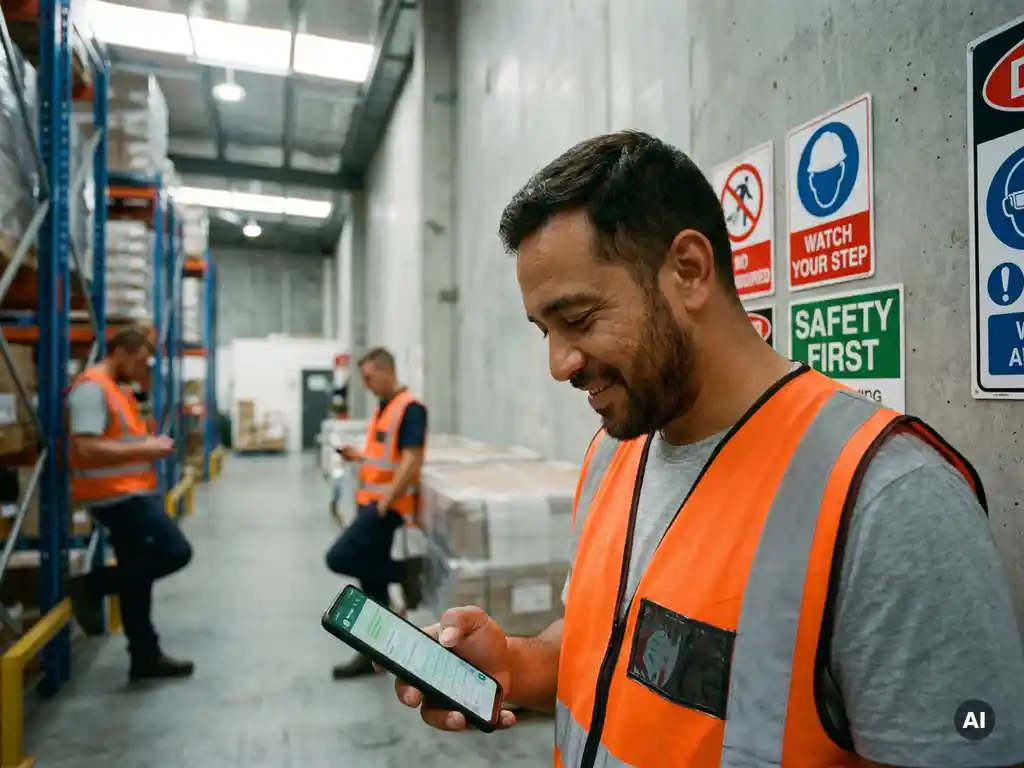
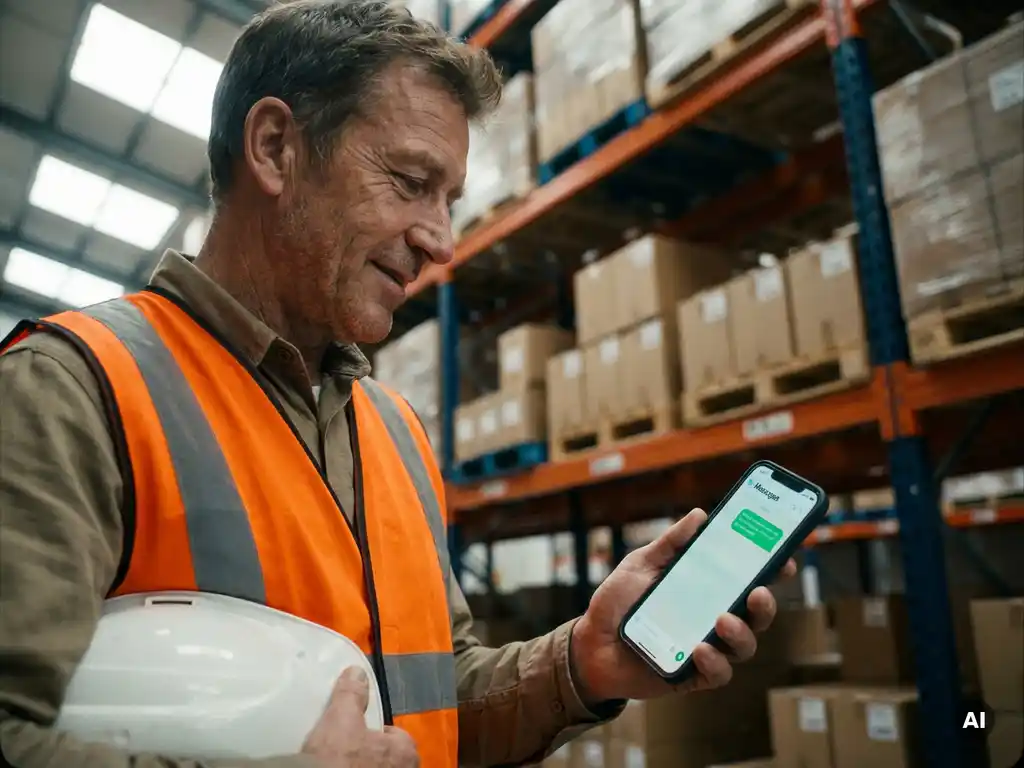
With E-lia you modernise the whole process through a smart, digital workflow:- Straight over WhatsApp: the toolbox talk is sent as a short piece of microlearning directly to your employees’ phones.
- No barriers: your team doesn’t need a separate app or login details.
- Multilingual: employees follow the briefing in their own language.
- Real-time overview: the dashboard shows you straight away who has completed the toolbox talk, for watertight records.
Ready to modernise your toolbox talks?
See how easily it works and boost reach across your organisation straight away.
Book a free demo