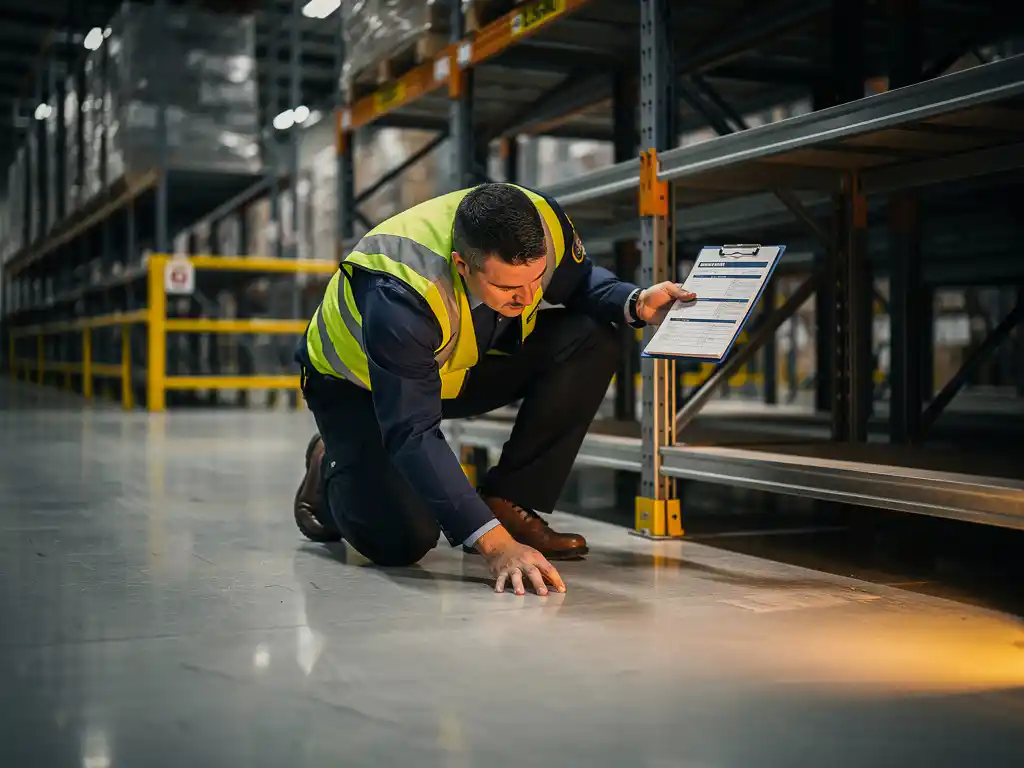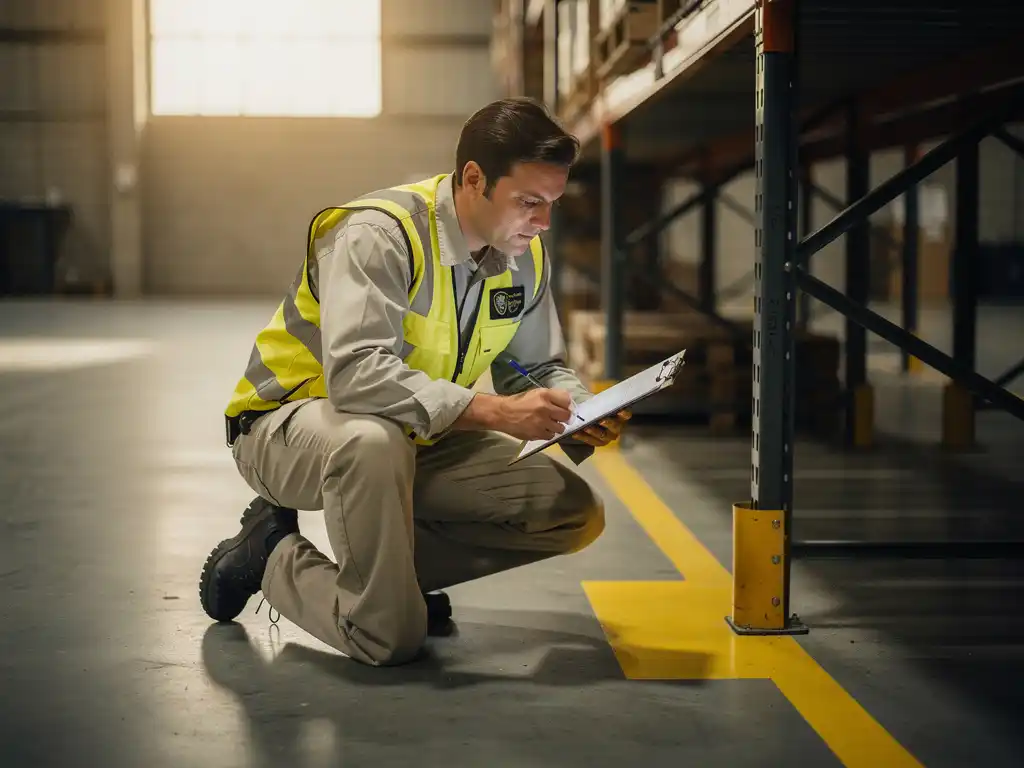


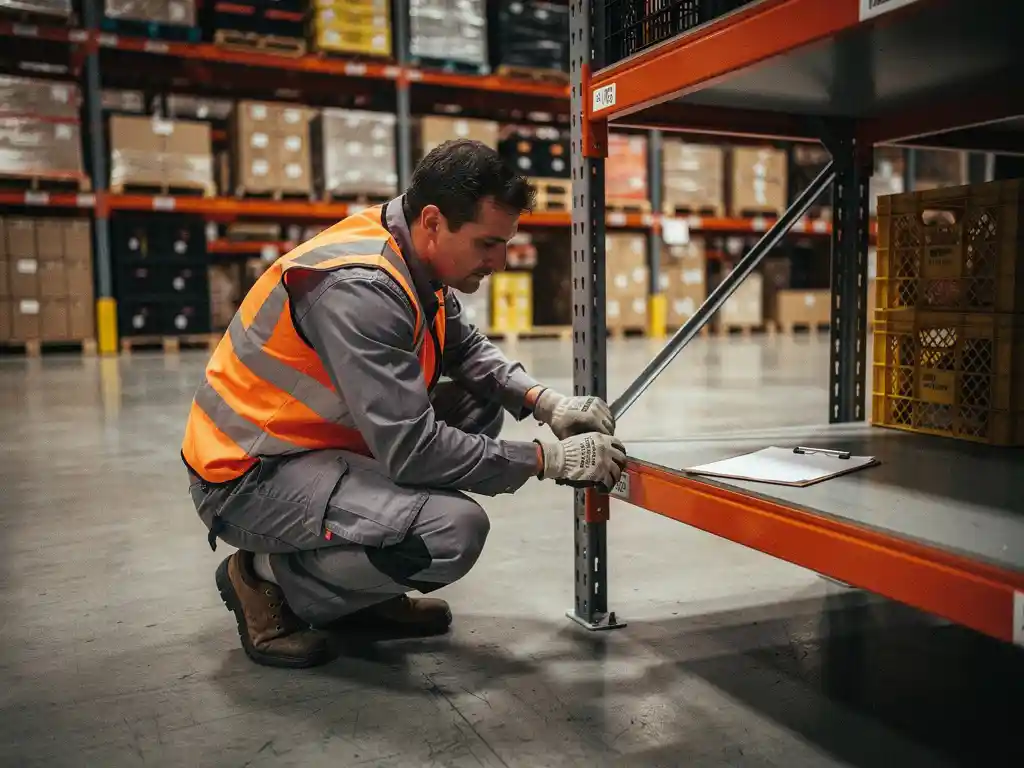
A warehouse inspection checklist should cover every area where safety risks, operational failures, or compliance gaps are most likely to occur. At minimum, it includes checks on storage and racking systems, fire safety equipment, emergency exits, personal protective equipment (PPE), floor conditions, signage, equipment like forklifts, and housekeeping standards. The exact format depends on your warehouse’s size, layout, and the types of goods you handle, but the core categories remain consistent across most operations. The sections below walk through the key questions every warehouse manager or safety officer should be able to answer confidently.
What should a warehouse inspection checklist include?
A comprehensive warehouse inspection checklist should cover all physical areas, equipment, safety systems, and working practices that could affect employee safety or operational continuity. It is structured around categories rather than a single flat list, so that inspectors can work through the warehouse systematically without missing critical areas.
The most important categories to include in a warehouse safety checklist are:
- Racking and storage: Check for damaged uprights, missing safety pins, overloaded bays, and correct load notices.
- Floors and walkways: Look for cracks, wet surfaces, obstructions, and clearly marked pedestrian routes.
- Fire safety: Verify that extinguishers are in place and in date, sprinkler systems are unobstructed, and fire exits are clear and signed.
- Emergency exits and evacuation routes: Confirm exits are unlocked, unobstructed, and visible from all areas of the floor.
- Forklift and equipment safety: Check pre-use inspection records, charging station conditions, and separation of vehicle and pedestrian zones.
- PPE availability and condition: Ensure appropriate PPE is available at the right points and that worn or damaged items have been replaced.
- Lighting: Confirm that all areas, especially loading docks and stairwells, are adequately lit.
- Hazardous materials storage: Check that any chemicals or flammable goods are stored according to their safety data sheets and relevant regulations.
- Signage: Verify that speed limits, hazard warnings, and directional signs are visible and up to date.
- Housekeeping: Assess general tidiness, waste disposal practices, and whether spill kits are accessible.
Each item on the checklist should have a clear pass, fail, or action required outcome, with space for notes and a named responsible person when remedial action is needed. A checklist that only records observations without triggering follow-up is of limited value. For a structured approach to conducting workplace inspections, having the right digital tools in place makes a significant difference.
How often should a warehouse workplace inspection be carried out?
A warehouse workplace inspection should be carried out at least once a month for general safety checks, with daily or shift-based checks for high-risk items like forklifts, loading docks, and emergency exits. The appropriate frequency depends on the volume of activity, the nature of goods handled, and any recent incidents or changes to the layout.
In practice, most warehouses operate on multiple inspection cycles running in parallel:
- Daily: Equipment pre-use checks, fire exit clearance, spill checks, and housekeeping.
- Weekly: Racking condition, PPE stock levels, lighting checks, and signage.
- Monthly: Full workplace inspection using the complete checklist, reviewed by a supervisor or safety officer.
- Quarterly or annually: Formal racking inspections by a competent person, fire system servicing, and review of the checklist itself to ensure it reflects current operations.
If your warehouse has experienced a near-miss, an accident, or a significant change such as new racking, new equipment, or a layout change, an unscheduled inspection should be triggered immediately. Inspection frequency is not just a compliance requirement; it is one of the most practical ways to catch deteriorating conditions before they become incidents.
Who is responsible for conducting a warehouse safety inspection?
Responsibility for conducting a warehouse safety inspection typically sits with a designated competent person, usually a safety officer, warehouse manager, or team supervisor who has been trained to identify hazards relevant to the specific environment. In smaller operations, this may be the warehouse manager directly. In larger facilities, a dedicated health and safety coordinator often leads formal inspections.
That said, responsibility is not limited to one person. Effective warehouse safety relies on shared accountability:
- Employees are responsible for daily checks on their own equipment and for reporting hazards they observe.
- Team leaders and supervisors conduct shift-level checks and ensure their teams follow safe working procedures.
- Warehouse managers oversee scheduled inspections, review findings, and ensure corrective actions are completed.
- Senior management or H&S leads are responsible for the overall inspection programme, ensuring it is properly resourced and that findings are escalated when necessary.
In some industries and jurisdictions, certain inspections must be carried out by a formally qualified or certified inspector, particularly for lifting equipment, pressure systems, or fire suppression systems. Always check the relevant regulations for your sector and location to confirm who must sign off on specific checks.
What are the most common hazards found during a warehouse inspection?
The most common hazards found during a warehouse safety inspection are damaged or overloaded racking, blocked emergency exits, inadequate separation between pedestrians and vehicles, poor housekeeping leading to slip and trip risks, and insufficient or expired fire safety equipment. These hazards appear repeatedly across warehouse environments regardless of industry sector.
Beyond these, inspectors frequently identify:
- Forklift-related risks: Speeding, missing pedestrian barriers, or operators without current certification.
- Manual handling issues: Incorrect stacking heights, no mechanical aids available, or workers using poor technique due to inadequate training.
- Lighting deficiencies: Dim areas near racking ends, loading bays, or stairwells where incidents are more likely.
- Electrical hazards: Damaged charging cables, overloaded sockets, or obstructed electrical panels.
- Inadequate signage: Missing or faded floor markings, absent load notices on racking, or unclear emergency evacuation routes.
- PPE non-compliance: Workers in areas requiring hard hats or hi-vis without the appropriate equipment, often due to lack of awareness rather than deliberate non-compliance.
Many of these hazards are not the result of negligence but of gradual drift. A racking upright gets slightly bent during a busy shift and is not reported. A fire exit gets temporarily blocked during a delivery and nobody moves the pallets. Regular inspections using a structured warehouse safety checklist are the most reliable way to catch this kind of incremental deterioration. Reinforcing hazard awareness through regular toolbox talks is an effective complement to the formal inspection process.
How do you make sure inspection findings actually get followed up?
To make sure warehouse inspection findings get followed up, every identified issue must be assigned to a named person with a clear deadline and a defined action. Findings that are recorded but not acted on create a false sense of safety and, in the event of an incident, can become a significant liability. The inspection process is only as valuable as the follow-through it generates.
Practical steps to close the loop on inspection findings include:
- Assign a responsible person and a completion date to every finding at the time of inspection, not afterwards.
- Categorise findings by severity so that critical issues like a blocked fire exit are resolved within hours, not weeks.
- Use a simple tracking system, whether a shared spreadsheet, a safety management platform, or a dedicated app, to log open actions and their status.
- Review open actions at the start of the next inspection to confirm they have been completed before adding new items.
- Brief team leaders and supervisors on findings that affect their areas so they can monitor progress directly.
- Report recurring findings upwards to management. If the same hazard appears in three consecutive inspections, it signals a systemic issue that needs a structural fix, not just another action item.
One of the most effective ways to embed a follow-up culture is to make inspection outcomes visible. Posting a summary of findings and completed actions in the warehouse itself communicates to employees that inspections lead to real change, which in turn encourages them to report hazards proactively between formal inspection cycles. Tools that support retaining and maintaining knowledge across teams help ensure that lessons from inspections are not forgotten over time.
What’s the difference between a workplace inspection and a risk assessment?
A workplace inspection and a risk assessment are related but distinct processes. A risk assessment is a systematic evaluation of potential hazards and the likelihood and severity of harm they could cause, typically carried out before a process starts or when conditions change. A workplace inspection is a regular, physical check of the actual working environment to verify that controls identified in the risk assessment are in place and working effectively.
In simple terms: a risk assessment asks “what could go wrong and what should we do about it?” A workplace inspection asks “are the things we said we would do actually being done?”
The two processes work together rather than replacing each other:
- Risk assessments inform the content of your inspection checklist. If a risk assessment identifies forklift-pedestrian collision as a significant risk, your checklist should include checks on segregation barriers and speed limit compliance.
- Inspection findings can trigger a review of risk assessments. If inspectors consistently find a particular hazard that the risk assessment did not anticipate, the assessment needs updating.
- Both are legally required under health and safety regulations in most jurisdictions, but they serve different functions and should be documented separately.
A common mistake is treating a completed risk assessment as a substitute for ongoing inspections. Risk assessments are point-in-time documents; warehouse environments change constantly through new stock, new staff, seasonal pressures, and equipment wear. Only regular physical inspections can confirm that the real-world situation matches what the risk assessment assumed. Clear work instructions that reflect the latest risk assessment findings help bridge the gap between documentation and daily practice.
How E-Lia helps with warehouse safety training and inspections
Running effective warehouse inspections requires more than a good checklist. It requires people at every level, from new starters to experienced supervisors, to understand what they are looking for and why it matters. That is where we come in.
We help warehouse teams build and share safety knowledge quickly and without friction, using short microlearning modules delivered directly via WhatsApp. No app to download, no login to remember, no time taken away from the floor for classroom sessions. Here is what that looks like in practice:
- Onboarding new warehouse staff: Send structured safety inductions via WhatsApp before or on day one, covering hazard awareness, PPE requirements, and emergency procedures. Learn more about how we support onboarding for frontline teams.
- Refresher training on inspection topics: Deliver short modules on specific hazards like racking safety, forklift rules, or manual handling, targeted at the teams who need them.
- Multilingual support: Our platform supports automatic translations, so every employee receives safety information in their own language, reducing misunderstandings in diverse teams.
- Fast content creation: Building a module takes 10 to 15 minutes on average, so safety officers can respond quickly when a new hazard or procedure needs to be communicated.
- Progress tracking: A simple dashboard shows who has completed which modules, giving managers evidence that training has been received and understood.
If you want to see how this works for a warehouse environment specifically, book a free demo to talk through your training needs.
Frequently Asked Questions
Can I use a generic warehouse inspection checklist template, or do I need to create a custom one?
A generic template is a useful starting point, but it should always be adapted to your specific warehouse before use. Factors like the type of goods you store, your racking configuration, the equipment you operate, and any sector-specific regulations will all require tailored checklist items. A template that was designed for a cold storage facility, for example, will miss critical checks relevant to a chemical distribution warehouse. Use a template to build your structure, then work through it with a supervisor or safety officer who knows your site to fill in the gaps.
What should I do if an employee refuses to follow safety procedures identified during an inspection?
Non-compliance with safety procedures should be addressed promptly and consistently, starting with a direct conversation to understand whether the issue is a lack of awareness, inadequate training, or a deliberate choice. If the employee was not aware of the procedure, that points to a training gap that needs to be closed — not just for that individual, but potentially across the team. Repeated or deliberate non-compliance should be handled through your formal disciplinary process, with clear documentation at each stage. Making safety expectations visible and reinforcing them through regular toolbox talks or microlearning modules helps prevent non-compliance from becoming habitual.
How do I get warehouse staff to take inspections seriously and not just treat them as a box-ticking exercise?
The most effective way to shift the culture is to make inspection outcomes visibly connected to real changes on the floor. When employees see that a hazard they reported was fixed within days, or that an inspection finding led to new equipment or a safer layout, they understand that the process has genuine consequences. Involving frontline workers in the inspection process itself — rather than having it done to them by management — also increases buy-in significantly. Short, targeted training that explains why specific checks matter, rather than just what to check, helps people engage with the purpose behind the process.
What records do I need to keep from warehouse inspections, and for how long?
You should retain completed inspection checklists, records of any findings and corrective actions taken, and evidence that actions were closed out within the agreed timeframe. In most jurisdictions, health and safety records should be kept for a minimum of three to five years, though this varies by country and sector — and records relating to accidents or near-misses are often subject to longer retention requirements. Digital records are generally easier to retrieve and audit than paper files, and they make it simpler to identify trends across multiple inspection cycles. Always check the specific legal requirements for your location and industry.
How do I handle a serious hazard discovered mid-shift, outside of a scheduled inspection?
A serious hazard discovered at any time should be treated as an immediate priority, regardless of whether it falls within a scheduled inspection cycle. The area or equipment involved should be taken out of use or cordoned off straight away, and the relevant supervisor or safety officer should be notified without delay. A short unscheduled inspection of the surrounding area is good practice to confirm there are no related hazards nearby. Once the immediate risk is controlled, document what was found, how it was addressed, and whether it points to a gap in your regular inspection process that needs to be corrected.
Is there a legal requirement to use a specific warehouse inspection checklist format?
In most jurisdictions, health and safety legislation does not prescribe a specific checklist format — it requires that inspections are carried out, that findings are recorded, and that corrective actions are taken. What matters legally is that you can demonstrate a systematic approach to identifying and controlling hazards, and that your records show follow-through on findings. However, certain types of equipment inspections, such as thorough examinations of lifting equipment or pressure systems, do have legally defined formats and must be carried out by a competent person. Always verify the specific requirements for your sector and country with your health and safety regulator or a qualified adviser.
How can I use inspection data over time to improve warehouse safety, not just maintain it?
Treating inspection records as a data source rather than just a compliance archive is one of the most underused opportunities in warehouse safety management. By reviewing findings across multiple inspection cycles, you can identify recurring hazards, high-risk areas, and patterns that point to systemic issues — such as a particular racking bay that is repeatedly overloaded, or a shift where housekeeping standards consistently fall short. This kind of trend analysis allows you to move from reactive fixes to proactive improvements, whether that means redesigning a workflow, investing in additional equipment, or targeting training at the teams or topics where gaps keep appearing.