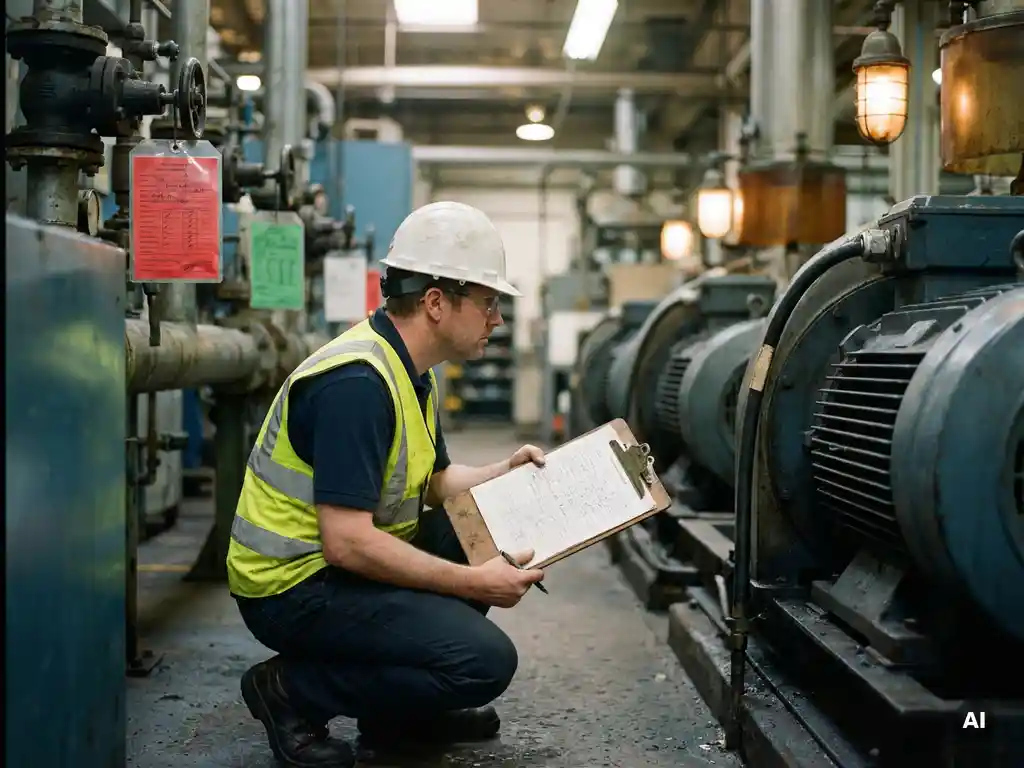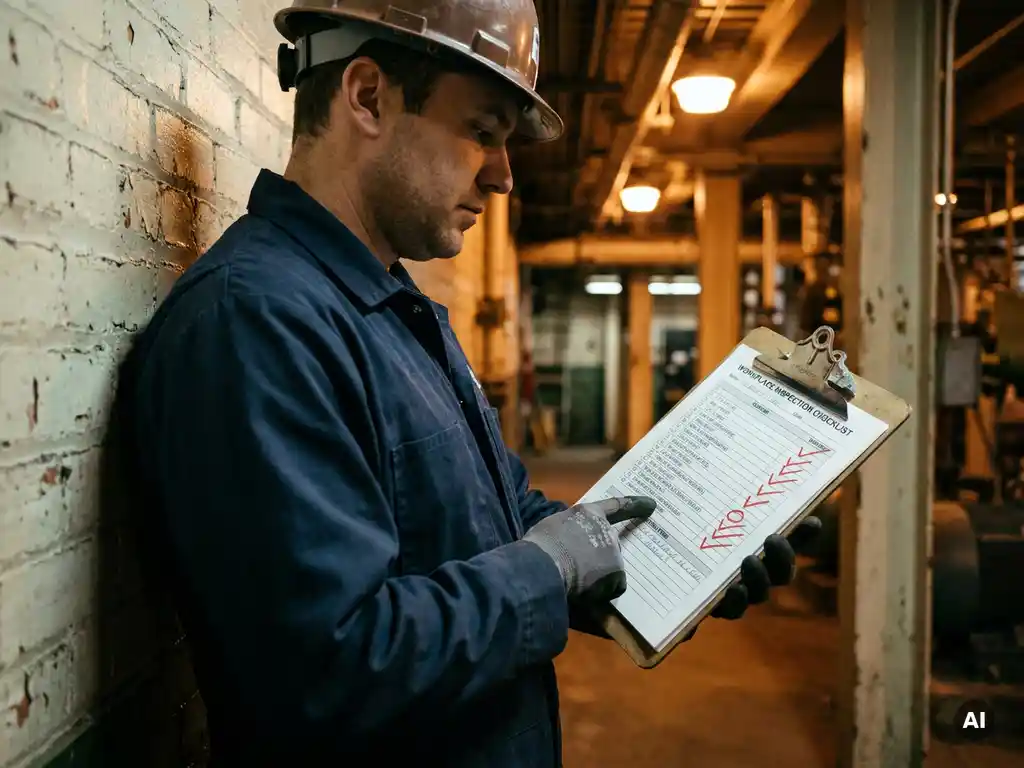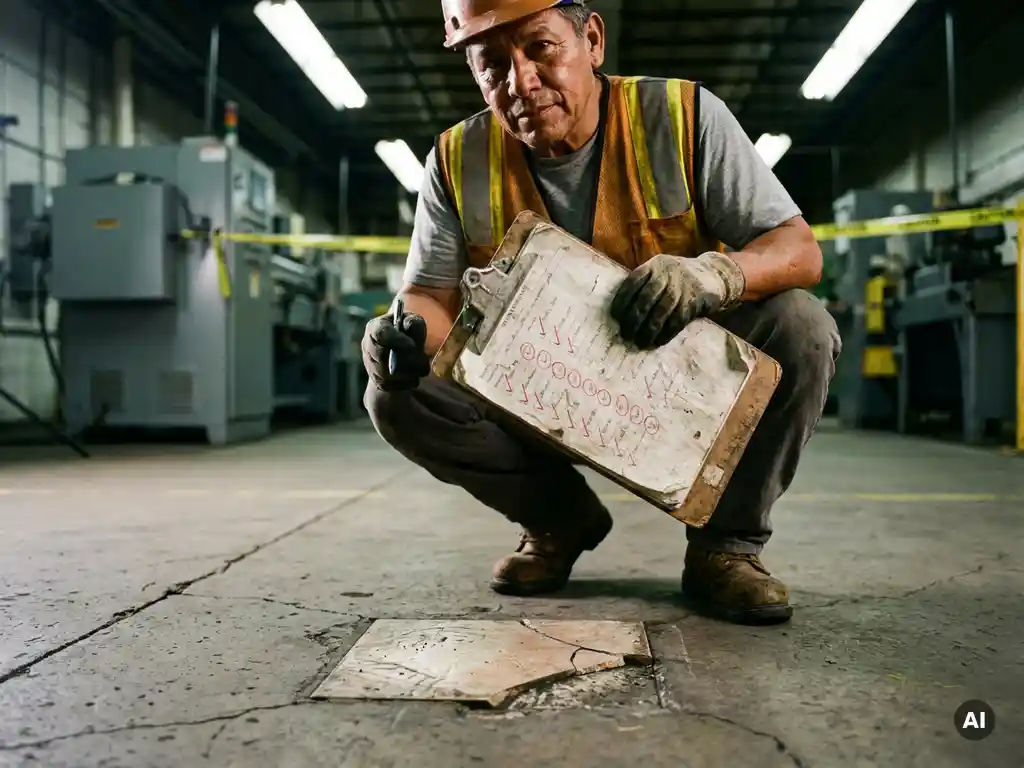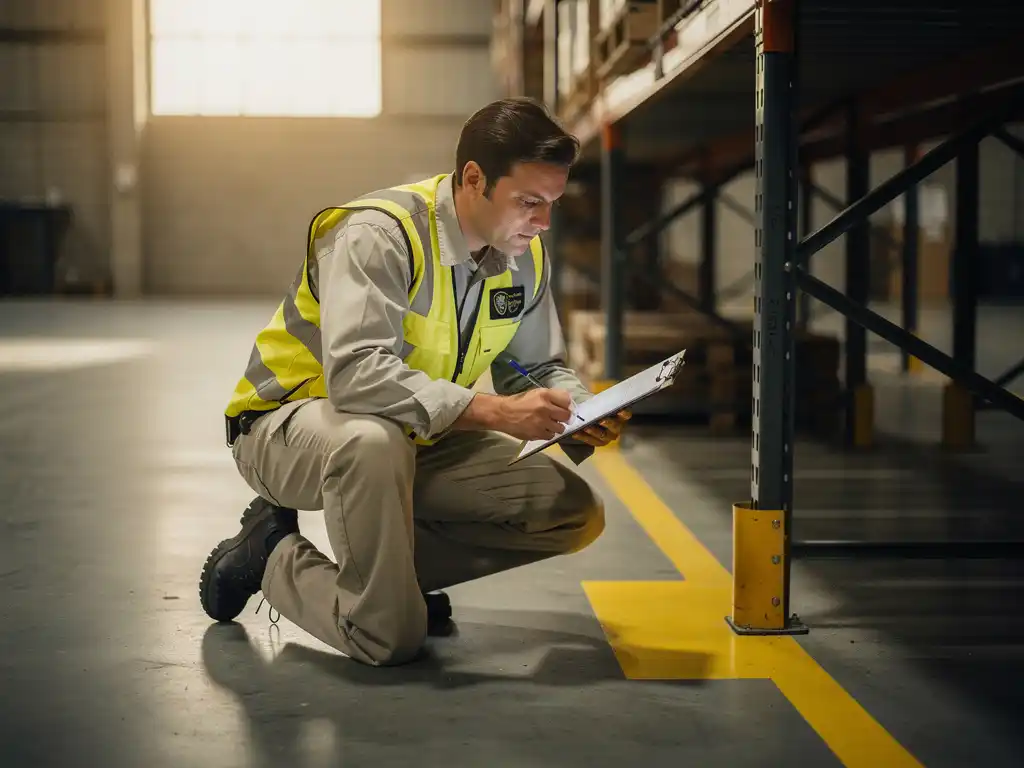
To carry out a workplace inspection step by step, start by preparing a checklist and assigning a responsible inspector, then walk through the work environment systematically to identify hazards, document findings, and follow up with corrective actions. The process typically covers physical safety, equipment condition, emergency preparedness, and compliance with health and safety regulations. The sections below answer the most common questions about how to conduct a workplace inspection effectively, so your team knows exactly what to do at every stage. If you want to see how digital tools can support this process, feel free to book a free demo.
What should you check during a workplace inspection?
During a workplace inspection, you should check physical hazards, equipment condition, emergency systems, hygiene standards, and whether employees are following established safety procedures. A structured workplace inspection checklist ensures nothing is overlooked and that every area of the work environment is assessed consistently.
In practice, a thorough inspection covers several distinct categories:
- Physical environment: Floors, walkways, lighting, ventilation, and temperature conditions
- Machinery and equipment: Proper guarding, maintenance records, and visible wear or damage
- Hazardous materials: Correct storage, labelling, and availability of safety data sheets
- Emergency preparedness: Fire exits, extinguishers, first aid kits, and evacuation routes
- Personal protective equipment (PPE): Availability, condition, and actual use by staff
- Ergonomics: Workstation setup, lifting practices, and repetitive strain risk factors
The specific items on your checklist will vary depending on your industry. A warehouse inspection focuses heavily on racking, forklifts, and loading areas, whilst a healthcare facility inspection prioritises infection control and sharps disposal. Tailor your workplace safety inspection checklist to reflect the real risks present in your environment.
Who is responsible for carrying out a workplace inspection?
Workplace inspections are typically the responsibility of a designated health and safety officer, a line manager, or a joint health and safety committee. In many countries, employers are legally obligated to ensure inspections are carried out, but the person who physically conducts the inspection can vary based on company size and structure.
In smaller organisations, a manager or senior team member often takes on this role. Larger organisations typically have dedicated safety professionals or internal audit teams. What matters most is that the person conducting the inspection has sufficient knowledge of the work environment, understands the relevant regulations, and has the authority to flag issues and escalate them.
In some sectors, worker representatives or union delegates also participate in inspections to ensure findings are not filtered through management alone. This joint approach tends to produce more complete results because frontline employees often notice hazards that managers miss.
How often should a workplace inspection be conducted?
Workplace inspections should be conducted at least once per year as a minimum, but most safety professionals recommend quarterly inspections for standard work environments. High-risk environments such as construction sites, chemical plants, or busy warehouses may require monthly or even weekly checks in specific areas.
The right frequency depends on several factors:
- Industry risk level: Higher-risk sectors demand more frequent inspection cycles
- Regulatory requirements: Some industries have legally mandated inspection intervals
- Rate of change: If your processes, equipment, or workforce change frequently, inspections should follow suit
- Incident history: A recent near-miss or accident is a strong signal to increase inspection frequency in that area
Beyond scheduled inspections, it is good practice to carry out informal walkthrough checks on a daily or weekly basis. These spot checks are not a replacement for formal inspections but help catch emerging hazards before they become serious problems.
What tools and documents do you need before starting an inspection?
Before starting a workplace inspection, you need a completed inspection checklist, relevant safety regulations or standards for your industry, previous inspection reports, incident logs, and any maintenance or equipment records. Having these documents ready allows the inspector to compare current conditions against historical data and legal requirements.
On the practical side, inspectors typically bring:
- A printed or digital checklist specific to the area being inspected
- A camera or smartphone to photograph hazards
- A notepad or reporting app to record observations in real time
- Measuring tools if dimensions or clearances need to be verified
- PPE appropriate to the area being inspected
Reviewing previous inspection reports before you start is particularly valuable. It helps you check whether previously identified issues were actually resolved and whether any recurring problems need more structural attention rather than another short-term fix.
How do you document and report workplace inspection findings?
Workplace inspection findings should be documented in a written report that includes the date and location of the inspection, the name of the inspector, a description of each hazard or issue found, its severity rating, and the recommended corrective action with a deadline. Clear documentation creates accountability and provides a legal record of due diligence.
A good inspection report is specific rather than vague. Instead of writing “fire exit blocked,” write “fire exit on the north side of the warehouse blocked by two pallets of stock as of 14:00 on the inspection date.” This level of detail makes it easier to assign responsibility, verify that the issue has been resolved, and identify patterns over time.
Findings are typically categorised by urgency:
- Immediate action required: Hazards that pose an imminent risk and must be addressed the same day
- Short-term action: Issues to be resolved within days or a week
- Long-term improvement: Systemic or structural issues that require planning and budget
Once the report is complete, it should be shared with relevant managers, the health and safety committee, and any employees directly affected by the findings.
What happens after a workplace inspection is completed?
After a workplace inspection is completed, the findings must be reviewed, corrective actions must be assigned to specific people with clear deadlines, and progress must be monitored until every issue is resolved. An inspection that produces a report but no follow-up action provides no real safety benefit.
The follow-up process typically involves three stages. First, immediate hazards are addressed straight away, sometimes before the inspector has even left the site. Second, a formal action plan is drawn up for all other findings, with named responsible parties and realistic completion dates. Third, a review meeting or check-in confirms that actions have been completed and signs off on the findings.
It is also worth using inspection findings as input for your broader safety training programme. If multiple inspections reveal the same gap, such as PPE not being worn correctly or emergency exits being blocked repeatedly, that is a signal that employees need clearer instruction rather than just another reminder. Tools like toolbox talks can be an effective way to address recurring issues and reinforce correct behaviour with your team.
How E-Lia helps with workplace inspection training
Carrying out a workplace inspection is only as effective as the preparation and follow-up behind it. If your team does not know what to look for, how to document findings, or what steps to take after an inspection, even the best checklist will fall short. That is where we come in.
We help organisations build short, practical training modules that prepare employees and managers for every stage of the workplace inspection process. Our platform delivers these modules directly via WhatsApp, with no app to download and no login required. This means your team can complete safety training in 3 to 6 minutes, on any device, in their own language.
With E-Lia, your organisation can:
- Build a workplace inspection training module in 10 to 15 minutes
- Send step-by-step work instructions and checklists directly to employees before an inspection
- Use automatic translations so multilingual teams receive training in their own language
- Support new starters with structured onboarding that includes safety awareness from day one
- Track completion and comprehension via a simple dashboard
- Schedule recurring modules to retain and maintain knowledge across your team
Whether you are onboarding new safety officers or refreshing your entire team’s knowledge ahead of an inspection cycle, our microlearning approach makes the process fast, accessible, and effective. Book a free demo to see how we can support your workplace safety training.
Frequently Asked Questions
What is the difference between a formal workplace inspection and an informal walkthrough?
A formal workplace inspection is a scheduled, structured process that follows a standardized checklist, produces a written report, and requires documented follow-up actions. An informal walkthrough is a quick, unscheduled check that helps identify emerging hazards between formal inspections but does not replace the thoroughness or legal documentation of a formal process. Think of informal walkthroughs as an early warning system and formal inspections as your comprehensive safety audit.
What are the most common mistakes made during a workplace inspection?
The most common mistakes include using a generic checklist that does not reflect the specific hazards of your work environment, failing to follow up on findings with concrete corrective actions, and only involving management without input from frontline workers. Another frequent error is treating the inspection as a box-ticking exercise rather than a genuine hazard-identification process. To avoid these pitfalls, tailor your checklist to your environment, assign named owners to every finding, and actively involve employees who work in the area being inspected.
How do you prioritize which hazards to fix first after an inspection?
Hazards should be prioritized based on the likelihood of an incident occurring and the severity of potential harm. Anything that poses an immediate or imminent risk to life or safety should be addressed the same day, even before the inspection report is finalized. Short-term issues with moderate risk should be resolved within a week, while systemic or structural problems can be scheduled into a longer-term improvement plan with a realistic budget and timeline.
Can employees report hazards between scheduled inspections, and how should this be handled?
Yes, and encouraging employees to report hazards between inspections is a sign of a strong safety culture. Organizations should provide a clear, low-barrier reporting channel, whether that is a physical hazard log, a digital form, or a messaging-based tool, so employees can flag issues without waiting for the next scheduled inspection. All reports should be acknowledged promptly, assessed for urgency, and logged in the same system used to track formal inspection findings to ensure nothing falls through the cracks.
How do you make sure inspection findings actually lead to lasting improvements rather than quick fixes?
Lasting improvement requires treating repeated findings as systemic signals rather than isolated incidents. If the same hazard, such as a blocked emergency exit or incorrect PPE use, keeps appearing across multiple inspections, the root cause is likely a gap in training, process design, or workplace culture rather than individual negligence. Addressing root causes, updating procedures, and reinforcing correct behavior through targeted training are far more effective than issuing repeated reminders or applying the same short-term fix.
Do small businesses with only a few employees still need to conduct formal workplace inspections?
Yes. Workplace health and safety obligations apply regardless of company size, and in many countries small employers are legally required to assess and manage workplace risks. The scale and formality of the inspection can be proportionate to the size and complexity of the business, but a documented process is still essential. For small teams, a straightforward checklist completed by a manager or owner and reviewed quarterly is often sufficient to meet both legal requirements and genuine safety needs.
How can digital tools or training platforms improve the workplace inspection process?
Digital tools can streamline every stage of the inspection process, from distributing checklists and capturing photo evidence in real time, to automatically generating reports and tracking corrective actions through to completion. Training platforms can prepare inspectors and employees before an inspection takes place, ensuring everyone understands what to look for and how to respond to findings. Solutions that deliver training via familiar channels, such as WhatsApp, are particularly effective for reaching frontline and multilingual teams quickly and without technical barriers.