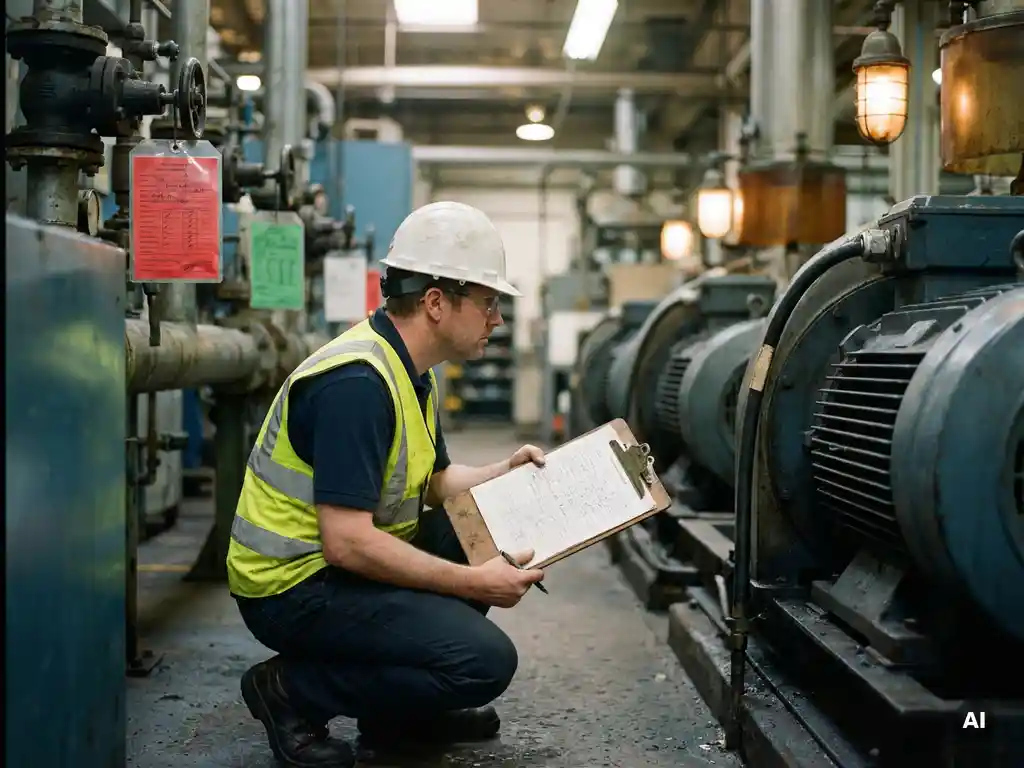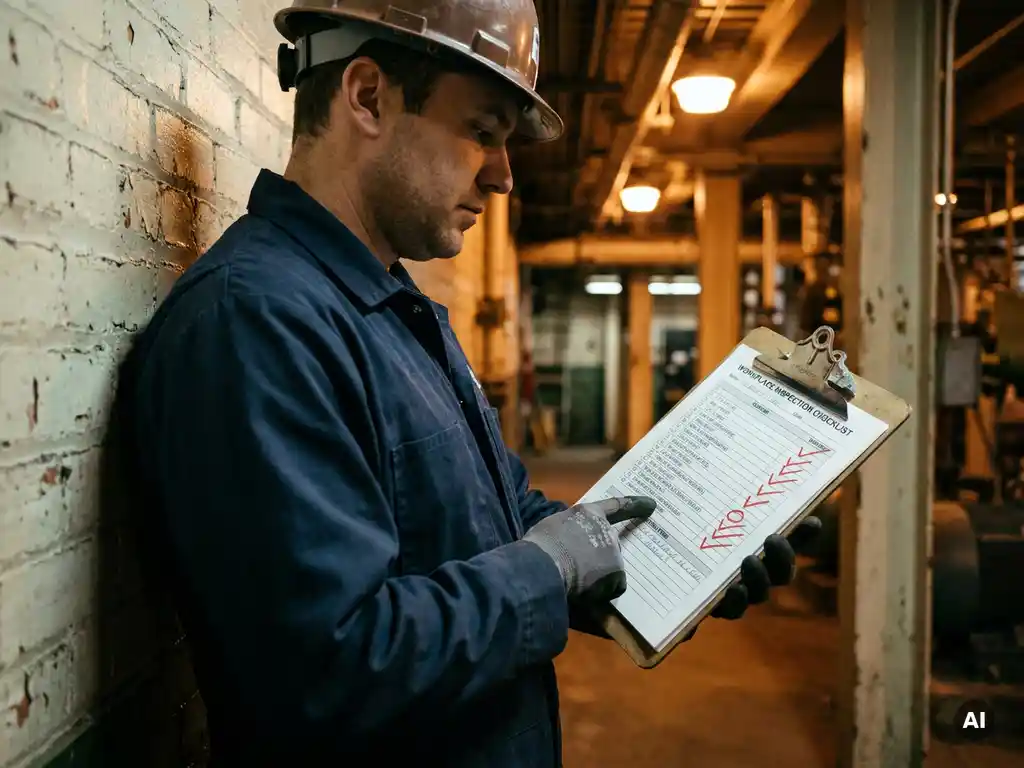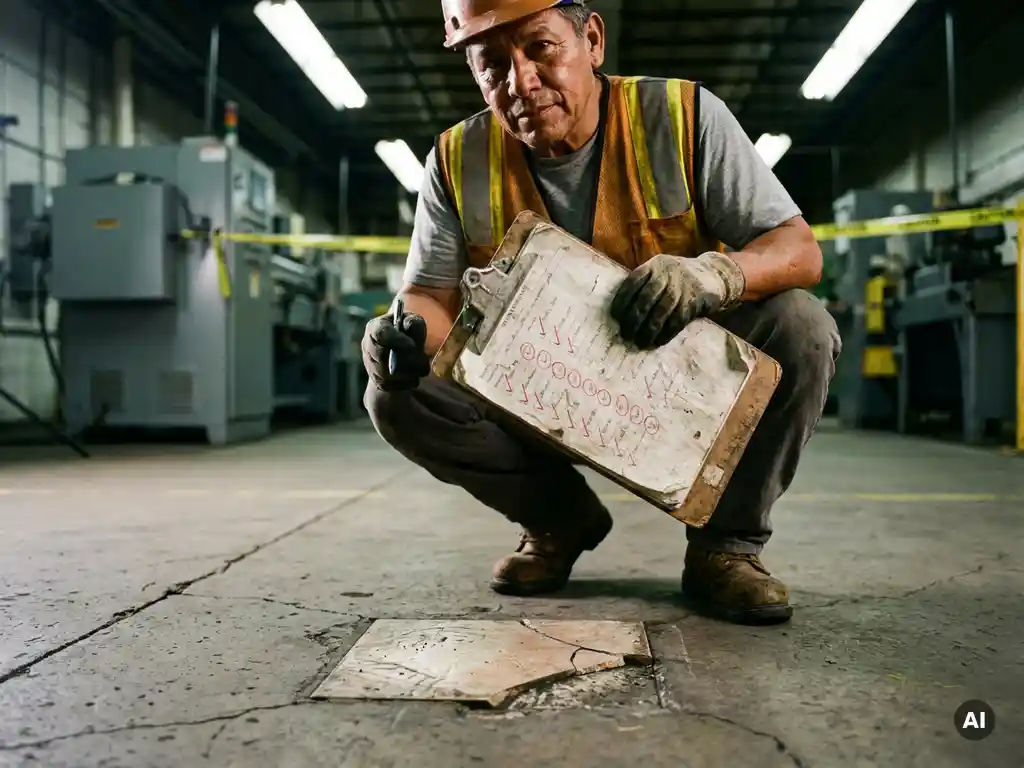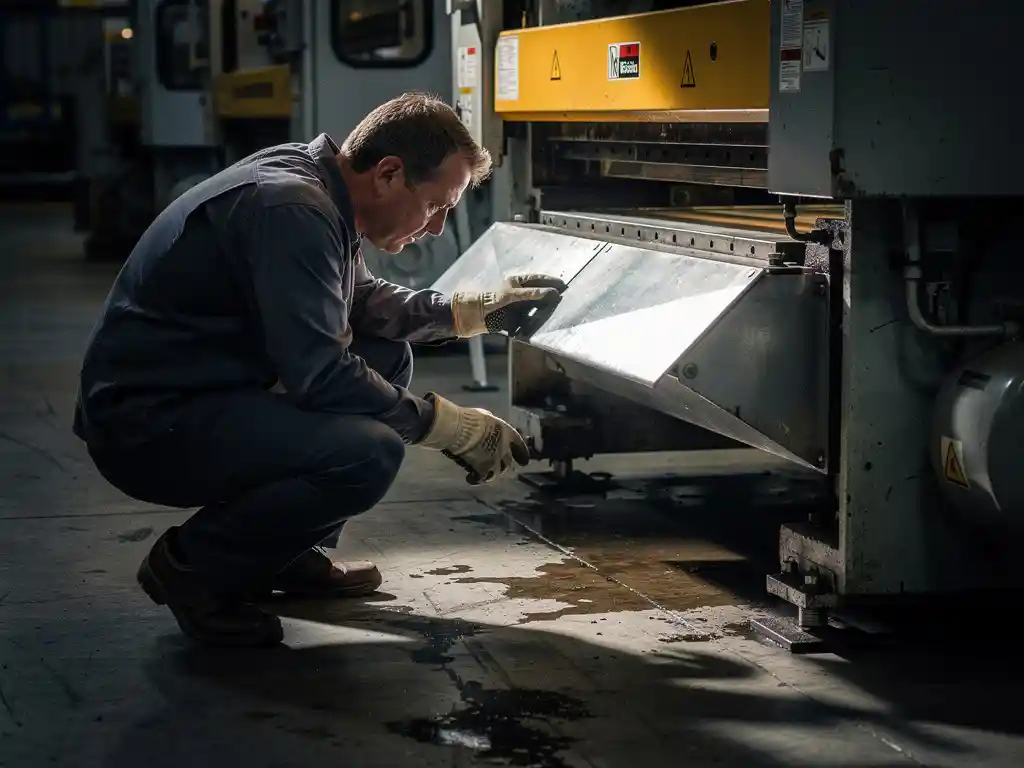
During a workplace inspection in production, the risks you must not miss include mechanical hazards from moving machinery, chemical exposure, ergonomic strain, fire and electrical dangers, inadequate personal protective equipment use, and poor housekeeping that creates slip and trip hazards. These risks are especially critical in manufacturing environments where the pace is fast, equipment is heavy, and teams are often diverse and multilingual. The sections below walk through the most important questions every production team should be asking about safety inspections in 2026.
What are the most common hazards found during production floor inspections?
The most common hazards found during production floor inspections are mechanical risks from unguarded machinery, chemical exposure from cleaning agents or process materials, ergonomic issues from repetitive tasks and poor posture, electrical faults, fire risks, and slip or trip hazards from cluttered walkways. These categories account for the majority of workplace injuries in manufacturing settings.
Mechanical hazards top the list because production environments rely heavily on equipment with moving parts. Conveyor belts, presses, cutting machines, and automated systems all carry risk when guards are missing, damaged, or bypassed. During an inspection, every piece of machinery should be checked for proper guarding and clear access to emergency stops.
Chemical hazards are often underestimated. Lubricants, cleaning products, adhesives, and process chemicals can cause skin irritation, respiratory problems, or long-term health effects. Inspectors should verify that Safety Data Sheets are current, storage is correct, and workers know how to handle spills.
Ergonomic risks deserve close attention in production because they develop gradually. Repetitive lifting, awkward postures at workstations, and vibrating tools all contribute to musculoskeletal disorders that reduce productivity and increase absenteeism over time.
Which risks are most often overlooked during a workplace inspection?
The risks most often overlooked during a workplace inspection in production are ergonomic hazards, near-miss incidents, noise exposure, psychological safety concerns, and outdated or poorly understood emergency procedures. These are frequently missed because they are less visible or immediate than physical dangers like exposed machinery.
Near-miss incidents are a particularly valuable but underused source of safety information. When a worker almost drops a heavy component or narrowly avoids a collision with a forklift, that event rarely gets formally recorded. Yet near-misses are early warnings of serious accidents waiting to happen.
Noise is another overlooked hazard. Prolonged exposure to high noise levels causes permanent hearing damage, but because the effect is gradual, it rarely triggers urgency during inspections. Inspectors should measure noise levels at workstations and verify that hearing protection is available, correctly fitted, and consistently worn.
Psychological safety, including stress, fatigue, and a culture where workers feel unable to raise concerns, is increasingly recognised as a production safety risk. Fatigued workers make more errors, and teams that do not feel safe speaking up are less likely to report hazards before they become accidents.
How does a workplace inspection differ from a risk assessment in production?
A workplace inspection is a regular, physical walkthrough of the production environment to identify existing hazards and check compliance with safety standards. A risk assessment is a structured analytical process that evaluates the likelihood and severity of potential harm from identified hazards. Both are essential, but they serve different purposes and happen at different stages.
Think of the risk assessment as the planning document and the workplace inspection as the ongoing verification. A risk assessment is typically conducted before a new process starts, when equipment changes, or after an incident. It asks: what could go wrong, how likely is it, and what controls are needed?
A workplace inspection then checks whether those controls are actually in place and working. It is operational and observational. Inspectors look at real conditions on the floor, not theoretical scenarios. If a risk assessment identified that a machine guard must always be fitted, the inspection confirms whether it is.
In practice, inspections often reveal new hazards that were not captured in the original risk assessment. When that happens, the risk assessment should be updated to reflect current conditions. The two processes are complementary and should inform each other on a continuous basis. Learn more about how structured workplace inspections can support your safety program.
What should a production workplace inspection checklist include?
A production workplace inspection checklist should include checks across machinery and equipment, housekeeping and walkways, chemical storage and handling, fire safety systems, electrical safety, personal protective equipment, emergency procedures, and worker welfare facilities. A thorough checklist ensures inspections are consistent and nothing critical is skipped.
Here is what a solid production safety inspection checklist covers:
- Machinery and equipment: Guards in place, emergency stops accessible and functional, maintenance records up to date
- Housekeeping: Walkways clear of obstructions, floors dry and free of spills, waste disposal areas managed
- Chemical safety: Correct labelling, proper storage, Safety Data Sheets accessible, spill kits available
- Fire safety: Extinguishers inspected and unobstructed, fire exits clear, evacuation routes posted
- Electrical safety: No exposed wiring, electrical panels accessible, portable appliance testing current
- PPE: Correct equipment available for each task, worn properly, replaced when damaged
- Emergency procedures: First aid kits stocked, first aiders identified, incident reporting process understood by workers
- Worker welfare: Rest areas adequate, drinking water available, sanitary facilities maintained
The checklist should be reviewed and updated at least annually or whenever there is a significant change to the production process, layout, or equipment. A checklist that reflects current conditions is far more useful than a generic template. You can also complement your inspections with regular toolbox talks to keep safety top of mind across the team.
How often should workplace inspections be conducted in production?
Workplace inspections in production should be conducted at least monthly for general floor inspections, with daily or shift-based checks for high-risk areas such as machinery, chemical storage, and fire exits. The right frequency depends on the nature of the work, the level of risk, and any regulatory requirements that apply to your industry.
High-risk production environments, such as those involving heavy presses, hazardous chemicals, or high-temperature processes, warrant more frequent checks. In these settings, a brief daily walkthrough by a team leader or safety representative is a practical way to catch hazards before they escalate.
Formal monthly inspections should be more structured, involving a checklist and documented findings. Any actions identified during an inspection should be assigned to a responsible person with a clear deadline. An inspection that produces a list of unresolved issues is only useful if those issues are actually followed up.
In addition to scheduled inspections, unannounced spot checks are valuable. They reflect real working conditions rather than a tidied-up version of the floor prepared in anticipation of an inspection visit.
How can production teams retain safety knowledge between inspections?
Production teams retain safety knowledge between inspections by embedding safety reminders into daily routines, using short and accessible training formats, reinforcing key messages at shift handovers, and making it easy for workers to access instructions without needing to find a manual or log into a system. Consistency and accessibility are the two factors that matter most.
One of the biggest challenges in production is that safety training often happens once during onboarding and then fades. Workers forget procedures, new hazards emerge, and updated instructions do not always reach the people who need them. Regular, brief reinforcement is far more effective than annual refresher courses. A structured onboarding process that embeds safety knowledge from day one makes a significant difference.
Microlearning, which delivers focused knowledge in short bursts of three to six minutes, fits naturally into production schedules. A short module covering the correct way to handle a chemical, the steps for locking out a machine before maintenance, or the evacuation procedure for a specific area can be completed during a break without disrupting workflow. Clear work instructions delivered in this format help workers apply the right procedures every time.
Making safety information available in workers’ own language is equally important. In multilingual production teams, language barriers are a genuine safety risk. When instructions are only available in one language, non-native speakers may misunderstand critical procedures. Explore how tools designed to retain and maintain knowledge can close that gap in your team.
How E-Lia helps with safety knowledge in production
We built E-Lia specifically for teams where learning must fit around the work, not the other way around. For production environments, that means getting the right safety knowledge to the right person at the right moment, without requiring a login, a new app, or time away from the floor.
Here is what we offer for production teams focused on workplace inspection and safety:
- WhatsApp-based microlearnings: Safety modules delivered directly to workers’ phones, completable in three to six minutes during a break or before a shift
- No login required: Workers access training through a platform they already use, removing the barrier of forgotten passwords or unfamiliar systems
- Automatic translations: Modules can be delivered in multiple languages simultaneously, so every worker receives instructions they can actually understand
- Pre-scheduled and on-demand sending: Reinforce safety knowledge before an inspection, after a near-miss, or whenever procedures change
- Progress tracking dashboard: See who has completed which modules so you know where knowledge gaps exist before the next inspection reveals them
- Fast module creation: Build a new safety module in ten to fifteen minutes when a process changes or a new hazard is identified
Safety knowledge that lives only in a binder or a one-time training session does not protect your team between inspections. We make it easy to keep that knowledge alive, accessible, and up to date. For food production environments, our HACCP training solution ensures compliance knowledge is always current and understood by every team member. Plan a demo and see how E-Lia fits into your production environment.
Frequently Asked Questions
How do I get started with a workplace inspection program if we currently have no formal system in place?
Start by conducting a baseline walkthrough of your production floor to identify the most obvious hazards, then use that observation to build your first checklist tailored to your specific environment. Assign a responsible person or small team to lead inspections, set a regular schedule, and document findings from day one — even informally. From there, you can gradually formalise the process by introducing standardised checklists, deadlines for corrective actions, and a simple tracking method to ensure issues are resolved rather than forgotten.
What is the best way to get workers actively involved in the inspection process rather than just management?
Involve workers by designating rotating ‘safety representatives’ from the floor who participate in monthly inspections alongside supervisors — this builds trust and surfaces hazards that management might never notice. Create a simple, low-barrier way for workers to report hazards between formal inspections, such as a WhatsApp message, a physical card system, or a QR code that links to a short reporting form. When workers see that their reports lead to real action, participation increases naturally and a genuine safety culture begins to take hold.
What should we do immediately after an inspection identifies a serious hazard?
If an inspection uncovers an imminent danger — such as an unguarded machine with moving parts or a blocked fire exit — the area or equipment should be taken out of use immediately until the hazard is controlled, regardless of production pressure. Assign a named individual to own the corrective action, set a specific deadline, and document both the hazard and the planned fix in writing. Once resolved, verify the control is effective and update your risk assessment to reflect the change so the same hazard does not recur.
How do we make sure safety inspection findings are actually acted on and not just filed away?
The most effective approach is to treat every inspection finding as an action item with a named owner, a deadline, and a follow-up check — not just a note in a report. Use a simple tracker, whether a shared spreadsheet, a safety management tool, or even a WhatsApp group, to keep outstanding actions visible to both the responsible person and their manager. Reviewing open actions at the start of each team meeting or shift briefing keeps accountability high and prevents findings from being forgotten between inspection cycles.
Can workplace inspections be used as a training opportunity for new or less experienced workers?
Absolutely — walking the floor with a new worker during an inspection is one of the most effective forms of practical safety training available. Seeing real hazards, understanding why certain controls exist, and asking questions in context is far more memorable than a classroom session or a PDF handout. Pairing new starters with experienced inspectors for their first few walkthroughs accelerates safety awareness and helps them develop the habit of noticing hazards as part of their daily routine.
How do we handle workplace inspections effectively when our production team speaks multiple languages?
Language barriers are a genuine safety risk in multilingual production teams, and inspections are only effective if every worker understands the findings, corrective actions, and updated procedures that result from them. Translate inspection findings and any updated instructions into the languages your team actually uses, and verify understanding rather than assuming it. Tools that deliver safety information directly in a worker’s preferred language — such as multilingual microlearning modules sent via WhatsApp — ensure that critical knowledge reaches everyone, not just those fluent in the dominant workplace language.
What is the difference between a scheduled inspection and an unannounced spot check, and do we need both?
Scheduled inspections are planned walkthroughs that allow time for thorough documentation and structured checklist completion, while unannounced spot checks capture the production floor as it actually operates day to day — without any preparation that might temporarily mask real conditions. Both serve a purpose: scheduled inspections ensure comprehensive coverage and consistent records, while spot checks reveal whether safe behaviours and proper procedures are genuinely embedded in daily practice. Running both gives you a much more accurate and honest picture of safety performance than either approach alone.