


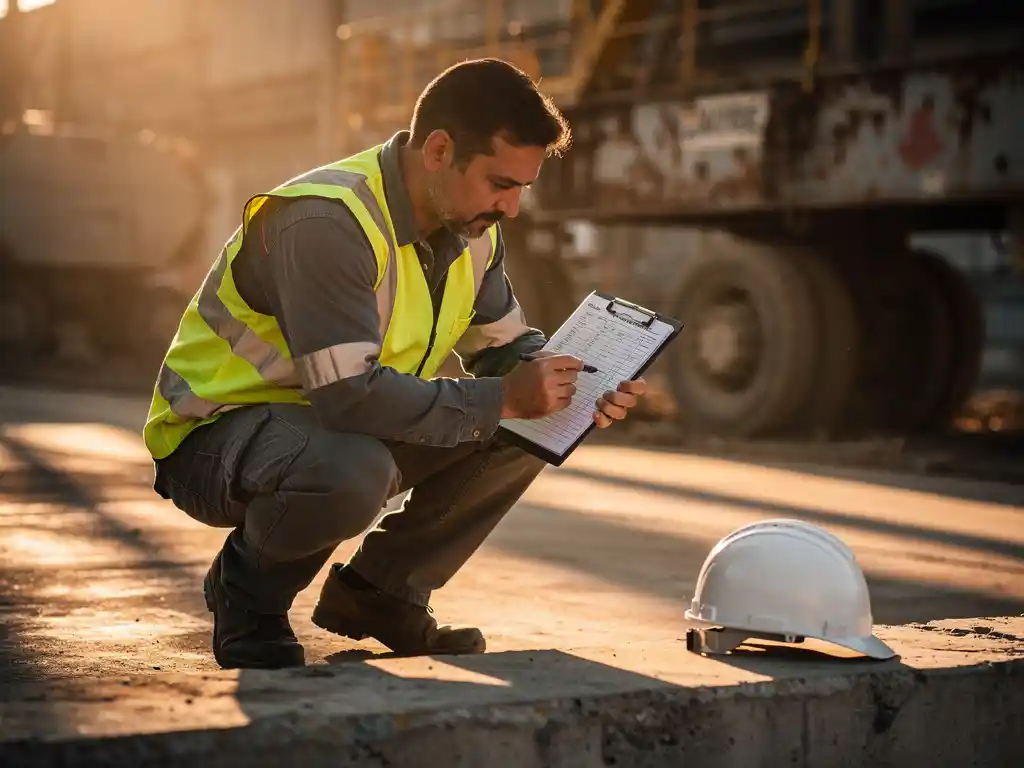
To ensure your workplace inspections are in order for a VCA audit, you need consistent documentation, a clear inspection schedule, assigned responsibilities, and evidence that findings are acted upon. VCA auditors are not just looking for paperwork — they want proof that safety is actively managed on the work floor. The questions below walk through everything your organisation needs to have in place before, during, and after an inspection. If you want to explore how digital tools can support this process, book a demo to learn more.
What do VCA auditors actually check during a workplace inspection?
During a workplace inspection, VCA auditors check whether your organisation actively identifies, records, and resolves safety risks on the work floor. They look at physical conditions, employee behaviour, the use of personal protective equipment, and whether safety procedures are being followed in practice, not just on paper.
Auditors typically assess the following areas:
- Housekeeping and order on the work floor
- Correct use and storage of hazardous substances
- Machine guarding and equipment maintenance records
- Emergency exit accessibility and signage
- Whether employees can explain relevant safety procedures
- Evidence of recent toolbox meetings and safety instructions
A key thing auditors look for is the gap between what is written in your safety documentation and what actually happens on the floor. If your VCA checklist says inspections happen weekly but your records show gaps of several months, that inconsistency will be flagged. Auditors also pay close attention to whether corrective actions from previous inspections have been completed and properly closed off. Learn more about how structured workplace inspections can help you stay consistently audit-ready.
What documentation must be in place before a VCA audit?
Before a VCA audit, you must have a complete and up-to-date set of safety documentation that demonstrates your safety management system is operational. This includes inspection reports, risk assessments, incident records, toolbox meeting logs, and evidence that employees have received relevant safety training.
The core documents auditors will request include:
- A current risk inventory and evaluation (RI&E)
- Signed toolbox meeting attendance records
- Completed workplace inspection checklists with dates and signatures
- Records of corrective and preventive actions
- Personal protective equipment (PPE) issue and inspection logs
- Proof of VCA training certificates for relevant staff
- Emergency response plans and evacuation drill records
Documentation alone is not enough — auditors want to see that records are organised, retrievable, and reflect real activity. Folders full of unsigned forms or checklists that are clearly filled in retrospectively are a common cause of audit findings. Make sure every document is dated, signed by the responsible person, and stored in a consistent location that supervisors can access quickly during an audit visit.
How often should workplace inspections be carried out for VCA compliance?
For VCA compliance, workplace safety inspections should be carried out at least once per month, though the required frequency depends on the risk level of the work environment and your own safety management plan. Higher-risk environments such as construction sites, production floors, or chemical handling areas typically require more frequent inspections.
Your inspection frequency should be defined in your safety management system and consistently followed. If your policy states weekly inspections, your records need to reflect that — auditors will look for regularity, not just volume. In practice, many VCA-certified organisations schedule:
- Weekly or fortnightly inspections on active project sites or production floors
- Monthly inspections for lower-risk support areas
- Immediate unplanned inspections following an incident or near-miss
It is also worth noting that toolbox talks, whilst not the same as formal inspections, contribute to demonstrating an active safety culture. Holding regular toolbox meetings alongside scheduled inspections strengthens your overall VCA audit readiness considerably.
Who is responsible for conducting workplace inspections under VCA?
Under VCA, the primary responsibility for conducting workplace inspections lies with direct supervisors and safety officers, though management carries ultimate accountability for ensuring inspections happen and findings are resolved. VCA does not assign this task to a single job title — it expects a clear internal structure where responsibility is defined and documented.
In practice, most organisations divide responsibility as follows:
- Supervisors and team leaders conduct routine floor-level inspections and complete the inspection checklist
- Safety officers (preventiemedewerkers) oversee the inspection programme, review findings, and verify corrective actions
- Management reviews inspection results periodically and ensures resources are available to address structural issues
One of the most common weaknesses auditors identify is that responsibility is assumed rather than assigned. If everyone thinks someone else is handling inspections, gaps appear quickly. Document who is responsible for each inspection type in your safety plan, and make sure that person has received the necessary training to carry out the task competently. VCA expects inspectors to be qualified — not just available. Explore how structured onboarding can help new employees understand their safety responsibilities from day one.
How can digital tools help keep workplace inspections audit-ready?
Digital tools help keep workplace inspections audit-ready by automating reminders, standardising checklists, storing records centrally, and making safety information accessible to the people who need it — without relying on paper systems that are easy to lose or forget. The right digital approach reduces the administrative burden whilst improving consistency.
Specific ways digital tools add value for VCA compliance include:
- Sending scheduled inspection reminders directly to supervisors so nothing is missed
- Providing standardised digital checklists that ensure every inspection covers the same points
- Automatically logging completed inspections with timestamps and responsible persons
- Delivering toolbox talk content and safety updates to employees on their phones
- Tracking whether employees have read and acknowledged safety instructions
- Generating overview reports that can be presented directly to an auditor
The shift away from paper-based systems also reduces the risk of records being incomplete or illegible — two issues that frequently come up during VCA audits. When safety documentation is digital and centralised, supervisors spend less time searching for paperwork and more time actually managing safety on the floor. Find out how tools for retaining and maintaining knowledge can reinforce safety awareness across your entire team.
What are the most common reasons companies fail a VCA workplace inspection?
The most common reasons companies fail a VCA workplace inspection are incomplete or inconsistent documentation, a lack of follow-up on previous findings, and a gap between written procedures and actual practice on the work floor. These issues are almost always preventable with better structure and consistency.
The most frequently cited failure points include:
- Missing or unsigned inspection records — inspections were done but not properly documented
- Open corrective actions — findings from previous inspections were never resolved or closed
- Irregular inspection frequency — long gaps between inspections that contradict the stated policy
- Employees unaware of safety procedures — training was delivered but not retained or understood
- Toolbox meetings not recorded — meetings happened but attendance was not logged
- Outdated risk assessments — the RI&E has not been updated after changes to the work environment or processes
A recurring theme across these failure points is the difference between doing something and proving you did it. VCA certification is built on demonstrable, repeatable safety behaviour. If your team is genuinely committed to safety but the evidence trail is weak, an audit will still produce findings. Building a culture where documentation is treated as part of the safety task itself, not an afterthought, is the most effective way to stay consistently audit-ready. Clear work instructions play a key role in closing the gap between written procedures and what actually happens on the floor.
How E-Lia helps with workplace inspection readiness
Staying audit-ready for VCA requires more than good intentions — it requires a system that makes it easy for every employee to receive, understand, and confirm safety information consistently. That is exactly what we built E-Lia to do.
With E-Lia, organisations can:
- Send toolbox talks, safety updates, and workplace inspection instructions directly via WhatsApp — no app download or login required
- Create standardised microlearning modules for safety procedures in as little as 10 to 15 minutes
- Automatically track which employees have completed safety content and generate progress reports for your audit documentation
- Support multilingual teams by delivering content in each employee’s own language through automatic translation
- Schedule content in advance so inspection reminders and safety refreshers go out at exactly the right time
Whether you are preparing for an upcoming VCA audit or want to build a more consistent safety training routine, we are here to help. Plan a demo and see how E-Lia fits into your workplace safety workflow.
Frequently Asked Questions
How long should we keep workplace inspection records for VCA purposes?
VCA requires organisations to retain safety records — including inspection reports, corrective action logs, and toolbox meeting attendance — for a minimum of three years, though many organisations keep them longer as a best practice. Auditors may request historical records to assess whether your safety management system has been consistently maintained over time, not just in the weeks before an audit. Storing records digitally makes long-term retention and quick retrieval significantly easier than managing physical folders.
What should we do if we discover a major safety hazard during a workplace inspection?
If a major safety hazard is identified during an inspection, it should be recorded immediately in your inspection report and escalated to management without delay — do not wait for the next scheduled review cycle. Depending on the severity, work in the affected area may need to be halted until the hazard is resolved. The key for VCA compliance is that the finding, the action taken, and the person responsible are all documented, and that the corrective action is formally closed off once the hazard has been addressed.
Can we use a generic inspection checklist, or does it need to be tailored to our specific work environment?
Whilst generic checklists can serve as a useful starting point, VCA auditors expect your inspection checklist to reflect the actual risks present in your specific work environment. A construction site, a chemical processing facility, and a logistics warehouse each carry different hazards, and a one-size-fits-all checklist is unlikely to cover them adequately. Tailoring your checklist to your risk inventory and evaluation (RIu0026E) demonstrates that your safety management system is genuinely risk-based rather than a box-ticking exercise.
How do we get employees more engaged with workplace safety inspections instead of seeing them as a formality?
Engagement improves significantly when employees understand the purpose behind inspections and feel that their input leads to real change. Involving team members in identifying hazards during inspections — rather than having a supervisor walk around alone — builds ownership and makes safety a shared responsibility. Closing the feedback loop is equally important: when employees see that a finding they raised was actually resolved, it reinforces that inspections matter and are not just a compliance ritual.
What is the difference between a workplace inspection and a toolbox meeting, and do we need both for VCA?
A workplace inspection is a structured physical walkthrough of the work environment to identify hazards, check compliance with safety procedures, and verify that previous findings have been resolved. A toolbox meeting is a short, focused safety briefing where employees are informed about specific risks, procedures, or lessons learned. VCA expects both: inspections provide evidence that safety conditions are actively monitored, whilst toolbox meetings demonstrate that safety knowledge is being communicated and understood at the team level.
How far in advance should we start preparing documentation for a VCA audit?
Ideally, your documentation should be audit-ready at all times rather than assembled in a rush before a scheduled audit. That said, a practical minimum is to begin a structured review at least six to eight weeks before the audit date, checking that all inspection records are complete, corrective actions are closed, training certificates are current, and your RIu0026E reflects any recent changes to the work environment. Organisations that treat audit preparation as an ongoing process rather than a one-off event consistently perform better and experience far fewer last-minute surprises.
What happens if a VCA auditor finds non-conformities during the audit — does that automatically mean we fail?
Not necessarily — VCA audits distinguish between minor non-conformities and major ones, and a small number of minor findings does not automatically result in a failed audit or loss of certification. What matters is how your organisation responds: auditors expect you to acknowledge the finding, define a corrective action, assign responsibility, and set a realistic deadline for resolution. Demonstrating a structured and transparent response to non-conformities is itself evidence of a mature safety management system.