

Safety information reaches employees too late when the communication channels do not match how employees on the work floor are actually reachable. Paper lists, emails, and intranet messages miss employees who do not have a business email address or rarely sit behind a computer. This article answers the most frequently asked questions about distributing safety information in a timely and reliable manner, from channel selection to multilingual communication.
Why does safety information often reach employees too late?
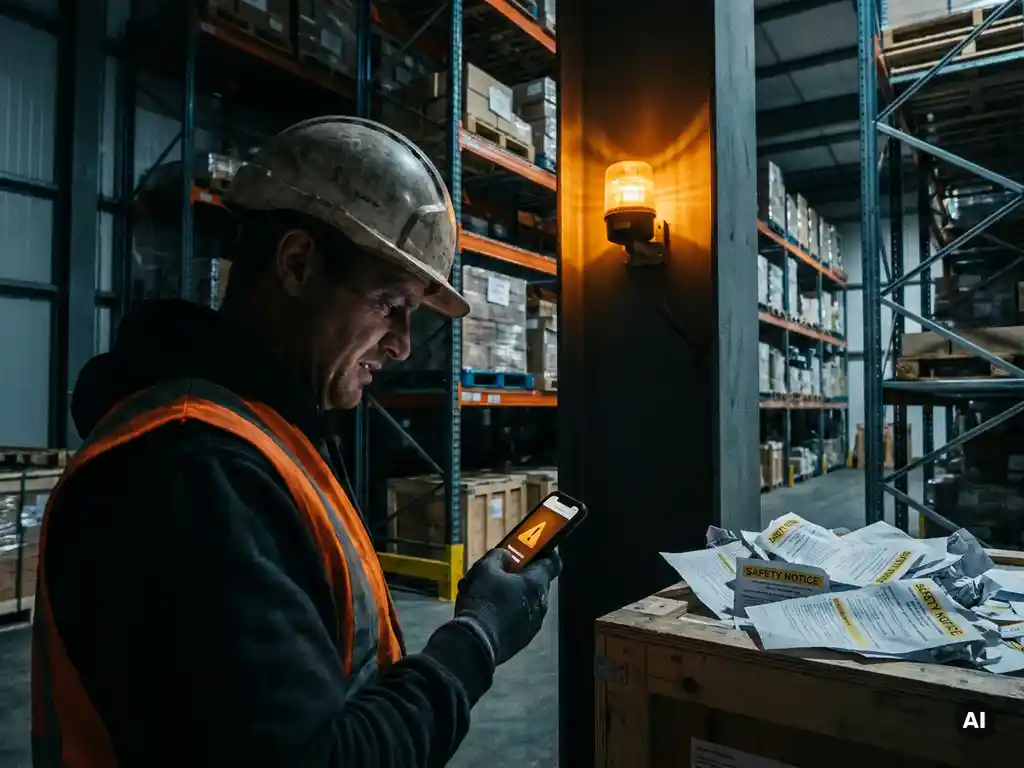
Safety information reaches employees too late because the channels used do not match the reality on the work floor. Operational employees in construction, logistics, or manufacturing rarely have access to a business laptop or email. When safety updates are sent through those channels, they simply do not arrive at the right moment.
The way information is distributed also plays a significant role. Physical toolbox meetings require everyone to be present at the same time, which is difficult to organise in shift work or with dispersed teams. Paper instructions disappear into jacket pockets or are never read. And even digital systems that require a separate login encounter resistance: employees do not log in if they are not accustomed to doing so.
Another common problem is that safety information is only sent after an incident has occurred, rather than preventively. Urgent updates about hazardous situations, revised work instructions, or new risks must be immediately available, not after a meeting or after filling in a form.
Which channels work best for urgent safety updates?
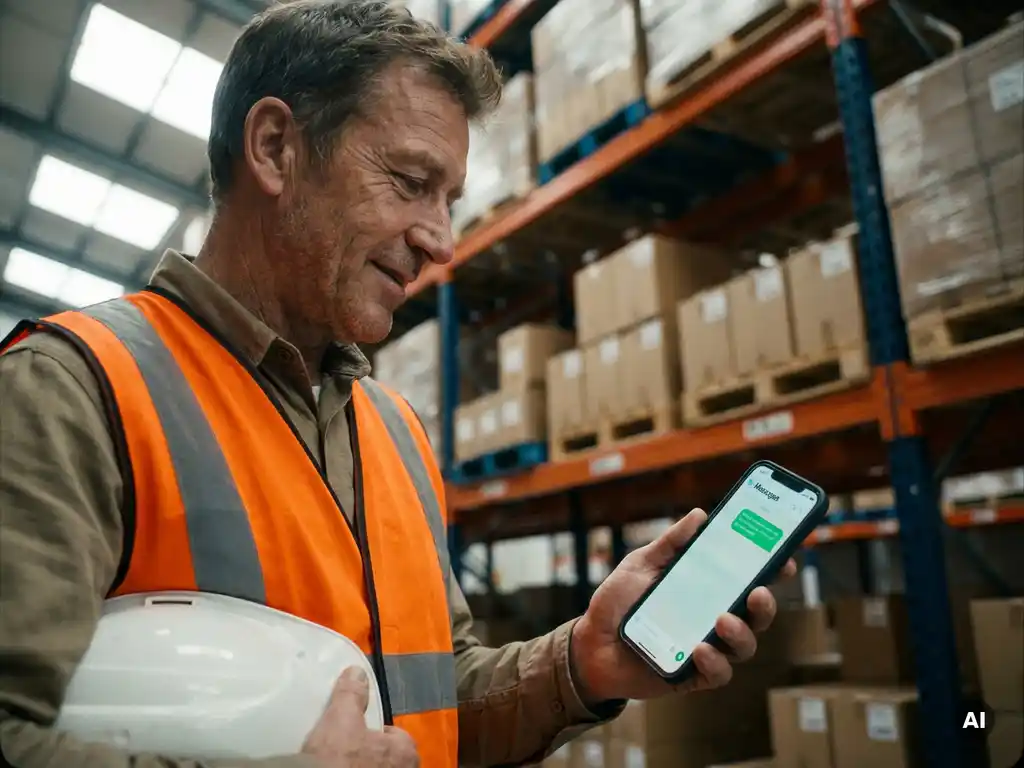
For urgent safety updates, channels work best that employees already actively use and that do not create additional barriers. In practice, this means direct messaging via smartphone, without employees needing to download a separate app or create an account.
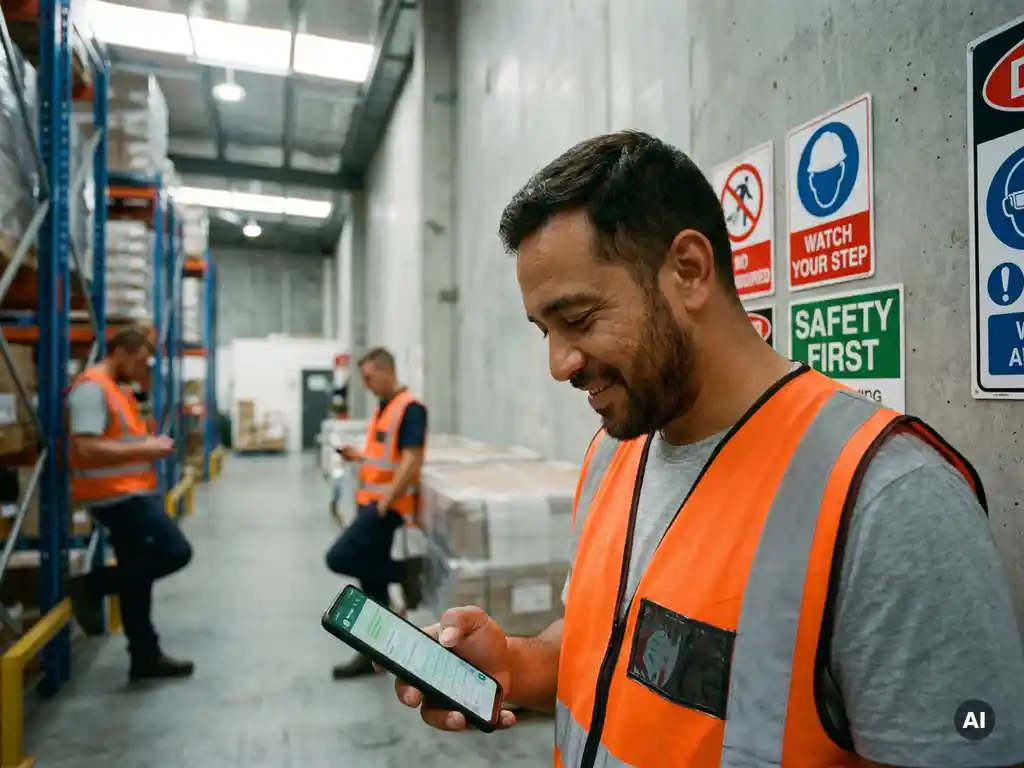
WhatsApp is a familiar way of communicating for many employees on the work floor. Messages sent through this channel are seen quickly, even by people who rarely open a computer. This makes it particularly suitable for time-sensitive information such as revised safety procedures, new work instructions, or current risk warnings.
Other channels such as email, intranet, or an LMS are less suitable for urgent communication with operational employees. They require active login steps and are consulted less frequently during working hours. For broader communication or documentation they can be useful as a supplement, but as a primary channel for urgent safety information they fall short.
How do you ensure that employees actually read safety information?
Employees read safety information more often when it is brief, relevant, and immediately available. Long documents, complicated portals, and text without context are skipped. Short microlearning modules of a few minutes, offered at the moment they are relevant, align better with how people absorb information during a working day.
In addition to format, confirmation plays a significant role. When employees must actively respond to a message — for example by completing a knowledge check or confirming an instruction — this increases the likelihood that the information is actually processed. Passive receipt rarely leads to demonstrable knowledge transfer.
Timing is also a factor. Safety information that connects to what employees are doing at that moment has more impact than generic messages that are unrelated to daily activities. Send an instruction about the use of personal protective equipment at the start of a task that requires those items, not a week in advance.
What is the role of compliance in distributing safety information?
Compliance in distributing safety information means that you not only send the information, but can also demonstrate that employees have received and processed it. Employers have obligations regarding the provision of information and instruction to employees about working safely. How you fulfil those obligations depends on the situation, the work activities, and the applicable regulations.
Registration plays a central role in this. When an employee has completed a toolbox meeting, reviewed a work instruction, or finished a knowledge check, you want to record that. Paper signature lists and Excel records are cumbersome and error-prone for this purpose. Digital registration makes it easier to keep track of who has received which information and when.
For organisations working with VCA, toolbox meetings are a well-known instrument for raising and recording safety topics. VCA is not a statutory obligation, but is often contractually required by clients in sectors such as construction and industry. Good registration of safety activities can support demonstrating what has been done, without this automatically meaning that all requirements are met.
How can multilingual teams receive safety information on time?
Multilingual teams receive safety information on time when that information is available in the language each employee understands best. Safety instructions in a language an employee does not have a good command of lead to misunderstandings and are less well retained. This increases the risk of errors on the work floor.
Automatic translations make it possible to quickly make the same instruction available in multiple languages, without having to manually create a separate version for each language. This is relevant for organisations with employees who speak different mother tongues, which is common in sectors such as construction, logistics, and the food industry.
In addition to language, the way information is presented also plays a role. Visual aids, short videos, and clear images can make safety information more accessible, even for employees who do not have full command of the instruction language. A combination of text in the employee’s own language and visual support increases the likelihood that the message gets through.
Which steps reduce the risk of delayed safety communication?
Reducing delayed safety communication starts with choosing a channel that reaches employees directly, followed by a process that makes sending updates as straightforward as possible. The fewer steps required to distribute information, the greater the likelihood that it happens quickly and consistently.
Concrete steps that make a difference:
- Choose a channel that employees already use, so that no new habits need to be learned.
- Set fixed moments for safety updates, so that employees know when to expect information.
- Keep content brief and focused, so that employees can process the information quickly without lengthy interruptions to their work.
- Register participation automatically, so that you know who has received the information and who has not.
- Follow up with employees who have not responded, so that no one is left out.
- Ensure translations are available, so that multilingual teams receive the same information in their own language.
A well-structured process does not need to be complicated. The aim is for the right information to reach the right person at the right time, and for you to be able to demonstrate that.
How E-lia helps with the timely distribution of safety information
With E-lia you send safety information, toolbox meetings, and work instructions directly via WhatsApp to your employees’ phones. No extra app, no login procedure, no paper lists. Employees receive the information immediately, complete a knowledge check, and their participation is automatically recorded in a clear dashboard.
What E-lia concretely does for your organisation:
- Send toolbox meetings and safety instructions directly via WhatsApp, including to employees without a business email address
- Offer content in more than 50 languages thanks to automatic AI translations
- Register participation and knowledge checks automatically, so that you always have insight into who has received what
- Track employee progress in real time via a live dashboard
- Use a library of more than 60 practice-oriented safety topics, updated monthly
- Replace paper signature lists and Excel records with a fully digital process
Would you like to see how E-lia works for your organisation? Get in touch with us or request a demo and discover how you can distribute safety information more quickly, more easily, and in a more demonstrable way.
Related Articles
- How do you standardise workplace inspections across multiple locations?
- How do you turn safety communication into a continuous process instead of a monthly obligation?
- How do you move from separate toolbox files to one central toolbox library?
- What are specific toolbox topics for construction?
- What legal requirements apply to toolbox meetings?