To translate workplace inspection findings into improvement actions, you document each finding clearly, assign a priority level based on risk, and define a specific corrective or preventive action with an owner and a deadline. The key is moving from observation to a structured response without letting findings sit unresolved. The questions below walk through each step of that process in detail.
What types of findings typically come out of a workplace inspection?
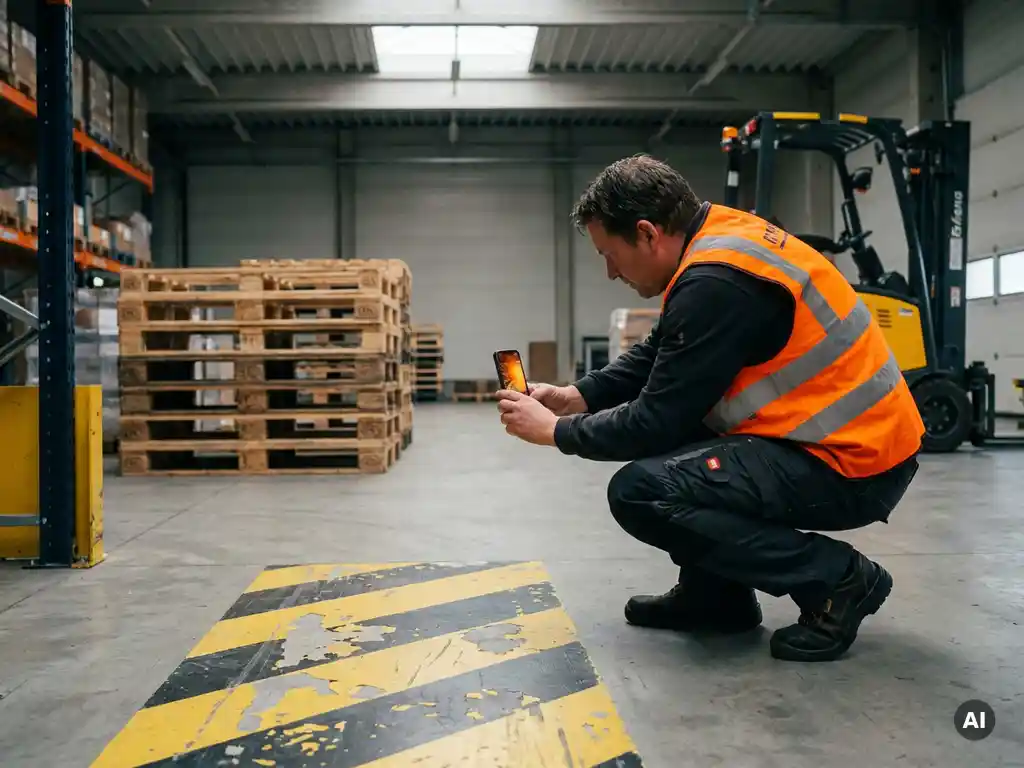
Workplace inspection findings generally fall into three categories: safety hazards, compliance gaps, and operational inefficiencies. Safety hazards include physical risks like blocked emergency exits or missing protective equipment. Compliance gaps cover areas where legal or regulatory requirements are not being met. Operational inefficiencies relate to processes that increase the risk of errors, accidents, or inconsistent work quality.
In practice, inspectors also document near misses, which are incidents that did not cause harm but easily could have. These are particularly valuable because they reveal systemic weaknesses before a serious event occurs. Other common findings include inadequate signage, outdated procedures that staff are no longer following, insufficient training records, and equipment that has not been maintained according to schedule.
Understanding which category a finding belongs to helps determine the urgency and type of response required. A physical safety hazard demands immediate action, whilst an outdated procedure may allow for a planned review cycle. Learn more about how structured workplace inspections can support this process.
How do you prioritise inspection findings before taking action?
Prioritise inspection findings by assessing two factors: the severity of potential harm and the likelihood that harm will occur. Findings that combine high severity with high likelihood should be addressed immediately. Lower-risk findings can be scheduled for resolution within a defined timeframe. This risk-based approach ensures that resources go where they are most needed first.
A simple priority matrix works well in practice. Assign each finding a risk level such as critical, high, medium, or low based on the combination of severity and probability. Critical findings require same-day or next-day action. High-priority findings should be resolved within a week. Medium and low findings can be incorporated into a regular improvement schedule.
It is also worth considering whether a finding is isolated or systemic. A single broken step on a staircase is an isolated hazard. A pattern of missing safety checks across multiple teams points to a systemic issue that needs a broader response, not just a one-time fix.
What is the difference between a corrective action and a preventive action?
A corrective action addresses a problem that has already occurred by eliminating its root cause. A preventive action addresses a potential problem that has not yet occurred by removing the conditions that could cause it. Both are essential parts of a workplace safety improvement programme, but they serve different purposes in the inspection follow-up process.
For example, if an inspection finds that a machine guard was removed and a worker was injured, the corrective action is to replace the guard and retrain the operator. The preventive action might be to introduce a pre-shift checklist that confirms all guards are in place before the machine is switched on.
Many audit findings require both types of response. The corrective action fixes what went wrong. The preventive action changes the system so the same failure is less likely to happen again. Focusing only on corrective actions without thinking preventively means the same findings will reappear in future inspections. Structured toolbox talks are an effective way to embed preventive thinking across your teams.
How do you write a clear improvement action from an inspection finding?
A clear improvement action contains four elements: a specific description of what needs to change, the person responsible for making that change, a realistic deadline, and a measurable outcome that confirms the action is complete. Vague actions like “improve safety culture” are not actionable. Specific actions like “install non-slip matting at the warehouse entrance by 15 March” are.
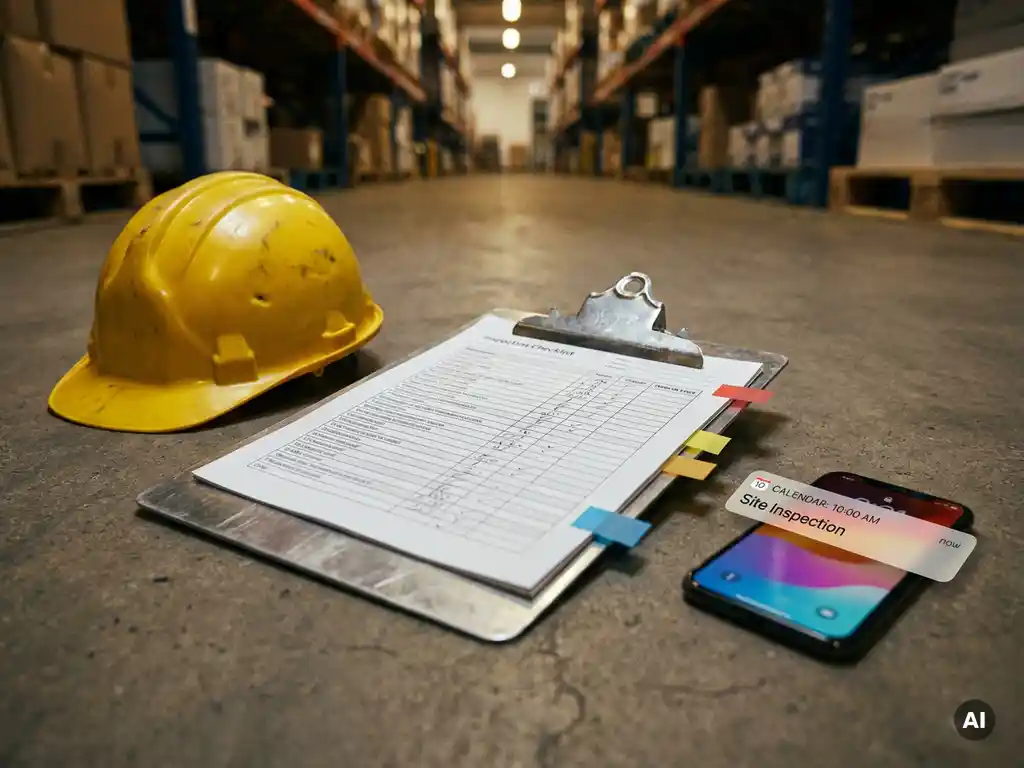
When writing improvement actions, link each one directly to the original finding. This creates traceability between what was observed during the inspection and what was done in response. It also makes it easier to verify during the next inspection whether the action was effective.
- Be specific: Describe exactly what needs to happen, not just the general area of improvement
- Name an owner: Assign one person, not a team or department, to be accountable
- Set a deadline: Give a concrete date, not “as soon as possible”
- Define completion: Describe what done looks like so there is no ambiguity when reviewing progress
If a finding has multiple contributing factors, write a separate action for each one. Bundling too much into a single action makes it harder to track and easier to leave partially unresolved. Clear work instructions can play a key role in ensuring actions are carried out consistently.
Who should be responsible for following up on improvement actions?
Responsibility for improvement actions should sit with the person who has direct control over the area or process where the finding occurred, typically a team leader, supervisor, or department manager. A central coordinator, often from the health and safety or quality team, should oversee the overall action list and ensure nothing falls through the gaps. Ownership and oversight are two separate roles.
Assigning ownership at the right level matters. If actions are always assigned upward to senior management, they become bottlenecked. If they are assigned too broadly to entire departments, no individual feels accountable. The most effective approach is to assign each action to the person with the most direct ability to implement the change.
For larger organisations, it helps to have a defined escalation path. If an action owner cannot complete their task within the agreed timeframe due to resource or budget constraints, there should be a clear process for escalating to the next level rather than allowing the deadline to quietly pass.
How do you make sure improvement actions are actually completed?
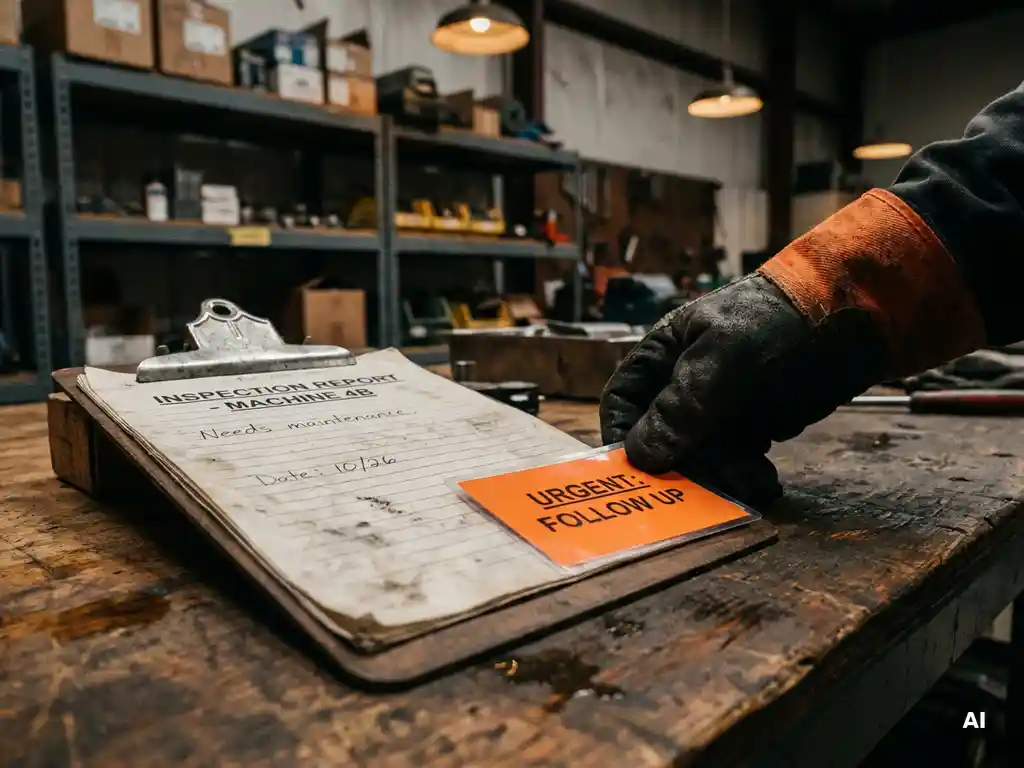
Improvement actions are completed consistently when they are tracked in a visible system, reviewed at regular intervals, and tied to accountability. The most common reason actions stall is that they are recorded once and never reviewed again. Building a review rhythm, whether weekly, fortnightly, or monthly depending on the volume and urgency of findings, keeps actions moving forward.
Practical steps that support completion include:
- Using a shared action log that all relevant stakeholders can access and update
- Including open actions as a standing agenda item in team or safety meetings
- Sending reminders to action owners before deadlines, not after they have passed
- Closing actions only when evidence of completion has been provided, not just when someone reports it verbally
- Reviewing completed actions during the next inspection to confirm they have been effective
It also helps to celebrate progress. When teams see that the findings from their inspection led to real improvements, they are more likely to engage seriously with future inspections. Inspection follow-up should feel like a continuous improvement cycle, not a one-time compliance exercise. Supporting employees in retaining and maintaining knowledge is a key part of sustaining that cycle.
How E-Lia helps with workplace inspection follow-up
Turning inspection findings into completed actions depends on one thing above all: making sure the right people receive the right information at the right time. That is exactly what we at E-Lia are built to support. Book a demo to find out how we help organisations in healthcare, logistics, production, and retail close the gap between inspection results and real workplace improvement.
We deliver microlearnings, updated work instructions, and targeted knowledge directly to employees via WhatsApp, with no app to download and no login required. When an inspection reveals a gap in procedure knowledge or a recurring compliance issue, we make it straightforward to act on that finding immediately.
- Fast content creation: Build a targeted microlearning module in 10 to 15 minutes to address a specific finding
- Instant or scheduled delivery: Send updated instructions to the right team the moment a corrective action is defined
- Multilingual support: Reach every employee in their own language, removing communication barriers in diverse teams
- Progress tracking: Monitor who has completed each module through a clear dashboard, so follow-up is visible and verifiable
- Pre-onboarding and onboarding: Standardise the information new employees receive so compliance gaps caused by inconsistent onboarding are addressed at the root — explore our onboarding solution to learn more
If your organisation wants a faster, more reliable way to act on workplace inspection findings, plan a demo and see how we work in practice.
Frequently Asked Questions
How soon after a workplace inspection should improvement actions be assigned?
Improvement actions should be assigned within 24 to 48 hours of completing the inspection, while findings are still fresh and context is clear. Critical and high-priority findings should ideally be assigned on the same day. Delaying the assignment process is one of the most common reasons findings remain unresolved — the longer the gap between inspection and action, the easier it is for urgency to fade and accountability to blur.
What should I do if the same finding keeps reappearing in every inspection?
A recurring finding is a strong signal that previous corrective actions addressed the symptom but not the root cause. When this happens, step back and conduct a more structured root cause analysis — techniques like the 5 Whys or a fishbone diagram can help identify the underlying system or behaviour driving the issue. From there, redesign the preventive action to target that root cause directly, rather than applying the same fix and expecting a different result.
How do you handle improvement actions when the responsible person disputes the finding?
Disputes over findings are best resolved by keeping the focus on objective evidence — photographs, measurements, records, or regulatory references — rather than opinion. Where genuine disagreement exists, involve a neutral third party such as a health and safety advisor or an external auditor to assess the finding independently. It is important not to let a disputed finding stall indefinitely; if the risk is real, interim controls should be put in place while the discussion is resolved.
Is there a recommended tool or format for tracking improvement actions across multiple teams or sites?
A centralised action log — whether a dedicated safety management platform, a shared spreadsheet, or an integrated module within your quality management system — is the most practical approach for multi-team or multi-site environments. The key requirements are that it is accessible to all relevant stakeholders, shows real-time status, and records evidence of completion rather than just self-reported updates. For organisations managing high volumes of findings, purpose-built tools like Salus, Intelex, or Ideagen offer structured workflows that reduce the administrative burden significantly.
How do you communicate inspection findings and required actions to frontline employees who may not regularly check email or internal systems?
Reaching frontline workers effectively requires meeting them where they already are — which for many teams means mobile-first, low-friction channels rather than email or intranet portals. Options include team briefings supported by printed action summaries, digital signage in work areas, or messaging platforms that employees already use on their phones. The goal is to ensure that the person responsible for implementing the change actually receives and understands the instruction, not just that the information was technically sent.
What counts as valid evidence that an improvement action has been completed?
Valid completion evidence depends on the nature of the action, but it should always be objective and verifiable rather than verbal confirmation alone. Acceptable evidence typically includes photographs of the corrected condition, updated and signed-off procedures, training completion records, maintenance logs, or a follow-up inspection sign-off. Defining what evidence is required at the time the action is written — not after — removes ambiguity and makes the review process significantly faster.
How do you keep employees engaged with the inspection and improvement process over time?
Sustained engagement comes from making the feedback loop visible — when employees can see that their reported findings led to real changes, they are far more likely to take future inspections seriously. Practical ways to reinforce this include sharing a brief update after each inspection cycle that highlights what was found and what changed as a result, recognising teams who resolved actions ahead of schedule, and involving frontline staff in developing the corrective actions themselves where possible. Inspections that feel like a collaborative improvement process generate much stronger participation than those that feel like a top-down compliance exercise.