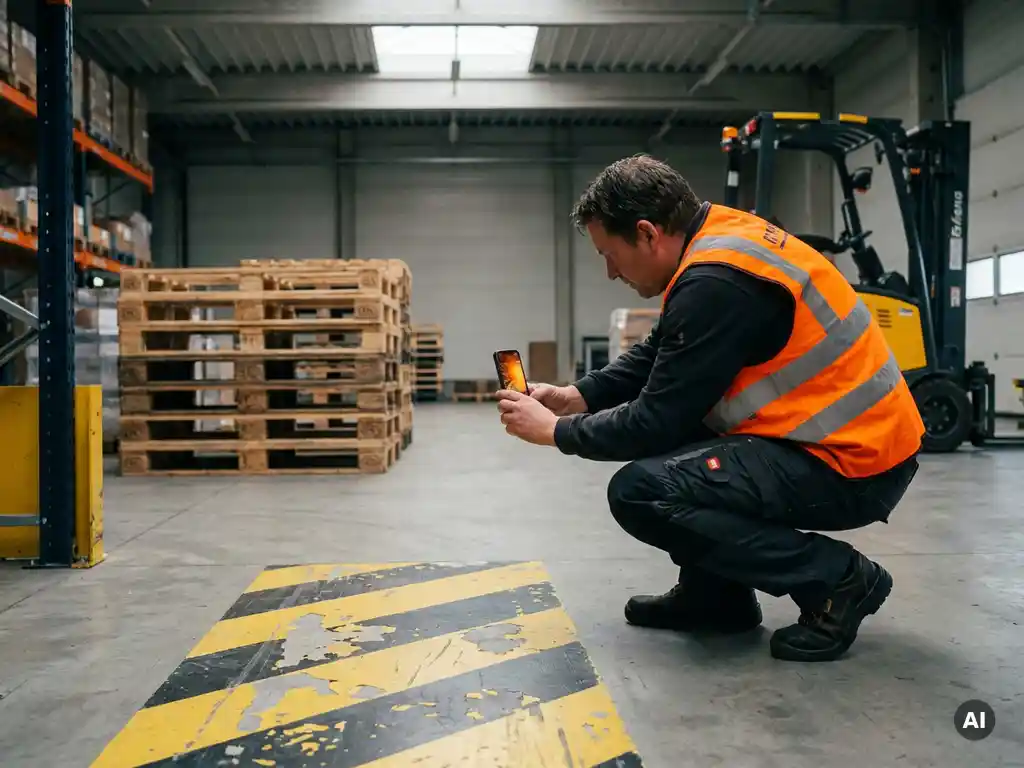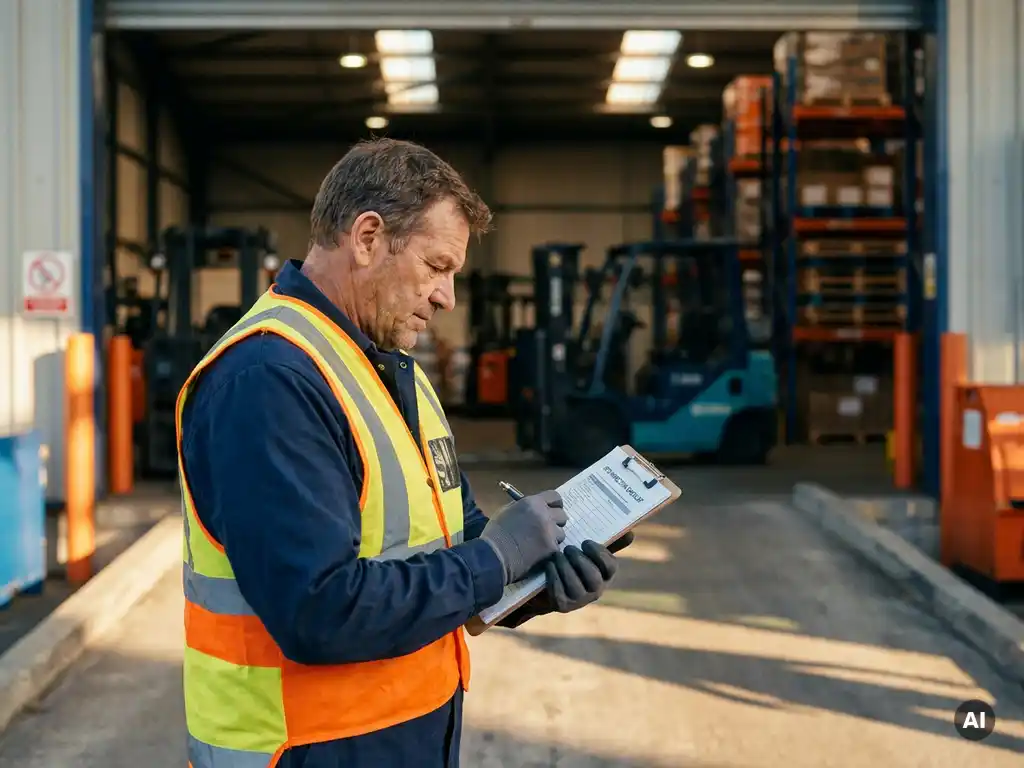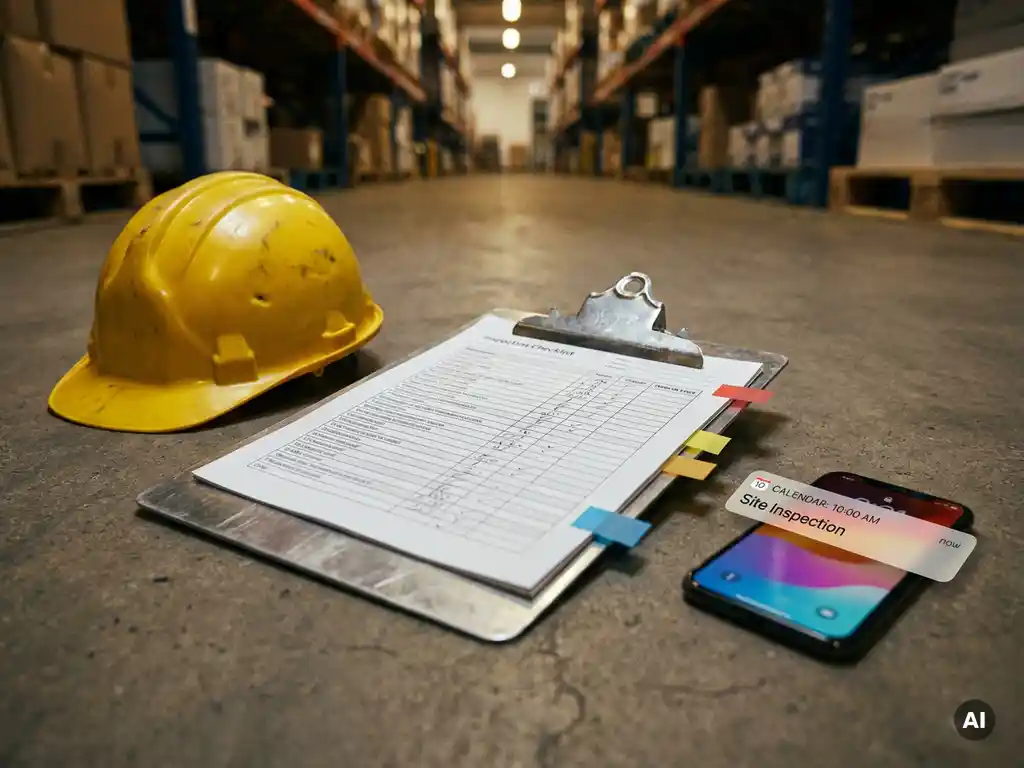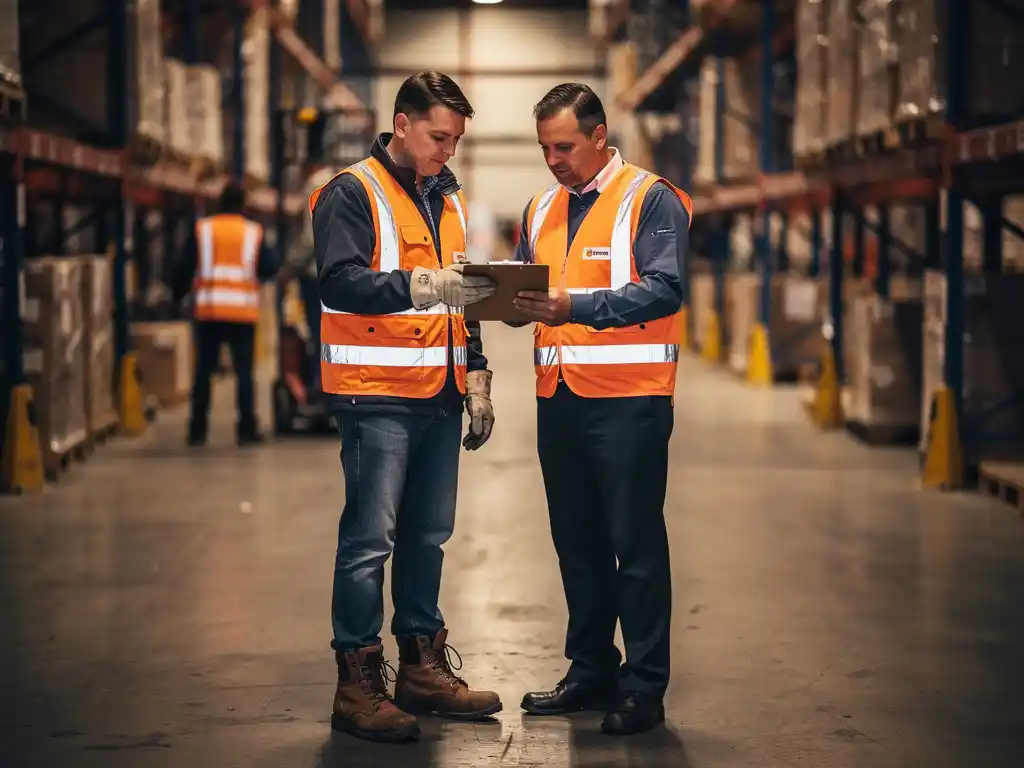
When temporary workers are on-site, responsibility for workplace inspection is shared between the hiring company and the staffing agency, but the hiring company carries the primary duty of care for day-to-day safety on the work floor. This split responsibility is defined by law in most jurisdictions, including Dutch labour law under the Arbeidsomstandighedenwet, which places direct obligations on whoever controls the physical working environment. The sections below break down exactly who owns what, where the gaps tend to appear, and how to close them before an incident occurs. If you have specific questions about your situation, feel free to book a meeting with us.
Who legally owns the duty of care for temporary workers on-site?
The hiring company legally owns the primary duty of care for temporary workers whilst they are on-site. Under Dutch law and broadly across EU member states, the organisation that controls the workplace, the equipment, and the daily work processes is responsible for ensuring safe working conditions, regardless of whether the worker is on the payroll or placed through a staffing agency.
This means that if a temporary worker operates a forklift, handles chemicals, or works in a confined space on your premises, you as the hiring company are legally required to ensure that the working environment meets all applicable health and safety standards. The employment contract held by the staffing agency does not transfer your obligation to maintain a safe workplace.
In the Netherlands, this principle is anchored in Article 10 of the Arbeidsomstandighedenwet, which explicitly states that employers must apply the same safety measures to workers hired through third parties as they do to their own employees. Inspectors from the Nederlandse Arbeidsinspectie can and do hold hiring companies accountable during workplace inspections, not just the staffing agency.
What does the staffing agency’s responsibility actually cover?
The staffing agency is responsible for the pre-placement aspects of worker safety: ensuring the worker has received relevant general safety training, holds required certifications, is medically fit for the role, and has been informed about the general risks associated with the type of work. The agency’s responsibility covers the worker’s employment conditions, not the physical workplace itself.
In practice, this means a staffing agency should verify that a placed worker has completed, for example, a basic VCA safety certificate before being deployed on a construction or industrial site. The agency should also ensure the worker has received a clear job description that includes known hazards associated with the role.
What the staffing agency cannot control are the specific conditions inside your facility on any given day. Wet floors, malfunctioning machinery, inadequate lighting, or improper storage of materials are all within the hiring company’s sphere of responsibility. The agency has no authority to inspect your premises or enforce corrective action there, which is precisely why the split in responsibility matters.
Which workplace inspections must the hiring company carry out?
The hiring company must carry out the same workplace inspections for temporary workers as it does for permanent staff. This includes risk inventory and evaluation (RI&E) assessments, toolbox talks, site inductions before work begins, and regular safety walks. Temporary workers must receive a workplace-specific induction before they start, not after.
Key inspections and checks that apply specifically when temporary workers are present include:
- Pre-placement site induction: A structured walkthrough of emergency exits, hazardous zones, PPE requirements, and reporting procedures before the worker starts their first shift.
- Equipment and machinery checks: Confirming that any equipment the temporary worker will use has been inspected and is safe to operate, and that the worker is competent to use it.
- Hazardous materials briefing: Where relevant, ensuring the worker understands the substances they may encounter and has access to safety data sheets.
- Periodic safety walks: Regular inspections of the work area to identify new or changing risks, particularly in dynamic environments like warehouses or production floors.
- End-of-shift or end-of-assignment review: Checking that no new hazards have been introduced and that the worker has not reported any near-misses or concerns.
The frequency and depth of these inspections should reflect the risk level of the work. High-risk environments such as manufacturing plants or healthcare facilities require more structured and documented inspection cycles than low-risk office settings.
What happens when a temporary worker gets injured during an inspection gap?
When a temporary worker is injured and it emerges that a required inspection was not carried out, the hiring company typically bears primary legal and financial liability. An inspection gap, meaning a period during which a known risk was not assessed or controlled, is treated as a failure of the duty of care by the party controlling the workplace.
The consequences can include enforcement action from the Nederlandse Arbeidsinspectie, fines, mandatory corrective measures, and civil liability claims. In serious cases, criminal liability for individual managers is possible under Dutch law when negligence is demonstrated.
The staffing agency may share liability if it can be shown that the agency placed a worker without adequate preparation, failed to communicate known risks, or did not ensure the worker held required qualifications. However, in the majority of on-site injury cases, the investigation focuses first on whether the hiring company’s workplace was safe and whether its inspection obligations were met.
The practical lesson is straightforward: an injury that occurs in the absence of documented inspections is very difficult to defend, even if the workplace was generally well-managed. Documentation is not merely a bureaucratic requirement; it is your primary evidence that you met your duty of care.
How should hiring companies document workplace inspections for temp workers?
Hiring companies should document workplace inspections for temporary workers using the same systems they use for permanent staff, with one additional requirement: the record must clearly show that the temporary worker specifically received the inspection, induction, or briefing, not just that a general inspection took place in the area.
Effective documentation practices include:
- Signed induction checklists that confirm the temporary worker received a site-specific briefing before starting work.
- Dated inspection logs that record the condition of the work area, any identified hazards, and corrective actions taken.
- Digital confirmation records showing that safety instructions were delivered and acknowledged, particularly useful when workers speak different languages.
- Near-miss reports that include the worker’s name and role type, so patterns involving temporary staff can be identified and addressed.
- Clear records of which PPE was issued, when, and to whom.
Storing these records in a system that is easily retrievable during an inspection or incident investigation is essential. Paper-based systems are legally acceptable but carry a higher risk of records being incomplete, lost, or illegible. Many organisations are moving towards digital delivery and confirmation of safety instructions, which creates an automatic audit trail. Tools designed to retain and maintain knowledge can play a significant role in keeping safety awareness consistent across your workforce.
When should the staffing agency and hiring company align on inspection responsibilities?
The staffing agency and hiring company should align on inspection responsibilities before the first temporary worker starts on-site, not after an incident prompts a review. This alignment should be formalised in the placement agreement or a separate health and safety protocol that both parties sign.
The key moments to align include:
- Before placement: The hiring company should inform the agency of all relevant workplace risks, required certifications, and the specific induction process the worker will go through on arrival.
- At the start of a new assignment: Both parties should confirm that the worker has received the agency-side preparation and that the hiring company’s on-site onboarding is scheduled.
- When working conditions change: If new machinery is introduced, a process changes, or a new hazard is identified, the agency should be notified so they can brief future placements accordingly.
- After any incident or near-miss: A joint review helps both parties understand whether the gap was in pre-placement preparation, on-site management, or both.
Regular communication between the two parties is not a legal requirement in every jurisdiction, but it is widely recognised as best practice and significantly reduces the risk of liability disputes when something goes wrong.
How E-Lia supports safety training and onboarding for temporary workers
One of the most common reasons inspection gaps occur is that safety instructions are delivered inconsistently, forgotten, or never confirmed. We developed E-Lia specifically to solve this problem, using WhatsApp to deliver structured microlearning modules to workers before and during their time on-site, with no app download or login required.
For organisations working with temporary staff, E-Lia offers:
- Pre-onboarding modules via WhatsApp: Safety briefings, site induction content, and work instructions delivered directly to a worker’s phone before their first shift.
- Automatic translation: Content delivered in the worker’s own language, removing a major barrier in multilingual workforces common in logistics, production, and healthcare.
- Progress tracking and confirmation: A clear dashboard showing who has completed which modules, creating the audit trail that supports your inspection documentation.
- Quick module creation: Building a new safety module takes an average of 10 to 15 minutes, so you can respond rapidly when processes or risks change.
- Scheduled or instant delivery: Send instructions the moment a new placement is confirmed, or schedule them to arrive at the right moment in the onboarding flow.
If you want to see how this works in practice, plan a demo and we will walk you through a live example relevant to your sector.
Frequently Asked Questions
Can a temporary worker refuse to start work if they haven't received a proper site induction?
Yes. Under Dutch labour law and broader EU health and safety legislation, every worker — including temporary staff — has the right to refuse work they reasonably believe poses an unacceptable risk to their safety. If a temporary worker arrives on-site without receiving a structured induction, they are within their rights to raise this before starting. Hiring companies should treat such a refusal as a signal that their onboarding process has a gap, not as a disciplinary issue.
What if the temporary worker speaks little or no Dutch — does that change our inspection obligations?
No, it does not reduce your obligations — it increases the care you must take to fulfil them. If a worker cannot understand a verbal safety briefing or a written induction document, you are still legally required to ensure they have genuinely received and understood the safety information. This means providing translated materials, using visual instructions, or leveraging tools that automatically deliver content in the worker’s own language. Inspectors will not accept a language barrier as a defence if a worker is injured.
How quickly should a site induction take place for a temporary worker starting at short notice?
The induction must take place before the worker begins their first task, regardless of how last-minute the placement is. There is no legal grace period that allows a worker to start in a hazardous environment and receive their induction later in the day. If your current process cannot deliver a structured induction at short notice, this is the gap to close first — pre-built digital induction modules that can be sent the moment a placement is confirmed are one practical solution for exactly this scenario.
Are we required to include temporary workers in our RIu0026E (Risk Inventory and Evaluation), or is that only for permanent staff?
Your RIu0026E must cover all workers in your workplace, including temporary staff. If temporary workers are regularly present in specific areas or perform specific tasks, those areas and tasks should be reflected in your risk assessment. A common mistake is maintaining an RIu0026E that was written with only permanent staff in mind, which can leave gaps around tasks that are frequently delegated to temporary workers, such as loading, cleaning, or machine operation during peak periods.
What's the most common mistake hiring companies make when it comes to temporary worker safety?
The most common mistake is assuming the staffing agency has handled everything. Hiring companies often believe that because the agency provided a VCA-certified worker, their own obligations are largely covered. In reality, the agency’s preparation addresses general competency, whilst the hiring company is responsible for everything specific to the physical workplace on that day. A certified worker who has never seen your site, your machinery, or your emergency procedures is not a safe worker — they are a worker with a qualification.
If we use the same temporary workers repeatedly, do we still need to run a full induction each time?
It depends on how much time has passed and whether anything in the workplace has changed. A returning worker who was on-site last week in the same role may only need a brief refresher and confirmation that no new hazards have been introduced. However, if there has been a significant gap, new equipment has been installed, processes have changed, or the worker is being placed in a different area, a full or partial re-induction is required. Documenting each visit separately — even for returning workers — protects you if an incident occurs during a later assignment.
How do we handle inspection responsibilities when temporary workers are placed across multiple shifts or locations?
Each shift supervisor or location manager must be clearly assigned responsibility for the inspection and induction of temporary workers under their direct supervision — this cannot be left ambiguous. A centralised record system is essential so that a worker moving between shifts or sites does not fall through the gap between managers who each assumed the other handled the induction. Defining this in your internal safety protocol and briefing all supervisors before temporary placements begin is the practical starting point.